
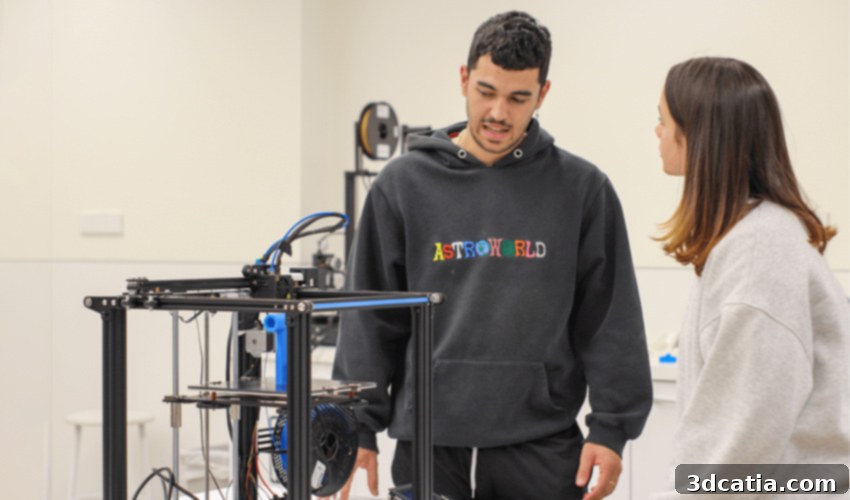
Transforming Lives: How 3D Printing Empowers Children with Disabilities Through Personalized Physiotherapy Devices
In a remarkable demonstration of innovative healthcare and social commitment, a groundbreaking project in Spain is harnessing the power of 3D printing technology to profoundly enhance the lives of children living with disabilities. Spearheaded by the San Juan de Dios Comillas University School of Nursing and Physiotherapy (EUEF) in Madrid, this initiative represents a beacon of hope, providing tailored solutions that address unique individual needs often overlooked by mass-produced medical equipment.
The project is built upon a strong collaborative foundation, involving five distinct healthcare and social service organizations. This crucial partnership allows third-year physiotherapy students at EUEF to directly engage with young patients, assess their specific challenges, and subsequently design and produce custom-fit 3D-printed devices. These personalized aids are not merely functional tools; they are instruments of empowerment, significantly boosting the autonomy, mobility, and overall quality of life for these young individuals.
At the heart of this initiative lies a robust Service-Learning methodology. This educational framework transcends traditional classroom learning by immersing future healthcare professionals in real-world scenarios, fostering a holistic development that goes beyond technical proficiency. Through this approach, students don’t just acquire vital practical skills in physiotherapy and additive manufacturing; they cultivate essential qualities such as empathy, commitment, and active listening. This direct engagement with patients and their families instills a deep understanding of their struggles and aspirations, shaping a new generation of healthcare providers who are not only skilled but also profoundly socially aware and compassionate.
Within this dynamic learning environment, 3D printing emerges as an indispensable tool. Its inherent flexibility and adaptability make it uniquely suited to address the complex and often varied requirements of children with disabilities. Unlike conventional manufacturing methods, 3D printing allows for rapid prototyping and iteration, enabling the creation of highly customized devices that precisely conform to a child’s unique anatomy and functional needs. This capability is paramount, as it helps overcome significant financial and functional barriers frequently encountered with commercially available devices, which are often expensive, ill-fitting, or simply unavailable for specific conditions.
The collaborative model is key to the project’s success. By working closely with established healthcare and social service organizations, students gain invaluable access to patient cases and benefit from the guidance of experienced therapists. This interdisciplinary approach ensures that the devices are not only technologically sound but also therapeutically effective and practically viable for daily use. The process typically involves an initial assessment of the child’s needs by physiotherapists, followed by students brainstorming and designing solutions, often using 3D scanning to capture precise anatomical data. The iterative design process, involving feedback from the child, family, and therapists, ensures that the final product is optimally tailored.
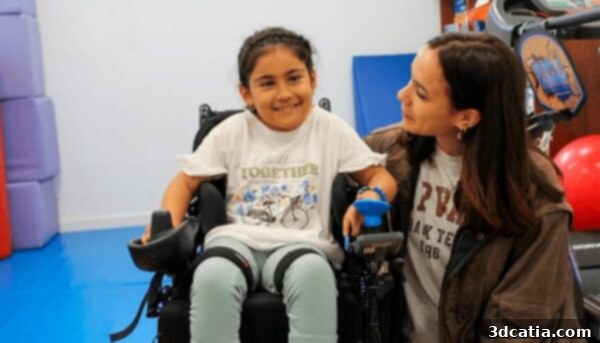
The students have worked closely with other therapists and families, ensuring the devices meet real-world needs.
Impactful Innovations: Real-World Examples of 3D-Printed Devices
The project has already yielded numerous inspiring success stories, showcasing the tangible benefits of personalized 3D-printed assistive technology. Each case is a testament to the students’ dedication and the transformative power of this approach. These devices are designed not just to compensate for a disability but to actively promote greater independence, participation, and a higher quality of life.
Case Study 1: Enhanced Mobility with a Custom Wrist Splint
One compelling example comes from Marcela Marcial, a student who designed a custom wrist splint for a young girl facing significant challenges with her hand mobility. This girl struggled to effectively maneuver her wheelchair and perform everyday tasks requiring fine motor control. Traditional splints often proved uncomfortable, restrictive, or failed to provide the precise support needed. Marcela’s 3D-printed solution was meticulously crafted to the girl’s unique wrist anatomy, offering optimal stabilization without impeding necessary movement. The result was a dramatic improvement in her ability to control her wheelchair, grasp objects, and engage more actively in play and learning, fostering a newfound sense of independence and reducing reliance on others.
Case Study 2: Adaptable Support with an Interchangeable Grip System
Another innovative creation emerged from Diego Ruiz, who developed an interchangeable grip system for standing frames. Standing frames are crucial therapeutic tools that help children with motor impairments achieve an upright position, benefiting bone density, circulation, and muscle development. However, standard grips can be rigid and non-adaptive, limiting a child’s interaction with their environment. Diego’s system incorporated various 3D-printed grips that could be swapped out depending on the child’s activity, growth, or specific therapeutic goals. This adaptability meant the child could hold toys, perform different exercises, or simply find a more comfortable position, significantly enhancing their engagement during therapy sessions and promoting longer, more beneficial standing times.
Case Study 3: Precision Therapy with a Thumb Extension Device
Laura Fernández contributed with a specialized device designed to improve thumb extension during physiotherapy sessions. For many children, developing or maintaining proper thumb extension is vital for grasping, pinching, and other fine motor skills essential for daily activities like eating, writing, or playing. Laura’s 3D-printed device provided targeted, adjustable support that gently guided the thumb into the correct position, making therapy more effective and less strenuous for the child. The precision offered by 3D printing ensured a perfect fit, maximizing comfort and therapeutic outcomes, thereby accelerating progress in developing crucial hand functions.
Beyond Functionality: The Profound Emotional and Economic Impact
While the physical benefits of these custom-printed devices are undeniable, their emotional and psychological impact on children and their families is equally profound, if not more so. The physiotherapists actively involved in the project consistently highlight how being heard, understood, and witnessing tangible progress in daily life dramatically boosts a child’s self-esteem and confidence. When a child can perform a task they previously couldn’t, or engages more fully with their peers, the sense of accomplishment is immense. These devices empower them to participate more actively in school, play, and family life, reducing feelings of isolation and fostering a stronger sense of belonging.
For parents and caregivers, the project offers a crucial sense of relief and renewed hope. The journey of raising a child with disabilities often comes with significant emotional and financial burdens. Witnessing their child gain new capabilities, even small ones, strengthens caregivers’ confidence and alleviates some of the daily challenges. Furthermore, the free access to these customized, high-quality devices offers substantial financial relief. Commercial assistive devices can be prohibitively expensive, and the need for frequent replacements due to a child’s growth or changing needs can place an immense strain on family budgets. 3D printing provides a cost-effective alternative, making essential aids accessible to families who might otherwise struggle to afford them.
Cultivating Empathetic Professionals and Future Innovation
Beyond the immediate benefits to the children, this project also plays a pivotal role in shaping the next generation of healthcare professionals. It unequivocally highlights the transformative potential of 3D printing in physiotherapy, showcasing how this technology can revolutionize personalized care. More importantly, it underscores the immense value of training empathetic, socially committed individuals who are equipped not only with technical expertise but also with a deep sense of social responsibility. Students learn to think creatively, problem-solve collaboratively, and understand the intricate link between technology, therapy, and human well-being.
The skills acquired through this Service-Learning model are invaluable. Students gain hands-on experience in CAD software, 3D printing processes, material selection for biocompatibility and durability, and critical evaluation of device performance. This blend of clinical knowledge with advanced manufacturing techniques prepares them for a future where personalized medicine and assistive technology will undoubtedly play an even more significant role. The project also serves as a model for other educational institutions and healthcare systems, demonstrating how interdisciplinary collaboration and innovative technologies can be leveraged to address critical societal needs.
Looking forward, the potential applications of 3D printing in healthcare are vast and continuously expanding. From custom prosthetics and orthotics to surgical guides, anatomical models for education, and even bioprinting of tissues, additive manufacturing is poised to reshape medical practice. Initiatives like the one at San Juan de Dios Comillas University are at the forefront of this revolution, proving that combining technological prowess with compassionate care can lead to truly life-changing outcomes for vulnerable populations.
We are keen to hear your thoughts on the innovative use of 3D printing in physiotherapy and its broader impact on personalized healthcare. How do you envision this technology evolving further? Let us know your insights in a comment below or share your perspectives on our LinkedIn or Facebook pages! For more updates and to stay informed on the latest advancements in the additive manufacturing sector, don’t forget to sign up for our free weekly Newsletter to get the latest 3D printing news straight to your inbox. You can also find all our compelling videos and tutorials on our YouTube channel. Are you interested in diving deeper into medical and dental 3D printing news and breakthroughs? Visit our dedicated page for comprehensive coverage HERE.
*Photo Credits: Comillas (EUEF)