
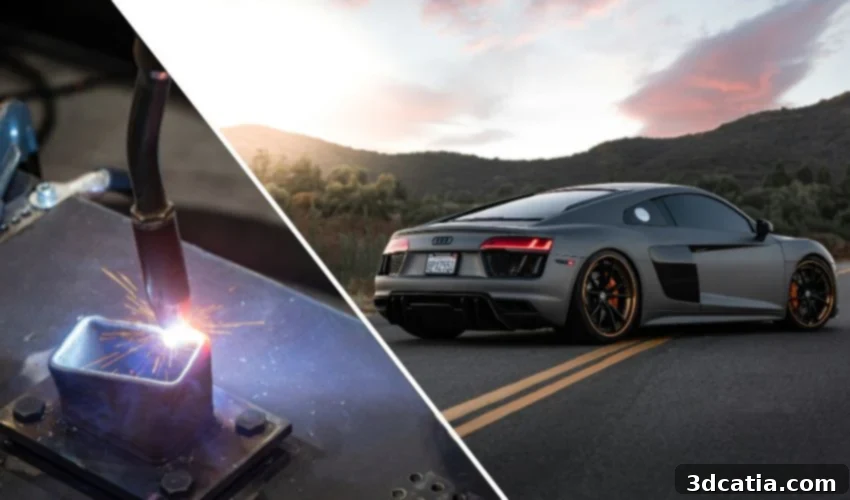
Revolutionizing Road Safety: How 3D Printing is Driving a Safer Automotive Future
The statistics are stark and undeniable: in 2023 alone, motor vehicle crashes tragically claimed the lives of 40,901 individuals in the United States, as reported by the U.S. Department of Transportation’s Fatality Analysis Reporting System. This grim reality serves as a powerful reminder of the relentless need to advance automotive safety. Numerous variables contribute to the severity of a crash, from occupant restraint usage like seatbelts to the vehicle’s structural integrity. Every element, from foundational chassis design to sophisticated passive safety features such as airbags, plays a critical role in mitigating harm and saving lives. Beyond direct crash impact, vehicle safety also encompasses everyday functionality, reliability, and user accessibility. In this multifaceted pursuit, 3D printing, also known as additive manufacturing, is emerging as a truly transformative technology. It empowers manufacturers to innovate across the entire vehicle lifecycle, creating automobiles that are not only more resilient in collisions but also more ergonomic, accessible, and reliable for all users. As automakers continue to push the boundaries of design and engineering, 3D printing has become an indispensable tool in the quest for safer, smarter vehicles. This article will delve into ten pivotal ways additive manufacturing is profoundly improving automotive safety, offering a glimpse into the future of transportation.
1. Accelerated Access to Repairs and Legacy Parts
One of the most immediate and impactful safety benefits offered by 3D printing is its unparalleled ability to streamline access to essential vehicle components, particularly crucial during repair and maintenance operations. For owners of older or classic vehicles, or those operating in remote areas, sourcing replacement parts can often be a frustrating, time-consuming, or even impossible endeavor due to obsolescence or discontinuation by original manufacturers. Additive manufacturing provides a revolutionary solution by enabling the rapid, on-demand fabrication of these “legacy parts.” This means that vital structural elements, engine components, or safety-critical systems that are no longer mass-produced can be digitally reproduced and printed as needed. By ensuring that vehicles can remain structurally sound and fully operational with genuine, high-quality replacements, 3D printing significantly enhances their long-term reliability and safety on the road. This capability is paramount in preventing further accidents that might arise from makeshift repairs or the use of compromised parts, thereby contributing significantly to overall road safety and the longevity of the vehicle fleet.
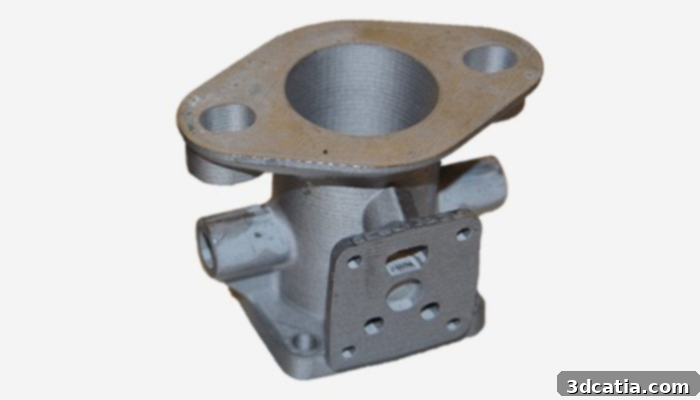
A replica carburetor created for a vintage racecar by Tecron (Image credit: Markforged)
2. Faster Prototyping for Safer Vehicle Designs
In the demanding world of automotive design and engineering, speed is a critical factor, especially when it comes to developing and testing safety features. Traditional prototyping methods often involve lengthy lead times, complex tooling, and high costs, which inherently limit the number of design iterations that engineers can realistically explore and validate. 3D printing fundamentally transforms this process, offering unparalleled agility. Engineers can now rapidly produce and rigorously evaluate multiple versions of safety-critical components, ranging from advanced crash structures and energy-absorbing zones to sophisticated restraint systems and interior elements. This iterative capability, where designs can be quickly printed, tested, refined, and reprinted, leads to significantly more optimized and thoroughly validated designs. The ability to conduct extensive testing on various prototypes allows for a deeper understanding of material behavior and structural performance under diverse conditions. Ultimately, this rapid prototyping cycle accelerates the development timeline, ensuring that safer, more robust vehicle designs are brought to market faster, providing enhanced protection to consumers sooner.
3. Improving Accessibility for Drivers and Passengers
Beyond crash protection, automotive safety also encompasses the ease and confidence with which individuals can interact with their vehicles. 3D printing is a powerful enabler for more inclusive and adaptable vehicle designs, directly enhancing safety for a broader range of drivers and passengers, including those with disabilities or specific physical needs. The technology facilitates the creation of highly customized assistive devices that can be perfectly tailored to individual requirements. Examples include bespoke steering wheel assist tools, specialized gear shifters, modified pedal extensions, or custom entry/exit aids. These personalized adaptations not only make vehicles more accessible but, critically, make them safer. By reducing physical strain, improving grip, enhancing control, and ensuring stability for all occupants, these 3D printed solutions directly mitigate risks such as loss of control, difficulty in emergency maneuvers, or injuries sustained during ingress/egress. The flexibility of additive manufacturing allows for on-demand customization, moving beyond one-size-fits-all solutions to create truly personalized and safer driving and riding experiences for everyone.
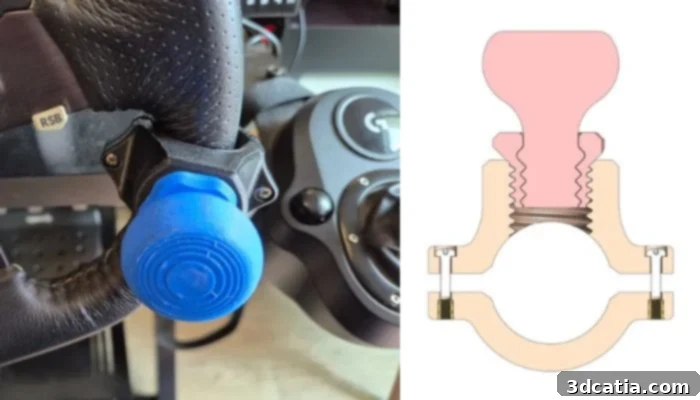
An assistive steering wheel knob is available to download on Cults. (Image credits: MIGUEPPC via Cults)
4. Structural Safety Through 3D Printed Seat Frames
In the event of a collision, vehicle seats are far more than just comfort features; they are integral safety components designed to absorb impact energy, maintain occupant posture, and work in conjunction with seatbelts and airbags to minimize injury. The design and construction of seat frames are therefore critical. 3D printing revolutionizes this aspect by enabling the creation of seat frames that are not only significantly lighter than their traditionally manufactured counterparts but are also engineered with incredibly complex and optimized geometries. Companies like Mercedes, Audi, and Porsche have already explored and implemented 3D printed seat components. This technology allows for the integration of advanced lattice structures and topology optimization, which can be precisely tuned to enhance energy absorption and increase overall structural strength without adding unnecessary weight. Furthermore, the ability to customize seat frames based on various occupant body types and seating positions can further improve safety outcomes, ensuring optimal interaction with restraint systems. These tailored, high-performance components significantly reduce the risk of serious injury by providing consistent support and superior deformation resistance during a collision, leading to more effective passive safety. The material choice in 3D printing, from high-strength polymers to reinforced composites, further allows engineers to achieve specific performance characteristics for different sections of the seat frame.
5. Enhanced Airbag Deployment with 3D Printed Housings
Airbag systems are a cornerstone of modern automotive safety, deploying within milliseconds of a collision to cushion occupants and prevent severe injuries. The effectiveness of an airbag largely depends on its rapid, precise, and reliable deployment, which is heavily influenced by the components that house and control it. 3D printing offers significant advantages in the design and production of airbag housing units. Joyson Safety Systems, a prominent global supplier of mobility safety components, has successfully utilized SLS (Selective Laser Sintering) technology to 3D print Driver Air Bag (DAB) Housings. These housings are subjected to immense loads and must securely hold both the inflator and the airbag cushion in place until deployment. By leveraging 3D printing, designers can utilize high-performance composite materials that offer superior mechanical properties and thermal stability. This enables precise control over the deployment mechanics, ensuring the airbag unfolds optimally to provide comprehensive protection during a crash. The design freedom of 3D printing also allows for complex internal geometries that can optimize air flow and energy management during deployment, further enhancing safety performance and occupant protection.
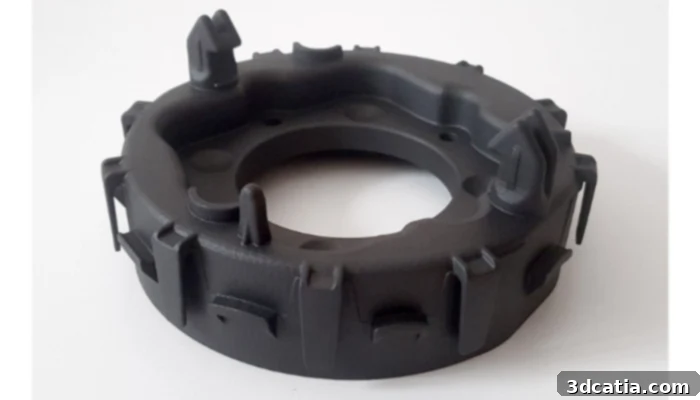
A 3D printed airbag housing (Image credit: Joyson Safety Systems)
6. Head Padding for Whiplash & Impact Prevention
Head and neck injuries, including whiplash, are among the most common and debilitating consequences of vehicle collisions. Traditional foam padding often provides limited customization and energy absorption capabilities. 3D printing is introducing a new paradigm for head-impact protection through the use of advanced, custom lattice structures. These intricate designs can be engineered to absorb and dissipate crash energy far more effectively and uniformly than conventional materials, significantly reducing the forces transmitted to the neck and head during an impact. The beauty of 3D printing lies in its ability to tailor these lattice structures precisely to each passenger’s anatomy and the specific requirements of the vehicle’s interior, ensuring better support and minimizing dangerous gaps between the occupant and the head restraint. When strategically combined with properly positioned and designed head restraints, these innovative padding solutions help prevent excessive head motion, thereby drastically reducing the risk and severity of whiplash and other impact-related injuries. Preliminary data from physics journals, focusing on infill patterns like gyroids and reinforced gyroids, suggest excellent compressive behavior for high energy absorption, with some studies indicating a potential injury risk reduction of up to 35%. This offers a promising avenue for next-generation interior safety.
7. AM Battery Shields: Enhancing EV Safety and Efficiency
As electric vehicles (EVs) become increasingly prevalent, the safety of their high-voltage battery packs is a paramount concern. These batteries must be robustly protected from impacts, road debris, and thermal events to prevent critical failures. 3D printing is playing a crucial role in developing advanced protective shields for EV batteries. By leveraging additive manufacturing, engineers can design lightweight, high-strength structures that excel at absorbing crash energy and shielding sensitive battery cells. The technology allows for the creation of intricate lattice and metamaterial designs that significantly outperform traditional solid materials in terms of energy dissipation and weight reduction. For instance, automakers like Volkswagen have successfully utilized 3D-printed composites to cut battery housing weight by an impressive 60%, directly contributing to both enhanced safety and improved vehicle efficiency (range). Beyond impact protection, these sophisticated designs can also integrate optimized cooling channels and advanced thermal management features directly into the shield structure, further enhancing battery longevity and operational safety by preventing overheating, a common precursor to thermal runaway events. This holistic approach ensures both mechanical protection and thermal stability for EV batteries.
8. Safer Automotive Lighting and Signaling
Visibility is fundamental to preventing accidents, making automotive lighting and signaling systems critical safety components. 3D printing significantly enhances safety in this domain by enabling rapid prototyping and extensive customization of lighting components such as headlights, taillights, turn signals, and interior illumination. The ability to quickly produce functional prototypes allows engineers to meticulously test and refine optical performance under a vast array of conditions, improving road visibility for the driver and ensuring clear signaling to other road users. This leads to better light distribution, reduced glare for oncoming traffic, and more durable housing units. Manufacturers like Ford have adopted 3D printing for producing specialized lenses and housings, leading to better component fit, faster repair turnaround times for unique parts, and a reduction in manufacturing waste. By ensuring the integrity and optimal performance of lighting systems, 3D printing directly contributes to a safer driving environment, especially in adverse weather conditions or at night. The ability to create complex light guides and reflectors also opens doors for innovative, adaptive lighting systems that further improve active safety.
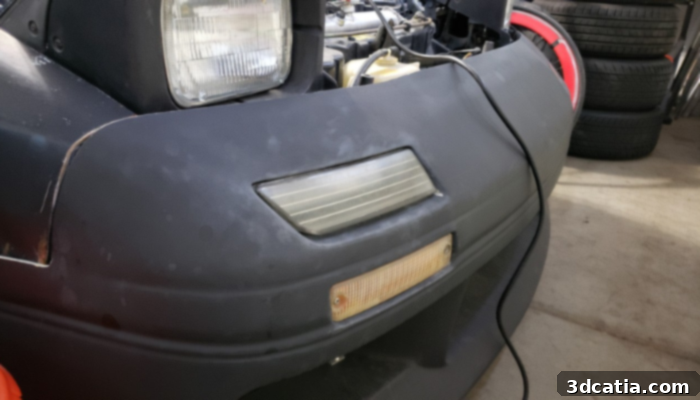
3D printed OEM turn signals on a Mazda Rx-7 (Image Credit: Michael Burton)
9. Lattice Structures for Enhanced Rollover Protection
Rollover accidents are among the most dangerous types of collisions, often leading to severe occupant injuries due to cabin intrusion and structural collapse. 3D printing offers groundbreaking solutions to bolster rollover safety by facilitating the creation of lightweight, yet exceptionally strong, structural components. This includes advanced crash rails, reinforced roof pillars, and integrated roll cages. These components can be meticulously optimized through additive manufacturing to absorb impact energy more effectively and maintain the critical integrity of the passenger cabin during a rollover event. Automakers are increasingly utilizing 3D-printed metal nodes and intricate crash components to construct stiffer and more resilient vehicle frames without incurring the penalty of added weight. This not only significantly improves passenger protection by preventing crush injuries but also enhances overall vehicle efficiency due to lightweighting. Early research, such as studies from Yanshan University, indicates that lattice-reinforced roof pillars and crash boxes can redistribute and absorb impact forces during rollovers, leading to reduced cabin intrusion and deformation, and offering up to 43% more energy absorption compared to traditional designs. This represents a significant leap forward in passive safety for vehicles.
10. Honeycomb Crash Energy Absorbers & Impact Zones
Protecting critical vehicle components like fuel tanks, high-voltage battery systems, and delicate electronics from collision forces or road debris is paramount for both occupant safety and vehicle integrity. 3D printing enables the design and manufacture of highly effective underbody shields and strategic impact zones with built-in energy-absorbing structures. These components are engineered to deform in controlled, predictable ways during collisions or strikes, dissipating kinetic energy away from vulnerable areas. Optimized crash energy absorbers, particularly those featuring complex lattice or honeycomb structures, are proving to be exceptionally efficient. These intricate geometries often outperform traditional solid foam or hollow metal parts in their capacity to absorb and dissipate energy. Designs can incorporate features like crush initiators—specific points designed to collapse first—and multi-material layers to further enhance their impact resistance and energy management capabilities. These advanced 3D printed solutions offer a compelling combination of lightweight construction, customizable protection, and dramatically improved crash performance. A recent study published in the Journal of Materials Engineering and Performance highlighted that honeycomb micro-lattices exhibited up to 47% higher compressive residual stress than traditional armor steels, significantly boosting their energy absorption capacity. Furthermore, the study noted that these 3D printed materials demonstrated up to 57% greater corrosion resistance, adding another layer of long-term safety and durability.
![[Right] A Singaporian 3D printed car utilizing honeycomb structures. (Credit: NTU) [Left] A cross-section design using the application of a 3D printed honeycomb structure (Credit: Aamer Nazir)](https://3dcatia.com/wp-content/uploads/2025/10/img_66115_6.webp "Fortifying the Road Ahead: 10 Ways 3D Printing Boosts Car Safety 6")
[Right] A Singaporean 3D printed car utilizing honeycomb structures [Left] A cross-section design using the application of a 3D printed honeycomb structure (Credit: Aamer Nazir)
The integration of 3D printing into automotive manufacturing is unequivocally shaping a safer future for drivers and passengers worldwide. From accelerating the availability of vital repair parts to enabling the creation of advanced energy-absorbing structures, additive manufacturing is proving its value across every facet of vehicle safety. Its capabilities in rapid prototyping, customization, lightweighting, and the creation of complex geometries are empowering engineers to develop vehicles that are not only more resilient in crashes but also more accessible, efficient, and reliable in everyday use. The journey towards zero road fatalities is ongoing, and 3D printing stands as a crucial technology propelling this progress forward. What are your thoughts on utilizing 3D printing for automotive safety? Do you have any additional insights or applications to share? We invite you to let us know in a comment below or connect with us on our LinkedIn or Facebook pages! Additionally, don’t forget to sign up for our free weekly Newsletter to receive the latest 3D printing news directly in your inbox. For more comprehensive news and updates within the automotive and transportation sector, you can explore our dedicated page HERE.
*Cover Image Credits: Adobe Stock (left) and Tyler Clemmensen via Unsplash (right)