
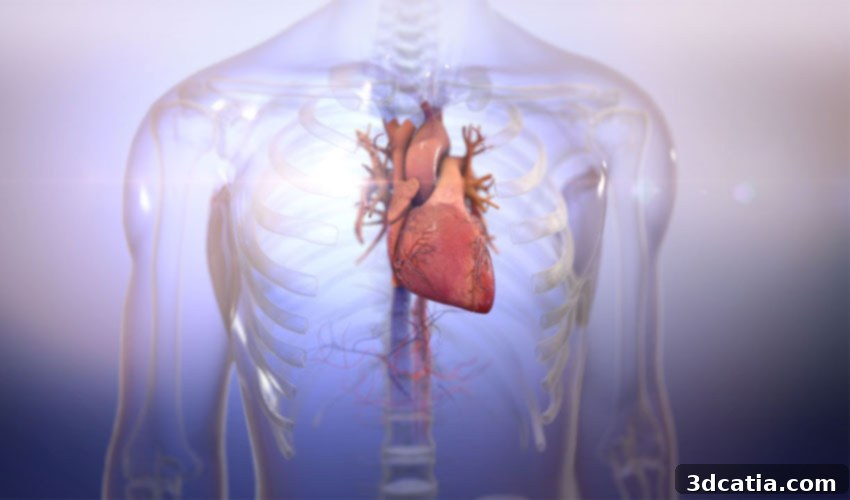
BIOLIFE4D’s Groundbreaking Achievement: Successfully Bio-Printing 3D Human Heart Tissue and Personalized Cardiac Patches
In a monumental stride for regenerative medicine, BIOLIFE4D, a Chicago-based company at the forefront of bio-printing and advanced tissue engineering, recently announced a significant breakthrough: the successful bio-printing of functional 3D human heart tissue. This achievement marks the first conclusive and public results following the company’s successful $50 million fundraiser last September, signaling a promising future for personalized cardiac care and addressing critical organ shortages.
The potential of bio-printing extends far beyond mere scientific curiosity; it offers a transformative solution for understanding the intricate complexities of vital organs such as the human heart. By creating biologically accurate models and even functional tissues, researchers and medical professionals can gain unprecedented insights into cardiac function, disease progression, and the efficacy of potential treatments. This technology paves the way for more appropriate care strategies, earlier disease prevention, and enhanced medical training. Historically, 3D printing has already revolutionized medical fields by producing highly realistic anatomical models, aiding surgeons in meticulous preparation for complex procedures and improving the overall transplant process. BIOLIFE4D, however, has specifically concentrated its pioneering efforts on the direct creation of living heart tissue, successfully developing a revolutionary cardiac patch designed to integrate with and repair damaged heart muscle.
Microscopic view of heart cells in a supportive hydrogel matrix, the foundational element of bio-printed tissues.
BIOLIFE4D’s Rapid Production: A Game-Changing Cardiac Patch in Days
The recently unveiled 3D bio-printed cardiac patch by BIOLIFE4D represents a significant step forward in personalized regenerative medicine. This innovative patch is not merely a structural component; it is biologically complex, containing several distinct types of cells that are naturally found in the human heart. Crucially, it also incorporates a preliminary vascularization system, a critical feature for ensuring the long-term viability and integration of the tissue within a living organism. Vascularization, the development of blood vessels, is paramount for delivering oxygen and nutrients to the cells and removing waste products, preventing tissue necrosis and facilitating successful graft. This sophisticated patch holds immense promise for patients suffering from acute heart failure, offering a novel approach to restore lost myocardial contractility – the heart’s ability to pump blood effectively – and improve overall cardiac function.
One of the most astonishing aspects of this achievement is the speed with which the process was completed. The entire bio-printing and maturation process for the cardiac patch was accomplished in just a few days, a timeframe significantly faster than what was previously believed possible and far exceeding industry expectations. This rapid turnaround is a critical factor for clinical translation, where timely intervention can be life-saving. While the initial bio-printing is fast, the company projects that they can produce clinically relevant patches on a larger scale within 6 to 8 months, demonstrating their commitment to bringing this technology from the laboratory to patient care.
Dr. Ravi Birla, a leading figure at BIOLIFE4D, emphasized the unprecedented nature of this accomplishment, stating, “The speed at which we bioprinted 3D human cardiac patches, within days, is unheard of within the scientific community. These efforts clearly demonstrate our ability to bioprint human tissue and provide a clear and rapid pathway towards bioprinting human hearts.” This statement underscores not only the technical prowess of the team but also the ambitious vision that drives BIOLIFE4D. The company’s immediate focus now shifts towards an even more complex undertaking: the bio-printing of crucial components such as heart valves and blood vessels. This strategic progression is vital for their ultimate goal of creating a miniature, functional human heart, a stepping stone towards developing full-sized, transplantable organs that closely mimic the physiology and intricate architecture of a real human heart.
The sophisticated BIOLIFE4D bio-printer, capable of precisely depositing living cells to create 3D tissue structures.
The Science of Personalized Organs: BIOLIFE4D’s Bio-Printing Process Explained
BIOLIFE4D’s innovative bio-printing process is meticulously designed to create patient-specific tissues, effectively sidestepping the formidable challenge of immune rejection often associated with traditional organ transplantation. The journey begins with a remarkably simple yet profound step: the collection of blood samples from the patient. This seemingly ordinary sample holds extraordinary potential because every cell in the human body, regardless of its specialized function, contains the complete genetic blueprint – the same number of genes and identical DNA. This fundamental biological principle means that, with the right scientific manipulation, any somatic cell has the inherent potential to be converted into any other cell type.
From Blood Cells to Heart Cells: The iPSC Revolution
The collected blood cells are then subjected to a sophisticated cellular reprogramming technique, transforming them into induced pluripotent stem cells (iPSCs). This groundbreaking technology, for which its discoverers were awarded the Nobel Prize, allows adult cells to be “reprogrammed” back to an embryonic-like state. In this pluripotent state, iPSCs possess the remarkable ability to differentiate into virtually any cell type in the body. For BIOLIFE4D’s cardiac endeavors, these iPSCs are precisely guided to differentiate into cardiomyocytes – the specialized muscle cells responsible for the heart’s rhythmic contractions. This crucial step ensures that the resulting heart tissue is genetically identical to the patient, thereby minimizing or eliminating the risk of immune system rejection, a major hurdle in organ transplantation.
Crafting the Bio-Ink: The Foundation of Living Tissue
Once the cardiomyocytes are successfully cultivated, they are meticulously mixed with a specialized hydrogel. This hydrogel serves as a vital bio-ink, providing a supportive, biocompatible scaffold that not only suspends the cells but also mimics the extracellular matrix of natural tissue. More importantly, this nutrient-rich hydrogel is engineered to keep the cells alive and viable throughout the entire bio-printing process and during the subsequent incubation period. It delivers essential nutrients, facilitates cellular communication, and provides the necessary microenvironment for the cells to thrive and organize into functional tissue.
Induced Pluripotent Stem Cells (iPSCs), the versatile building blocks for personalized bio-printed tissues.
Precision Bio-Printing and Maturation
With the bio-ink prepared, the mixture is loaded into a sophisticated bio-printer. This advanced machine precisely extrudes the cell-laden hydrogel in a layer-by-layer fashion, building the desired 3D cardiac patch structure with remarkable accuracy and control. The bio-printer creates an intricate architecture, positioning cells and the hydrogel matrix to encourage the formation of functional tissue. Following the printing phase, the nascent cardiac patch is transferred to a specialized incubator. This controlled environment simulates physiological conditions, promoting cell growth, differentiation, and the self-organization of the cells into a mature, functional tissue. Over a short period, the cells in the patch begin to communicate, contract, and develop into a living, beating piece of heart tissue, ready for potential therapeutic application.
Transforming Cardiac Care: Addressing Organ Donor Shortages and Revolutionizing Treatment
BIOLIFE4D’s pioneering efforts hold the potential to profoundly disrupt the current paradigm for treating heart disease and other debilitating cardiac defects. The implications are vast, particularly in improving the organ transplantation process. One of the most critical challenges in modern medicine is the chronic and severe shortage of donor organs. Thousands of patients worldwide languish on transplant waiting lists, often for years, and many succumb to their conditions before a suitable organ becomes available. By enabling the creation of patient-specific, bio-printed heart tissue and eventually entire hearts, BIOLIFE4D aims to eliminate the need for traditional donor organs, thereby dramatically expanding access to life-saving treatments and reducing patient mortality associated with waiting lists.
Beyond transplantation, these advancements usher in a new era of personalized medicine. Each bio-printed patch or organ would be derived from the patient’s own cells, ensuring perfect immunological compatibility. This not only eradicates the risk of immune rejection, which requires lifelong immunosuppressive drugs with their associated side effects, but also allows for treatments precisely tailored to an individual’s unique genetic and physiological makeup. This level of personalization could lead to more effective therapies, fewer complications, and significantly improved long-term outcomes for patients with various cardiac ailments, from congenital heart defects to advanced heart failure. The ability to rapidly produce functional heart tissue could also accelerate drug development and testing, providing more accurate in-vitro models than traditional cell cultures or animal studies. Ultimately, BIOLIFE4D’s vision is to offer hope to millions, transforming the prognosis for cardiac patients worldwide and setting a new standard in regenerative medicine.
For more in-depth information about BIOLIFE4D’s innovative work, please visit their official website. You can also gain further insights into their pioneering efforts through the video below:
What are your thoughts on the groundbreaking solutions being developed by BIOLIFE4D? We invite you to share your insights and comments below, or connect with us on our Facebook and Twitter pages! Don’t miss out on the latest news and innovations in 3D printing; sign up for our free weekly Newsletter to get all the updates delivered directly to your inbox!