
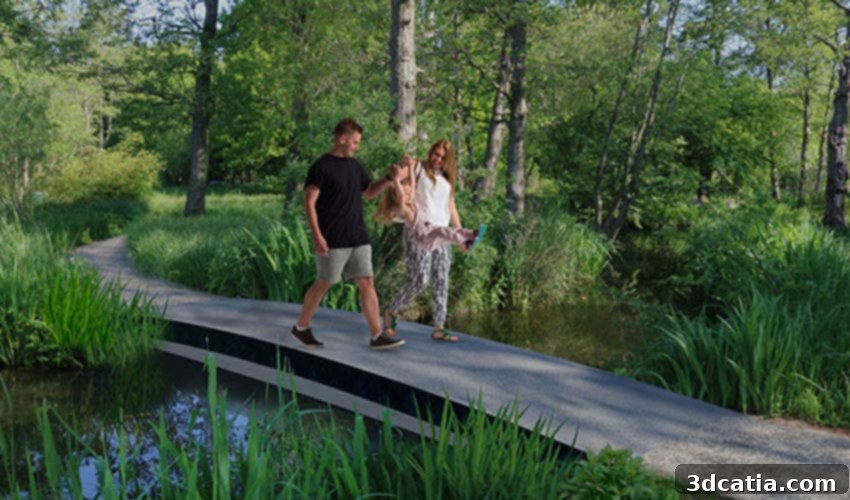
Revolutionizing Infrastructure: Rotterdam Unveils its Sustainable 3D Printed Composite Pedestrian Bridge
Rotterdam, a city renowned for its innovation and commitment to sustainability, is set to make history with the installation of its first 3D printed pedestrian bridge. This groundbreaking project, slated for completion before the end of 2020, marks a significant leap forward in modern infrastructure. The existing wooden footbridge in the picturesque Kralingse Bos will soon be replaced by a state-of-the-art, lightweight structure crafted from fiber-reinforced plastic using advanced additive manufacturing techniques. This new bridge not only promises to be exceptionally durable, boasting a lifespan twice that of conventionally manufactured alternatives, but also championing environmental responsibility by being fully recyclable at the end of its extended service life. While additive manufacturing has previously been explored for bridge construction, notably with projects involving concrete 3D printing, Rotterdam’s initiative stands out by leveraging innovative composite materials, heralding a new era for sustainable urban development.
The journey toward this remarkable achievement began with a pivotal collaboration that was first announced in September. Key industry players, including Royal HaskoningDHV, CEAD, and DSM, joined forces to conceptualize and design a prototype bridge. The initial goal was to develop a lightweight, sustainable structure, primarily utilizing glass-fiber reinforced plastic – a material chosen for its exceptional strength-to-weight ratio and environmental benefits. Today, what began as a prototype has evolved into a full-scale development project, spearheaded by Royal HaskoningDHV, DSM, and the progressive Municipality of Rotterdam. This powerful alliance is driven by a shared vision: to significantly accelerate the development and implementation of a new generation of bridges within the city. Rotterdam, recognized globally as a dynamic, innovative hub, is actively pursuing a circular economy model, making it the perfect proving ground for such forward-thinking infrastructure solutions.
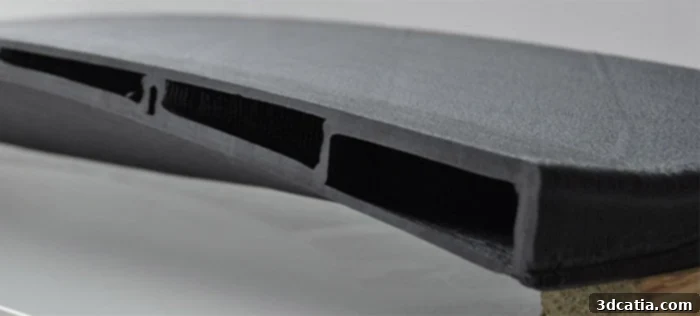
Embracing Sustainability and Circularity in Infrastructure
At the core of this ambitious project is a profound commitment to creating infrastructure that is inherently more sustainable. The primary objective is to deliver a bridge with a significantly extended lifetime expectancy, coupled with substantially lower life cycle costs, especially when compared to traditional steel bridges. The existing wooden deck bridge, a familiar landmark in the native garden of the Kralingse Bos since 1975, is nearing the end of its operational life. This timing presents a unique and opportune moment for its replacement, not just with any bridge, but with a technologically advanced, 3D printed, lightweight copy made from a cutting-edge plastic composite. This transition is more than just an upgrade; it represents a tangible step by the three collaborating partners towards actively promoting and embedding the principles of a circular economy within urban infrastructure. The selection of recyclable composite materials underscores this dedication, ensuring that the bridge’s components can be repurposed or recycled once it eventually reaches the end of its service, thereby minimizing waste and conserving resources.
The vision for this project is shared at the highest levels of Rotterdam’s city management. Mozafar Said, Asset Manager for the City of Rotterdam, eloquently articulated the city’s strategic perspective: “We see the use of composite bridges as a smart solution to replacing our older constructions. With more than 1000 bridges in Rotterdam, we are constantly looking to push the boundaries to develop the next generation of bridges which will be more sustainable and circular with lower maintenance and lifecycle costs.” This statement highlights the proactive approach Rotterdam is taking to modernize its extensive bridge network, emphasizing durability, cost-efficiency, and environmental responsibility as core pillars of future urban development. The choice of 3D printing with composites offers unparalleled advantages in achieving these goals, from rapid prototyping and customized designs to optimized material use and extended service life.
The Power of Composite 3D Printing and Advanced Materials
The technology underpinning this bridge is composite 3D printing, a sophisticated additive manufacturing process that allows for the creation of robust, lightweight structures by integrating reinforcement fibers into a polymer matrix. Unlike conventional manufacturing, where material waste can be significant, 3D printing enables precise material deposition, reducing waste and allowing for complex, optimized geometries that would be challenging or impossible to produce with traditional methods. Fiber-reinforced plastics, such as the glass-fiber reinforced material used in this bridge, offer exceptional mechanical properties, including high tensile strength, stiffness, and fatigue resistance, making them ideal for load-bearing applications like pedestrian bridges. Furthermore, their resistance to corrosion, unlike steel, significantly reduces maintenance requirements and extends the bridge’s lifespan, contributing directly to lower overall lifecycle costs.
The collaborative expertise brought by each partner is crucial. Royal HaskoningDHV, a leading engineering and consultancy firm, brings extensive experience in civil engineering and bridge design, ensuring structural integrity and safety. DSM, a global science-based company, is a powerhouse in advanced materials, providing the innovative plastic composites that make this project possible. CEAD specializes in large-scale composite 3D printing technology, providing the machinery and know-how to fabricate such a substantial structure. The Municipality of Rotterdam provides the urban context, the need, and the progressive policy framework to enable such an innovative project. This synergy of design, material science, and manufacturing technology creates a formidable team capable of pushing the boundaries of what is achievable in modern infrastructure.
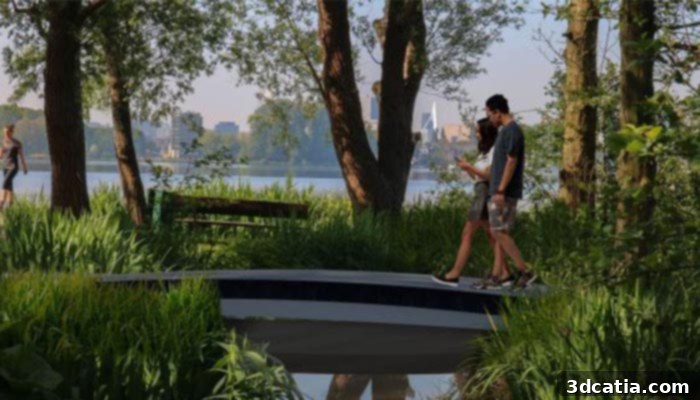
Smart Features and Future-Proofing Urban Infrastructure
Looking beyond its revolutionary construction method and sustainable materials, the companies involved have also revealed exciting plans for integrating smart features into the 3D printed bridge. These enhancements include the strategic placement of sensors throughout the structure. These sensors will serve a crucial role in continuously monitoring various parameters, such as the bridge’s state of maintenance, its structural safety, and its overall lifespan. This real-time data collection will enable a proactive and highly efficient approach to asset management, allowing city officials to identify potential issues before they escalate, optimize maintenance schedules, and gain invaluable insights into the bridge’s performance under various conditions. This concept of a ‘smart bridge’ moves beyond static infrastructure, creating a dynamic, responsive asset that can communicate its needs and provide data for future design improvements. This will not only enhance public safety but also ensure maximum operational efficiency throughout the bridge’s extended service life.
Maurice Kardas, Business Development Manager at Royal HaskoningDHV, succinctly captured the essence of this pioneering endeavor: “This is a step change which signifies a collective effort to bring innovation from idea to realization and ushers in a new era of sustainable design and bridge functionality.” His words underscore the transformative nature of this project, highlighting its potential to set new benchmarks for civil engineering practices globally. It’s a testament to what can be achieved when collaboration, cutting-edge technology, and a clear vision for a sustainable future converge. This bridge is not merely a replacement structure; it is a living laboratory and a beacon for the future of urban infrastructure, showcasing how advanced manufacturing can contribute to more resilient, environmentally friendly, and smarter cities. You can find more information about this initiative and other city projects HERE.
The implications of Rotterdam’s 3D printed bridge extend far beyond the Kralingse Bos. It demonstrates the tangible benefits of additive manufacturing for large-scale construction projects, challenging traditional building paradigms and paving the way for wider adoption of these technologies. From reducing construction timelines and costs to offering unprecedented design freedom and fostering a circular economy, the advantages are multifold. This project serves as a powerful case study for urban planners, engineers, and policymakers worldwide, illustrating how embracing innovation can lead to more sustainable, efficient, and future-proof cities. As global populations continue to grow and urban centers expand, the demand for innovative and sustainable infrastructure solutions will only intensify. Rotterdam’s pioneering spirit in this domain positions it as a leader in shaping the urban landscapes of tomorrow.
What are your thoughts on this revolutionary 3D printed bridge? Do you envision such innovative structures becoming a common sight in your own city? We invite you to share your perspectives and comments below, or engage with us on our Facebook and Twitter pages! To stay informed about the latest advancements, research, and entrepreneurial ventures in the dynamic world of 3D printing, remember to sign up for our free weekly Newsletter, delivered directly to your inbox!