
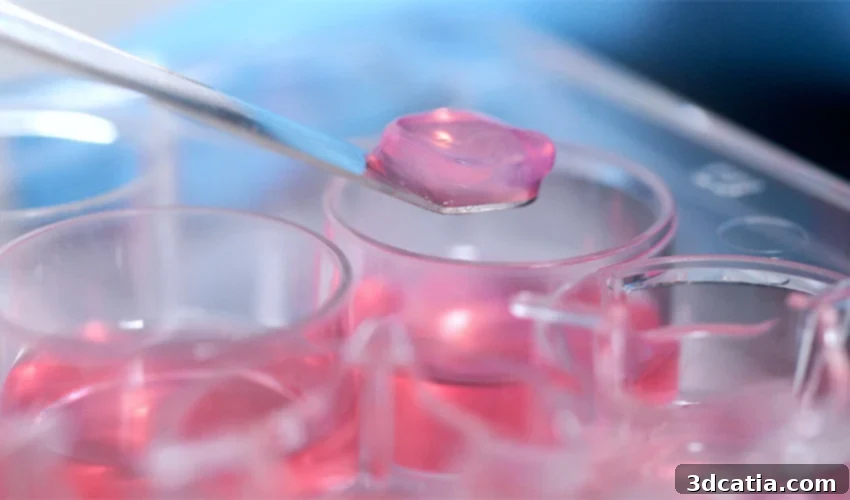
Biogelx: Pioneering Synthetic Bioinks for Next-Generation 3D Bioprinting and Drug Development
Biogelx, a dynamic spin-out company from the prestigious University of Strathclyde in Glasgow, stands at the forefront of innovation in the burgeoning field of biotechnology. The company is dedicated to the sophisticated development and precision production of advanced synthetic bioinks, critical components for both 3D cell cultures and groundbreaking bioprinting applications. While public discourse and media attention often gravitate towards the ambitious long-term vision of creating fully functional human organs through bioprinting, it’s crucial to acknowledge the extensive research and technological milestones that must be achieved before such a monumental goal becomes a reality. This understanding underpins Biogelx’s strategic focus on addressing the more immediate, yet equally vital, short and medium-term bioprinting objectives and opportunities. The startup is keenly committed to enhancing its synthetic bioink portfolio, with a significant emphasis on accelerating drug development. By improving testing processes and simultaneously reducing associated costs, Biogelx aims to make a tangible impact on pharmaceutical research. We recently had the privilege of interviewing Mitch Scanlan, the Managing Director of Biogelx, to delve deeper into the company’s ambitious vision, its market strategies, and the innovative solutions it offers to the scientific community.
3DN: Could you introduce yourself and elaborate on Biogelx’s connection to 3D bioprinting?

Mitch Scalan
Biogelx emerged from the University of Strathclyde with a clear mission: to pioneer the development of highly tunable synthetic materials specifically designed for advanced 3D cell culture and 3D bioprinting applications. In its foundational years, the company concentrated on creating synthetic peptide hydrogels for 3D cell culture. These materials quickly garnered significant market recognition due to their unparalleled chemical and physical tunability. This unique property allows these scaffolds to precisely mimic the complex characteristics of native biological tissues, thereby providing cells with a realistic and interactive 3D environment crucial for accurate research. A significant advantage of these synthetic hydrogels, compared to their natural counterparts, is their freedom from batch-to-batch variation. This ensures an exceptionally versatile and reproducible platform for a wide array of 3D cell culture applications, directly addressing a common pain point in biological research.
As the 3D cell culture market matured, we observed the parallel emergence of a distinct and rapidly growing demand for 3D bioprinting solutions, particularly where high throughput and increased precision were paramount. Given Biogelx’s established expertise and product range supporting 3D cell culture, it was a natural progression for us to explore the immense potential of our core synthetic peptide hydrogel technology as a superior synthetic bioink for advanced 3D bioprinting applications. Following an intensive 18-month development program, generously supported by a SMART program grant from Scottish Enterprise, we successfully engineered a novel range of synthetic bioinks. These innovative products are now being commercialized under the distinctive product family name, Biogelx™-INK, marking a significant milestone in our journey to revolutionize cellular research and drug discovery.
3DN: Could you tell us more about your new Biogelx™-INK product range? What sets it apart in the market?
The BiogelxTM-INK product line has been meticulously engineered to offer unparalleled versatility, catering to a diverse spectrum of printing applications. The primary differentiator for these bioinks lies in their unique blend of superior properties, which collectively address many of the limitations traditionally associated with bioprinting. A key advantage is their ability to be printed with exceptional 3D fidelity, meaning they can accurately replicate complex geometries and intricate structures without the common requirement for support or sacrificial materials. This significantly simplifies the printing process and reduces post-processing steps.
Furthermore, the Biogelx™-INKs exhibit remarkable independence from external factors often crucial for other bioinks. They print consistently, irrespective of temperature fluctuations, pH levels, the need for UV curing, or the addition of reactive crosslinking reagents. This liberation from strict environmental controls provides researchers with immense flexibility and ease of use. The innovative gelation mechanism is another distinguishing feature: gelation is precisely triggered by the addition of standard cell culture media containing physiological levels of calcium. This elegant control mechanism ensures that researchers have complete command over the printing and gelling process, allowing for on-demand solidification and enhanced experimental reproducibility.
Being synthetic in nature is a fundamental aspect of Biogelx™-INKs. This characteristic, combined with stringent quality control protocols enforced throughout production, guarantees exceptional batch-to-batch reproducibility. Such consistency is absolutely vital for reliable bioprinting results, especially in sensitive research and drug development applications where variability can compromise data integrity. With Biogelx™-INK technology, we provide a convenient and robust solution that effectively overcomes prevalent printing challenges, empowering scientists to focus their invaluable time and resources on their core bioprinting research applications, rather than troubleshooting material inconsistencies.
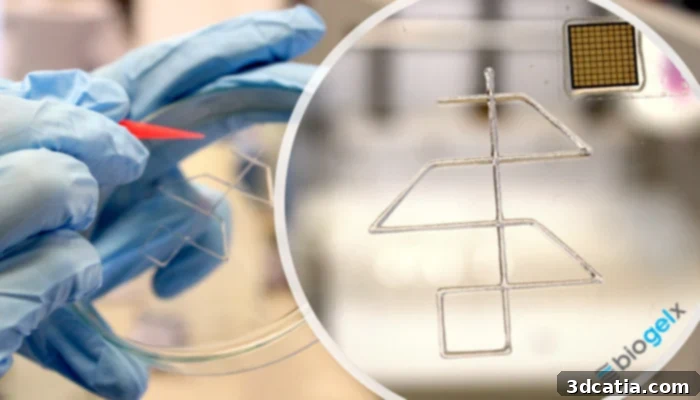
Photo credits: Biogelx
3DN: For which specific applications are your Biogelx™-INK products particularly suitable?
The versatility of Biogelx™-INK products is one of their most compelling attributes, as their mechanical and chemical properties can be readily adapted to suit a wide array of specific applications. This adaptability, combined with their excellent printability and proven cell viability, positions them as a leading choice for various research needs. The current product range includes a standard formulation, Biogelx™-INK-S, alongside two advanced formulations that are functionalized with biomimetic sequences. These sequences are designed to mimic key extracellular proteins such as fibronectin (featuring the RGD sequence) and collagen (incorporating the GFOGER sequence). By integrating these biomimetic elements, the bioinks can better replicate the natural cellular microenvironment, promoting more biologically relevant cellular responses.
Biogelx™-INK-S has undergone rigorous testing and has been successfully validated with a broad spectrum of widely used cell lines, including HepG2, A549, HCT116, HCT119, human bone marrow MSCs, MCF-7, and 3T3 Fibroblasts. This extensive compatibility demonstrates its broad applicability across various research disciplines. Furthermore, through a strategic combination of precise chemical functionalization and fine-tuned physical tunability, these products can be meticulously optimized to closely mimic the diverse characteristics of an extensive range of tissues and fulfill the requirements of complex 3D cell culture applications. This intrinsic flexibility opens up immense potential, particularly in the critical area of drug development for high-throughput screening. In the long term, these bioinks are poised to play a transformative role in regenerative medicine and advanced tissue engineering applications, paving the way for groundbreaking medical advancements. While our primary focus is currently on supporting cutting-edge research applications, we firmly believe that future clinical applications will unlock significant market growth opportunities and ultimately lead to profound impacts on patient care.
3DN: Is your bioink compatible with all 3D bioprinters currently on the market?
Initially, Biogelx™-INKs were specifically developed and optimized for use in extrusion-based printing techniques. This strategic decision was based on the fact that extrusion bioprinting currently accounts for over 80% of the entire 3D bioprinting market, making it the most prevalent and accessible technology for researchers. The widespread adoption of extrusion bioprinters ensures that a significant portion of the scientific community can readily integrate our bioinks into their existing workflows.
However, a core strength of Biogelx materials lies in their inherent versatility. Their fundamental chemical and physical properties allow for significant customization and tuning to suit different applications and, importantly, different printing technologies. This means that while extrusion printing was the starting point, these materials are not limited to it. We are actively engaged in collaborative efforts with various research groups who are rigorously evaluating our materials with other cutting-edge 3D bioprinting technologies. This includes exploring their potential for inkjet printing, which offers distinct advantages for specific applications, as well as other emerging bioprinting modalities. This ongoing research and development demonstrate our commitment to ensuring broad compatibility and continuously expanding the utility of Biogelx™-INKs across the evolving landscape of 3D bioprinting technologies.
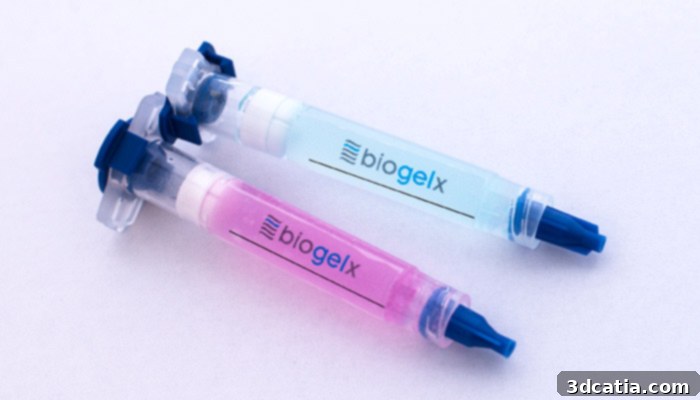
The Biogelx inks were developed in order to be extruded | Credits: Biogelx
3DN: What was the biggest challenge you encountered during the development of your Biogelx™-INK products?
Throughout our comprehensive market research, a consistent demand emerged from the scientific community: researchers were actively seeking novel bioink biomaterials that could deliver a delicate and complex balance of properties. Specifically, they desired the exceptional biocompatibility typically associated with natural materials like collagen, coupled with the superior printability commonly found in materials such as alginate. Crucially, they also required the rigorous reproducibility and enhanced safety profile inherent in non-animal derived, chemically defined synthetic materials. Reconciling and effectively balancing these often-conflicting properties into our new synthetic bioinks presented, without a doubt, our most significant challenge during the development phase.
Fortunately, the fundamental design of our materials proved to be incredibly versatile. Through strategic biochemical and mechanical modifications, we found we could precisely adapt the core material to meet the stringent demands of a wide range of applications, successfully navigating these challenges. A particular triumph was our ability to maintain the crucial nanofibrous network, a hallmark of our original hydrogel product line, within the printable bioink formulations. This preservation of the nanofibrous structure is critical because it provides a highly biomimetic environment that actively supports robust cell growth and proliferation within complex 3D bioprinted structures. Overcoming this balancing act allowed us to create bioinks that offer a truly comprehensive solution, merging the best attributes of different material classes into one highly functional and reproducible platform.
3DN: What are Biogelx’s future projects and strategic directions?
This is an incredibly exciting and dynamic period for Biogelx. Beyond the crucial ongoing efforts in scaling up production and accelerating the commercialization of both our 3D cell culture and bioink products, we are proactively seeking to forge strategic collaborations. We are actively engaging with both academic institutions and industrial partners to collaboratively develop future applications, recognizing that this rapidly evolving technological area requires collective innovation and expertise. The pace of advancement in bioprinting is staggering, and staying at the cutting edge necessitates a collaborative approach.
Furthermore, we are strategically expanding our core capabilities. While our foundation is rooted in chemistry, we are diligently building out our cell biology expertise. This expansion is pivotal as it will enable us to offer specialized screening services to researchers. These services will allow scientists to quickly and efficiently identify optimal bioink formulations tailored for a myriad of different cell applications, streamlining their experimental processes and accelerating discovery. Our commitment also extends to adapting our innovative materials to support the next generation of bioprinting technologies and, critically, to facilitate their translation into real-world clinical applications. With such ambitious goals and the immense potential of our technology, we foresee no shortage of opportunities to drive future innovation, foster significant growth, and ultimately make a profound impact on healthcare and scientific research.
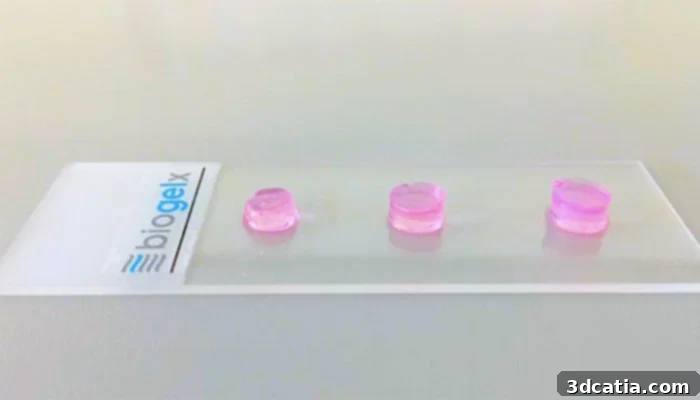
Photo credits: Biogelx
3DN: How do you envision the future of bioprinting, and what role will Biogelx play in this evolving market?
We observe immense potential and transformative power within the bioprinting market, and we are continually monitoring the industry’s trajectory with a keen eye. However, for Biogelx, it is strategically imperative to maintain a sharp focus on the short- to medium-term applications within bioprinting. These are the applications that offer tangible commercial success and enable us to generate immediate impact and value for the scientific community.
While there is undeniable fascination and significant media attention surrounding the eventual printing of transplantable human organs, it is a complex endeavor that will undeniably require many more years of intensive research and development to achieve. While Biogelx is enthusiastic about contributing to this monumental long-term journey, our immediate strategic focus is directed towards more achievable and impactful opportunities within 3D bioprinting and bioinks. This includes, but is not limited to, the development of more accurate and physiologically relevant disease models and advanced cell-based assays. These are crucial tools for the efficient screening and rigorous testing of new drug candidates, directly addressing pressing needs in the pharmaceutical industry.
The pharmaceutical industry faces a massive and urgent need to develop superior, more physiologically relevant 3D models. These advanced models are essential for testing and screening drugs more effectively during the early stages of development. 3D bioprinting, powered by innovative synthetic bioinks, can play a pivotal and transformative role in delivering these solutions. The adoption of such technologies promises a multitude of benefits: it can significantly reduce the reliance on animal testing, minimize the incidence of costly drug failures in late-stage trials, and ultimately lead to a substantial reduction in the overall cost of drug development. If pharmaceutical organizations can identify ineffective or potentially harmful drug candidates much earlier in the discovery process, they can reallocate valuable resources to more promising drug candidates. This paradigm shift will have a profound economic impact by drastically reducing the financial burden caused by late-stage clinical trial failures, which currently represent a major hurdle in bringing new therapies to market.
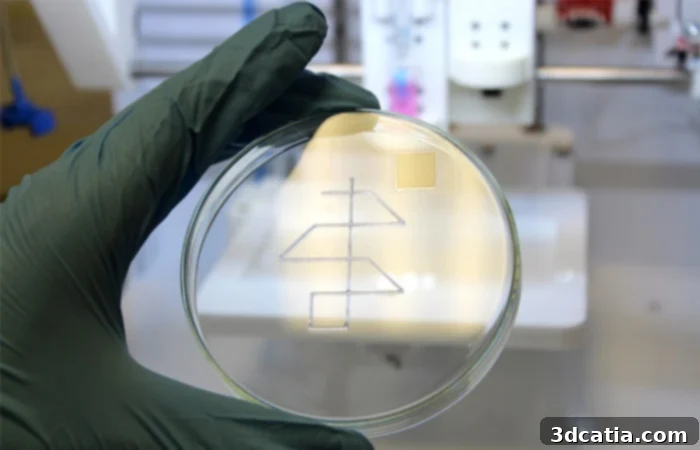
Photo credits: Biogelx
When it comes to the rigorous demands of drug development, and particularly for sophisticated bioprinting applications, the twin pillars of reproducibility and reliability are not merely beneficial, but absolutely vital. At Biogelx, we firmly believe that the future of advanced biomedical research and pharmaceutical development is undeniably synthetic. To effectively balance the critical requirements of printability with superior biocompatibility, in the consistent and dependable manner required for such sensitive applications, chemically-defined bioink materials that seamlessly incorporate biomimetic functionality represent the optimal and most promising solution. Our synthetic bioinks are designed precisely to meet these exacting standards, setting a new benchmark for consistency and performance in the bioprinting landscape.
You can find more detailed information on Biogelx’s innovative products and research by visiting their official website HERE.
We invite your thoughts! What are your impressions of Biogelx’s groundbreaking activities in the field of synthetic bioinks and 3D bioprinting? Share your insights in a comment below or join the conversation on our Facebook and Twitter pages! And for all the latest news and innovations in 3D printing, don’t forget to sign up for our free weekly Newsletter, delivered straight to your inbox!