
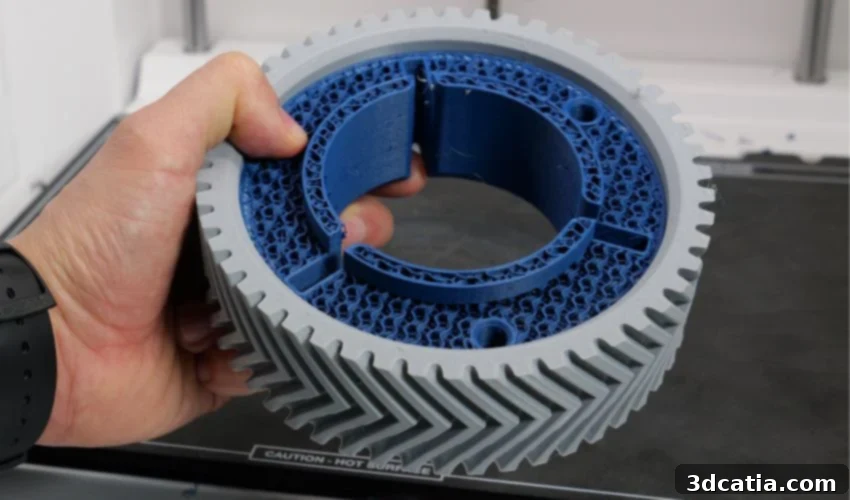
Unlock the Potential of Multi-Material 3D Printing: A Comprehensive Guide
As 3D printing technology continues its evolution, multi-material printing emerges as a pivotal advancement. Once considered a specialized capability, it’s rapidly transforming into a practical asset for engineers, designers, and manufacturers. The appeal lies in its ability to construct more functional parts in a streamlined process. Several prominent additive manufacturing technologies, including fused deposition modeling (FDM), stereolithography (SLA), and material jetting, are now supporting multi-material printing, broadening its accessibility across diverse industries. By enabling the combination of multiple materials within a single build, it optimizes production, reduces reliance on assembly, and fosters more integrated designs. This article explores the reasons why multi-material printing is poised to redefine the future of additive manufacturing.
The Expanding Landscape of Multi-Material 3D Printers
The growing popularity of multi-material printing is evident in the increasing availability of new printers specifically designed for this purpose. In the desktop segment, innovative machines like Bambu Lab’s new H2C are capable of printing with up to seven different materials simultaneously, while minimizing material waste. Prusa has also entered the market with the INDX, an eight-material multi-tool upgrade for the Prusa CORE One. This system boasts zero purge waste and faster tool changes, enhancing efficiency and reducing material costs.
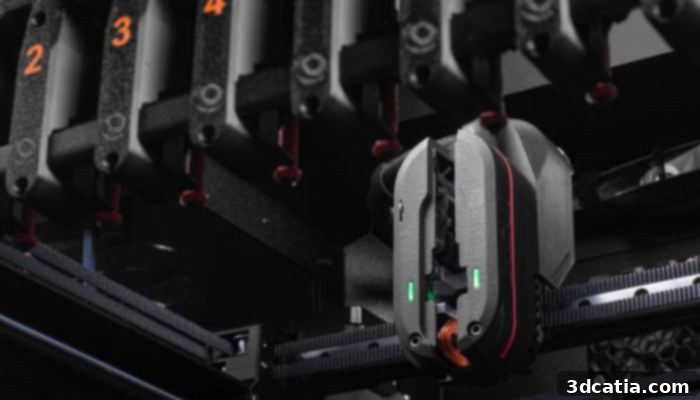
Prusa and Bondtech collaborated to develop INDX, a multi-material printing system that leverages a tool-changing approach featuring a single active “Smart Head” and multiple passive toolheads. (Photo Credit: Prusa)
The industrial sector is experiencing similar advancements. Manufacturers like OMNI3D and Rapid Fusion are now offering large-format multi-material extrusion solutions specifically tailored for production environments. Beyond FDM, companies such as Stratasys have a long history of supporting multi-material workflows through material jetting. Additionally, Aerosint, now a part of Schaeffler, has demonstrated multi-metal laser powder bed fusion and binder jetting utilizing its unique selective powder deposition technology. These collective developments demonstrate the increasing integration of multi-material capabilities into mainstream manufacturing practices.
Enhanced Design Capabilities for Multi-Material 3D Printing
As multi-material 3D printing hardware progresses, software tools are simultaneously evolving to provide designers with greater control over geometry and material distribution. Traditional CAD software is being enhanced with systems that support functionally graded materials. Tools like GraMMaCAD, for example, allow users to incorporate graded material distributions directly into their CAD models, defining the precise material transition zones. This allows designers to meticulously adjust the location of stiffness, flexibility, or conductivity within a part. Furthermore, OpenVCAD, an open-source, code-based tool, enables the seamless merging of two materials.
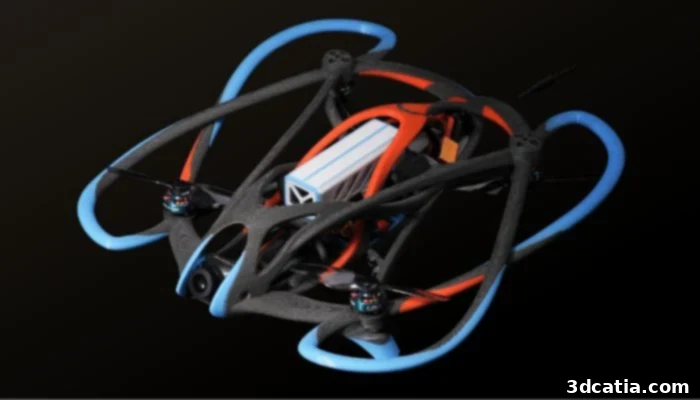
Aero Mobius Drone Frame printed on a Bambu H2C (Photo Credit: Bambu Lab)
The Power of Combining Distinct Material Properties
One of the most compelling benefits of multi-material 3D printing is the ability to integrate different material characteristics into a single, cohesive part. Instead of manufacturing individual components and assembling them, designers can combine rigid, flexible, transparent, conductive, or high-temperature materials in a single print. Each material can be strategically placed where its specific properties are most advantageous.
This capability facilitates the creation of more functional and efficient designs. A single component can incorporate rigid sections for structural integrity, flexible zones for hinges, transparent elements for inspection windows, conductive pathways for embedded electronics, and heat-resistant regions for areas exposed to friction or high temperatures. By strategically transitioning between these materials, multi-material printing makes it possible to optimize both strength and functionality. Moreover, it opens up new avenues for personalized products, such as shoe insoles with customized cushioning zones.
Streamlining the 3D Printing Process with Multiple Materials
Multi-material 3D printing simplifies the overall workflow by consolidating multiple materials into a single machine. This reduces the complexity of material management and minimizes the safety hazards associated with manually handling and swapping materials. It also eliminates the need for additional hardware or add-ons that are typically required to print with multiple materials simultaneously. Post-processing can also be simplified with the use of dedicated support materials, such as PVA or HIPS, that dissolve cleanly without damaging the part. This reduces cleanup time and allows for more complex geometries than traditional breakaway supports. These advantages lead to a faster and more efficient printing process.
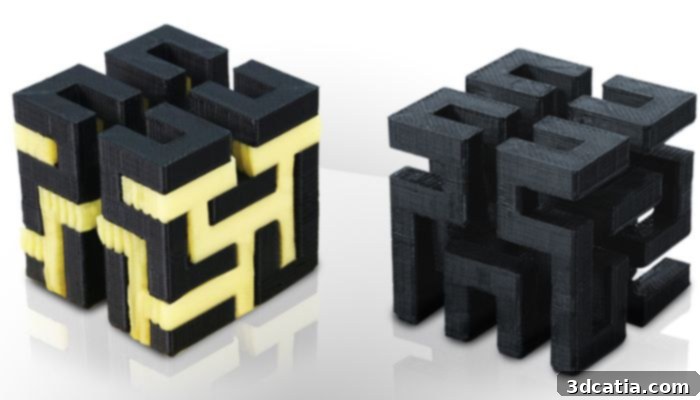
Water-soluble support filament simplifies post-processing (Photo Credit: Airwolf 3D)
Reducing Assembly and Lowering Production Costs
Multi-material 3D printing minimizes the need for assembly by enabling the creation of multiple functional features within a single integrated part. Traditional single-material printing often requires products to be divided into separate components that require additional fabrication, handling, and fastening. These steps increase labor and production costs. By producing rigid, flexible, and specialized regions in a single build, multi-material printing can reduce the need for fasteners, adhesives, and manual assembly. This reduces labor costs and ultimately lowers manufacturing expenses.
Enabling the Production of Realistic Prototypes with Multi-Material Printing
Beyond procedural benefits, multi-material 3D printing enhances the visual appeal and tactile quality of parts, resulting in more realistic prototypes. Designers can create components with multiple colors, textures, and surface finishes in a single build, reducing the need for painting or coating. This allows for prototypes that more closely resemble final products, as well as consumer-facing parts that are visually appealing and ready for use directly from the printer. In the medical sector, this capability has been particularly valuable for anatomical models, where the use of multiple colors, textures, and opacities enhances the model’s clarity and understanding. By integrating aesthetic features directly into the print, manufacturers can streamline production while delivering more polished results and superior functional prototypes.
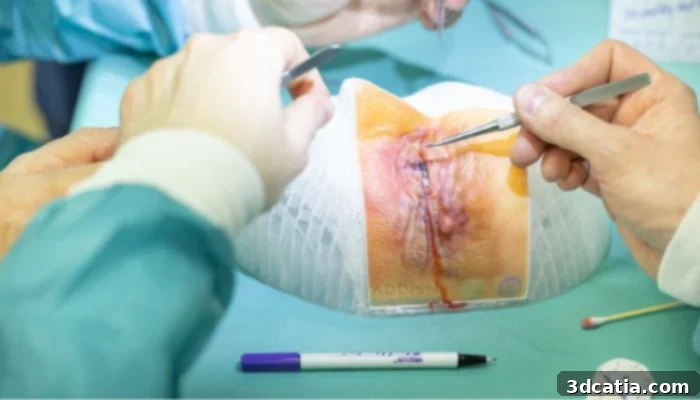
Anatomical models can be used for advanced surgical education. (Photo Credit: Stratasys)
Advanced Printhead and Mixing Technologies
Building on the ability to work with multiple materials, recent advancements in printhead and mixing technologies have improved both precision and reliability. Enhanced nozzles, dynamic mixing chambers, and automated tool-changing systems allow printers to deposit materials with extreme accuracy, smoothly transition between different material types, and reduce errors caused by misalignment or contamination. These innovations make it possible to produce complex, multi-material designs consistently and efficiently.
Broad Applicability Across Industries
Thanks to these advancements, multi-material printing is finding applications across a wide range of industries. From footwear and robotics to medical devices and consumer products, the ability to integrate multiple materials into a single component unlocks new design possibilities that were previously impractical or impossible. Companies can create parts that combine structural strength, flexibility, electronics integration, and aesthetic appeal all in one build, enabling innovative products while reducing development time and costs. This versatility makes multi-material printing a valuable tool not just for prototyping, but for full-scale production in diverse sectors, making it an essential technology for companies looking to innovate and optimize their manufacturing processes. By leveraging the power of combining multiple materials in a single print, businesses can achieve unprecedented levels of design freedom, functionality, and efficiency.
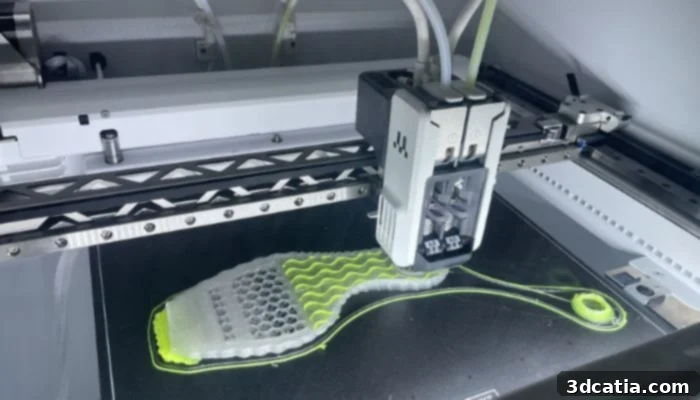
Multi-material printing enables footwear brands like Footwearology to print shoes with variable stiffness and cushioning. (Photo Credit: UltiMaker)
Do you think multi-material 3D printing is the next frontier in manufacturing? Share your thoughts in the comments below or connect with us on LinkedIn or Facebook! Stay up-to-date with the latest 3D printing news by subscribing to our free weekly Newsletter. You can also explore our video content on our YouTube channel.
*Cover Photo Credit: UltiMaker