
Unlocking Innovation: Top 5 3D Printing Breakthroughs Shaping Industries Today
This week, we’re taking a deep dive into the fascinating world of 3D printing and exploring how additive manufacturing (AM) is profoundly shaping our society. From revolutionizing production lines to enabling personalized medical solutions, this transformative technology has seamlessly infiltrated a multitude of sectors. Whether it’s enhancing performance in demanding sports or accelerating patient-specific healthcare, the applications of 3D printing are vast and continually expanding. To help you stay abreast of the latest advancements, we’ve curated a selection of the top five videos showcasing groundbreaking innovations. This collection not only highlights how AM is improving product performance but also reveals its incredible versatility and potential. We hope you’ll enjoy these insights into the future of manufacturing and discover the incredible possibilities that additive manufacturing brings to the forefront of industry and daily life. For more compelling 3D printing content, be sure to visit our Youtube channel.
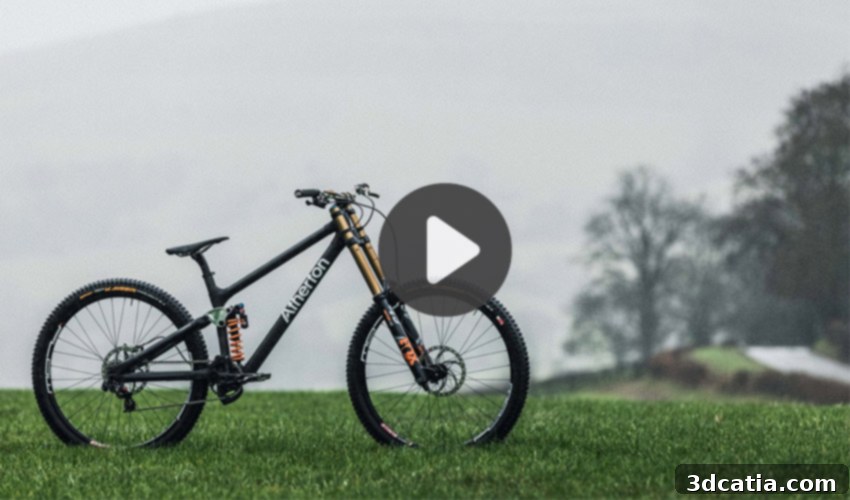
1. Atherton Bikes: Accelerating Performance with Metal Additive Manufacturing
Atherton Bikes, an esteemed manufacturer specializing in high-performance mountain bikes, stands at the forefront of innovation thanks to additive manufacturing. Founded by professional cyclists, the company’s core mission is to design bicycles that offer unparalleled performance, durability, and responsiveness on the most challenging terrains. To achieve this, Atherton recognized the immense potential of 3D printing, particularly for crafting critical frame components. They partnered with Renishaw, a global leader in engineering and scientific technology, to leverage their advanced metal additive manufacturing capabilities.
The collaboration focuses on designing and printing various intricate lugs and terminals for their bike frames directly on Renishaw’s state-of-the-art RenAM 500Q metal 3D printing machine. This process allows Atherton to produce complex geometries that would be impossible or prohibitively expensive with traditional manufacturing methods. The ability to create organic shapes and internal lattice structures significantly reduces weight while maintaining or even increasing strength, critical factors for competitive mountain biking. Furthermore, metal 3D printing empowers Atherton to conduct multiple design iterations with unprecedented speed. What once took months through conventional prototyping can now be accomplished in a matter of weeks, offering remarkable agility and flexibility to their design teams. This rapid iteration cycle means continuous improvement and the ability to fine-tune designs based on rider feedback and performance data, giving Atherton a significant edge in a highly competitive market. Additive manufacturing not only accelerates their product development but also enables a level of customization and performance enhancement previously unimaginable.
2. SmileDirectClub: Scaling Customization with HP Multi Jet Fusion
The American company SmileDirectClub has rapidly emerged as a pioneer in the clear aligner market, democratizing access to orthodontic solutions for millions. Their business model relies heavily on providing custom-fit aligners directly to consumers, necessitating a manufacturing process capable of immense scale, precision, and personalization. To meet the soaring market demand and maintain their position as an industry leader, SmileDirectClub made a strategic investment in HP’s groundbreaking Multi Jet Fusion (MJF) 3D printing technology. This decision has proven transformative for their production capabilities.
Today, SmileDirectClub operates an impressive fleet of 49 HP Multi Jet Fusion machines, making it one of the largest installations of its kind globally. This formidable array of printers allows the company to design and produce an astonishing volume of more than 50,000 custom dental molds per day. Each mold is unique, precisely crafted to the specific dental geometry of an individual patient, enabling the creation of aligners that fit perfectly and effectively guide teeth into their desired positions. The Multi Jet Fusion technology is particularly suited for this application due to its high speed, ability to produce functional parts with excellent surface finish, and cost-effectiveness for mass customization. As explained by SmileDirectClub co-founder Alex Fenkell in the accompanying video, 3D printing has not just optimized their production; it has fundamentally revolutionized their entire manufacturing paradigm. It has enabled them to scale a highly personalized product to a mass market, making orthodontic care more accessible and affordable than ever before.
3. Additive Manufacturing in the Medical Sector: Personalized Prosthetics by Bewegingsvisie
The medical sector is one of the most impactful beneficiaries of 3D printing technology, and companies like the Dutch firm Bewegingsvisie exemplify this transformation. Specializing in the manufacture of prostheses and orthoses, Bewegingsvisie confronts the inherent challenge of creating highly individualized devices that must perfectly conform to a patient’s unique anatomy for optimal comfort, function, and aesthetic appeal. Traditional manufacturing often involves laborious, manual processes and limitations in achieving truly bespoke solutions.
Recognizing these limitations, Bewegingsvisie turned to 3D printing, specifically leveraging solutions from Ultimaker, renowned for its accessible and reliable desktop 3D printers. This strategic shift has enabled the company to design and produce devices that are precisely adapted to the morphology of each patient, whether a child or an adult. By using digital scanning and design tools, followed by 3D printing, they can create prostheses and orthoses that offer an unprecedented level of customization. Patients benefit from a much more comfortable, lightweight, and truly unique solution that integrates seamlessly with their body and reflects their individual needs and preferences. This personalization significantly enhances the quality of life for individuals requiring these devices, improving mobility and reducing discomfort. Bewegingsvisie thus joins a growing number of innovative players in the medical field who are harnessing 3D printing to create custom-made prostheses, orthoses, and other medical devices, marking a significant leap forward in patient-centered care and demonstrating the profound human impact of additive manufacturing.
4. INDUSTRY From Needs to Solutions 2019: A Glimpse into the Future of 3D Technologies
Trade shows are pivotal hubs for innovation, networking, and showcasing the future of various industries, and INDUSTRY From Needs to Solutions in Barcelona is a prime example within the additive manufacturing landscape. The 2019 edition of this influential event brought together a diverse array of participants from across the globe, including leading manufacturers, material scientists, software developers, and end-users, all focused on the advancements and applications of 3D technologies.
The 3Dnatives team was on-site, fully immersed in the bustling atmosphere, engaging with attendees and exhibitors alike. This provided a unique opportunity to gather insights directly from the experts, discussing everything from emerging trends in additive manufacturing to specific challenges and innovative solutions being developed. Beyond the technical discussions, the event offered unique experiences, such as a memorable taste test of 3D printed food. This intriguing demonstration highlighted the boundless potential of additive manufacturing to venture into novel territories, even culinary ones, hinting at a future where customized nutrition and complex food designs could become commonplace. The energy at INDUSTRY From Needs to Solutions underscored the dynamic growth and widespread adoption of 3D technologies, illustrating how various sectors are embracing AM to address their specific needs. Join us, as we take you on a captivating tour through the vibrant aisles of this key trade show, offering a comprehensive look at the cutting-edge innovations that continue to define the future of 3D printing and digital manufacturing.
5. Kanthal: Pioneering Metal Powders for Advanced 3D Printing
The success of metal 3D printing is fundamentally reliant on the quality and properties of the metal powders used. Kanthal, a company with over 30 years of specialized expertise in powder metallurgy, recognized this critical nexus. With the rapid acceleration of additive manufacturing technologies, Kanthal strategically seized the opportunity to expand its operations, establishing a dedicated division focused on developing and supplying advanced materials for this innovative field. This initiative led to the creation of Kanthal Additive Manufacturing, a testament to their commitment to driving the evolution of metal AM.
Kanthal Additive Manufacturing is primarily focused on the production of high-performance metal powders, specifically working on complex alloys based on iron, chromium, and aluminium. These elements are carefully combined and processed to create powders with exceptional mechanical, thermal, and chemical properties. For industrialists involved in critical applications such as aerospace, automotive, energy, and toolmaking, the availability of such specialized materials is paramount. These advanced powders enable the creation of 3D printed components that exhibit superior strength, excellent corrosion resistance, high-temperature stability, and other bespoke characteristics required for demanding operational environments. Kanthal’s dedication to material science ensures that designers and engineers have access to the highest quality feedstock, thereby unlocking new possibilities for complex part design, functional integration, and overall performance improvement in additive manufacturing. Their work underscores the foundational importance of materials development in pushing the boundaries of what 3D printing can achieve across various high-tech industries.
What were your thoughts on this week’s compelling selection of top 3D printing videos? We believe these examples clearly demonstrate the immense potential and rapid progression of additive manufacturing across diverse industries. From enhancing athletic performance to enabling mass-customized healthcare and pioneering new material innovations, 3D printing is continuously pushing the boundaries of what’s possible. Share your feedback, insights, or any other incredible 3D printing applications you’ve encountered in the comments section below, or connect with us on our Facebook and Twitter pages! Don’t miss out on staying informed about all the exciting developments shaping the future of digital manufacturing. Be sure to sign up for our free weekly Newsletter to receive the latest news, trends, and innovations in the 3D industry delivered straight to your inbox every week!