
3D Printing Startups of the Year: Vote for the Most Innovative Company
Each month, 3Dnatives highlights a startup that is pushing the boundaries of 3D printing. As 2025 draws to a close, it’s time to choose which of these innovators will be crowned our official Startup of the Year. And the decision is in your hands: Cast your vote before December 31st using the poll on the right side of your screen.
To help you make your choice, we’ve compiled a recap of every featured company. These startups are pioneering new printing techniques, developing groundbreaking software, and creating devices that make a real difference in people’s lives. Each has achieved something remarkable. Discover them below and learn about their contributions to the ever-evolving landscape of additive manufacturing. The future of 3D printing is being shaped by these innovative companies, and we’re excited to share their stories with you.
SelectAM: AI-Powered Platform for Identifying 3D Printable Parts
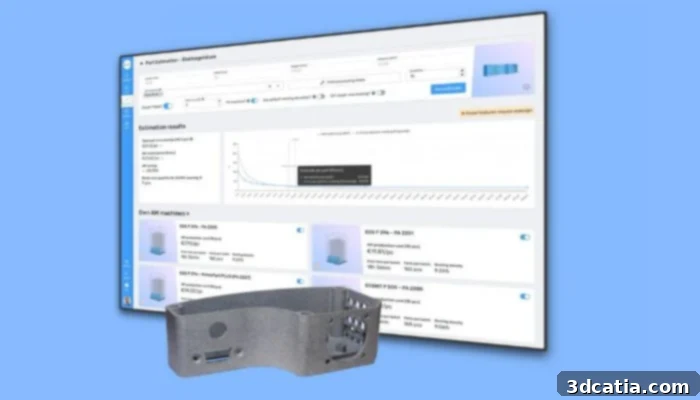
SelectAM, a Finnish startup, has developed a fully automated, AI-based platform that identifies the most suitable parts for 3D printing. By analyzing provided data, SelectAM estimates costs, production time, and potential savings compared to traditional manufacturing methods. The company’s mission is to empower businesses to make informed decisions about which parts to 3D print, ensuring they choose the right parts for the right reasons.
Essentially, SelectAM offers an “automated 3D printing expert” that guides companies through the process of identifying optimal candidates for additive manufacturing. Their platform is technology-agnostic, enabling them to integrate any type of 3D printing technology into the estimation profile. This flexibility allows users to assess the feasibility and cost-effectiveness of various 3D printing processes for their specific parts, ultimately optimizing their manufacturing strategies.
Read our interview with SelectAM HERE.
(Photo Credits: SelectAM)
SAMGEN: Predictive Maintenance Software for 3D Printers
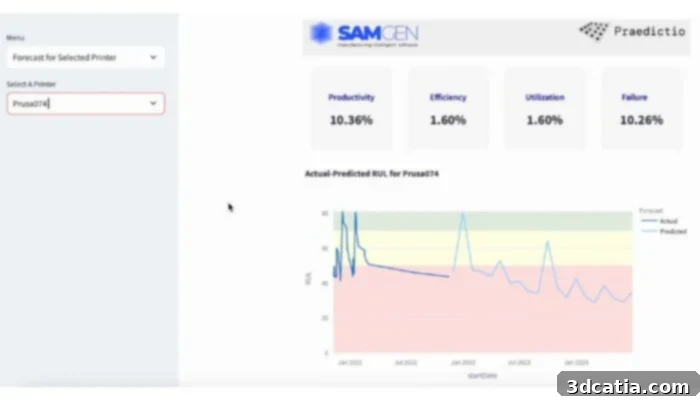
SAMGEN, a Berlin-based startup, has developed PRAEDICTIO, a cloud-based software solution that accurately predicts the maintenance needs of 3D printers. Leveraging advanced algorithms, PRAEDICTIO continuously monitors and assesses the wear and tear of critical components, including the heating bed, fans, and sensors.
SAMGEN’s technology transforms traditional, reactive maintenance into a proactive, data-driven approach, empowering customers to maximize their equipment’s efficiency and minimize downtime. By providing Remaining Useful Life (RUL) predictions, users gain valuable insights into the expected lifespan of each printer and its components. This allows them to proactively plan maintenance with their service providers, avoiding costly unplanned downtime and optimizing their overall maintenance costs.
PRAEDICTIO provides real-time insights that empower businesses to optimize their 3D printing operations. Predictive maintenance strategies, driven by accurate data, are essential for maximizing the return on investment in additive manufacturing equipment.
Read our interview with SAMGEN HERE.
(Photo Credits: SAMGEN)
LEAM: Enhancing Layer Density in Large-Format 3D Printing
LEAM, a spin-off from the Technical University of Munich, has created the DEMEX system, an add-on designed to improve the performance of large-format 3D printers. The DEMEX system integrates LED emitters and infrared cameras strategically positioned around the extruder nozzle.
Using the LED emitters, the DEMEX system precisely heats the substrate in a localized manner directly in front of the nozzle, guaranteeing optimal welding of the layers. Furthermore, a closed-loop control system with infrared cameras ensures that the desired target temperature is consistently achieved. This precise control of temperature enables significantly improved layer adhesion and mechanical properties in large-format 3D printed parts.
The result is a dramatic improvement in part strength. Previously, the maximum Z-resistance achievable was limited to 60%. With the DEMEX system, workpieces can now reach 100% of the resistance specified in the material manufacturer’s data sheet – in all directions! This breakthrough unlocks new possibilities for the production of robust and reliable large-scale 3D printed components.
Read our interview with LEAM HERE.
LEAM’s DEMEX system improves the layer density of extra-large 3D printed parts. (Photo Credits: LEAM)
3D Architech: Gel-Based Metal 3D Printing for Micro-Scale Features
3D Architech has pioneered a proprietary gel-based 3D printing technology for metal that achieves micron-scale features as fine as 10 microns. Their innovative process begins with a lithography-based approach to create gel structures with the desired intricate architecture.
These delicate gel structures are then transformed into solid metal or alloy parts through a specialized conversion process. The technology enables the creation of advanced microarchitecture designs with significant cost reductions and high throughput. 3D Architech is currently focusing on applications in the cooling, energy, and manufacturing sectors, where the ability to produce highly detailed metal parts is critical.
With headquarters in both Japan and the United States, 3D Architech is poised to revolutionize the production of micro-scale metal components, opening doors to new innovations in various industries.
Read our interview with 3D Architech HERE.
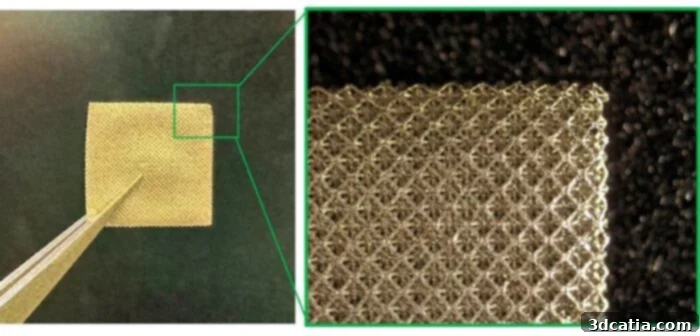
(Photo Credits: 3D Architech)
Addimetal: Making Metal Binder Jetting Accessible and Reliable
Addimetal, a French startup, is dedicated to delivering repeatable and reliable metal binder jetting solutions to its users. The company has developed its own 3D printer, the K2-2, designed to be “plug & play,” simplifying the adoption of metal binder jetting technology.
The K2-2 machine is completely open in terms of materials and binders, making it ideal for both research and industrial environments. Furthermore, the system anticipates and manages the challenges associated with sintering by developing tools that streamline part preparation and monitoring. Addimetal’s Orion software offers advanced slicing capabilities, a user-friendly interface, and production monitoring and control, making metal binder jetting more accessible and approachable for a wider range of users.
By focusing on ease of use and reliability, Addimetal is breaking down the barriers to entry for metal binder jetting, enabling more companies to leverage this powerful additive manufacturing technology.
Read our interview with Addimetal HERE.
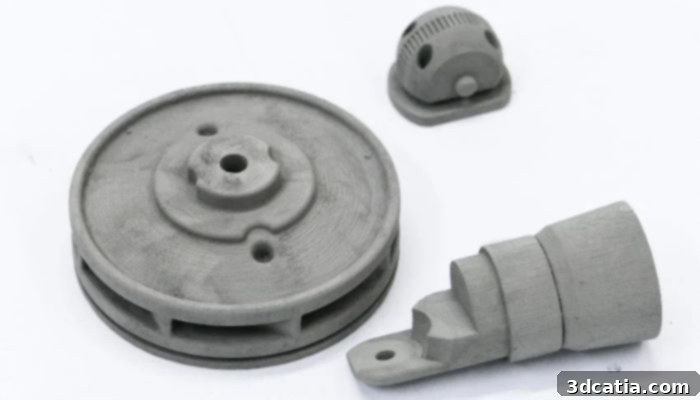
(Photo Credits: Addimetal)
FIDENTIS: Revolutionizing Dentures with Multi-Material 3D Printing
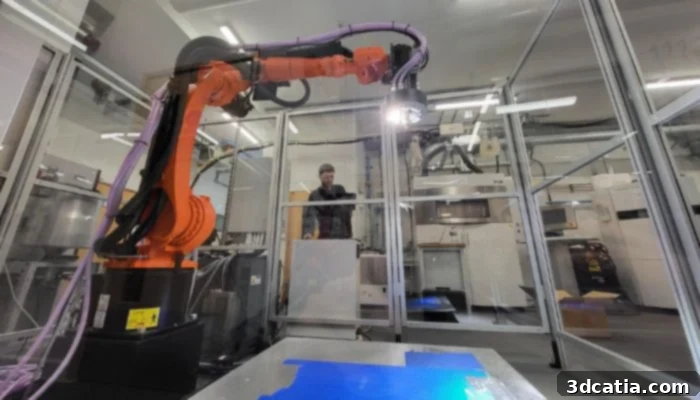
FIDENTIS, a spin-off from the Fraunhofer IGCV institute, has garnered attention for its multi-material 3D printing solution designed for telescopic prostheses. The company’s technology combines laser powder bed fusion (L-PBF) with a robotized system, allowing two or more alloys to be combined in a single component.
Multi-material L-PBF demands extreme precision at every stage of the process. FIDENTIS has developed specialized solutions that structure and stabilize the entire process, ensuring consistent and high-quality results. Their mission is to support dental laboratories in the industrialization of high-quality prostheses, providing them with the tools and technologies needed to produce advanced dental solutions.
FIDENTIS is pushing the boundaries of 3D printing in the dental industry, enabling the creation of more sophisticated and personalized dental prosthetics.
Read our interview with FIDENTIS HERE.
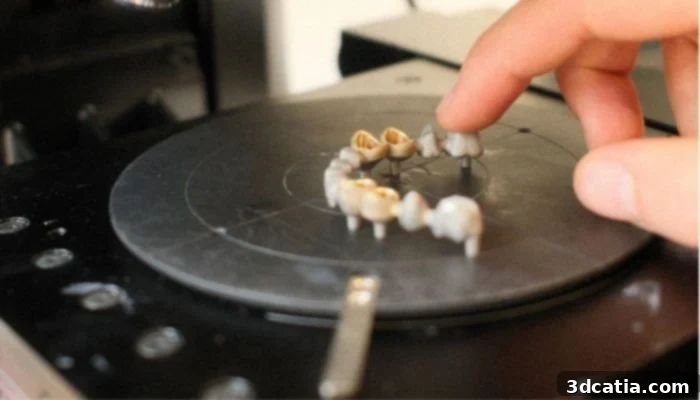
(Photo Credits: FIDENTIS)
S.A.M: 3D Printed Tokens for Enhanced Data Protection
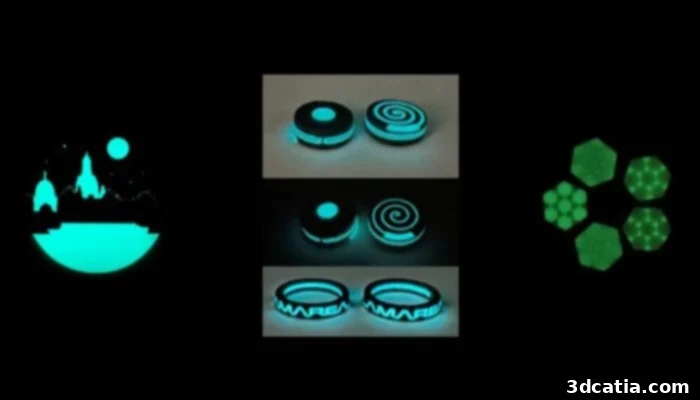
In today’s interconnected world, data security is paramount. S.A.M (Signature & Authentification des Matériaux), a French startup, is addressing this critical need by fighting counterfeiting and protecting sensitive data through 3D printed “tokens.” These physical keys securely store confidential information, such as proof of ownership, serial numbers, or secure access credentials, enabling simple, autonomous, and offline protection.
To print these tokens, users only need a double-headed FDM printer, a spool of S.A.M coding material, a dedicated application for generating G-codes, and a physical 3D token decoder. This innovative approach offers a tangible and secure way to safeguard valuable data, mitigating the risks associated with online vulnerabilities.
S.A.M is providing a unique and practical solution for data protection in an increasingly digital world.
Read our interview with S.A.M. HERE.
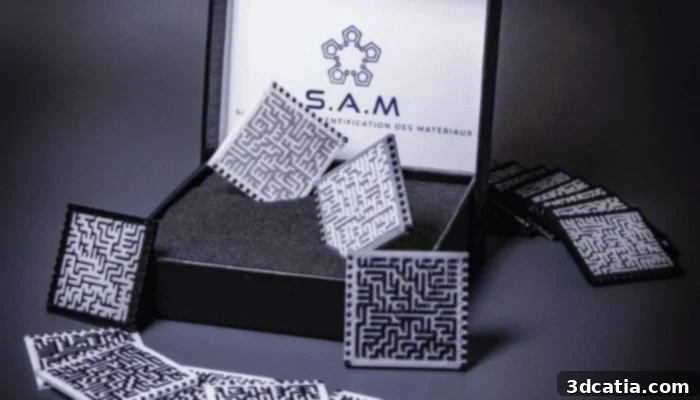
(Photo Credits: S.A.M)
AMAREA Technology: Multi-Material Jetting for Advanced Thermoplastics
AMAREA Technology develops additive manufacturing machines for high-performance materials, including technical ceramics, metals, composites, and polymers. This German startup stands out by combining these diverse materials via its Multi Material Jetting (MMJ) technology.
The MMJ process works by depositing thermoplastic polymer droplets filled with functional materials, such as ceramics, metals, glasses, or composite materials in powder form. The material is locally melted and then deposited as individual droplets via the print heads, immediately fusing together and solidifying. By depositing material drop by drop, materials from different classes can be selectively deposited and combined within complex geometries.
This innovative approach allows for the creation of parts with tailored properties, combining the benefits of multiple materials in a single component. AWAREA technology opens new possibilities for product design and manufacturing.
Read our interview with AMAREA Technology HERE.
(Photo Credits: AMAREA)
Parastruct: Driving Sustainability with Circular Advanced Manufacturing
Based in Austria, Parastruct is committed to making the construction sector more affordable, sustainable, and customized. The company has developed a method called Circular Advanced Manufacturing, enabling the creation of optimized printing materials.
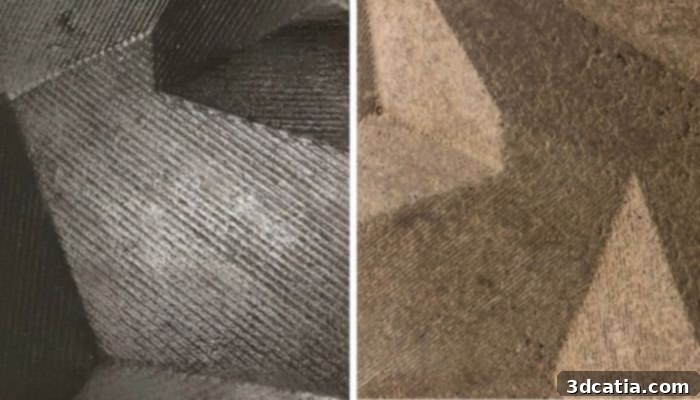
Specifically, Parastruct mixes biogenic waste and minerals with low-carbon binders. These materials are then processed with the powder binding 3D printing method to create construction components. By utilizing waste materials and sustainable binders, Parastruct minimizes environmental impact and reduces the cost of construction materials.
Parastruct is paving the way for a more sustainable and circular approach to construction.
Read our interview with Parastruct HERE.
(Photo Credits: Parastruct)
Augmental: MouthPad^ Device for Accessible Technology
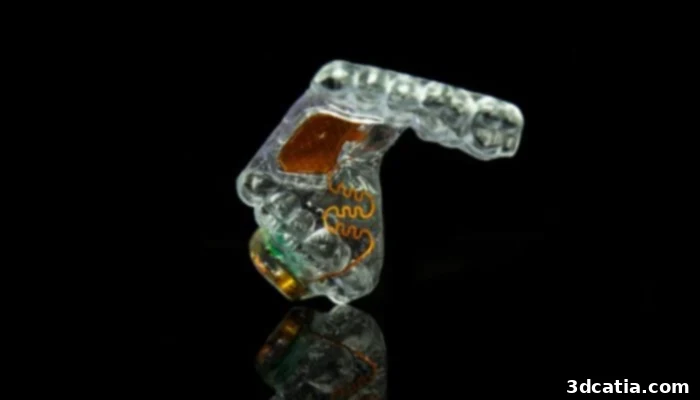
Augmental has developed the MouthPad^, an innovative device designed for individuals with physical disabilities, especially those with limited hand mobility. This touchpad is designed to be placed in the mouth to control a computer, tablet, or phone. The device is 3D printed using SLA technology with dental-grade resin.
The MouthPad^ opens doors to technology access for people with limited mobility. It is currently available for purchase, marking a significant step forward in assistive technology.
Augmental is making technology more inclusive and empowering individuals with disabilities.
Read our interview with Augmental HERE.
(Photo Credits: Augmental)
Gameet: Microdevices for Optimized Gamete Selection and Fertilization
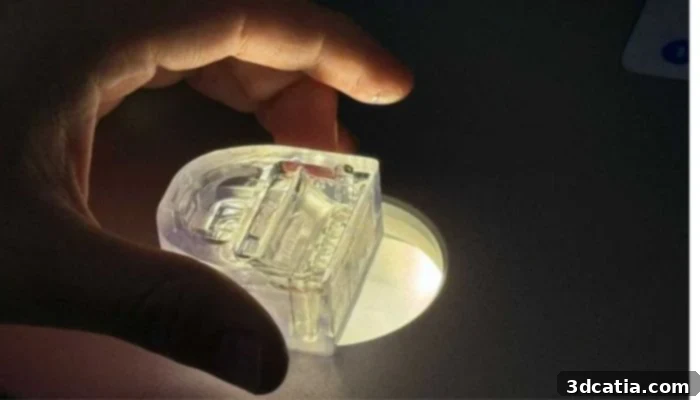
Gameet, an Argentinian startup, has developed a micro device using SLA 3D printing to optimize gamete selection and fertilization. The goal is to streamline current assisted reproduction treatments, which can be lengthy and complex.
Gameet has recently completed the development of its first biocompatible device, which has been successfully tested on cattle. The next step is to move on to clinical trials on patients. This innovative device holds great promise for the medical sector.
Gameet is pioneering new applications of 3D printing in the field of assisted reproduction.
Read our interview with Gameet HERE.
(Photo Credits: Gameet)
AM3L: Porous Metamaterials with Metal 3D Printing
AM3L, a French startup, focuses on the production of porous metamaterials using metal additive manufacturing. The company creates structures with customized, controlled, and verified architecture. AM3L prioritizes controlling the porosity of each produced part rather than its density.
By manipulating the architecture of these materials, AM3L can offer different properties within a single structure. This approach opens opportunities for optimizing performance in various applications.
AM3L is pushing the boundaries of metal 3D printing by developing highly customized porous metamaterials.
Find out how they do it by reading our interview HERE.
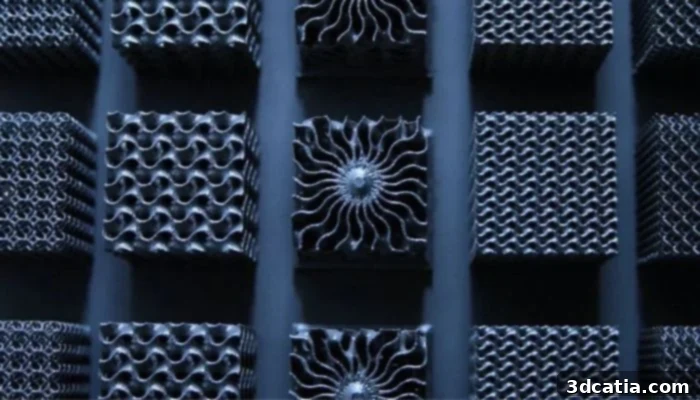
(Photo Credits: AM3L)
Don’t forget to vote for your favorite startup using the poll on the right side of your screen! We want to hear your thoughts about these innovative companies. Share your opinions in the comments below or on our LinkedIn or Facebook pages!
To stay up-to-date with the latest 3D printing news, subscribe to our free weekly Newsletter to get the news delivered directly to your inbox. You can also find all our videos on our YouTube channel.