
Formlabs Form 2 Review: Unveiling Precision and Performance in SLA 3D Printing
The journey of Formlabs began in 2011, born from the innovative minds of MIT students Maxim Lobovsky, Natan Linder, and David Cranor. Their groundbreaking work led to the creation of the first low-cost, compact 3D printer leveraging Stereolithography (SLA) technology. Following significant backing from investors and the remarkable commercial success of their initial offering, the Form 1, the brand continued its rapid evolution, culminating in the release of its next-generation flagship 3D printer: the Form 2.
Priced at approximately €3,958 (around $4,221 USD), the Form 2 positions itself distinctly outside the typical budget range of entry-level personal 3D printers. However, its impressive specifications, including a potential minimum layer thickness of just 25 microns, immediately set it apart, promising exceptional detail and surface finish. This remarkable capability makes it a compelling option for professionals, designers, and enthusiasts who demand unparalleled precision from their additive manufacturing equipment.
At 3Dnatives, our lab had the exclusive opportunity to acquire this advanced machine directly from the American manufacturer. We embarked on a thorough testing process to deliver a comprehensive review. Our primary objectives during this evaluation were to identify and assess the key improvements implemented since the Form 1 and Form 1+ models, and critically evaluate whether its premium price point is justified by its performance, features, and overall user experience. Below, you will find our complete and detailed assessment of the Formlabs Form 2.
Unpacking the Form 2: A Premium Experience
From the moment the Form 2 arrives, the meticulous attention to detail and robust protection evident in its packaging immediately signal the seriousness and quality commitment of Formlabs. Every aspect of the unboxing experience has been carefully considered, ensuring the delicate precision instrument arrives safely and ready for operation. It’s clear that no component of the shipping process was left to chance, providing users with confidence from the very start.
The entire system is thoughtfully organized and distributed across three distinct boxes: one for the Form 2 3D printer itself, another for the resin cartridge(s), and a third dedicated to the essential finishing kit. Despite the printer weighing nearly 30 pounds (approximately 13 kg), extracting the machine from its protective enclosure was surprisingly effortless. This ease of handling is largely thanks to the intelligently integrated handles within the packaging design, which greatly simplify the lifting and positioning process, even for a single user.
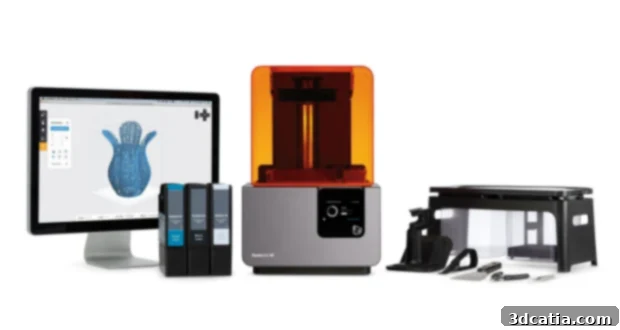
The Formlabs Form 2 3D printer and its comprehensive finishing kit, designed for optimal post-processing.
The finishing kit supplied with the Form 2 is an indispensable part of the stereolithography workflow, containing all the necessary accessories for the critical post-treatment of printed objects. This comprehensive collection includes a dedicated finishing station equipped with two containers, specifically designed for pre- and post-rinsing of parts. It also features a draining basket, a flexible bottle for dispensing the rinsing solution, precision tweezers for support removal, two spatulas crucial for carefully detaching prints from the build platform, multiple pairs of disposable gloves for safety, cleaning wipes, and a soft cloth for general maintenance. This complete suite of tools ensures users have everything required to achieve professional-grade finishes.
As with its predecessors, the Form 1 and Form 1+, successful post-processing with the Form 2 requires the use of isopropyl alcohol (IPA). This vital solvent can be readily purchased, with a gallon typically costing around $27 USD (excluding shipping) on platforms like Amazon. The IPA solution, which must always be handled with appropriate caution and in a well-ventilated area, is essential for dissolving and removing any excess unsolidified resin adhering to your object after the printing process. Proper rinsing is paramount to ensure the final part is clean, fully cured, and exhibits the desired surface quality.
The Form 2 boasts physical dimensions of 350 x 330 x 520 mm, allowing for a generous production volume of 145 x 145 x 175 mm. This represents a significant expansion compared to the previous model’s 125 x 125 x 165 mm, providing users with increased flexibility for larger prints or multiple smaller objects in a single batch. Among its core technological advancements, the Form 2 integrates a more powerful 250mW laser. This enhanced laser system delivers superior performance and precision, achieving a focal point accuracy of 140 microns, a notable improvement over the 155 microns seen in earlier Formlabs models. These combined enhancements contribute to faster print times and even finer detail in the finished objects.
A vibrant, brand new color touchscreen enhances the user interface and control on the Formlabs Form 2 3D printer.
Seamless Installation and Enhanced Usability
The installation process for the Form 2 is remarkably streamlined, guided by clear, straightforward instructions that enable quick machine setup and operation. After simply connecting the power cable, users are prompted to select their preferred connection method: USB, Ethernet cable, or Wi-Fi. For Wi-Fi connectivity, the setup is particularly intuitive, managed directly and easily from the printer’s integrated control panel. This panel features a sublime color screen, which impresses with both its vibrant display quality and elegant design, contributing significantly to the overall user experience.
Once connected and configured, the next steps involve securely attaching the resin tank and the manufacturing plate. A thoughtful and practical improvement introduced with the Form 2 is the addition of an integrated scraper mechanism. This innovative component plays a crucial role during printing, gently sweeping across the resin surface between each laser pass. Its function is to agitate and homogenize the resin, preventing debris accumulation and ensuring a consistent, clean resin surface for the laser to cure. This meticulous detail significantly optimizes the quality and reliability of prints, leading to fewer failures and superior final part aesthetics.
An integrated scraper mechanism efficiently moves the resin within the tank, ensuring consistent print quality.
Formlabs demonstrates its innovative design philosophy further with another clever enhancement: a vertical opening mechanism for the printer’s hood, which pivots on its own axis. This seemingly minor detail offers a significant practical advantage by dramatically reducing the rear space required when the hood is opened. Unlike previous machines where a large clearance was necessary, this design allows the printer to be placed closer to walls or other equipment, optimizing workspace utilization. This was a feature that was sorely lacking in earlier models and greatly improves the printer’s adaptability to various environments.
Perhaps one of the most impactful positive changes is the introduction of a sophisticated system for resin cartridges. These cartridges are effortlessly inserted into a dedicated slot at the back of the machine. This is a real stride forward in user convenience and efficiency. The cartridge system not only makes it much easier to manage resin stock, but it also intelligently automates the refilling of the resin tank during printing. This hands-free approach ensures a continuous supply of resin, minimizes spills, and enhances the overall cleanliness and user-friendliness of the Form 2.
Regarding resin costs, a 1-liter bottle of classic Formlabs resin typically retails for approximately €162 (around $180 USD). While this represents a significant investment, Formlabs has commendably introduced “Open Mode.” This groundbreaking feature is designed to expand the printer’s compatibility, allowing users to experiment with and utilize resins from other manufacturers. This is a highly welcomed addition in the SLA 3D printing market, where proprietary printing materials often exceed the €100/L price point. “Open Mode” offers greater flexibility, potential cost savings, and encourages innovation by enabling users to explore a wider array of specialized resins tailored to specific applications.
The Formlabs Form 2 printer now features convenient and efficient resin cartridges, streamlining material management.
Prior to initiating a print, the Form 2 provides an additional layer of control and precision: the ability to fine-tune the machine’s footing directly from the control panel. This critical adjustment ensures that the printer is perfectly level on its surface. Maintaining a precisely level printing platform is paramount in SLA technology, as it prevents any potential overflow of resin during the printing process and guarantees uniform layer adhesion, contributing significantly to print success and accuracy.
PreForm Software: Intelligent Control for Optimal Prints
The PreForm software, which accompanies the Form 2, continues to evolve with frequent updates. While some users might find the recurring updates a bit too numerous, they undeniably contribute to a constantly refined experience, delivering an interface that is both aesthetically pleasing and remarkably easy to understand and navigate. Formlabs consistently strives to enhance functionality and user-friendliness, making PreForm a powerful yet accessible tool for preparing 3D models for printing.
Upon launching PreForm, a prompt window gracefully appears, guiding the user to select crucial print parameters. This includes choosing the type of resin being used and specifying the desired layer thickness from available options: 100, 50, or an ultra-fine 25 microns. Once the 3D model is loaded into the software, a suite of intuitive tools becomes available. Users can precisely adjust the model’s dimensions, optimize its orientation on the build plate, arrange multiple models for efficient batch printing, and meticulously manage the generation of print supports. While the initial steps of support generation might appear complex, particularly for newcomers, Formlabs’ excellent support team provides clear, concise explanations and resources that quickly empower users to master this essential feature, ensuring successful and high-quality prints.
The design of PreForm software maintains familiarity, yet its enhanced usability makes it more intuitive and powerful than ever.
A notable new addition to the PreForm software is the “magic wand” option. This intelligent tool simplifies the printing process, allowing users to prepare an object for printing with just a single click. The magic wand automatically analyzes the model and intelligently positions the necessary supports to ensure a successful print. However, it’s worth noting that this automated approach may sometimes place supports on highly detailed or visible areas of your object, such as a delicate facial feature. This can lead to a more laborious post-processing step to meticulously clean and smooth these areas. With a bit of experience and understanding of how SLA supports function, users can anticipate these scenarios. By strategically positioning the model manually and adding only the absolutely necessary supports, it’s possible to significantly minimize post-processing time and achieve an even cleaner final product.
Once the 3D model is perfectly prepared and optimized within PreForm, the final step before printing is to send the file to the Form 2 via your chosen connection method (USB, Ethernet, or Wi-Fi). After this transmission, a final validation step appears on the Form 2’s intuitive control screen. This screen displays a convenient preview of the file and its associated print settings. Once confirmed, the Form 2 seamlessly initiates the printing process, bringing your digital design to life with exceptional precision.
Exceptional Printing Performance and Post-Processing Nuances
Our extensive testing of the Form 2 involved printing a diverse series of complex designs, meticulously evaluating its capabilities across various geometries and detail levels. What became immediately apparent was a discernible improvement in the overall print quality compared to the first-generation Form 1 and Form 1+ machines. Beyond mere aesthetic enhancement, the Form 2 consistently delivered a higher success rate for prints. This increased reliability is a critical factor for professional users who depend on consistent, high-quality output. Even for intricate models, the Form 2 demonstrated remarkable resilience against print failures, a testament to its refined engineering and software integration.
While the printing process itself on the Form 2 is straightforward and largely automated, the post-processing steps, inherent to any SLA machine, can initially be a bit laborious for new users. Once a part has been printed, it is essential to rinse it thoroughly in the two bins provided within the finishing kit. These bins are designated for a pre-wash and a final wash, removing uncured resin from the part’s surface. Following the cleaning, the removal of print supports requires patience and the careful use of cutting pliers. It’s important to note that, in contrast to FDM 3D printers, resin parts often necessitate a much larger number of supports, depending on the complexity and orientation of your object. This can extend post-processing time, but the resulting smooth surface finish and intricate detail are generally well worth the effort.
Another significant advantage of the Form 2 is its remarkably low sound level during operation. Unlike many conventional FDM 3D printers, which can be quite noisy, the Form 2 operates quietly. This “good point” makes it an ideal machine for placement and continuous operation even in an office environment or other shared workspaces, without causing disturbance. Its discreet operation further contributes to its appeal as a professional-grade tool that integrates smoothly into various work settings.
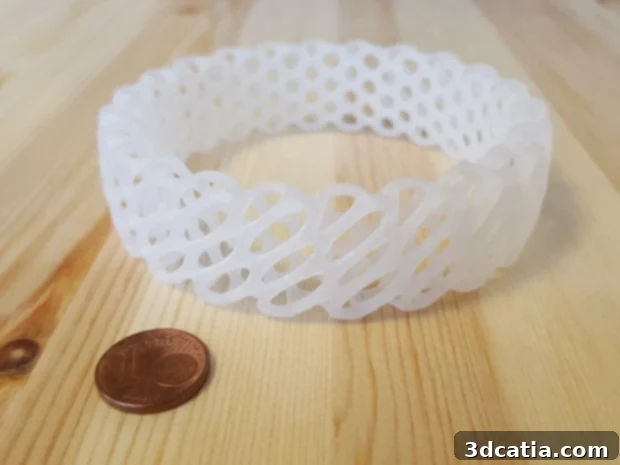
The “Diagrid Bracelet” model by Nervous System – Printed with supports, showcasing intricate lattice structures.
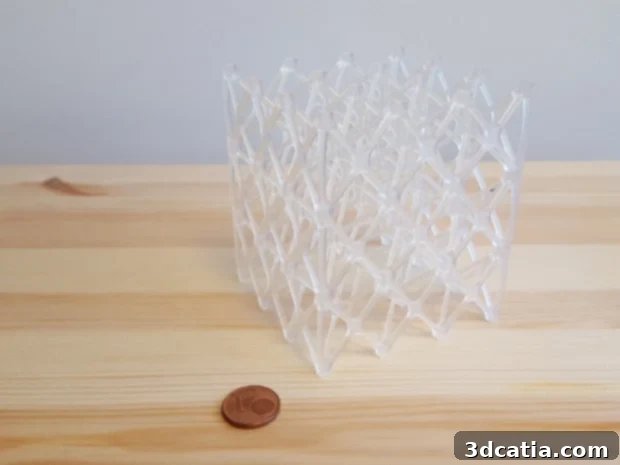
The “Dymaxion Cube” model – Printed without supports, demonstrating self-supporting capabilities.
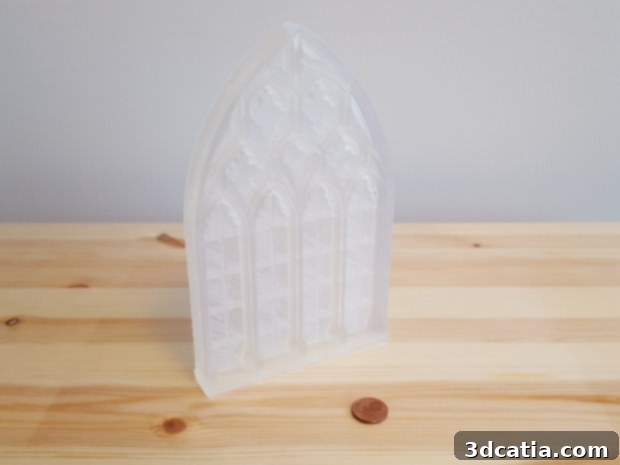
The “Gothic Window” model by Skimbal – Printed with supports, highlighting fine architectural details.
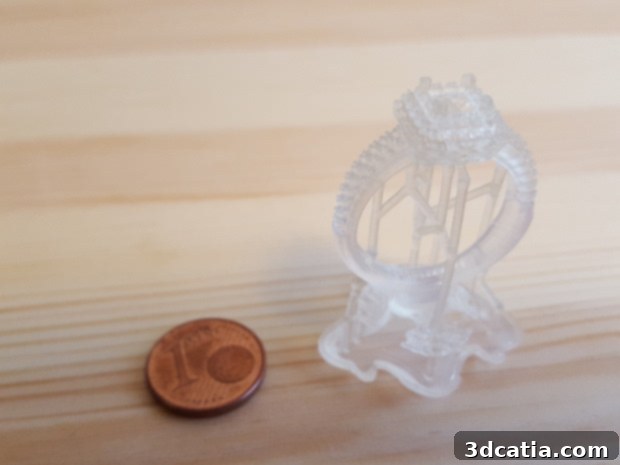
The “Rings” model by Jay Bradshaw, shown before the careful process of support removal, demonstrating complex geometry.
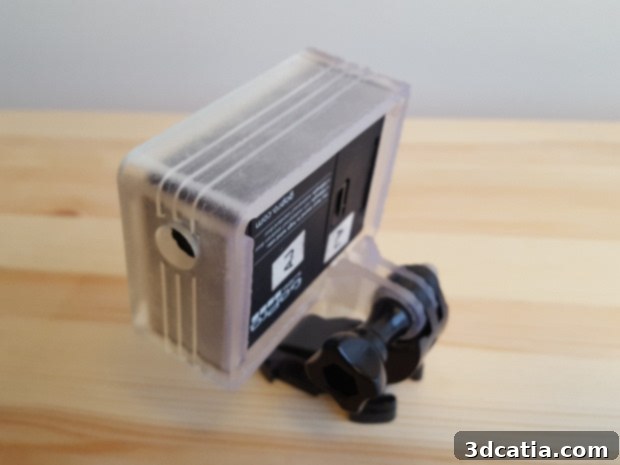
GoPro Hero Mount for GoPro 3 Camera – Printed with supports, showing functional part capabilities.
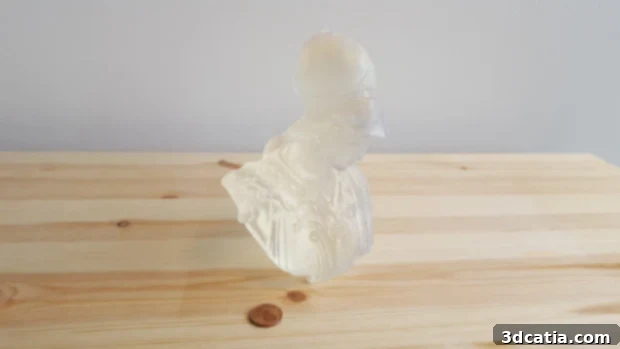
The “Athena of Velletri” model by CosmoWenman – Printed with supports, exhibiting intricate sculptural detail.
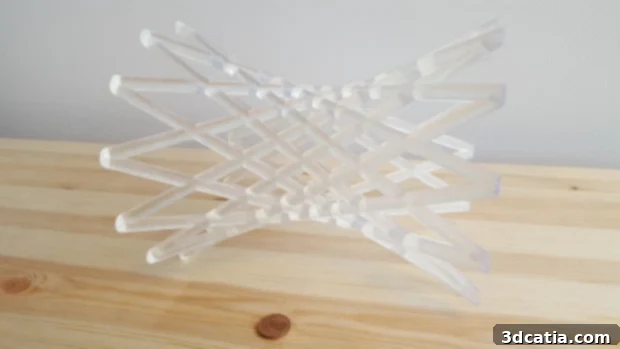
The “Hyperboloid” model by George Hart – Printed without supports. Our objective here was to rigorously test the maximum build volume capacity of the Form 2.
Conclusion and Final Verdict
The Formlabs Form 2 represents a significant advancement in the desktop SLA 3D printing landscape. From its origins at MIT to its current iteration, Formlabs has consistently pushed the boundaries of accessible high-resolution additive manufacturing. Our in-depth review confirms that the Form 2 is a truly capable machine, offering a compelling blend of precision, reliability, and user-focused innovations.
The improvements over its predecessors, particularly in build volume, laser power, and overall print success rates, are substantial. Features like the intuitive color touchscreen, the clever vertical-opening hood, the automated resin cartridge system, and the integrated scraper all contribute to a refined and more efficient user experience. The “Open Mode” is a particularly forward-thinking addition, providing users with much-needed flexibility and choice in a market often dominated by proprietary materials.
While the initial investment for the Form 2 and its specialized resins is higher than that of typical FDM printers, the quality of the output — characterized by incredibly fine details, smooth surface finishes, and robust mechanical properties (depending on the resin) — justifies this price point for many professional and prosumer applications. Industries such as jewelry design, dental labs, prototyping, and engineering will find the Form 2 to be an invaluable tool capable of producing production-ready parts and highly detailed models. The post-processing, though requiring some patience and practice, is a standard part of the SLA workflow and yields superior results compared to other desktop technologies.
In conclusion, the Formlabs Form 2 stands out as an exceptional high-resolution SLA 3D printer. It delivers on its promises of precision, ease of use, and consistent performance, making it a top contender for anyone seeking to bring intricate digital designs into the physical world with unparalleled fidelity. For those who prioritize print quality and are willing to invest in a robust and intelligently designed system, the Form 2 is undoubtedly a machine that merits strong consideration.