
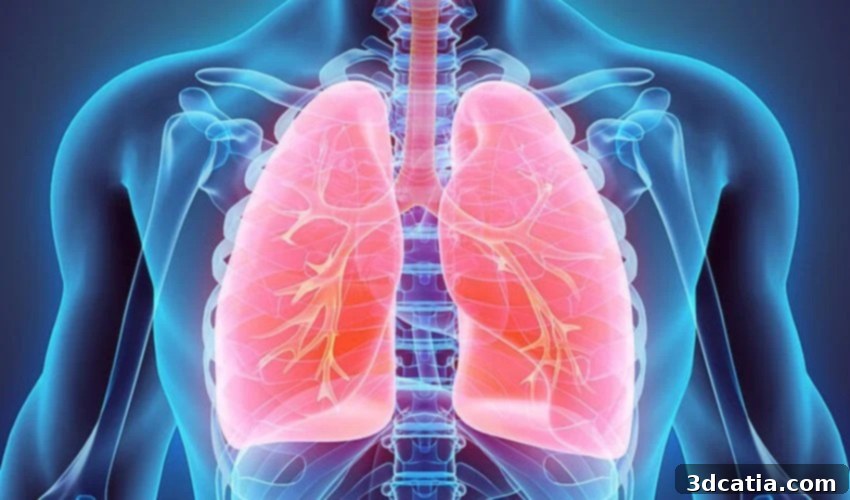
Revolutionizing Organ Transplantation: The Promise of 3D-Printed Human Lung Scaffolds
In a monumental leap forward for regenerative medicine and additive manufacturing, a groundbreaking collaboration between United Therapeutics and 3D Systems has culminated in the development of an incredibly complex 3D-printed human lung scaffold. This innovative structure, proudly unveiled at the LIFE ITSELF conference in San Diego, is not merely another technological marvel; it stands as a testament to human ingenuity, widely heralded as the most intricate object ever created using additive manufacturing techniques. The successful creation of these highly sophisticated lung scaffolds, which have already undergone promising animal testing, paves the way for a future where organs could be custom-made from a patient’s own stem cells, dramatically reducing the risks associated with traditional transplants.
The field of bioprinting has seen an explosion of interest and advancements recently, capturing headlines for its vast potential in medical applications. This cutting-edge form of 3D printing utilizes living cells and biocompatible materials to construct biological tissues and organs, promising a revolution in healthcare. We’ve already witnessed remarkable progress, such as the recent successful transplantation of an ear implant made from human cells by a surgeon in the USA. While the ultimate goal of creating fully functional, transplantable human organs remains a complex challenge, significant milestones like this 3D-printed lung scaffold unequivocally demonstrate the immense progress and transformative power that 3D printing is bringing to the medical frontier.
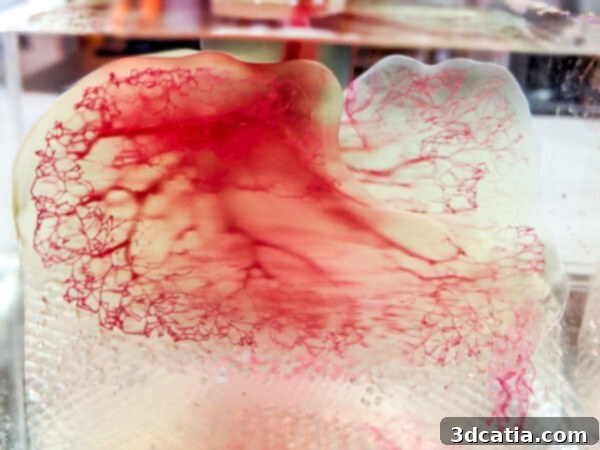
3D printed lung scaffold (photo credits: 3D Systems)
The Intricate Architecture of the 3D-Printed Lung Scaffold
The structural complexity of these 3D-printed lungs is truly astonishing. They are composed of an unprecedented 44 trillion individual parts, known as voxels, meticulously arranged to form the intricate network of the human lung. This includes over 4,000 kilometers (approximately 2,500 miles) of delicate lung capillaries and an estimated 200 million alveoli – the tiny air sacs where gas exchange occurs. Such precision in replicating the human lung’s natural architecture is critical for its future functionality. Scientists at United Therapeutics are now focused on the next crucial step: cellularizing these 3D-printed scaffolds by seeding them with the patient’s own stem cells.
This method holds the key to addressing one of the most formidable hurdles in organ transplantation: immune rejection. When a patient receives a donor organ, their immune system often perceives it as a foreign entity, launching an attack. To counteract this, transplant recipients must endure a lifetime regimen of powerful immunosuppressive drugs. While these medications are life-saving, they come with a host of severe side effects, including increased susceptibility to infections, kidney damage, diabetes, and certain types of cancer. By utilizing each patient’s unique stem cells, the bioprinted lungs would be genetically identical to the recipient, thereby significantly lowering the risk of rejection and potentially eliminating the need for dangerous immunosuppression. This personalized approach could dramatically improve the long-term health outcomes and quality of life for transplant patients.
The rapid manufacturing of these complex structures is made possible by a newly developed advanced photopolymer-based bioprinting technology named Print to Perfusion. This innovative process is designed to create donor organs of this complexity in a remarkably short timeframe – potentially as little as three weeks. This speed is crucial for meeting the urgent demand for transplant organs and could transform the logistics of organ donation and transplantation, moving towards an on-demand system tailored to individual patient needs.
Early Successes and Future Horizons for Bioprinted Organs
Dr. Martine Rothblatt, the visionary chief executive officer of United Therapeutics, has confirmed that these meticulously 3D-sculpted lung scaffolds have already undergone rigorous testing in animal models. The results have been exceptionally promising, demonstrating successful gas exchange – the fundamental function of a lung – within the scaffolds. This crucial validation marks a significant milestone in their journey toward clinical application. Dr. Rothblatt expressed profound optimism regarding the timeline for human trials, commenting, “With the continued hard work of dedicated scientists and engineers at United Therapeutics and 3D Systems, we hope to have these personalized, manufactured lungs cleared for human trials in under five years.” This ambitious timeline underscores the rapid pace of innovation and the confidence in the technology’s potential.
Beyond individual transplants, a broader and equally ambitious goal of this pioneering collaboration is to establish an unlimited supply of transplantable lungs for the future. This vision aims to completely transform the current paradigm of organ scarcity. To achieve this, United Therapeutics is also leveraging existing advanced methodologies, such as ex vivo lung perfusion (EVLP). This process involves keeping donor lungs viable outside the body for an extended period, allowing for assessment, treatment, and optimization before transplantation. By carefully preserving and monitoring lungs that might otherwise be deemed unsuitable, EVLP has already proven its effectiveness, successfully prolonging over 230 lives to date by increasing the availability of suitable donor organs. Integrating such techniques with bioprinted organs could create a robust and sustainable supply chain for life-saving transplants.
Addressing the Critical Organ Shortage with Advanced Bioprinting
The demand for donor organs globally continues to rise at an alarming rate, far outpacing the available supply. This creates a tragic reality where thousands of patients worldwide wait endlessly for a life-saving transplant, often succumbing to their illness before an organ becomes available. The statistics paint a grim picture: in the U.S. alone, 2,524 patients received a lung transplant in 2021, according to the U.S. Health Resources and Services Administration. However, as of June 3, 2022, a staggering 1,075 patients in the U.S. remained on the waiting list for a donor lung, facing an uncertain future. More tragically, over 150,000 Americans die each year from lung disease, with many of these individuals desperately waiting for a transplant that never materializes. This critical disparity between organ supply and demand highlights the urgent need for innovative solutions like 3D bioprinting.
The potential impact of 3D-printed lungs on this public health crisis cannot be overstated. By creating an on-demand, personalized supply of organs, bioprinting could virtually eliminate waiting lists, saving countless lives and alleviating the immense suffering experienced by patients and their families. This technology promises not only to increase the sheer number of available organs but also to enhance the safety and effectiveness of transplantation by removing the risks of immune rejection. Furthermore, the ability to produce organs in a controlled laboratory environment could democratize access to transplants, making life-saving treatments available to a broader population, irrespective of geographical location or donor availability. This truly represents a paradigm shift in healthcare, moving from a reactive, scarcity-driven model to a proactive, abundance-driven one. You can find out more about the project HERE.
The Path Forward: Overcoming Challenges and Embracing Opportunity
While the advancements in 3D bioprinting, particularly with this lung scaffold, are incredibly promising, the path to widespread clinical adoption still involves significant hurdles. Challenges include achieving full vascularization within the printed organs to ensure they can receive blood supply and nutrients, replicating the complex functional maturity of natural tissues, navigating stringent regulatory approval processes, and scaling up production to meet global demand. Despite these complexities, the dedication of researchers and engineers from United Therapeutics and 3D Systems demonstrates a clear commitment to overcoming these obstacles. Their collaborative spirit and innovative approach are driving the field forward at an unprecedented pace, fostering hope for millions worldwide.
The development of the 3D-printed human lung scaffold marks a pivotal moment in medical history. It showcases the incredible power of merging advanced manufacturing with biological science to tackle some of humanity’s most pressing health challenges. As this technology continues to evolve, the vision of a future free from organ waiting lists, where personalized, life-saving organs are readily available, moves closer to becoming a reality. This innovation not only offers a beacon of hope for patients with end-stage organ failure but also inspires further research and development across the entire spectrum of regenerative medicine.
Do you believe 3D-printed lung scaffolds could truly replace human donor organs and solve the organ shortage crisis in the near future? Share your thoughts in a comment below or join the conversation on our Linkedin, Facebook, and Twitter pages! Don’t forget to sign up for our free weekly Newsletter here to receive the latest 3D printing news straight to your inbox! You can also find all our videos and interviews on our YouTube channel, offering deeper insights into the world of additive manufacturing.
*Cover Photo Credits: yodiyim/Fotolia