
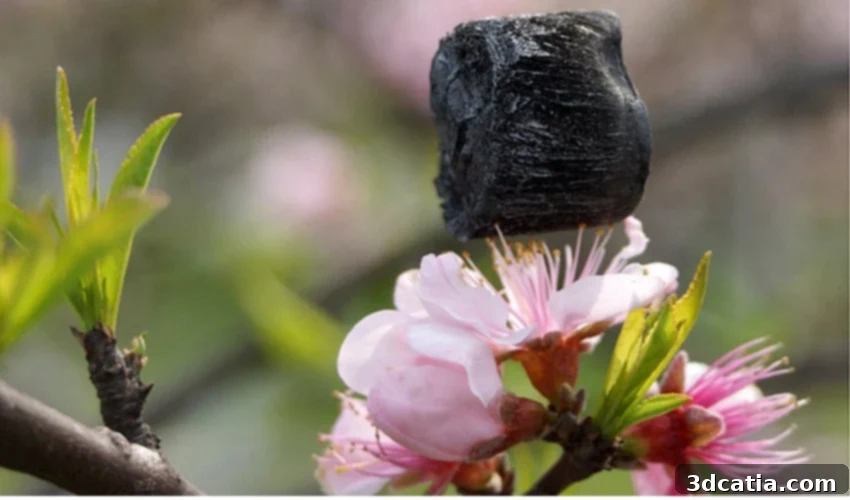
Revolutionizing Water Purification: The Power of 3D Printed Graphene Aerogels
Since its groundbreaking discovery in 2004, Graphene has captivated scientists and engineers alike, earning its reputation as a true ‘wonder material.’ This remarkable allotrope of carbon, formed by a single layer of atoms arranged in a two-dimensional honeycomb lattice, has found increasing application in diverse fields, particularly in the advancement of rechargeable battery technology. However, its potential extends far beyond energy storage. Recently, a team of pioneering engineers at the University at Buffalo achieved a significant breakthrough, successfully leveraging graphene for a radically different and critically important purpose: environmental remediation. They have developed an innovative process for 3D printing graphene aerogels designed to efficiently filter contaminated water.
The findings of this pivotal research were published in a recent paper titled “Emerging investigator series: 3D printed graphene-biopolymer aerogels for water contaminant removal: a proof of concept.” The study’s authors, including lead researcher Nirupam Aich, along with Nano. Arvid Masud and Chi Zhou, have not only demonstrated the efficacy of their novel aerogel but have also secured a patent for the described technology. Currently, the team is actively seeking industrial partners to collaborate on commercializing this process, aiming to bring this transformative water purification solution to a global scale.
Addressing the Global Water Crisis with Advanced Materials
The increasing global population and rapid industrialization have placed immense pressure on our planet’s freshwater resources, leading to a pervasive crisis of water contamination. From industrial effluents containing heavy metals and organic solvents to agricultural runoff laden with pesticides, a myriad of pollutants threaten both human health and ecological balance. Traditional water treatment methods, while effective to a degree, often face limitations in terms of cost, energy consumption, efficiency in removing emerging contaminants, and scalability for widespread application. This urgent need for more sustainable, efficient, and robust water purification technologies has driven intense research into advanced materials, with nanomaterials like graphene leading the charge. The University at Buffalo’s innovation directly addresses this critical challenge, offering a promising new pathway toward cleaner, safer water for communities worldwide.
Understanding the ‘Wonder Materials’: Graphene and Aerogels
To truly appreciate the significance of this breakthrough, it’s essential to delve into the extraordinary properties of its core components: graphene and aerogels. Individually, these materials represent pinnacles of materials science; combined, they form a synergistic powerhouse with unparalleled capabilities.
Graphene: The Atomically Thin Marvel
As previously mentioned, graphene is a revolutionary nanomaterial composed solely of elemental carbon atoms. What sets it apart is its unique atomic arrangement: a single, flat layer of carbon atoms perfectly ordered in a hexagonal, honeycomb lattice. This one-atom-thick structure makes graphene the thinnest material known to humankind. Despite its incredible thinness and remarkable lightness, graphene exhibits astonishing mechanical strength. Its tensile strength, measuring approximately 130 GPa, dwarfs that of steel, which typically ranges from 310 to 690 MPa. This means graphene is hundreds of times stronger than steel by weight. Beyond its unparalleled strength, graphene is also an exceptional electrical conductor, highly flexible, and nearly transparent, making it a versatile material with applications spanning electronics, composites, and now, environmental engineering.
Aerogels: The Lightest Solids
Complementing graphene’s extraordinary features are aerogels – a class of synthetic porous ultralight materials derived from a gel, in which the liquid component has been replaced with gas. What remains is a solid structure with incredibly low density. In fact, aerogels are composed of over 99 percent air (or more accurately, empty space in the form of pores), earning them the title of the lightest and lowest-density solids on Earth. Despite their airy composition, aerogels are remarkably strong and elastic. They can withstand significant compression and return to their original shape, possessing excellent thermal insulation properties. Their vast internal surface area and highly porous structure make them ideal candidates for filtration, absorption, and catalyst support applications.
The Synergy: Graphene-Biopolymer Aerogels
When the unique attributes of graphene are harmoniously combined with the ultra-porous structure of aerogels, the result is nothing short of astounding. The University at Buffalo’s innovation creates 3D printed graphene-biopolymer aerogels, which leverage the best of both worlds. The resulting composite material is not only incredibly lightweight – reportedly 7.5 times lighter than air – but also possesses an astonishingly low density, approximately 1,000 times smaller than that of water. This makes it a contender for one of the lightest materials ever created. This exceptional combination of properties – high surface area, robust mechanical strength, electrical conductivity, and extreme porosity – positions these aerogels as an ideal solution for advanced filtration applications, particularly in water treatment where efficiency and durability are paramount.
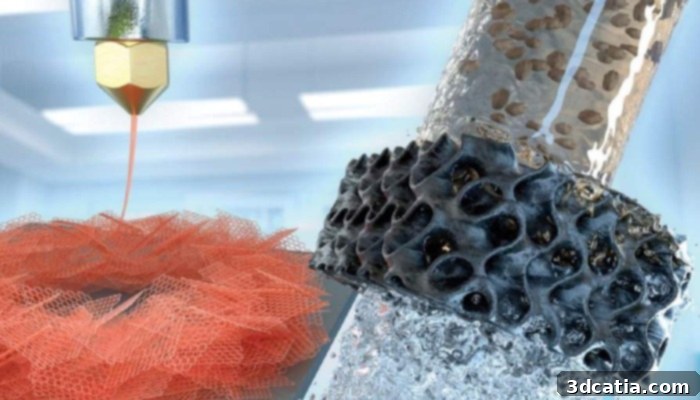
Here you can see a 3D printer printing the aerograph plate on the left. On the right is the aerogel that filters polluted water. (Photo Credits: Environmental Science: Nano)
3D Printing: A Game-Changer for Aerogel Production
The implementation of 3D printing technology is a critical aspect of this research, addressing two major challenges that have historically limited the widespread adoption of aerogels in large-scale water treatment: scalability and the creation of an aerogel stable enough for repeated, long-term use. Additive manufacturing, or 3D printing, provides an unprecedented level of control and flexibility that traditional methods cannot match.
Overcoming Scalability and Stability Hurdles
Previous attempts to utilize graphene and similar nanomaterials for water purification often struggled with scalability. Producing these materials in the form of nanosheets is inherently difficult to scale up for industrial applications. The new 3D printing process, however, enables the fabrication of aerogels in custom sizes and complex geometries, effectively overcoming this scalability hurdle. This means that these advanced filtration units can be produced in dimensions suitable for large-scale facilities, such as municipal wastewater treatment plants, opening up possibilities for widespread deployment that were previously impractical. Furthermore, the inherent design of these 3D printed aerogels ensures exceptional structural integrity and stability, crucial for sustained performance. Unlike some filtration media that degrade or release residues, these aerogels leave no harmful byproducts in the filtered water, maintaining the purity of the effluent.
Precision and Customization with Additive Manufacturing
The ability to 3D print these graphene-biopolymer aerogels offers additional advantages beyond mere scalability. Additive manufacturing allows for precise control over the aerogel’s internal architecture, enabling engineers to design highly optimized porous structures. This level of customization can be tailored to target specific contaminants or flow rates, maximizing filtration efficiency. The consistency of 3D printing also ensures repeatable production of high-quality aerogel filters, a vital factor for industrial applications where performance reliability is paramount. This precision not only enhances the aerogels’ contaminant removal capabilities but also contributes to their overall stability and lifespan, paving the way for more durable and effective water treatment systems.
Unprecedented Filtration Performance and Reusability
The true testament to the success of this innovative technology lies in its demonstrated performance. The reconfigured 3D printed aerogels have undergone rigorous testing, yielding highly encouraging results across a spectrum of challenging water pollutants.
Tackling a Broad Spectrum of Contaminants
In a series of already conducted tests, the graphene-biopolymer aerogel proved exceptionally effective in purifying water samples. It successfully filtered out heavy metals that frequently contaminate water systems, such as lead and chromium, which are notoriously difficult to remove and pose severe health risks. Beyond metals, the aerogel also demonstrated remarkable efficiency in removing a variety of organic dyes and industrial solvents, including hexane, heptane, and toluene. These organic pollutants, often byproducts of manufacturing processes, are persistent and can be carcinogenic or toxic, making their removal crucial for public safety and environmental protection. The aerogel effectively acts as a highly advanced sieve, selectively trapping these undesirable substances while allowing only pure water to pass through its intricate porous network.
Long-Term Solutions: The Power of Reusability
Perhaps one of the most economically and environmentally significant features of these 3D printed aerogels is their exceptional reusability. To thoroughly evaluate this potential, researchers subjected the aerogel to a demanding test: running organic solvents through it ten consecutive times. With each run, the aerogel consistently achieved a 100 percent removal rate of the solvents, demonstrating no discernible loss in performance. This high degree of reusability is a game-changer for water treatment. It significantly reduces operational costs by minimizing the need for frequent replacement of filtration media and dramatically lowers the environmental footprint associated with filter disposal. This longevity and consistent performance make the graphene aerogels a sustainable and cost-effective solution for long-term water purification needs.
The Vision: Catalytic Degradation of Contaminants
Looking to the future, study co-author Nirupam Aich articulates an even more ambitious vision for these aerogels. He states, “We can use these aerogels not only to contain graphene particles but also nanometal particles which can act as catalysts. The future goal is to have nanometal particles embedded in the walls and the surface of these aerogels, and they would be able to degrade or destroy not only biological contaminants, but also chemical contaminants.” This forward-thinking approach aims to transform the aerogels from passive filters into active remediation agents. By incorporating catalytic nanometal particles, the aerogels could actively break down harmful pollutants at a molecular level, offering a more complete and efficient purification process. This would enable them to tackle an even broader spectrum of contaminants, including complex organic compounds and pathogenic microorganisms, pushing the boundaries of what is possible in water treatment.
Future Outlook and Commercialization
The promising results from the University at Buffalo’s research represent a significant leap forward in the quest for effective and sustainable water purification solutions. The successful demonstration of 3D printable, highly effective, and reusable graphene-biopolymer aerogels paves the way for their eventual deployment in real-world applications. The ongoing search for industrial partners highlights the readiness of this technology for commercialization, with the potential to impact various sectors, from municipal water treatment plants to industrial wastewater management and even point-of-use filtration systems in developing regions. Further research will likely focus on optimizing the aerogel’s composition, scaling up manufacturing processes, and rigorous long-term field testing to validate its performance under diverse environmental conditions. The full study, detailing these findings and methodologies, is accessible here for those interested in a deeper dive into the scientific specifics.
What are your thoughts on this revolutionary new approach to filtering contaminated water? We invite you to share your insights in a comment below or join the conversation on our Linkedin, Facebook, and Twitter pages! Don’t miss out on the latest advancements in 3D printing and additive manufacturing; sign up for our free weekly Newsletter here to receive news straight to your inbox. You can also explore all our informative videos on our dedicated YouTube channel.