
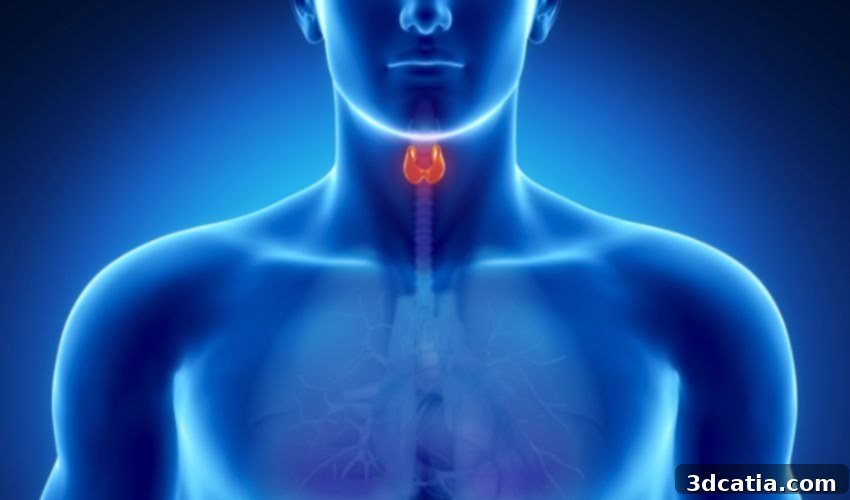
3D Printing Revolutionizes Head and Neck Cancer Treatment: Kallisio’s FDA-Cleared Oral Stent Minimizes Radiation Side Effects
The landscape of medical innovation is constantly evolving, with 3D printing emerging as a transformative force, particularly in the challenging field of oncology. While much of the recent research and development has understandably concentrated on advanced applications like bioprinting for creating prostheses or even 3D-printed tumors for enhanced cancer research, the scope of additive manufacturing in treatment extends far beyond. A prime example of this expanding utility comes from Kallisio, a US-based company that has harnessed the precision and customization capabilities of 3D printing to develop an innovative oral stent. This device is specifically designed to significantly reduce debilitating side effects associated with radiation therapy for head and neck cancers, marking a critical advancement in patient care. The significance of this breakthrough is further underscored by its recent official FDA clearance, affirming its safety and effectiveness for clinical use.
Understanding Radiation Therapy and Its Significant Side Effects
Radiation therapy, often referred to as radiotherapy, stands as a cornerstone in cancer treatment protocols worldwide. This powerful therapeutic approach involves precisely delivering high doses of radiation to target and eradicate cancer cells, thereby shrinking tumors and preventing disease progression. The World Health Organization (WHO) estimated in 2021 that over 50% of all cancer patients will require radiotherapy as a vital component of their comprehensive cancer care. This includes patients battling some of the most prevalent forms of cancer, such as breast, cervical, colorectal, and lung cancers. Despite its widespread application and proven efficacy, radiation therapy is not without its challenges, particularly concerning its potential for severe side effects.
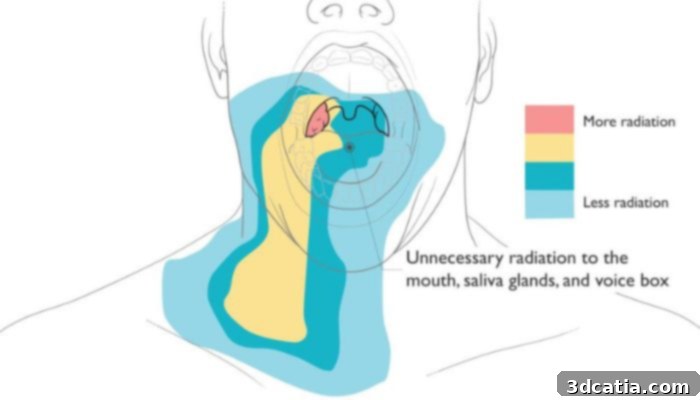
An image showing the potential impact that radiation has on organs in the mouth during treatment for head and neck cancers (image credits: Kallisio)
The inherent danger of radiation has been known since the pioneering work of scientists like Marie and Pierre Curie. This danger necessitates strict controls, even for diagnostic procedures like X-rays, and mandates extensive safety gear for individuals who regularly work with radiation equipment. A critical limitation of current radiation therapy techniques is its indiscriminate nature: it does not inherently distinguish between malignant cancer cells and healthy, surrounding tissue. This lack of selectivity frequently leads to collateral damage to healthy cells and organs located within or near the treatment field, giving rise to a spectrum of adverse effects that can profoundly impact a patient’s quality of life.
The Critical Need for Precision in Head and Neck Oncology
For patients battling head and neck cancers—a group of malignancies accounting for approximately 4% of all cancer cases in the United States—the impact of radiation therapy side effects can be particularly severe and debilitating. The head and neck region houses numerous vital and sensitive structures, including the salivary glands, tongue, jaw, teeth, and throat, all of which are highly susceptible to radiation-induced damage. Patients undergoing treatment for these cancers frequently experience a range of acute and chronic side effects. These can include mucositis (painful soreness and open sores in the mouth or throat), xerostomia (severe dry mouth due to salivary gland damage), dysphagia (trouble swallowing), nausea, earaches, accelerated tooth decay, temporomandibular joint (TMJ) stiffness leading to difficulty opening the mouth, hair loss in the treated area, and significant skin changes such such as redness, irritation, swelling, blistering, and even fibrosis. These side effects can drastically diminish a patient’s ability to eat, speak, and maintain basic oral hygiene, leading to significant weight loss, malnutrition, chronic pain, and a severely compromised quality of life during and long after treatment.
Recognizing this critical unmet need, Kallisio embarked on developing a solution that specifically targets the minimization of damage to healthy cells during radiation therapy for head and neck cancers. By strategically protecting these vulnerable tissues, Kallisio aims to not only improve immediate patient outcomes but also to reduce the long-term morbidity and pain associated with current treatment modalities. Their innovative approach promises to make the cancer treatment journey less arduous and more tolerable for patients, ultimately enhancing their recovery and overall well-being.
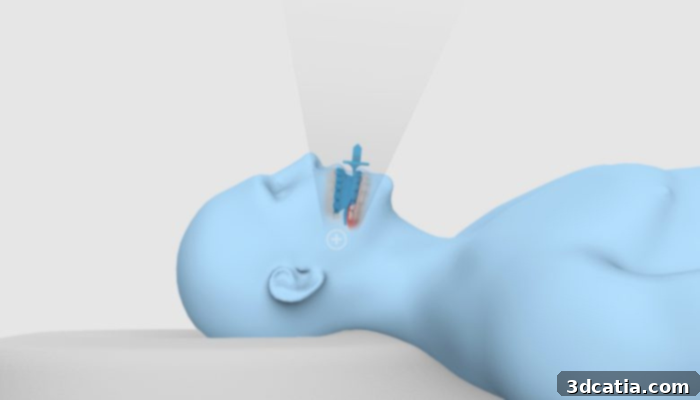
The Stentra stent can be precisely placed to reduce radiation exposure to healthy tissues, shielding anything but the targeted tumor area (image credits: Kallisio)
Kallisio’s Stentra Oral Stent: A Personalized 3D-Printed Solution
At the heart of Kallisio’s groundbreaking Stentra™ oral stent lies the sophisticated application of 3D printing technology. This advanced manufacturing method, when synergistically combined with state-of-the-art digital imaging, enables the creation of a fully personalized and custom-tailored medical device. The inherent ability of additive manufacturing to produce intricate geometries with unparalleled precision is crucial here, allowing the Stentra stent to perfectly conform to each patient’s unique anatomy and specific treatment plan. This bespoke fit is paramount for effectively safeguarding healthy tissues, or “organs at risk” (OARs), from the intense radiation exposure directed at the tumor.
The functional mechanism of the Stentra oral stent is elegantly simple yet highly effective. Once precisely positioned within the patient’s oral cavity, the stent serves to immobilize key OARs such as the tongue, lips, and salivary glands. By securely holding these sensitive structures away from the high-dose radiation target zone, the stent acts as a physical barrier, significantly reducing the amount of radiation dose healthy tissues receive. This targeted protection helps to prevent or mitigate the severe side effects that commonly arise when radiation inadvertently affects these critical areas. The unparalleled customization afforded by 3D printing ensures that the stent fits perfectly, maximizing both patient comfort and therapeutic efficacy, thereby revolutionizing the protective strategies available during head and neck radiation therapy.
The Power of 3D Printing in Medical Customization
The choice of 3D printing as the core technology for the Stentra oral stent is not arbitrary; it is a deliberate decision based on the unique advantages additive manufacturing offers for highly personalized medical devices. Traditional manufacturing methods often struggle to produce the complex, patient-specific geometries required for such precise protective equipment. 3D printing, however, excels in creating intricate, custom-fit designs directly from digital scans. This capability allows Kallisio to rapidly design and manufacture an oral stent that perfectly matches an individual patient’s oral anatomy, ensuring optimal placement and maximum protection for vital organs. The ability to produce bespoke devices on demand not only enhances the therapeutic outcome but also improves patient comfort and compliance throughout their arduous treatment journey. This highlights 3D printing’s indispensable role in advancing patient-centered healthcare solutions.
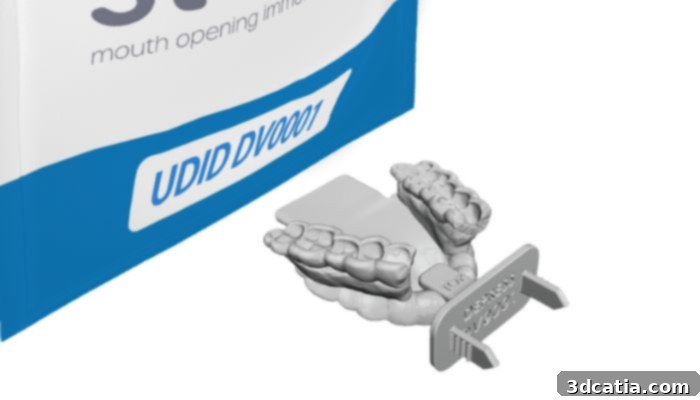
The Stentra stent is precisely designed according to a patient’s unique treatment plan and oral anatomy, then accurately 3D printed for a perfect fit (image credits: Kallisio)
FDA Clearance: A Mark of Safety and Efficacy
A significant milestone in Kallisio’s journey with Stentra is the achievement of 510(k) clearance, also known as “Premarket Notification,” from the U.S. Food and Drug Administration (FDA). This critical regulatory approval signifies that the Stentra oral stent has undergone rigorous review and testing, demonstrating that it is substantially equivalent to a legally marketed predicate device and, crucially, that it is both safe and effective for its intended purpose. For medical devices, FDA clearance is paramount, instilling confidence among healthcare providers and patients alike regarding the product’s reliability and performance. This regulatory endorsement is not merely a formality; it represents a robust validation of Kallisio’s innovative approach and paves the way for the widespread clinical adoption of the Stentra stent.
Implementation and Future Outlook
With FDA clearance now secured, Kallisio is poised to move forward with the broader launch and implementation of the Stentra oral stent. The next strategic steps involve close collaboration with leading cancer centers across the country, facilitating the integration of this personalized solution into existing radiation therapy workflows. The comprehensive Stentra solution extends beyond just the 3D-printed stent; it also encompasses essential components such as advanced intraoral scanning equipment for capturing precise patient anatomical data and a cloud-based clinical portal ordering system, streamlining the process for medical professionals. While Kallisio prints the stents, specific details regarding the particular 3D printing technology employed for manufacturing have not been publicly disclosed. This integrated approach ensures a seamless and efficient adoption process for hospitals and clinics, bringing this vital innovation directly to patients who need it most.
Rajan Patel, co-founder and CEO of Kallisio, eloquently summarizes the profound impact of this innovation: “Designed to address each patient’s unique treatment and anatomical needs, Stentra delivers an unmatched level of customization and effectiveness in addressing the critical need to safeguard healthy tissue during radiation therapy. FDA clearance is an exciting milestone in our journey to improve patient experiences and quality of life.” His statement underscores the patient-centric philosophy driving Kallisio’s development and highlights the potential for Stentra to significantly enhance the overall quality of life for individuals undergoing challenging head and neck cancer treatments. This advancement represents a beacon of hope, demonstrating how targeted 3D printing applications can make a tangible difference in critical healthcare areas. You can learn more about this transformative project directly on Kallisio’s official website HERE.
The introduction of Kallisio’s patient-tailored oral stent marks a significant leap forward in supportive cancer care. It exemplifies the power of combining advanced manufacturing technologies like 3D printing with deep medical understanding to solve complex clinical challenges. Innovations like Stentra not only promise better treatment outcomes but also prioritize the patient’s journey, reducing discomfort and improving their capacity to recover and thrive. We invite you to share your thoughts on Kallisio’s groundbreaking work and the future of 3D printing in oncology. Let us know in a comment below or on our LinkedIn, Facebook, and Twitter pages! Don’t forget to sign up for our free weekly newsletter here, the latest 3D printing news straight to your inbox! You can also find all our videos on our YouTube channel.