
3D Printing Headlight Lenses: Revolutionizing Automotive Lighting with Additive Manufacturing
The automotive industry is a dynamic sector constantly seeking innovative solutions to enhance vehicle performance, aesthetics, and manufacturing efficiency. Among the myriad of advancements, additive manufacturing, commonly known as 3D printing, has emerged as a transformative technology. Its value is particularly evident when comparing its capabilities against traditional manufacturing methods like CNC machining and reverse engineering, especially in niche applications such as headlight lens production. A pioneering study conducted by Taiwan’s Tunghai University has shed light on this, revealing that 3D printing offers superior flexibility and performance for headlight lenses compared to conventional techniques. The broader automotive sector has already embraced additive manufacturing (AM) for its ability to produce topology- and weight-optimized parts, facilitate rapid prototyping, enable the creation of custom components, and support small series productions. However, the direct application of 3D printing for complex optical components like headlight lenses has historically been less common, making this research particularly noteworthy and impactful.
The question then arises: why consider additive manufacturing for something as critical as headlight lenses? To fully appreciate this innovation, it’s essential to understand the multifaceted role of headlight lenses. These components are paramount to a car’s lighting system, serving several crucial functions. Primarily, they are engineered to ensure light is evenly and effectively transmitted across the road, which is vital for promoting safe driving conditions, particularly during nighttime or in adverse weather. Beyond mere illumination, headlight lenses act as robust protective shields, safeguarding delicate bulbs and internal electrical components from environmental hazards such as dust, road debris, snow, and rain. Furthermore, these lenses present a significant opportunity for vehicle customization. A uniquely designed lens can dramatically alter a vehicle’s front-end aesthetic, contributing a distinctive and personalized visual element that appeals to discerning consumers and luxury markets.
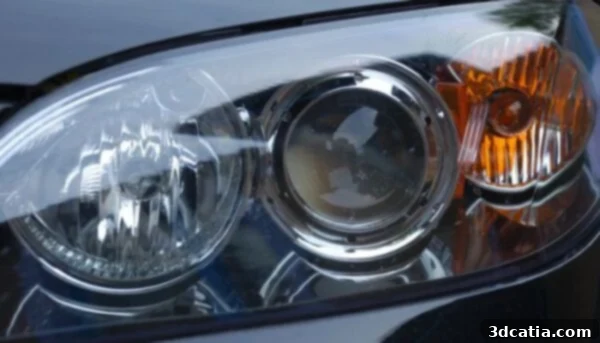
Traditional headlight lens
Historically, headlight production has relied on mass manufacturing techniques focused on achieving consistent quality and cost efficiency through economies of scale. However, the contemporary automotive landscape is rapidly evolving. Consumers and manufacturers alike are increasingly demanding more diverse, personalized products that cater to unique preferences and specific market segments. This paradigm shift towards customized, on-demand solutions presents significant challenges for traditional mass production methods. The primary hurdle lies in the substantial upfront investment required for traditional lens molds. These molds are costly to design and manufacture, necessitating exhaustive financial risk and benefit analyses before any commitment to production can be made. This elaborate decision-making process often leads to prolonged development cycles, hindering agility and responsiveness to market trends.
The limitations of traditional manufacturing extend beyond just cost and time. As product designs become progressively more intricate and sophisticated, the complexities associated with mold design and manufacturing processes escalate dramatically. This intricacy inevitably decelerates production speeds, creating a bottleneck for innovation and market responsiveness. As Chia-Hung Yeh, the research team leader, articulated, “Moreover, as product designs become more complex, mold design and manufacturing processes are also becoming more intricate, which slows production speeds. To stay competitive in a rapidly changing market, manufacturing design capabilities must meet these demands quickly.” This statement underscores the urgent need for agile and adaptable manufacturing technologies that can keep pace with the accelerating demands of modern automotive design and consumer expectations.
Comparing Advanced Manufacturing Processes for Optical Components
The Tunghai University study conducted a rigorous comparative analysis to evaluate the efficacy of 3D printing against established manufacturing techniques for headlight lenses. The experiment involved the production of 14 headlight lenses within a single eight-hour 3D printing cycle. For comparison, a series of lenses were also produced using CNC machining and reverse engineering methodologies. Following their creation, the researchers meticulously measured several critical properties of all lens samples. These included fundamental optical characteristics such as light transmittance, crucial for visibility; precise geometric features like surface profile, radius of curvature, and diameter; physical dimensions such as height; and surface quality indicators like surface roughness. The objective was to ascertain how well 3D-printed lenses could stand up to their traditionally manufactured counterparts in terms of both optical performance and physical integrity.
The results of this comprehensive evaluation were exceptionally promising for additive manufacturing. The 3D printed lenses demonstrated remarkably low curvature radius error, indicating high precision in their optical geometry. Furthermore, they exhibited exceptional surface roughness, a critical factor for minimizing light scattering and ensuring clear light transmission. In terms of light transmittance, the 3D printed lenses achieved an impressive 93 percent. This figure was almost on par with the CNC-machined samples, which recorded a 94 percent transmittance, and closely matched the two types of reverse-engineered lenses, which showed transmittances of 91 and 94 percent. Crucially, all these advanced manufacturing methods significantly exceeded the 90 percent transmittance of a commercially available polycarbonate lens, highlighting their superior optical performance. The study’s findings unequivocally demonstrated that 3D-printed versions could not only stand up against traditionally manufactured lenses but often surpassed them in key performance metrics.
Cost-Effectiveness and Efficiency: The Advantages of 3D Printing
Beyond performance, another compelling aspect highlighted by the Tunghai University research was the remarkable cost-effectiveness of 3D printing for headlight lenses. The resin material used for producing the 3D printed lenses in the study cost approximately $30. This figure starkly contrasts with the high costs associated with traditional mold creation, making additive manufacturing a highly attractive option for prototyping and small-batch production. The report emphasized that 3D printing is an ideal solution for developing prototypes, offering unparalleled operational efficiency, and significantly shortening overall production times. The overwhelming positive sentiment towards 3D printing was encapsulated in the abstract’s concluding statement: “In cases where customization is required, 3D printing unquestionably outperforms conventional manufacturing methods.” This strong affirmation underscores the technology’s transformative potential, particularly for applications demanding bespoke solutions.
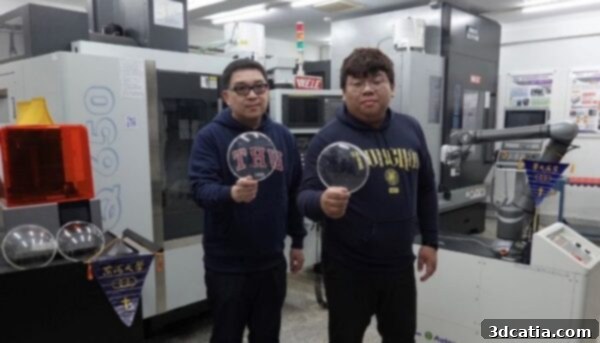
The research, led by PI Chia-Hung Yeh (left) and doctoral candidate Wei-Min Chen (right), was conducted at the Digital Design Engineering Laboratory, Department of Industrial Engineering and Enterprise Information, Tunghai University. (Photo Credit: Chia-Hung Yeh, Tunghai University)
Wei-Min Chen, a doctoral candidate who played a pivotal role in leading the research alongside Chia-Hung Yeh, articulated the broader implications of their findings. He explained: “3D-printing technology holds significant promise for producing optical components by allowing rapid prototyping of product designs, enabling designers and engineers to quickly validate the aesthetic, structural and functional aspects of their creations. Additionally, it makes it possible to bring intricate and innovative designs to life, shortening the development cycle for new vehicle models and boosting overall market competitiveness.” This highlights how additive manufacturing empowers designers and engineers with unprecedented creative freedom, allowing them to rapidly iterate on complex designs and significantly reduce the time-to-market for new automotive models. The ability to quickly test and validate designs is a game-changer in a fast-paced industry where innovation is key to staying ahead.
Future Directions and the Broader Impact on Automotive Innovation
Building on their successful initial findings, the researchers at Tunghai University are committed to further advancing the application of 3D printing in automotive lighting. Their future plans include a deeper investigation into specific headlamp module configurations. This will involve assessing various internal factors that can influence the performance and durability of 3D printed lenses, such as fixture temperature, the operating environment, and optimal structural design. Through this comprehensive evaluation, their ultimate aim is to ensure that the findings derived from their laboratory research can be effectively and reliably applied to practical, real-world automotive applications. This continued research will refine the technology, making it even more robust and suitable for mass adoption within the rigorous standards of the automotive industry. The potential for 3D printing to enable truly adaptive and smart lighting systems, capable of responding to different driving conditions and driver preferences, is immense.
The integration of 3D printing into the manufacturing of critical optical components like headlight lenses represents a significant leap forward for the automotive sector. It offers a powerful alternative to traditional methods, addressing key pain points such as long lead times, high tooling costs, and limitations in design complexity and customization. As the industry continues to push the boundaries of design and personalization, additive manufacturing stands ready to meet these evolving demands, paving the way for more innovative, efficient, and aesthetically diverse vehicle lighting solutions. The work by Tunghai University not only validates the technical viability of 3D printed headlight lenses but also illuminates a clear path towards their widespread adoption, promising a brighter future for automotive design and manufacturing.
To learn more about the detailed methodology and groundbreaking results of this study, you can access the full press release HERE.
What are your thoughts on the future of 3D printed headlight lenses and their potential to transform the automotive industry? We invite you to share your insights and engage in the conversation by leaving a comment below or by connecting with us on our LinkedIn, Facebook, and Twitter pages! Don’t miss out on the latest advancements and news in additive manufacturing—be sure to sign up for our free weekly newsletter here, delivering the most important 3D printing updates directly to your inbox. Additionally, you can explore all our engaging videos and educational content on our dedicated YouTube channel. For more in-depth coverage and related articles on additive manufacturing applications within the automotive sector, please click here.
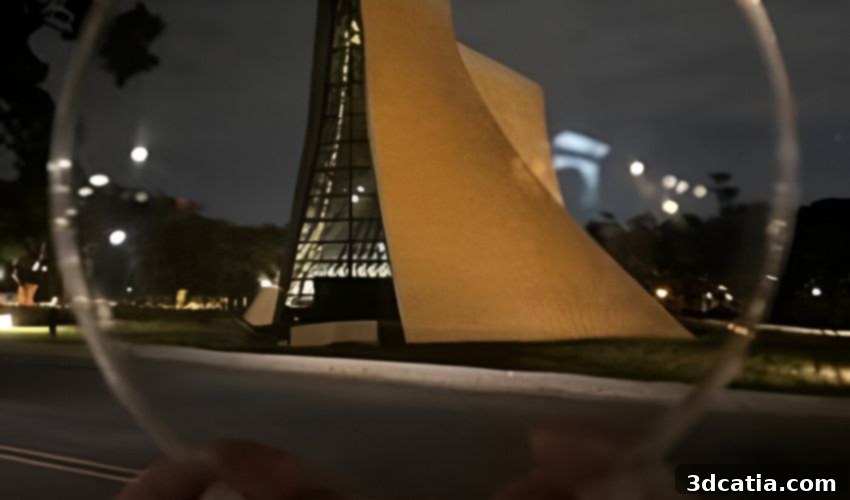
*Cover image: The Luce Memorial Chapel in Taichung, Taiwan viewed through one of the 3D printed headlight lenses. Photo credit: Chia-Hung Yeh, Tunghai University