
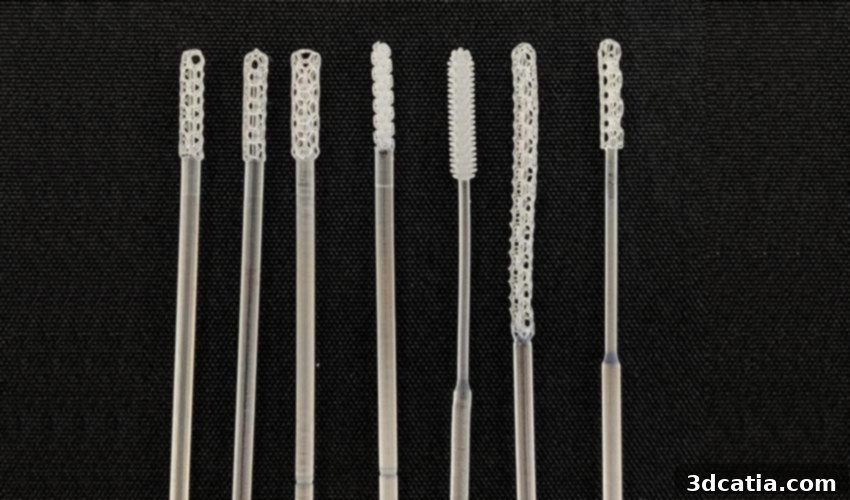
3D Printing Spearheads Nasopharyngeal Swab Production Amidst Global Health Crises
The advent of unforeseen global health crises often exposes vulnerabilities in established supply chains and manufacturing capabilities, leading to critical shortages of essential medical supplies. During such times, the ability to rapidly innovate and produce vital equipment becomes paramount. One such critical item that faced severe scarcity was the nasopharyngeal (NP) swab, indispensable for widespread COVID-19 testing. These specialized medical devices, consisting of flexible sticks with a bristled or flocked tip, are designed for the delicate collection of samples from the nasopharynx before being placed into a viral transport medium. As traditional supply lines struggled to keep pace with unprecedented demand, the innovative world of additive manufacturing, commonly known as 3D printing, emerged as a transformative solution. 3D printing companies worldwide stepped up, leveraging their expertise to design, validate, and mass-produce these crucial swabs, ensuring that healthcare systems could continue vital diagnostic testing.
The rapid response from the 3D printing industry not only addressed immediate shortages but also highlighted the immense potential of localized and agile manufacturing in bolstering global health resilience. The ability to quickly iterate designs, utilize advanced materials, and deploy production swiftly positioned 3D printing as a game-changer. This article delves into the pivotal contributions of leading 3D printing companies, specifically Carbon and Formlabs, and their innovative approaches to tackling the urgent demand for NP swabs, showcasing how technology can pivot to support humanity in times of need.
The Critical Need for Nasopharyngeal Swabs: A Global Supply Chain Challenge
The sudden and pervasive spread of COVID-19 created an immediate and overwhelming demand for diagnostic testing. At the heart of this testing process was the nasopharyngeal swab. Unlike standard cotton swabs, NP swabs are engineered for precision and efficacy. Their unique design includes a long, flexible shaft to reach the nasopharynx, and a tip specifically designed to collect viral particles efficiently without causing discomfort or injury to the patient. The material of the tip is also crucial; it must effectively bind viral RNA while releasing it cleanly into the transport medium for accurate laboratory analysis.
The global manufacturing infrastructure for these specialized medical devices was not prepared for the exponential surge in demand. Many countries faced dire shortages, hindering their ability to conduct widespread testing, which is a cornerstone of pandemic control. This crisis underscored a significant vulnerability in the global medical supply chain, prompting a desperate search for alternative production methods. The strict requirements for sterility, biocompatibility, and performance meant that any alternative solution would need rigorous validation and certification—a process typically time-consuming but accelerated by the emergency. This scenario created a unique opportunity for 3D printing companies to demonstrate their capability for rapid, on-demand, and specialized manufacturing in a critical healthcare context.
Understanding Nasopharyngeal Swabs: Design and Function
Nasopharyngeal swabs are highly specialized medical instruments designed to safely and effectively collect respiratory samples from the upper part of the throat, behind the nose. A typical NP swab comprises two main components: a long, thin, flexible shaft, usually made of plastic, and a flocked or bristled tip. The flexibility of the shaft is critical, allowing it to navigate the nasal cavity without causing trauma, while its length ensures it can reach the nasopharynx. The flocked tip, often made of nylon fibers, is superior to traditional cotton because it efficiently collects cells and mucus containing viral particles and then rapidly releases them into the transport medium, maximizing sample yield for accurate diagnostic tests. The material of the entire swab must be inert, non-toxic, and compatible with the human body, as well as with the chemical reagents used in laboratory testing. Achieving these precise design and material specifications through conventional manufacturing methods can be complex and time-consuming, highlighting where 3D printing could offer a significant advantage.
Carbon’s Pioneering Role: Advancing Swab Design with DLS Technology
In response to the urgent global need, California-based 3D printing giant Carbon rapidly mobilized its expertise and Digital Light Synthesis (DLS™) technology to design, validate, and produce nasopharyngeal sampling swabs. Carbon’s DLS process is renowned for its ability to produce highly complex, isotropic parts with exceptional mechanical properties, making it uniquely suited for medical device applications. Their approach to swab manufacturing focused on leveraging their sophisticated Lattice Engine software, which allows for the creation of intricate lattice structures. These structures are not only material-efficient, reducing both waste and printing time, but also significantly enhance the functionality and comfort of the swabs. Carbon understood that successful deployment required more than just rapid production; it demanded a product that met stringent medical standards and offered superior performance in clinical settings.
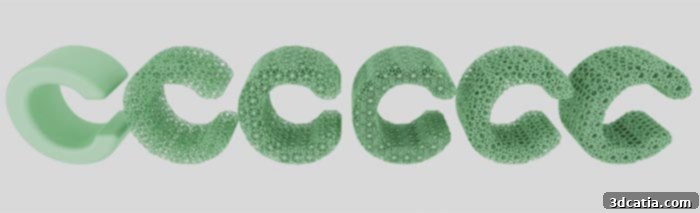
Carbon’s lattice structure technology | Image via Carbon
Innovation Through Lattice Structures: Comfort and Efficiency
Carbon’s innovative use of lattice structures represents a significant advancement in swab design. Traditional flocked swabs have limitations in material distribution and flexibility. By contrast, Carbon’s Lattice Engine software enables the precise design of microscopic, interconnected strut geometries within the swab’s tip. This engineering marvel yields several critical benefits. First, it significantly reduces the amount of material required, leading to faster printing times and lower production costs. Second, and crucially for patients and healthcare workers, these lattice tips offer improved comfort during sample collection due to their inherent flexibility and adaptability to nasal passages. The open, porous nature of the lattice also enhances sample collection efficiency, as the intricate network can trap viral particles more effectively than traditional designs, while also ensuring a rapid and complete release into the transport medium. This sophisticated design approach demonstrates how advanced additive manufacturing can lead to products that are not only rapidly produced but also superior in performance and patient experience.
Collaborative Development and Open Access
Recognizing the critical importance of medical device certification and safety, Carbon embarked on a collaborative journey with multiple healthcare institutions. This partnership ensured that the designs underwent rigorous clinical assessment and validation by medical professionals. This iterative process of design, testing, and feedback was essential for developing a swab that healthcare providers could trust and use safely and effectively. In an unprecedented move reflecting the urgency of the global crisis, Carbon officially stated: “Given the current crisis, designs produced with Carbon’s Lattice Engine will not be specifically restricted to Carbon DLS™ printing technology and may be designed for printing on any platform in any material.” This commitment to open access and platform-agnostic design was monumental. It meant that their validated designs, once released, could be utilized by other 3D printing facilities regardless of their specific printer or material, thereby dramatically accelerating decentralized production and distribution efforts worldwide. This collaborative and open-source approach underscored a commitment to global health beyond commercial interests, fostering a collective response to a shared challenge. More information on Carbon’s initiatives can be found HERE.
Formlabs’ Rapid Response: Scaling Production with SLA 3D Printing
Simultaneously, another leading US-based 3D printing company, Formlabs, also rose to the challenge, leveraging its Stereolithography (SLA) technology to produce NP swabs. Formlabs initiated a crucial co-creation process with medical experts from prominent institutions like USF Health and Northwell Health. This direct collaboration with doctors and frontline healthcare providers was key to designing swabs that were not only effective but also optimized for maximum throughput and rapid deployment to health systems in dire need. Formlabs’ SLA machines are known for their high resolution and ability to produce smooth, isotropic parts, making them ideal for medical applications requiring precise geometries and biocompatible materials. Their approach focused on developing a completely 3D-printed swab, eliminating the complexities of multi-part assembly and streamlining the manufacturing process.
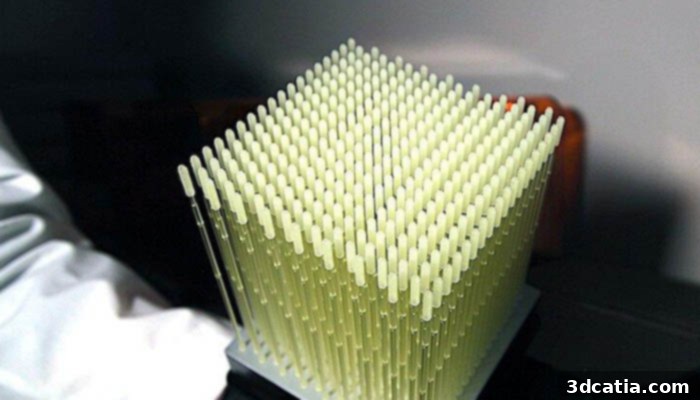
3D printed test swabs on Formlabs’ SLA machines
Rigorous Testing and Regulatory Approvals
The development of medical devices, especially during a public health emergency, necessitates an accelerated yet uncompromising approach to testing and regulatory approval. Formlabs’ 3D-printed swabs underwent an extensive battery of tests at USF Health. These evaluations included assessments for material biocompatibility, structural integrity, sample collection efficacy, and compatibility with viral transport media. The success of these tests paved the way for critical authorizations. The swabs received an Emergency Institutional Review Board (IRB) approval, a vital step for clinical use during a crisis. Furthermore, they secured authorization from various regulatory bodies, infectious disease specialists, and virology experts, ensuring that the devices met the highest standards for safety and diagnostic accuracy. This rigorous validation process provided healthcare professionals with confidence in the reliability and safety of these rapidly produced devices, a testament to Formlabs’ commitment to quality and patient care.
Biocompatible Materials and Scalable Manufacturing
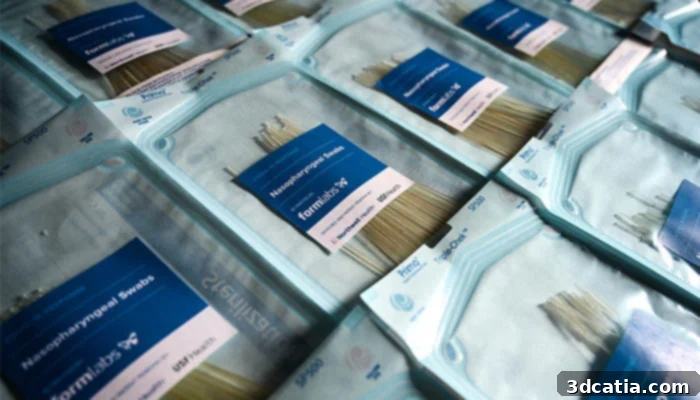
A cornerstone of Formlabs’ success in producing medical-grade swabs was their use of advanced, biocompatible, and autoclavable materials, such as their Surgical Guide Resin. Biocompatibility is non-negotiable for devices that come into contact with human tissue, preventing adverse reactions or toxicity. Autoclavability, the ability to withstand high-temperature steam sterilization, is equally critical for maintaining sterility and preventing cross-contamination in medical environments. The entire swab, from tip to shaft, was printed as a single, monolithic piece, leveraging the precision of SLA technology. This unified design not only simplifies production but also enhances structural integrity and reliability. To meet the massive demand, Formlabs scaled its manufacturing operations within its FDA-registered and ISO 13485 certified facility in the United States. This certification is a globally recognized standard for quality management systems in the medical device industry, assuring consistent quality and regulatory compliance. By consolidating production in such a highly regulated environment, Formlabs demonstrated its capability to transition from rapid prototyping to high-volume, medical-grade manufacturing. Interested parties wishing to order these essential test swabs can find more information and a contact form on their website HERE.
The Broader Impact: 3D Printing as a Pillar of Healthcare Resilience
The efforts of companies like Carbon and Formlabs in producing 3D-printed nasopharyngeal swabs represent more than just a temporary solution to a crisis; they signify a profound shift in how medical devices can be manufactured and supplied. The agility, customization capabilities, and speed of additive manufacturing proved invaluable during the pandemic, extending beyond swabs to include other critical personal protective equipment (PPE) like face shields, ventilator components, and even custom prosthetics. This experience has underscored the potential of 3D printing to create more resilient and localized supply chains, reducing reliance on distant and often fragile global networks. By enabling on-demand production closer to the point of need, 3D printing offers a powerful tool for responding to future health emergencies, natural disasters, or even routine supply chain disruptions. It shifts the paradigm from mass production to adaptive manufacturing, where specific needs can be met with tailored solutions.
From Crisis to Innovation: A New Paradigm for Medical Manufacturing
The COVID-19 pandemic served as an unexpected but powerful accelerator for the adoption of 3D printing in the medical sector. What began as an emergency measure quickly evolved into a demonstration of additive manufacturing’s inherent strengths: rapid prototyping, design flexibility, and the ability to produce complex geometries that improve functionality. The rigorous validation and certification processes undertaken by companies like Carbon and Formlabs have set new precedents, proving that 3D-printed medical devices can meet the highest standards of safety and efficacy. This newfound confidence is paving the way for wider acceptance and integration of additive manufacturing into mainstream medical device production. Moving forward, the lessons learned from the swab crisis will undoubtedly inform strategies for building more robust healthcare infrastructures, where localized, agile, and technologically advanced manufacturing capabilities play a central role in ensuring that essential supplies are always available, regardless of global circumstances.
The innovative spirit and rapid deployment demonstrated by the 3D printing community, particularly Carbon and Formlabs, in addressing the critical shortage of nasopharyngeal swabs during the COVID-19 pandemic highlight the transformative power of additive manufacturing. Their contributions not only filled an immediate void but also advanced the capabilities and acceptance of 3D printing within the highly regulated medical field. These initiatives showcase how advanced technology, combined with collaborative efforts and a commitment to innovation, can significantly bolster global health resilience and reshape the future of medical device manufacturing. What do you think of these vital initiatives to create 3D printed swabs? We encourage you to share your thoughts in a comment below or join the conversation on our Facebook and Twitter pages! Don’t forget to sign up for our free weekly Newsletter, to receive all the latest news in 3D printing directly in your inbox.