
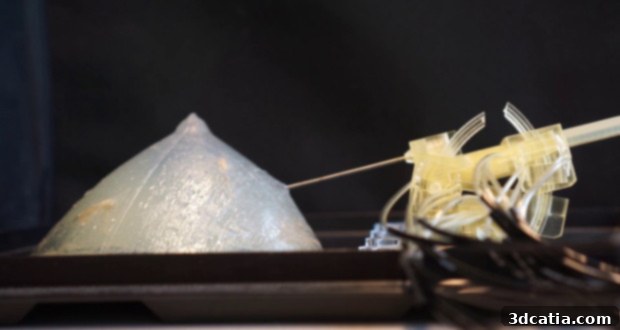
3D Printing Revolutionizes Breast Cancer Detection: Introducing the Stormram 4 Biopsy Robot
The landscape of healthcare is undergoing a profound transformation, largely driven by the relentless pace of technological innovation. Among the myriad advancements, 3D printing stands out as a particularly impactful force, reshaping everything from personalized prosthetics and intricate surgical guides to advanced drug delivery systems. Its ease of adoption and unparalleled precision have made it an invaluable tool in the medical field, particularly in the ongoing battle against debilitating diseases like cancer. This groundbreaking technology is propelling medicine to new frontiers, offering solutions that were once confined to the realm of science fiction. Following earlier breakthroughs, such as the development of 3D printed ovaries designed to restore fertility in cancer survivors, researchers have continued to push boundaries. A significant recent achievement comes from the University of Twente in the Netherlands, in close collaboration with Ziekenhuis Groep Twente, where they have unveiled the world’s smallest and most accurate 3D printed biopsy robot, aptly named Stormram 4, specifically engineered for the early detection of breast cancer.
Breast cancer remains a formidable global health challenge, affecting millions of individuals worldwide each year. In the United States alone, projections for 2017 indicated approximately 252,710 new cases in women and an additional 2,470 new cases in men. These staggering figures underscore the critical importance of early diagnosis, which can often be the deciding factor between life and death, or between less aggressive and more invasive treatment protocols. Current diagnostic methods, particularly manual MRI-guided breast biopsies, are susceptible to human error, which can lead to inaccuracies, inconclusive results, and delayed treatment. Recognizing this pressing need for enhanced precision and efficiency, the development of the Stormram 4 robot represents a pivotal moment. This innovative device promises to be a life-saving tool, addressing the inherent limitations of manual procedures and paving the way for more reliable and timely breast cancer diagnoses.
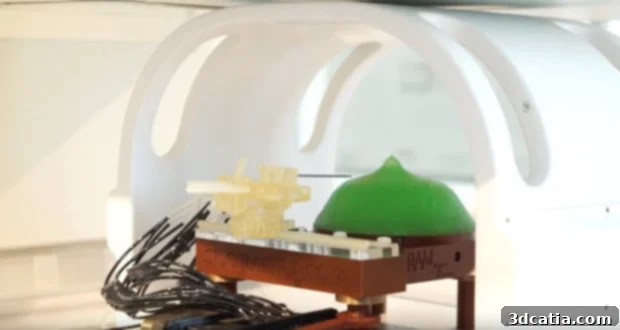
The Stormram 4 robot is engineered to revolutionize the biopsy process by meticulously collecting cell samples with an unprecedented level of accuracy, far surpassing what is achievable with the human hand. Traditional manual MRI breast biopsy procedures are often protracted, taking a considerable amount of time, which can be uncomfortable for patients and inefficient for healthcare facilities. Moreover, these procedures can sometimes prove ineffective due to challenges such as the fragmentation or insufficient quantity of cells collected. Doctors typically resort to using thicker needles to extract adequate tissue samples, a process that can be painful for the patient and may necessitate multiple attempts to obtain a viable sample. This not only prolongs the procedure but also increases patient anxiety and the risk of complications. The limitations of manual biopsies highlight a critical gap in current diagnostic practices, one that the Stormram 4 aims to fill with its advanced robotic capabilities.
To comprehensively address the multifaceted challenges inherent in manual biopsy procedures, the researchers embarked on an ambitious project to develop a sophisticated robotic system. This system incorporates a significantly thinner needle for biopsy, a crucial innovation that dramatically enhances patient comfort and minimizes tissue damage compared to the thicker needles typically employed. The reduced invasiveness, combined with the robot’s superior precision, is expected to lead to more accurate and reliable diagnoses on the first attempt. A key design feature of the Stormram 4 is its propulsion system: it is driven by ingenious rectilinear and curved air pressure motors. This pneumatic drive mechanism allows the robot to execute movements with remarkable speed and fluidity, far exceeding the steadiness and precision achievable by a human hand, especially within the constrained environment of an MRI scanner. Furthermore, the absence of electric motors is a deliberate and critical design choice, ensuring that the robot operates without generating electromagnetic interference, a prerequisite for seamless integration and safe operation within powerful MRI magnetic fields.
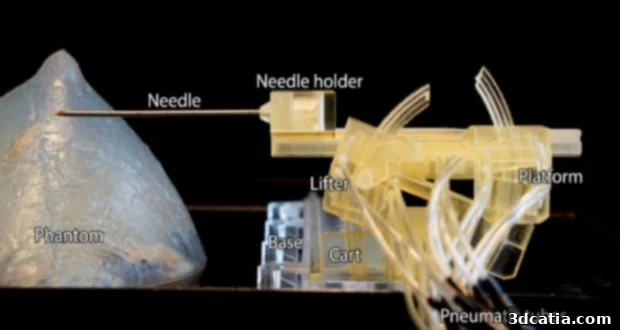
The very essence of the Stormram 4’s existence is a testament to the transformative power of 3D printing technology. The researchers harnessed the capabilities of a high-resolution polyjet 3D printer to fabricate the intricate components of the robot. A paramount design challenge was to create a device that could operate flawlessly within an MRI scanner without causing any magnetic interference. This necessitated the meticulous selection of materials. The robot’s body was crafted using a specialized plastic specifically chosen for its non-ferromagnetic properties, ensuring it would not disrupt the MRI scanner’s powerful magnetic field. Achieving this final design was an iterative process, involving the development and testing of three prior models before arriving at the optimized Stormram 4. The exclusion of electric motors was a non-negotiable requirement due to the electromagnetic interference they would inevitably cause with the MRI scanner. Consequently, the team ingeniously devised a system where the robot is powered entirely by air pressure and precisely controlled by an operator situated safely outside the scanner room. This innovative approach not only guarantees MRI compatibility but also showcases the versatility and problem-solving potential of advanced manufacturing techniques like 3D printing in highly specialized medical environments.
Vincent Groenhuis MSc, a key researcher involved in the project, elaborated on the critical advantages offered by the Stormram 4: “The robotic system can manipulate the needle more precisely toward target coordinates of the lesion inside the body, on the first attempt. This will significantly improve the accuracy of the biopsy procedure compared to the current manual practice.” He further emphasized the operational benefits, stating, “Secondly, the needle insertion can be performed directly inside the MRI scanner itself, allowing the needle’s trajectory to be followed under nearly real-time imaging guidance. This real-time feedback minimizes the chances of misplacement and significantly enhances the reliability of the sample collection. The required time to perform the biopsy is also substantially shorter, enabling more effective and efficient use of the MRI scanner facilities, which are often high-demand and costly resources.” These combined advantages not only improve diagnostic accuracy and patient outcomes but also streamline clinical workflows and optimize resource allocation in healthcare settings.
- The Stormram 3
- The Stormram 2
- The Stormram 1
The development of the pioneering Stormram 4 robot was a collaborative effort spearheaded by a dedicated team from the University of Twente’s Robotics and Mechatronics (RAM) lab, including Vincent Groenhuis MSc, Dr. Françoise Siepel, and Prof. Stefano Stramigioli. Their expertise in robotics and mechatronics was crucial in designing the intricate mechanical and control systems. Additionally, the project greatly benefited from close collaboration with Dr. Jeroen Veltman, a distinguished radiologist at Ziekenhuis Groep Twente (ZGT). Dr. Veltman’s invaluable clinical insights were instrumental in shaping the practical design and functionality of the robot, particularly in the creation of the specialized plastic frame that ensures MRI compatibility and optimal performance in a clinical setting. While the Stormram 4 represents a significant leap forward, this sophisticated little robot is still in its final stages of design and rigorous testing. Researchers anticipate several more years of intensive development and clinical trials before it can be widely deployed in diagnostic centers. This continued refinement will ensure its safety, efficacy, and seamless integration into routine medical practice, promising a brighter future for breast cancer diagnosis.
The potential impact of the Stormram 4 on the future of breast cancer detection is immense. By offering unprecedented precision, reducing procedural time, and enhancing patient comfort, this 3D-printed robot promises to significantly improve diagnostic accuracy and early intervention capabilities. It represents a paradigm shift from manual, operator-dependent procedures to automated, high-precision robotic interventions. This innovation not only elevates the standard of care for breast cancer patients but also showcases the profound possibilities when advanced manufacturing technologies, robotics, and medical expertise converge. As the medical community continues to embrace such advancements, the fight against cancer gains increasingly powerful allies, offering hope for earlier detection, more effective treatments, and ultimately, more lives saved.
See the robot in action below and witness the future of medical diagnostics:
What do you think the Stormram 4 could mean for the future of breast cancer detection and patient care? We invite you to share your thoughts and predictions in a comment below, or join the conversation on our Facebook and Twitter pages. Don’t forget to sign up for our free weekly Newsletter to receive all the latest news and innovations in 3D printing delivered straight to your inbox!