

Revolutionary Advancements: Unpacking the Latest in 3D Printing Innovation and Impact
This week, the world of 3D printing continues to push boundaries, delivering a diverse range of applications that span from highly sensitive medical innovations to groundbreaking industrial milestones and creative engineering feats. Our latest roundup delves into several compelling stories, starting with the first documented use of a 3D-printed assisted suicide pod in Switzerland, a development that has ignited significant ethical and legal debates. Moving to more robust applications, we celebrate a monumental production milestone by Carbon and Keystone Industries, who have successfully 3D printed over a million parts for the demanding dental sector. Beyond healthcare, we explore how additive manufacturing is making waves in environmental conservation with 3D-printed oyster shells and inspiring creative projects like a remarkable LEGO motorcycle. Finally, we examine the expansion of additive manufacturing into heavy industry, specifically the Oil & Gas sector, with updates from Vallourec. Join us as we uncover these fascinating advancements shaping our future.
First Case of Use of 3D Printed Suicide Pod in Switzerland
The concept of the Sarco capsule, a project spearheaded by Australian Dr. Philip Nitschke and initially unveiled in late 2021, has transitioned from a theoretical design to a real-world application. This assisted suicide capsule, notable for its significant reliance on 3D printing technology in its design and fabrication, has recently been utilized for the first time in Switzerland. The case involved a 64-year-old woman, suffering from a chronic immune disease, who chose to end her life using this innovative yet controversial device. The Sarco capsule operates by rapidly filling with nitrogen gas within minutes, inducing death through hypoxia and hypocapnia – a method designed to be peaceful and swift. As expected, this development has not only captured global attention but has also sparked intense discussions on various fronts, including profound legal and ethical dilemmas surrounding end-of-life choices and the role of technology in such sensitive matters. Authorities in Switzerland are reportedly conducting a criminal investigation, highlighting the complex societal questions and regulatory challenges that such an invention presents.

Photo Credits: Philip Nitschke/Reuters
One Million Dental Parts 3D Printed on Carbon Machines: A Milestone in Digital Dentistry
In a monumental achievement for the additive manufacturing industry and the dental sector, Carbon, a leading manufacturer of resin 3D printers, has proudly announced a significant milestone: the 3D printing of over one million dental parts. This impressive feat was accomplished in collaboration with Keystone Industries, a specialist in advanced resin formulations. The scale of this operation is truly remarkable, requiring an estimated 314,000 hours of intensive design and production work, alongside the consumption of 11,200 liters of specialized materials. This achievement not only underscores the robust capabilities of Carbon’s digital light synthesis (DLS) technology but also highlights the increasing reliance on advanced 3D printing solutions within modern dentistry.
Phil DeSimone, CEO and co-founder of Carbon, emphasized the strategic importance of this milestone, stating, “Reaching this milestone is a significant achievement for our partnership with Keystone and a clear indicator of the direction in which dental manufacturing is headed. We are not just a 3D printing company; we are pioneering a new era of high-volume custom manufacturing to meet the demands of today’s dental industry.” This declaration reflects a broader trend of additive manufacturing moving beyond prototyping to become a core method for high-volume, custom production. For the dental industry, this translates into unprecedented levels of personalization, efficiency, and speed in creating a wide array of products, from crowns and bridges to orthodontic aligners and surgical guides. The synergy between Carbon’s innovative printing platforms and Keystone’s advanced material science has demonstrably optimized the entire value chain in dental fabrication, showcasing the profound impact of digital dentistry on patient care and laboratory operations.

Photo Credits: Carbon
3D-Printed Oyster Shells: Innovating Aquaculture and Coastal Resilience
In a remarkable demonstration of how 3D printing can be harnessed for environmental benefit, the Merrymeeting Shellfish Company, based in Bath, Maine, is revolutionizing its shellfish farming practices. This innovative company is leveraging additive manufacturing to significantly enhance shellfish production, particularly through the creation of hexagonal shells from biodegradable materials. These specially designed shells can be printed in a mere two hours, offering a rapid and efficient solution for aquaculture needs. The primary advantage of these 3D-printed structures is their ability to facilitate indoor shellfish growth, a critical capability during the harsh winter months when outdoor farming is impractical or impossible. This ensures continuous production and reduces vulnerability to seasonal climate variations.
Founder Matthew Nixon has set an ambitious goal: to escalate annual oyster spat production – the spawned larvae that have successfully attached to a surface and begun to grow – from a current 60 million to an impressive 400 million next year. This dramatic increase is not merely about scaling operations; it is a direct response to the multifaceted challenges facing oyster farms, including the pervasive threats posed by climate change, such as ocean acidification and rising water temperatures, which can severely impact natural oyster populations and their habitats. By employing 3D printing, Merrymeeting Shellfish is pioneering a sustainable model that mitigates these environmental risks and fosters a more resilient aquaculture system. The company’s commitment extends to bolstering local production in Maine, thereby reducing the region’s reliance on shellfish imports and strengthening coastal economies. This initiative underscores how advanced manufacturing technologies can play a vital role in addressing ecological concerns, improving food security, and sustaining traditional industries amidst increasing competition and environmental pressures.
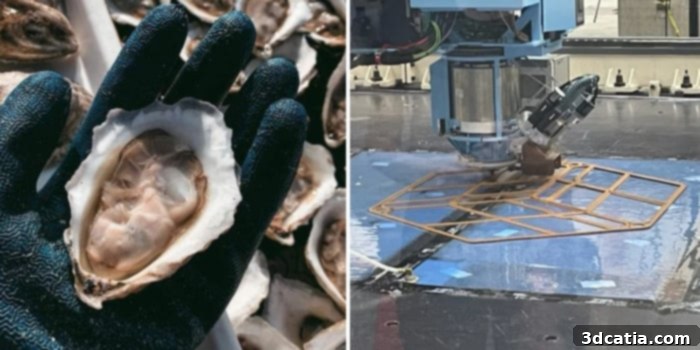
Photo Credits: Merrymeeting Shellfish Company / Press Herald
A Lifesize, 3D Printed LEGO Technic Motorbike
For enthusiasts of both classic LEGO and motorbikes, an extraordinary project by engineer Matt Denton offers a captivating blend of these passions. Denton has ingeniously utilized 3D printing technology to construct a fully rideable, life-sized replica of a LEGO Technic 8810 cafe racer. This remarkable creation transcends the boundaries of traditional toy building, bringing a beloved miniature model into the real world with impressive scale and functionality. The foundation for this unique vehicle was an existing electric monkey motorbike, which served as the chassis and powertrain. Denton then meticulously designed and 3D printed oversized LEGO parts, ensuring they precisely matched the aesthetics and interlocking mechanisms of the original LEGO Technic set. This process required careful attention to detail, replicating the iconic stud and tube connections that define the LEGO building experience.
The ‘bricks’ themselves were fabricated using PolyLite material, leveraging various 3D printing technologies to achieve the required strength, accuracy, and finish for such large components. Initially, the oversized parts were designed to attach just like genuine LEGO bricks, allowing for the authentic experience of snapping them into place. However, to guarantee the structural integrity and safety required for a rideable vehicle, Denton ultimately reinforced the assembly by bolting all the pieces together. This project is a testament to creative engineering and the versatility of 3D printing, demonstrating how digital fabrication can enable individuals to realize ambitious, large-scale projects that blur the lines between toy and functional object. Its ingenuity has even garnered approval from Adam Savage of Mythbusters fame, further cementing its status as a significant achievement in the maker community. This project not only entertains but also inspires, showcasing the limitless possibilities when imagination meets advanced manufacturing techniques.
Vallourec and Metal 3D Printing: Advancing the Oil & Gas Sector
The French industrial group Vallourec, a global leader in premium tubular solutions, has made significant strides in integrating advanced additive manufacturing into its operations, particularly for the highly demanding Oil & Gas sector. The company recently unveiled a series of new 3D-printed metal parts that have been rigorously qualified for use within this critical industry. These components include various pressure vessel elements, which are crucial for ensuring the safety and efficiency of operations in challenging oil and gas environments. Vallourec is utilizing Wire Arc Additive Manufacturing (WAAM) technology for the production of these parts, a method known for its capability to create large-scale metal components with excellent material properties, often at a faster pace and lower cost than traditional manufacturing techniques.
This strategic move follows a significant investment made in April 2023, when Vallourec integrated two sophisticated 3D metal printing robots into its dedicated R&D center. This integration was aimed at expanding the company’s capabilities to offer parts of diverse sizes and varying degrees of complexity, while simultaneously achieving substantial reductions in supply chain costs and lead times. A key highlight of Vallourec’s innovation is its assertion that it can manufacture pressure vessels using the WAAM process in full compliance with ASME Sec IX QW-600 requirements – a testament to the technology’s reliability and the quality of the produced parts for high-pressure applications. This adherence to stringent industry standards is vital for adoption in regulated sectors like Oil & Gas. The application of metal 3D printing, particularly WAAM, is transforming how complex, high-performance components are designed and produced for heavy industries, promising enhanced operational efficiency, greater design flexibility, and a more streamlined manufacturing process. We eagerly anticipate seeing the full range of applications and the long-term impact of these advanced manufacturing methods within the energy sector.
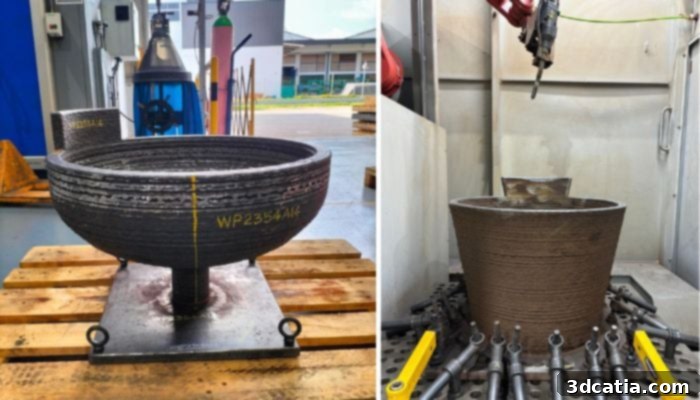
Photo Credits: Vallourec
The breadth of applications showcased this week – from the ethical complexities of medical devices to industrial breakthroughs in dental and energy sectors, and from environmental conservation to personal creative projects – truly reflects the dynamic and transformative power of 3D printing. Each story highlights how additive manufacturing is not just a technology but a catalyst for innovation across diverse fields, addressing contemporary challenges and opening new avenues for development. Whether it’s enhancing healthcare, tackling climate change, or simply inspiring creativity, 3D printing continues to reshape our world.
What are your thoughts on these groundbreaking developments, particularly the Sarco 3D-printed suicide pod and its implications? We invite you to share your perspectives in the comments section below or join the conversation on our social media platforms: LinkedIn, Facebook, and Twitter. To stay informed about the very latest in additive manufacturing news and innovations, don’t forget to sign up for our free weekly newsletter here, delivered straight to your inbox. You can also explore our extensive library of videos and insights on our dedicated YouTube channel. Your engagement helps us foster a vibrant community passionate about the future of 3D printing!
*Cover Photo Credits: Reuters