
Revolutionizing Cardiovascular Health: How 3D Bioprinting and ‘Heart-on-a-Chip’ Technology Advance Disease Understanding and Personalized Medicine
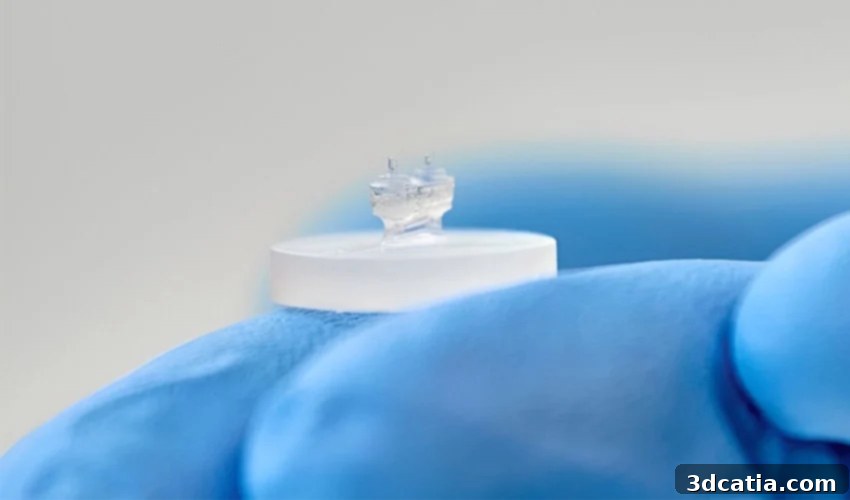
The human heart, a marvel of biological engineering, is an incredibly complex organ whose intricate mechanics, electrical activity, and physiological responses have historically posed significant challenges for in-depth study and comprehensive understanding. Traditional research methods, often relying on animal models or static cell cultures, frequently fall short in accurately replicating the dynamic, living environment of the human body, especially when it comes to the highly specialized tissues of the heart. However, a groundbreaking innovation in the field of 3D bioprinting is poised to transform our approach to cardiovascular research, offering unprecedented insights into this vital organ. This pioneering work comes from a dedicated team of researchers at the Azrieli Center at CHU Sainte-Justine in Canada, who have successfully developed a sophisticated “heart-on-a-chip” system. This cutting-edge device, meticulously crafted using advanced 3D bioprinting techniques, is specifically engineered to simulate the precise mechanical and electrical activities characteristic of the human heart, thereby accurately mimicking its complex behavior in a controlled laboratory setting. The profound potential of this device lies in its ability to facilitate a much more accessible and detailed study of individual heart diseases, paving the way for the development of highly specific and personalized treatments that are precisely tailored to the unique needs of each patient, ushering in a new era for personalized medicine in cardiology.
For several years now, the field of 3D bioprinting, a revolutionary additive manufacturing process that involves the precise deposition of living cells and biomaterials to create functional tissues and organs, has been undergoing a period of rapid and transformative evolution. This advanced technology has become a powerful catalyst, driving numerous promising and highly encouraging medical projects across a diverse range of disciplines. Ultimately, one of the most ambitious and long-term goals for researchers and clinicians leveraging this cutting-edge technology is the development of fully viable, functional human organs. Achieving this monumental feat would represent a paradigm shift in transplantation medicine, drastically reducing the agonizingly long waiting lists for critical organs such as kidneys, livers, and hearts. Imagine a future where organ transplants could be performed more quickly, with significantly reduced risks of rejection, and with organs specifically designed for the recipient. While the journey towards fully functional, bioprinted organs for transplantation remains a complex and extensive endeavor with many scientific and engineering hurdles yet to overcome, the inherent promise of 3D bioprinting for delivering monumental medical advancements is undeniable. For the immediate future, however, the technology is predominantly being utilized within critical research phases, offering innovative alternative solutions that enable scientists to gain a deeper, more nuanced understanding of specific diseases, develop advanced in-vitro models, and accelerate drug discovery processes. This “heart-on-a-chip” project perfectly exemplifies bioprinting’s current impact on foundational research.
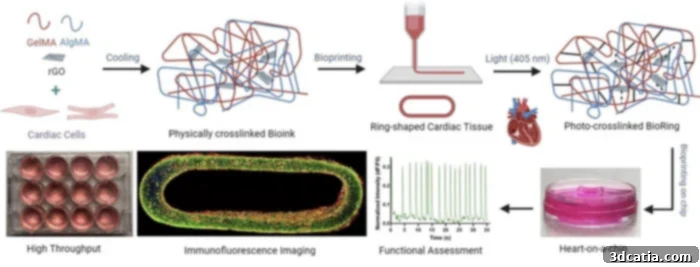
The process developed by the Canadian researchers for their 3D bioprinted heart-on-a-chip.
Utilizing 3D Bioprinting for Advanced Human Heart Research
Diseases affecting the heart are notoriously complex, presenting a formidable challenge to medical science due to the organ’s critical role and intricate biological mechanisms. The sheer vitality of the heart means that direct, live observation of its cellular activity and the progression of diseases within a living human being is extremely difficult, if not impossible, for medical professionals seeking to draw conclusive and actionable insights. This fundamental limitation has historically hindered the development of truly personalized and effective treatments for various cardiovascular conditions. Recognizing this significant unmet need, the dedicated researchers at CHU Sainte-Justine embarked on an ambitious mission: to create an advanced bio-printed ring structure that could accurately replicate the multifaceted physiology and mechanics of the human heart in an accessible, controllable environment. Their innovative solution involved the development of a highly specialized bio-ink, meticulously formulated from a unique blend of photocrosslinkable natural polymers. This proprietary composition includes methacryloyl gelatin (GelMA) and methacrylate alginate (AlgMA), renowned for their biocompatibility and favorable mechanical properties. Crucially, they also incorporated electroconductive nanomaterials, specifically reduced graphene oxide (rGO), into the bio-ink. This strategic combination yielded a revolutionary material that not only offered significantly enhanced printability, making the intricate 3D structures easier and more reliable to produce, but also dramatically improved tensile and compressive mechanical properties. The inclusion of rGO was particularly vital, imparting essential electrical conductivity to the bioprinted tissue, a critical characteristic for accurately simulating the heart’s natural electrical impulses and contractile functions. This advanced bio-ink represents a cornerstone of their “heart-on-a-chip” technology, allowing for the creation of functional cardiac tissues.
Through the precise application of 3D bioprinting technology, these researchers successfully created heart tissue in the innovative shape of a ring. This specific configuration was not arbitrary; it was deliberately chosen to simplify and enhance the study of the organ’s complex behavior. By structuring the tissue in this manner, it becomes significantly easier to monitor, analyze, and manipulate the bioprinted heart tissue, essentially functioning as a highly advanced biological “chip.” This chip-like device offers numerous advantages, primarily its increased ease of production and subsequent analysis, making high-throughput experimentation a much more feasible reality for cardiac research. Houman Sovaji, a distinguished Professor of Pharmacology and the insightful leader of this groundbreaking study, elaborated on the profound impact of their methodology: “Our research has made it possible to combine advanced 3D bioprinting technology to produce standard hearts-on-a-chip much more quickly and with unparalleled precision. What’s more, our comprehensive results definitively demonstrate that these printed devices exhibit superior performance and greater consistency compared to those painstakingly produced through manual methods.” This statement underscores a critical advancement in the field: not only can these models be created, but they also offer a level of reliability and reproducibility that surpasses traditional, labor-intensive techniques. The ability to rapidly and accurately fabricate these cardiac models streamlines research workflows, accelerates the pace of discovery, and ensures that experimental outcomes are more robust and dependable, solidifying the ‘heart-on-a-chip’ as a powerful tool for future cardiovascular investigations.
The long-term vision of the researchers behind this innovative “heart-on-a-chip” technology extends far beyond basic research. Their ultimate aspiration is to leverage the immense potential of patient-derived stem cells, transforming them into specific cardiac cells, and then integrating these cells into the bioprinted chip models. This revolutionary approach would allow for the development of highly individualized models of specific heart diseases, tailored precisely to the genetic makeup and unique pathological profile of individual patients. This personalized modeling would then enable direct testing of potential treatments directly on these patient-specific chips, bypassing the need for animal testing and offering a more accurate prediction of drug efficacy and toxicity in humans. This capability opens up genuinely transformative prospects for the creation of more effective, highly personalized therapeutic drugs. Instead of a one-size-fits-all approach to medication, doctors could potentially use these chips to identify the most potent and safest drug regimen for each patient, minimizing adverse reactions and maximizing therapeutic benefit. This move towards precision medicine in cardiology promises to fundamentally change how heart diseases are diagnosed, understood, and treated, leading to significantly improved patient outcomes and a reduction in the trial-and-error approach often seen in current drug development. The integration of patient-specific iPSCs (induced Pluripotent Stem Cells) in these models is key, allowing for the generation of cardiac tissues that faithfully recapitulate the unique genetic and cellular characteristics of an individual’s diseased heart, making the platform an invaluable tool for personalized drug discovery and disease progression studies.
Ali Mousavi, another key author and contributor to this pivotal study, articulates the critical next phase of their research, emphasizing the importance of comparative analysis: “The next crucial step will be to meticulously compare healthy and diseased heart cells within our bioprinted models to develop robust and comprehensive cardiac pathology models. This comparative approach will also allow us to safely and accurately test the effect of new therapeutic molecules on cells with specific disease characteristics.” This strategy is fundamental to isolating the unique cellular and molecular signatures of various heart diseases and understanding how different therapeutic compounds interact with these specific pathologies. By systematically evaluating the responses of diseased cardiac cells against their healthy counterparts when exposed to novel drugs, researchers can identify lead compounds with greater precision, assess their therapeutic potential, and pinpoint any adverse effects much earlier in the drug development pipeline. This not only accelerates the discovery process for new cardiovascular drugs but also significantly enhances their safety and efficacy profiles before they ever reach human clinical trials. The ability to perform such detailed, controlled, and reproducible experiments on human-relevant cardiac tissue represents a monumental leap forward, promising a future where drug development is more targeted, efficient, and ultimately, more successful in addressing the myriad challenges posed by heart diseases. In the meantime, for those eager to delve deeper into the scientific intricacies of this remarkable achievement, the full study is openly accessible and can be reviewed HERE.
This innovative “heart-on-a-chip” technology, powered by advancements in 3D bioprinting, signifies a monumental step forward in cardiovascular research and personalized medicine. By providing an unparalleled platform for studying the intricate workings of the human heart in a controlled and accessible environment, researchers are gaining critical insights into the underlying mechanisms of heart disease. The ability to create patient-specific models using stem cells, combined with the precision and reproducibility offered by 3D bioprinting, is setting the stage for a new era of targeted therapies. This approach promises to reduce the reliance on animal testing, accelerate drug discovery, and ultimately lead to more effective and safer treatments tailored to individual needs. The ongoing research at CHU Sainte-Justine is not just about understanding the heart; it’s about transforming the future of heart care, offering hope for millions affected by cardiovascular conditions worldwide. The implications for developing new diagnostic tools, understanding disease progression, and refining therapeutic strategies are vast and exciting, paving the way for a healthier future for all.
What are your thoughts on the incredible potential of using 3D bioprinting to thoroughly study the complex behavior of the heart and revolutionize personalized medicine? We invite you to share your valuable insights and perspectives in a comment below or engage with our community on our LinkedIn, Facebook, and Twitter pages! Don’t forget to sign up for our free weekly newsletter here to receive the latest 3D printing news and advancements straight to your inbox every week! You can also find all our compelling videos and in-depth discussions on our YouTube channel, where we explore the frontiers of additive manufacturing and its profound impact on various industries.
*All Photo Credits: Centre Azrieli/CHU Sainte-Justine