
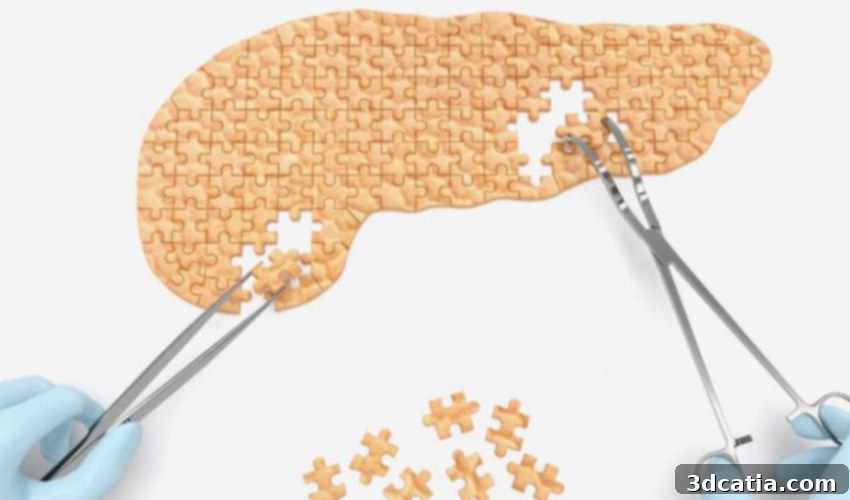
Revolutionizing Diabetes Treatment: The Promise of 3D Bioprinted Bionic Pancreas
In a groundbreaking endeavor that promises to redefine the landscape of diabetes treatment, a dedicated team of scientists from the esteemed Foundation for Research and Development of Science (Fundacja Badań i Rozwoju Nauki) has unveiled their visionary research in the field of 3D bioprinting. Their ambitious project specifically targets the creation of a functional bionic pancreas, offering a potential cure for millions afflicted by diabetes globally. This pioneering Polish foundation, committed to empowering young researchers to bring their discoveries to the world stage, set an audacious goal: to successfully 3D print a fully functional pancreas by the year 2022. While the complexities of medical innovation mean timelines can shift, the foundational research and progress towards this transformative objective continue to inspire hope and drive advancements in regenerative medicine.
Diabetes represents a formidable global health crisis, with its prevalence continuing to surge at an alarming rate. According to the World Health Organization (WHO), the number of individuals living with diabetes reached a staggering 422 million in 2014, a figure projected to nearly double by 2030. For those diagnosed with Type 1 diabetes, managing the condition is a lifelong commitment, typically involving exogenous insulin administration either through daily injections or continuous pump therapy. While these methods are vital for survival, they do not offer a complete cure and necessitate vigilant monitoring of blood glucose levels. The only existing pathways to a definitive cure involve the arduous process of transplanting a new, healthy pancreas – the organ responsible for secreting insulin – or, to a lesser extent, transplanting isolated islets of Langerhans, which are clusters of insulin-producing beta cells within the pancreas. However, both of these conventional transplantation methods are fraught with significant challenges. There is a severe global shortage of donor organs, making access to transplantation extremely limited. Furthermore, patients undergoing these complex surgical procedures face high risks of complications and require lifelong immunosuppressive therapy to prevent organ rejection, which carries its own set of serious health implications. Confronted with this dire and often devastating situation, the innovative Polish foundation embarked on its mission to harness the power of 3D bioprinting to engineer a viable bionic pancreas, aiming to circumvent these traditional obstacles.
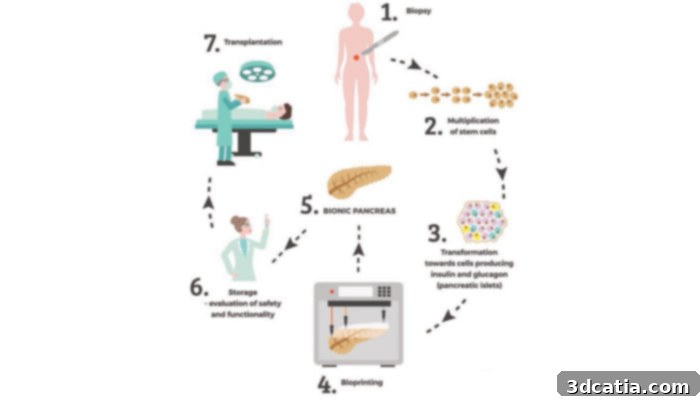
The intricate process of 3D bioprinting a bionic pancreas, showcasing the multi-layered approach to creating functional tissue structures. | Credits: Fundacja Badań i Rozwoju Nauki
At the forefront of this incredibly ambitious and potentially life-altering research project is Michał Wszoła, whose leadership steers the team toward their audacious goal. Wszoła eloquently explains that his team’s methodology involves the sophisticated 3D printing of intricate scaffolding structures, which are then infused with pancreatic tissue or, more specifically, with insulin-producing cells. This meticulous bioengineering process is designed to construct an artificial pancreas that mimics the natural organ’s complex architecture and biological function. The ultimate objective is to provide individuals affected by diabetes with a normally functioning pancreas, thereby liberating them from the daily burden of insulin management and, crucially, preventing the development of severe secondary complications. These complications, which can include kidney failure, blindness, nerve damage, and cardiovascular disease, are unfortunately the underlying cause of a significant majority of diabetes-related deaths. Recognizing the monumental scope of their mission, the team proactively established a powerful consortium in 2015, forging key partnerships with industry leaders. Notably, this consortium includes the Swedish company Cellink, a global pioneer renowned for its expertise and innovative solutions in the realm of 3D bioprinting. It was indeed one of Cellink’s state-of-the-art bio-printers that was instrumental in facilitating the early stages of this groundbreaking research, providing the precision and capabilities necessary for cellular-level fabrication.
The advanced bioprinting process developed by the Foundation’s scientists represents a pinnacle of personalized medicine. It commences with a biopsy from the patient, followed by the careful collection of their own stem cells. These autologous (patient-derived) stem cells are then meticulously cultured and differentiated in vitro, a critical step that transforms them into specialized cells capable of producing both insulin and glucagon—the two essential hormones for blood sugar regulation. By utilizing the patient’s own cells, the risk of immune rejection, a major hurdle in traditional organ transplantation, is virtually eliminated. These newly engineered, hormone-producing cells are then formulated into a specialized “bio-ink,” a biocompatible material compatible with advanced bioprinting systems like Cellink’s Bio X. This bio-ink is precisely deposited layer by layer onto the pre-designed scaffolding, gradually constructing the three-dimensional architecture of the bionic pancreas. The intricate layering ensures that the printed organ not only possesses the correct structural integrity but also the functional capacity to secrete insulin and glucagon in response to varying blood glucose levels, just like a natural pancreas. The culmination of this sophisticated process is the creation of the final bionic pancreas, engineered to be fully functional and, most importantly, designed to potentially eliminate the lifelong need for immunosuppressive drugs, which are a necessary but debilitating aspect of conventional organ transplants. This breakthrough holds immense promise for improving the quality of life for diabetes patients, offering a durable and physiologically integrated solution.

The project is now advancing through a critical phase, meticulously preparing for its first preclinical animal trials. These trials are an indispensable step in medical research, designed to rigorously assess the safety, efficacy, and long-term viability of the bioprinted bionic pancreas in a controlled biological environment before any human application. If these animal trials yield successful and promising results, demonstrating both the safety and the desired functionality of the engineered organ, the researchers confidently state that they could transition to human clinical trials within an estimated three years. The potential impact of such a breakthrough cannot be overstated. A successful bionic pancreas transplant would profoundly alleviate the daily burden and constant vigilance required from countless individuals with diabetes, offering them a path to a life free from the constraints of their condition and the looming threat of severe complications. This achievement would not only revolutionize diabetes management but also open new frontiers in regenerative medicine, demonstrating the immense potential of 3D bioprinting for creating other complex organs and tissues to address a wide range of medical needs. This pioneering work represents a beacon of hope for millions, underscoring the relentless pursuit of innovative solutions in the face of persistent global health challenges.
For those interested in delving deeper into the specifics of this groundbreaking research and supporting the advancement of this vital project, more comprehensive information is readily available on the official website of the Foundation for Research and Development of Science. You can explore their dedicated project page outlining the intricate details of the 3D bioprinting of a bionic pancreas HERE. The journey towards a functional bionic pancreas is a testament to human ingenuity and collaboration, pushing the boundaries of what is medically possible. We invite you to share your thoughts and perspectives on the remarkable potential of 3D bioprinting in transforming diabetes care. Do you believe this innovative approach will be the definitive cure we’ve been waiting for? Let us know if this detailed overview was useful in the comments section below, or engage with us on our social media platforms, including Facebook and Twitter pages! Don’t forget to sign up for our free weekly Newsletter to receive all the latest news and advancements in 3D printing technology delivered directly to your inbox, keeping you at the forefront of medical innovation and beyond!