
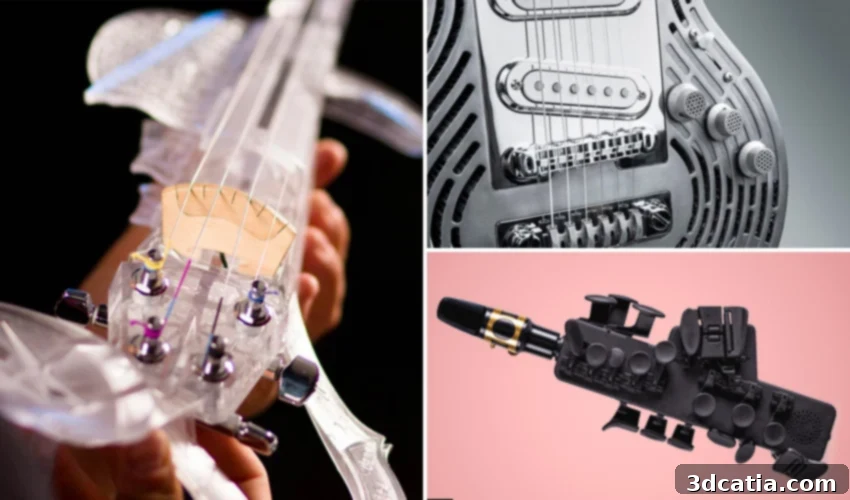
Revolutionizing Sound: Exploring the World of 3D Printed Musical Instruments
In a harmonious celebration of innovation and creativity, the realm of music is being profoundly transformed by the advent of 3D printing technology. This cutting-edge manufacturing method offers unparalleled freedom in instrument design and production, unlocking exciting possibilities previously unimaginable for musicians and manufacturers alike. No longer are creators confined to traditional instrument models; instead, they can now craft personalized instruments with unique designs, tailored to specific needs and artistic visions. Our curated selection showcases remarkable projects that leverage various 3D printing technologies and specialized materials to achieve exceptional acoustic and aesthetic results. Dive in to discover how additive manufacturing is reshaping the musical landscape and embrace the power of innovation in sound.
Odisei Music’s Travel Sax: The Portable Electric Saxophone
Odisei Music, an innovative company based in Catalonia, has introduced a groundbreaking electric saxophone known as the “Travel Sax.” This instrument redefines portability for musicians, being exceptionally lightweight and compact while simultaneously delivering impressive sound quality. Its entire production process utilizes HP’s advanced Jet Fusion 3D printing technology, which is instrumental in creating components with impeccable aesthetic finishes and robust mechanical properties. This technology also facilitates efficient, large-scale manufacturing, allowing Odisei Music to bring their vision to a wider audience. The Travel Sax offers the modern convenience of headphone compatibility, enabling musicians to practice privately without disturbing others. Furthermore, its broad compatibility with various music software enhances its versatility, making it a powerful tool for contemporary performers and learners. Odisei Music’s core mission is to empower musicians with greater ease of expression, thereby significantly contributing to the vibrant and evolving musical landscape.
3D Music Instruments: A Slide Trumpet Bridging Tradition and Technology
Ricardo Simian’s venture, 3D Music Instruments, is at the forefront of crafting unique slide trumpets through the application of advanced laser fusion 3D printing technology. These trumpets are celebrated for their exceptional robustness and significantly lighter weight compared to conventional brass instruments, a remarkable feat achieved by ingeniously combining 3D printed components with high-strength carbon tubes. The foundation of its design lies in a meticulously 3D printed mouthpiece, drawing inspiration from the historical Guitbert model. However, the manufacturer’s objective transcends mere replication; their goal is to develop a fully functional, modern instrument that respectfully honors its rich legacy while offering contemporary advantages. Available for purchase at 1,000 euros on the company’s website, this 3D printed slide trumpet presents musicians with an exciting opportunity to explore traditional music through a uniquely innovative and accessible instrument, blending the best of historical design with cutting-edge manufacturing capabilities.
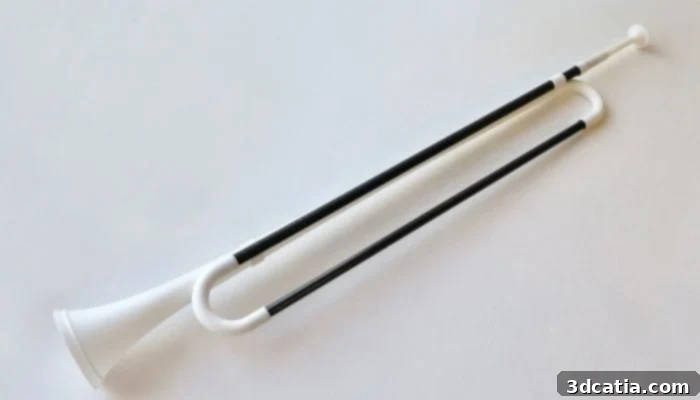
Photo credits: 3d music instruments
Sandvik’s Indestructible Metal Guitar: Built for Rock Legends
In a quest to overcome the notorious problem of instrument breakage during intense rock performances, Sandvik, a global engineering group, has engineered a truly innovative solution. They have successfully developed the world’s first indestructible metal guitar, masterfully crafted from titanium using advanced 3D printing technology. The process involves laser fusion on a bed of titanium powder, resulting in components with unparalleled strength and durability. To rigorously test their creation, Sandvik enlisted the legendary guitarist Yngwie Malmsteen, celebrated by Time magazine as one of the top 10 electric guitarists globally. Despite Malmsteen’s famously vigorous playing style, the instrument remained entirely unscathed, a testament to its robust construction. The guitar’s design emphasizes long-term resilience and exceptional sturdiness. Leveraging the unique capabilities of additive manufacturing, Sandvik was able to integrate intricate lattice structures into specific areas of the guitar, a design feat impossible to achieve with traditional milling methods. This innovative approach not only grants the guitar a surprisingly lightweight profile but also endows it with extraordinary strength and flexibility, enabling it to endure the most demanding stage environments and the relentless energy of a true rock star like Yngwie Malmsteen.
Open E-Drums: The Future of Accessible Electronic Drumming
Open E-Drums stands out as an exhilarating open-source project, elevating electronic drumming to unprecedented levels of accessibility and customization. By focusing on empowering drummers of all skill levels, Open E-Drums unveils a world of creative possibilities. This innovative platform provides open-source hardware designs, including patterns for 3D printable drum pads and essential MIDI converters, enabling users to construct their own bespoke electronic drum kits from the ground up. Whether you are a novice building your first kit or an experienced musician looking to expand an existing Roland or Yamaha setup, Open E-Drums offers the flexibility and freedom to design an ideal drumming experience. Furthermore, with readily available Arduino code for enhanced sensing capabilities, drummers can meticulously fine-tune their drum setups to perfectly align with their unique playing styles and preferences, fostering a truly personalized musical journey.
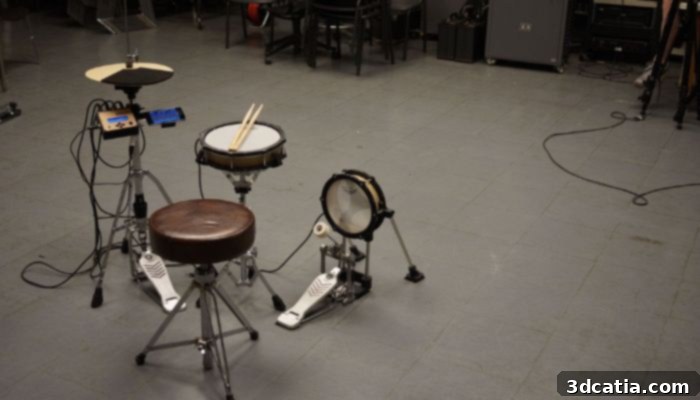
Photo credits: Open E-Drums
MONAD Studio’s Lucid – EXO: A Grand 3D-Printed Piano of the Future
Prepare to be captivated by the awe-inspiring Lucid – EXO, a truly cutting-edge grand piano that embodies a futuristic design, masterfully brought to life by the Argentine firm MONAD Studio. This extraordinary musical instrument represents a seamless fusion of traditional piano craftsmanship with avant-garde innovation, pushing the boundaries of what a grand piano can be. Its intricate, sculptural shapes and authentic piano sound immediately captivate the senses, while expansive, transparent windows offer a mesmerizing glimpse into the complex inner workings of its percussive sound machinery. This ambitious project was the result of a significant collaboration involving esteemed partners: Blüthner, the renowned German piano manufacturer, and Lucid Pianos, a Spanish company celebrated for its transparent piano designs. The name “Lucid” aptly pays homage to the unique exoskeletal system that forms the piano’s striking structure, comprised of gracefully curved, 3D printed components that ingeniously support and define the instrument’s resonant body. The initial construction of the piano’s “case” was expertly carried out in Portugal, utilizing large-scale 3D printing machines to achieve its complex geometry. Subsequently, the meticulous assembly of its critical sound components was performed at Blüthner’s headquarters in Leipzig. This international collaboration ensures an unparalleled level of perfection and quality in every intricate detail, promising music aficionados a truly extraordinary and unforgettable musical experience that harmonizes art, engineering, and groundbreaking technology.
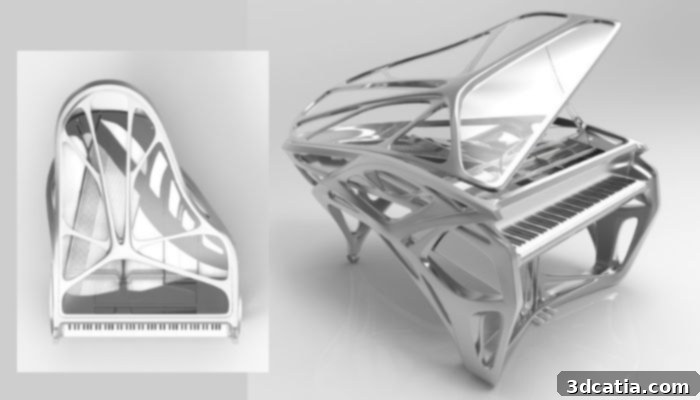
Photo credits: MONAD Studio
Reviving History: 3D Printing for Musical Instrument Preservation and Education
A distinctive project on our list utilizes 3D printing not for creating new playable instruments, but for the crucial task of faithfully replicating historically significant musical instruments housed within the Royal College of Music Museum. This initiative, generously supported by a £33,000 grant from the DCMS and the Wolfson Foundation, has a primary objective: to significantly enhance accessibility to these invaluable artifacts. This increased accessibility particularly benefits visitors with diverse needs, younger audiences, and dedicated music students. The project strategically employed 3D printing technology to produce high-fidelity replicas of ten iconic instruments from the museum’s extensive collection. Among these remarkable recreations are the world’s oldest known guitar, one of the oldest surviving clarinets, and two exquisite 17th-century recorders. By harnessing the power of additive manufacturing for the noble educational purpose of replicating these extraordinary historical instruments, this project brilliantly illustrates yet another profound way in which 3D technologies can contribute meaningfully to the preservation, study, and appreciation of music history and culture.
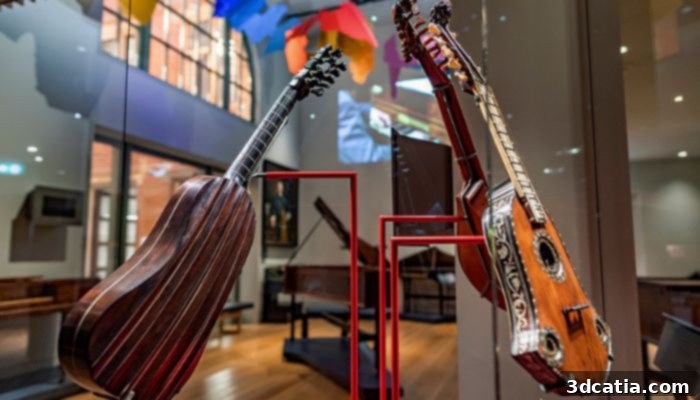
Photo credits: Royal College of Music
Sensio.cz’s “MyCello”: The Innovative 3D Printed Cello
Sensio.cz, a forward-thinking Czech company, has enthusiastically embraced 3D printing as a revolutionary method for crafting cellos. These innovative instruments have garnered international attention, finding their way into the hands of musicians in countries such as the United Kingdom, Italy, and the United States, where they are actively integrated into both rigorous rehearsals and captivating live performances. The visionary creators, Ondřej Kratochvíl and Jan Tobolík, emphasize that their 3D printed cello, constructed from advanced plastic materials, is not intended as a direct replacement for the traditional wooden cello. Instead, it represents a significant evolution in instrument design and accessibility. A striking advantage of this modern approach is the dramatically reduced production time: a 3D printed cello can be completed in just two days, a stark contrast to the approximately six months typically required to handcraft a conventional cello. This expedited manufacturing process makes the 3D printed cello particularly well-suited for beginners, offering an affordable and readily available entry point into playing. To fully appreciate its remarkable performance and exceptional sound quality, we highly recommend watching the accompanying video, which powerfully showcases the “MyCello” in action.
3Dvarius: The Revolutionary 3D Printed Violins and E-Cellos
In the heart of Toulouse, France, the pioneering company 3Dvarius is revolutionizing the world of string instruments with its exquisitely crafted electric violins and e-cellos. Founded in 2012 by a talented violinist and engineer, 3Dvarius was born from a vision to create an electric violin that not only upheld the exacting acoustic standards of classical musicians but also seamlessly bridged the gap between traditional and electric instrument performance. After exploring various materials, including initial experiments with aluminum, 3Dvarius decisively turned to the transformative power of 3D printing. Leveraging advanced stereolithography (SLA) technology, these exquisite instruments are meticulously printed as a single, seamless piece over a precise 24-hour period. This cutting-edge printing process ensures exceptional precision in reproducing the full, rich sound spectrum. However, the journey to perfection extends beyond printing; it includes extensive post-processing, such as subjecting the instrument to a specialized oven for complete polymerization and enhanced material durability. This is followed by meticulous cleaning, fine-tuning, and the expert installation of the bridge, pegs, and strings. Drawing profound inspiration from the iconic Stradivarius model, the design of the 3Dvarius embodies a perfect amalgamation of traditional craftsmanship and modern technology. The inherent versatility of 3D printing further allows for endless customization options, empowering musicians to tailor their 3Dvarius to their unique preferences and musical aspirations. Through their visionary approach, 3Dvarius is undeniably pushing the boundaries of innovation and artistry, reshaping the landscape of string instrument design and performance.
Pereira 3D’s Innovative Clarinet Accessories
Pereira 3D stands as a highly regarded clarinet specialist, recognized for its comprehensive suite of services that include hand-crafted accessories, custom clarinets, expert repairs, and thorough overhauls. Esteemed professional musicians, such as Cedric Mayfield and Ashley Oliveto, have lauded Pereira 3D’s products for their remarkable improvements in instrument response and stability, crucial attributes for peak performance. Eric Salazar, a New Music Soloist, particularly values the enhanced performance capabilities that Pereira 3D equipment brings to his artistry. Beyond their acclaimed traditional offerings, the shop also provides a selection of hand-selected Buffet Crampon clarinets, renowned for their consistent quality. Pereira 3D’s commitment to innovation extends notably to their range of 3D printed clarinet accessories. These include specialized barrels and bells, expertly crafted from a unique “3D Wood” material. This innovative material significantly improves tone quality and facilitates smooth transitions between notes, offering a distinct advantage to players. Furthermore, their ligatures are designed to surpass traditional counterparts by providing superior flexibility and delivering a full, resonant sound without any dampening effects. With a steadfast commitment to excellence and cutting-edge designs, Pereira 3D continues to elevate the world of clarinet performance, pushing the boundaries of what is possible through thoughtful integration of additive manufacturing.
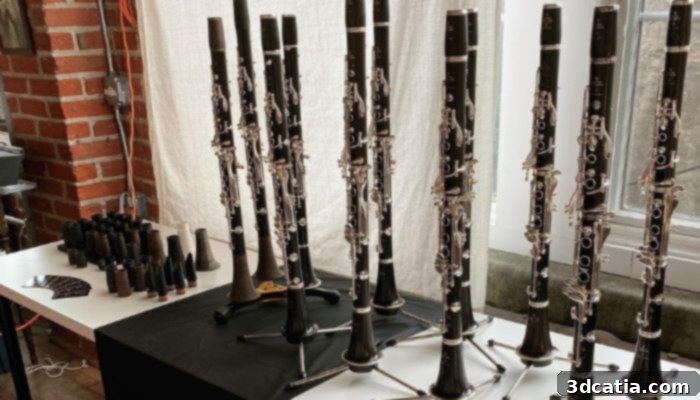
Photo credits: Pereira 3D
TuneFast Harp: A Single-String Instrument for Simplified Music-Making
The TuneFast Harp, ingeniously developed by Makefast Workshop, presents itself as a unique and accessible 3D-printed musical instrument featuring a single string. Designed with the appearance of a miniature harp, its creators’ primary goal was to drastically simplify the often-complex tuning process typically associated with multi-string instruments. Instead of numerous strings requiring individual adjustment, the TuneFast Harp incorporates a single, cleverly zigzagging string, which inherently minimizes the need for frequent and tedious tuning adjustments. This innovative design not only makes the instrument incredibly compact but also allows it to span a complete octave with just eight distinct notes, providing a surprising range for its size. Moreover, its compact dimensions and straightforward design render it highly accessible for 3D printing enthusiasts who possess their own machines at home, encouraging a DIY approach to music creation. Careful material selection is paramount to ensuring the harp’s durability and its ability to withstand the consistent tension of the string without compromise. For those inspired to create their own TuneFast Harp, comprehensive instructions and detailed information are readily available, HERE.
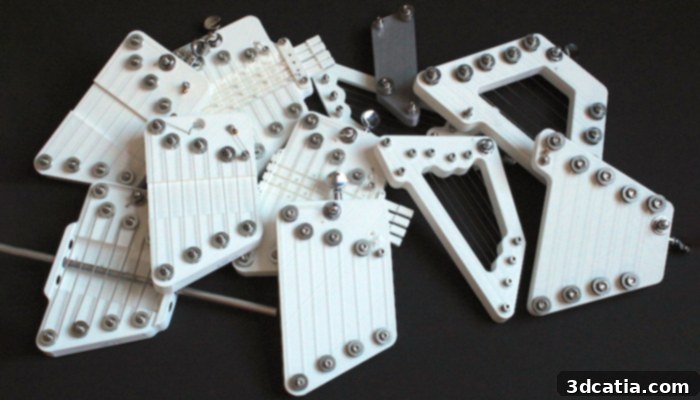
Photo credits: Makefast Workshop
The innovative projects highlighted above clearly demonstrate the profound and transformative impact of 3D printing on the world of musical instruments. From highly portable electric saxophones and indestructible guitars to custom clarinets and educational replicas of historical treasures, additive manufacturing is redefining what is possible in instrument design, production, and accessibility. It empowers creators to blend traditional craftsmanship with cutting-edge technology, offering musicians unprecedented levels of customization, durability, and expressive freedom. As 3D printing technologies continue to evolve, we can anticipate even more groundbreaking developments that will further enrich the musical landscape for generations to come. What do you think of this remarkable list of 3D printed instruments? Share your thoughts in a comment below or connect with us on ourLinkedIn,Facebook, andTwitter pages! Don’t forget to sign up for our free weeklyNewsletter here to receive the latest 3D printing news straight to your inbox. You can also explore all our videos on ourYouTube channel for more insights into this exciting field.