
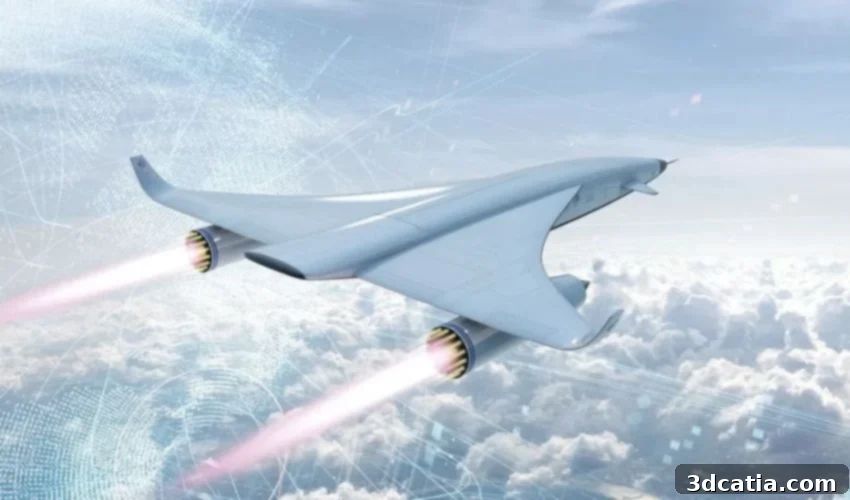
University of Arizona Leads $1.2M Project: 3D Printing Advanced Materials for Hypersonic Flight
The frontiers of aerospace engineering and advanced manufacturing are being pushed further by groundbreaking research at the University of Arizona. Researchers at the institution have recently been awarded a substantial $1.2 million grant, sourced from the esteemed Office of Naval Research’s Defense University Research Instrumentation Program (DURIP). This significant funding aims to propel the development of revolutionary 3D printing materials specifically designed to endure the extreme conditions associated with hypersonic speeds – defined as Mach 5 or higher, which is at least five times the speed of sound. This initiative underscores a critical national priority to advance material science for next-generation defense and space applications.
This pivotal project focuses on the creation of novel metallic alloys. Unlike existing materials, these new alloys are engineered from the ground up to be optimally utilized with additive manufacturing techniques, particularly 3D printing. Traditional metals currently employed in additive manufacturing were often conceived for conventional manufacturing processes like casting or forging, not specifically for the layer-by-layer fusion characteristic of 3D printing. Consequently, their performance and processability within a 3D printing environment can be suboptimal, leading to various defects or limitations in desired mechanical properties.
The ultimate goal is to produce materials that can withstand the incredibly harsh environments encountered during hypersonic flight. At Mach 5 and beyond, objects experience immense stress levels, where aerodynamic forces are exponentially magnified. Friction and intense air resistance generate extreme thermal loads, causing surfaces to heat up dramatically, potentially reaching thousands of degrees Celsius. Such conditions demand materials with exceptional thermal stability, creep resistance, and high strength-to-weight ratios, properties that are exceedingly difficult to achieve simultaneously with conventional alloys. The research team will invest the grant money into state-of-the-art instrumentation crucial for this development, including a sophisticated powder bed fusion (PBF) system. PBF is a key additive manufacturing technology that uses a laser or electron beam to selectively melt and fuse metallic powders, layer by layer, to build complex geometries.
Furthermore, the project will acquire a cutting-edge gas atomization system. This specialized equipment is essential for converting molten metals into fine, uniform metallic powders, which are the fundamental feedstock for powder bed fusion systems. The quality, purity, and morphology of these metal powders directly impact the integrity and performance of the final 3D printed components. Achieving consistent, high-quality powder is a critical step in developing reliable hypersonic materials. To finalize the process, a high-performance vacuum furnace for post-processing of the printed objects will also be procured. Post-processing steps such as hot isostatic pressing (HIP) or specialized heat treatments are vital for reducing porosity, consolidating the material, relieving internal stresses, and optimizing the microstructural and mechanical properties of 3D printed parts, ensuring they meet the stringent demands of hypersonic applications.
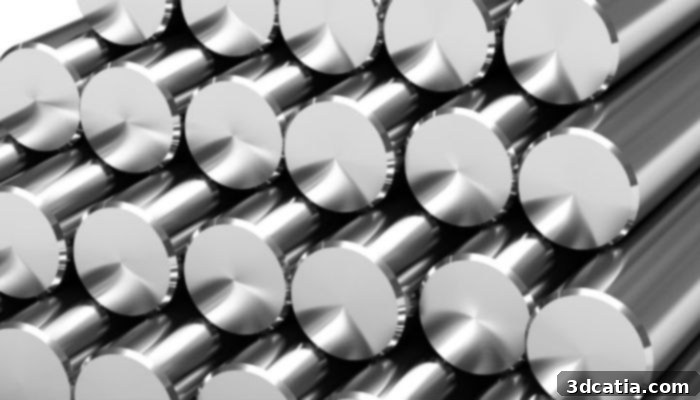
Metal alloys combine the metallic element with another element, metal or non-metal (Photo credit: Tampa Steel)
Sammy Tin, the distinguished Department Head of Material Science and Engineering, articulated the strategic vision behind this research, stating, “If we can develop materials and alloys that are specific to the 3D-printing process, we can customize alloy chemistries so that they have attributes that make it easier or more friendly for 3D printing.” This insight highlights a paradigm shift in material development. Instead of adapting existing materials to 3D printing, the focus is on creating new alloys whose inherent properties are optimized for the unique heating, cooling, and solidification cycles of additive manufacturing. This approach promises to unlock unprecedented capabilities.
The implications of this tailored material development are far-reaching. It means that 3D printing would transcend its current limitations, becoming a far more applicable and efficient process for a multitude of industrial sectors, especially aerospace and defense. By designing materials specifically for additive manufacturing, common issues such as cracking, warping, or inconsistent microstructures that plague existing materials in AM processes could be significantly mitigated or even eliminated. The end products would not only possess superior performance characteristics but also exhibit properties that are more precisely suited for their intended high-performance applications, offering enhanced reliability, durability, and functional integration. This customization allows for unprecedented design freedom and the creation of components with complex internal geometries previously impossible to manufacture, enabling lightweighting and performance optimization.
The significance of this endeavor was further emphasized by University of Arizona President Robert C. Robbins. He remarked, “Hypersonic flight and space exploration are among our university’s biggest strengths, and both require materials that can withstand extreme environments.” This statement perfectly encapsulates the strategic alignment of the university’s core research capabilities with critical national needs. President Robbins further expressed his pride, saying, “I am proud to have faculty members like Sammy Tin and Andrew Wessman working in this critical area and raising the University of Arizona’s already-impressive profile in advanced manufacturing.” This sentiment highlights the collaborative spirit and the depth of expertise within the university that are driving these advancements. The project not only contributes to national security but also solidifies the University of Arizona’s position as a leader in material science and advanced manufacturing research, attracting top talent and further investment.

Sammy Tin (L) and Andrew Wessman (R) are joint researchers on the project (Photo credit: Arizona College of Engineering)
This project arrives at a crucial juncture in global geopolitical dynamics, as multiple nations are intensely engaged in developing advanced hypersonic technologies for defense and military applications. The ability to deploy weapons or reconnaissance vehicles at Mach 5 or greater fundamentally reshapes strategic capabilities, offering unparalleled speed and maneuverability that can bypass existing defense systems. For example, industry titan Lockheed Martin has publicly announced plans to equip the U.S. Navy with hypersonic missiles, a testament to the urgency and importance of this technology. Similarly, Northrop Grumman, another major USA defense firm, is actively utilizing 3D printing to accelerate the development of these cutting-edge capabilities. The integration of additive manufacturing in such high-stakes projects demonstrates its transformative potential, enabling rapid prototyping, iterative design improvements, and the production of complex, performance-optimized components that conventional manufacturing methods simply cannot achieve.
The success of the University of Arizona’s research will not only contribute directly to the advancement of defense capabilities but also pave the way for future innovations in commercial aerospace, space exploration, and other industries requiring ultra-high-performance materials. By understanding and mastering the intricacies of material behavior under extreme hypersonic conditions, and by tailoring alloy chemistries specifically for the additive manufacturing process, researchers are setting new benchmarks for what is achievable. This work represents a significant leap forward in our capacity to engineer materials that can operate reliably and effectively in the most demanding environments known to humankind. To gain deeper insights into this particular project and its broader implications, interested readers can explore the University’s official press release HERE.
The development of metal alloys capable of withstanding hypersonic speeds through advanced 3D printing techniques is a truly exciting and vital field of research. What are your thoughts on this pioneering project and its potential impact on aerospace, defense, and manufacturing? We invite you to share your perspectives in a comment below or join the conversation on our LinkedIn, Facebook, and Twitter pages! Don’t forget to sign up for our free weekly Newsletter here to receive the latest 3D printing news directly in your inbox. You can also explore all our engaging videos on our dedicated YouTube channel for more insights into the world of additive manufacturing.
*Cover photo credit: Reaction/ BBC News