
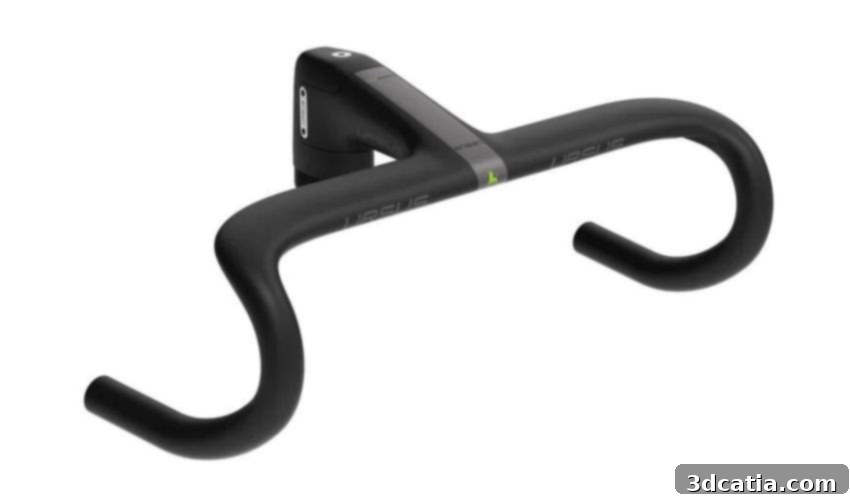
Revolutionizing Cycling: How HP Multi Jet Fusion and Weerg Empower Custom Bicycle Component Manufacturing
3D printing, or additive manufacturing, is rapidly transforming industries where customization, intricate design, and peak performance are paramount. Its inherent ability to produce highly complex geometries and facilitate rapid prototyping allows for quick, cost-effective testing of innovative materials and properties. This makes it an indispensable technology for demanding sectors such as automotive, aerospace, and sports. The cycling industry, in particular, has emerged as a significant beneficiary, leveraging additive manufacturing for everything from creating specialized components and iterating prototypes to producing high-performance, end-use parts that precisely meet customer needs or are custom-tailored for elite athletes. A prime example of this transformative potential is the collaboration between Ursus, a renowned bicycle component manufacturer, and Weerg, an online 3D printing service, in the development of a custom bicycle handlebar.
Traditional manufacturing methods often present considerable hurdles for companies requiring small to medium-sized batches of custom-designed parts with short lead times. Injection molding, for instance, is typically ill-suited for such demands due to its extensive lead times and the substantial upfront costs associated with mold creation. In stark contrast, additive manufacturing offers an ideal solution for these scenarios. Consequently, an increasing number of businesses are turning to specialized 3D printing service providers to optimize their production processes, saving both time and resources while achieving superior results in terms of both product performance and manufacturing efficiency.
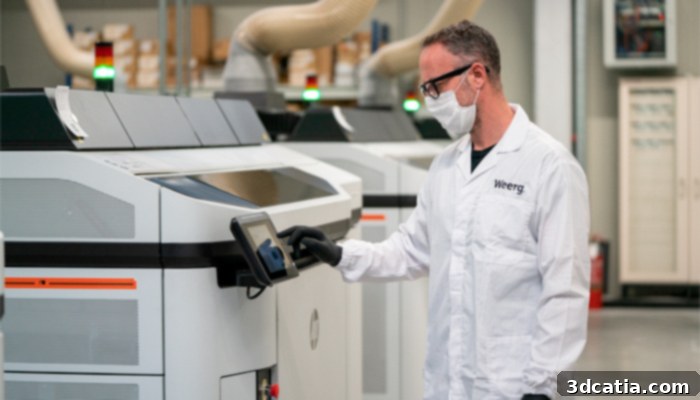
An operator at the headquarters of additive manufacturing service Weerg (photo credits: Weerg)
The Power of Partnership: Weerg’s Online Services and HP Multi Jet Fusion Technology
This dynamic context sets the stage for a remarkable Italian success story, born from the strategic collaboration between Ursus, a company with over five decades of expertise in engineering and high-performance bicycle components, and Weerg, a leading online manufacturing service. Together, these two companies embarked on the creation of the advanced Magnus H.02 handlebar, utilizing HP’s cutting-edge Multi Jet Fusion (MJF) technology, meticulously provided by Weerg. Headquartered in Scorzè, Venice, Weerg operates as a comprehensive online manufacturing hub, offering both CNC machining and various 3D printing solutions, all underpinned by a commitment to 100 percent in-house production. In the realm of additive manufacturing, Weerg boasts an impressive suite of technologies, including FDM, SLA, and notably, HP Multi Jet Fusion, where they hold the distinction of owning one of the world’s largest fleets of MJF 3D printers. This extensive capacity made Weerg the perfect partner for Ursus, first for rapid testing, and subsequently for the full-scale production of their innovative Magnus H.02 handlebar.
Ursus’ Drive for Innovation in Cycling Design
As a highly respected name in the global cycling community, Ursus is celebrated for its relentless pursuit of innovation, driven by continuous research and sophisticated product design. The Magnus H.02 handlebar project represented a significant engineering and design challenge for Ursus’ team. This particular handlebar, destined for high-performance racing bicycles, demanded a delicate balance of critical attributes: exceptional lightness, optimal ergonomics for rider comfort and control, and superior aerodynamics to minimize drag. During the intricate design phase of the handlebar, a primary objective was to engineer an attachment system that could flawlessly integrate with a diverse range of bicycle frames, ensuring universal compatibility and optimal rider positioning.
“Often, when some bicycle manufacturers contact us to put one of our products on their frames, they provide us with different sizes from project to project. Therefore, our goal is to create custom solutions so that we can fit our product perfectly to each frame,” explained Matteo Cortese, a product designer at Ursus, highlighting the core challenge of achieving versatile compatibility without compromising performance.
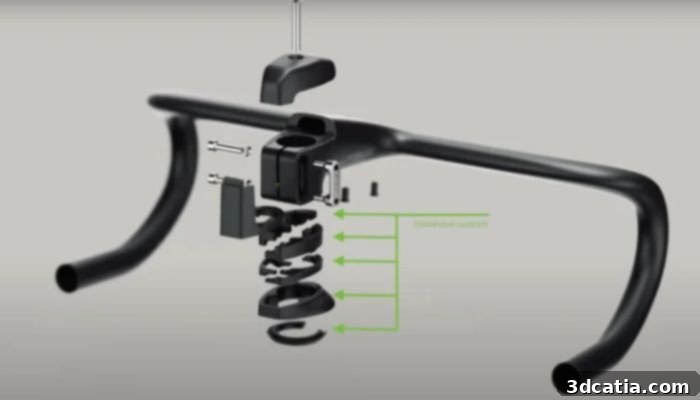
Photo Credits: Ursus/Weerg
Addressing Customization with HP Multi Jet Fusion
To effectively adapt the Magnus H.02 handlebar to various bicycle frames, Ursus’s designers devised a clever solution: the creation of a series of specialized spacers. These spacers would precisely adjust the height of the handlebar’s attachment point, allowing for perfect alignment and fit on different frame geometries. Given the inherently low production volumes required for these adaptation copies—each designed for specific customization needs—the application of HP Multi Jet Fusion (MJF) technology, as provided by Weerg, proved to be the quintessential solution. MJF technology stands out as one of the most compelling additive manufacturing processes for its remarkable time and cost optimization benefits. It offers unparalleled advantages in terms of design flexibility and its capacity to process a wide array of complex geometries, often outperforming other 3D printing technologies in these aspects. Crucially, MJF ensures that the mechanical properties of the chosen material remain robust and intact, making it perfectly suited for high-stress applications like bicycle components where structural integrity and performance are non-negotiable.
The Manufacturing Journey of Ursus’ Magnus H.02 Handlebar
The production journey for the innovative Magnus H.02 handlebar commenced with Ursus designers engaging directly with Weerg’s intuitive online platform. This initial step was crucial for evaluating the feasibility of their intricate design. As a fully online service, Weerg has streamlined the process, making it incredibly simple for users to upload 3D files, specify desired materials and finishes, and set delivery times—all within a single, user-friendly interface. This integration allows customers to receive an accurate, free quote within seconds. Weerg’s platform offers an extensive selection of materials for 3D printing, including a variety of polymers such as resin, polypropylene, PEEK, ABS, and nylon. Furthermore, Weerg has actively collaborated with HP to develop and offer specialized materials like the innovative PA 12 White, specifically optimized for MJF technology, catering to the diverse needs of its clientele.
Following the online submission, Ursus’ detailed design was meticulously reviewed and analyzed internally by a dedicated Weerg engineer. This expert provided crucial assistance to Ursus throughout the handlebar’s manufacturing process. The availability of a specialized engineer, personally committed to a project, represents an invaluable added benefit. It effectively bridges the efficiency of an online service with the essential human expertise and support sometimes required to navigate complex challenges and successfully bring innovative projects to fruition.
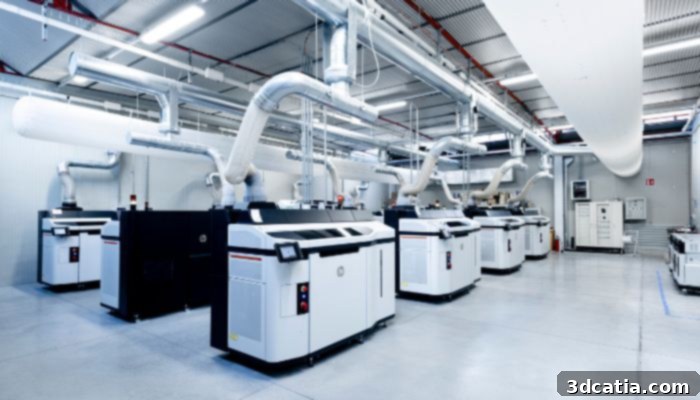
Weerg’s HP MJF machine farm (photo credits: Weerg)
Rapid Prototyping and Production Efficiency
A significant advantage of Weerg’s 100% in-house production capability was its direct impact on delivery speed. This vertical integration allowed Weerg to swiftly produce and deliver the initial handlebar models, enabling Ursus designers to commence critical testing without delay. Matteo Cortese elaborated on this benefit, stating, “Through MJF technology, Weerg allowed us to make excellent finished parts with good isotropic mechanical properties. On the site, we were able to order and receive in about ten days the few thousand units we needed for the project.” This rapid turnaround is a testament to the efficiency of Weerg’s integrated approach.
For Ursus, the ability to leverage MJF technology for rapid prototyping of the handlebars represented a groundbreaking advancement for their design team. It empowered them to quickly and affordably test the mechanical properties of new designs, making iterative modifications and customizations until the optimal final product was achieved. This agile development cycle significantly compressed their design-to-production timeline. Once these rigorous tests were completed and the design perfected, Ursus could then confidently request the necessary units of the finished product for market release. According to Ursus, the strategic adoption of HP MJF technology, facilitated by Weerg, resulted in an astounding saving of up to 20 times the available budget and significantly reduced development time. This remarkable outcome unequivocally reaffirms additive manufacturing as the superior production method for creating high-performance, custom parts in the cycling industry and beyond. To discover more about Weerg’s comprehensive services and the transformative capabilities of HP MJF technology, please click HERE.
Engage with Us
What are your thoughts on the groundbreaking use of MJF technology in Weerg’s impactful collaboration with Ursus? We invite you to share your insights in a comment below or join the conversation on our LinkedIn, Facebook, and Twitter pages! Don’t miss out on the latest advancements in 3D printing; remember to sign up for our free weekly Newsletter here, delivering the newest industry updates straight to your inbox! You can also explore all our informative videos on our YouTube channel.
*Cover Photo Credits: Ursus/Weerg