
TECLA: Revolutionizing Sustainable Housing with 3D Printed Raw Earth Eco-Habitats
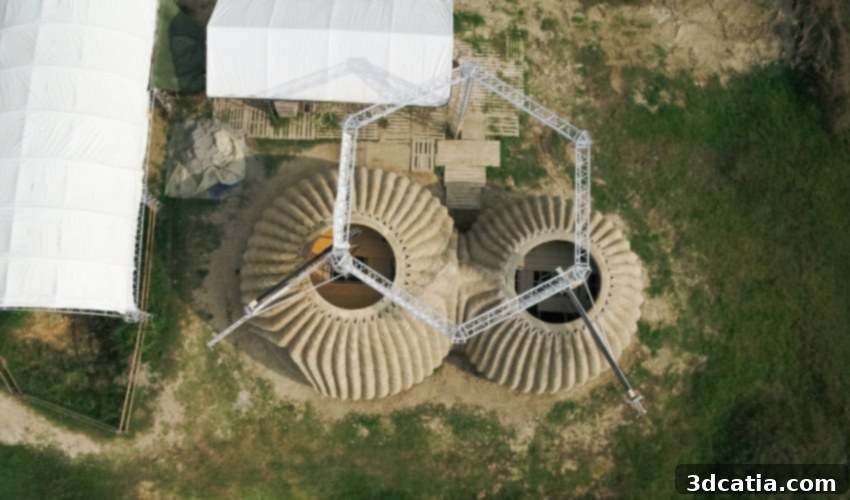
The future of sustainable living is taking shape, quite literally, with projects like WASP’s TECLA. WASP (World’s Advanced Saving Project), a pioneering Italian 3D printing company renowned for its commitment to sustainable construction practices, has successfully completed the printing phase for the TECLA supporting structure. This monumental achievement marks the realization of the world’s first 3D printed eco-habitat, signifying a profound leap forward in addressing global housing and environmental challenges.
Initiated in 2019 in collaboration with Mario Cucinella Architects, the TECLA project was born from a visionary goal: to forge a novel circular housing model. This model champions complete reusability and relies exclusively on recyclable materials sourced directly from local terrain. With its physical structure now complete, TECLA stands as a beacon of sustainable construction, poised to offer a viable and scalable solution to the escalating demand for eco-friendly housing in a world grappling with a burgeoning population and the urgent realities of the climate crisis. It embodies a paradigm shift, moving away from conventional resource-intensive building methods towards a regenerative approach.
The name TECLA, a clever portmanteau of “technology” and “clay,” perfectly encapsulates its innovative essence. This groundbreaking structure was meticulously printed in Massa Lombarda, Ravenna, Italy, utilizing the advanced capabilities of the Crane WASP, WASP’s state-of-the-art 3D printer specifically designed for the construction sector. The project pioneers a truly circular housing model, where every element is either reusable or recyclable, derived from the very soil beneath it. This makes TECLA inherently carbon-neutral and incredibly adaptable to diverse climates and geographical contexts, presenting a versatile solution for a global audience.
One of the most remarkable technical innovations behind TECLA’s construction was the synchronized operation of multiple WASP printers. This marked the first instance in a construction project where two printing arms worked in perfect harmony, a feat that drastically accelerated the building process while meticulously preventing collisions. This multi-printer synchronization allowed the team to complete the intricate structure with unprecedented speed and efficiency. According to WASP, the entire TECLA eco-habitat can be synthesized in approximately 200 hours of continuous printing, translating to roughly eight days. However, what truly distinguishes this 3D printed building is its revolutionary choice of material: raw earth.
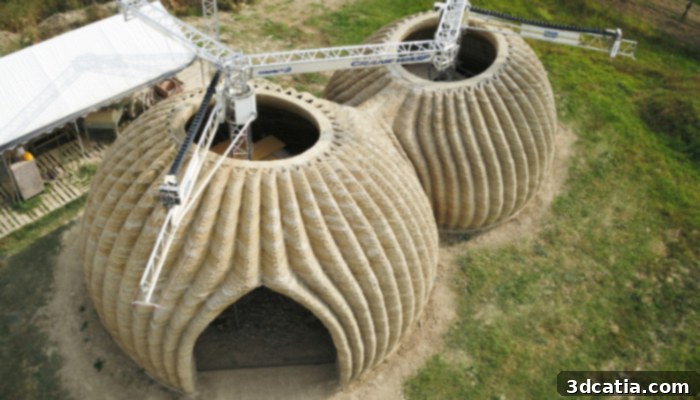
A side view of TECLA showing its distinctive shape (photo credits: WASP)
TECLA’s Transformative Contribution to Sustainable 3D Printing Construction
While 3D printing is not entirely new to the construction industry, most printed buildings have traditionally relied on ready-mix mortars or, in some pioneering instances, real concrete. Although these materials offer significant structural stability, their widespread use presents substantial environmental and sustainability concerns. The production of cement, a key component of concrete, is notoriously carbon-intensive, contributing significantly to global greenhouse gas emissions. This large carbon footprint of concrete can, in many ways, negate the inherent environmental benefits often associated with additive manufacturing.
Generally, additive manufacturing possesses immense potential to be far more environmentally benign than conventional construction methods. Its core advantages include the feasibility of local production – a factor that proved crucial and effective during the early stages of the pandemic – and its capacity for near zero-waste manufacturing. This is a dramatic departure from traditional building processes, which frequently generate substantial amounts of waste materials. However, when paired with high-carbon footprint materials like concrete, the overall environmental gain can be diluted. This is precisely where TECLA offers a groundbreaking alternative, pushing the boundaries of truly sustainable construction.
The TECLA project brilliantly sidesteps the environmental quandary posed by concrete through its innovative material choice: local soil, or raw earth. This is a game-changer for several compelling reasons. The use of earth is significantly more eco-friendly, as it is a natural, abundantly available, and renewable resource. Moreover, by utilizing soil found directly at the construction site, the need for extensive transportation of materials is drastically reduced, further diminishing the project’s carbon footprint and increasing construction speed. This approach allows the true environmental benefits of 3D printing in sustainable construction to fully manifest.
Massimo Moretti, Founder of WASP, articulates this vision perfectly: “We build 3D printed houses using earth found on the spot, employing a profoundly sustainable perspective. The oldest material known to humanity and cutting-edge technology merge to offer new hope to the world.” This sentiment underscores the philosophy behind TECLA. By leveraging local, sustainable materials, this 3D printed eco-habitat achieves a near carbon-neutral status. This pioneering methodology not only provides a blueprint for future innovations in sustainable construction but also reintroduces a timeless building material into the modern architectural lexicon, demonstrating its immense potential when combined with advanced additive manufacturing techniques. Raw earth also offers excellent thermal mass properties, naturally regulating indoor temperatures and reducing energy consumption for heating and cooling, further cementing TECLA’s eco-credentials.
The choice of raw earth also has profound implications for cost-effectiveness and accessibility. Sourcing materials locally eliminates many supply chain complexities and associated costs, making sustainable housing potentially more affordable and viable for communities worldwide, especially in regions with limited access to conventional building supplies. This democratizes access to robust, climate-appropriate shelter and empowers local economies through the utilization of indigenous resources and skills.
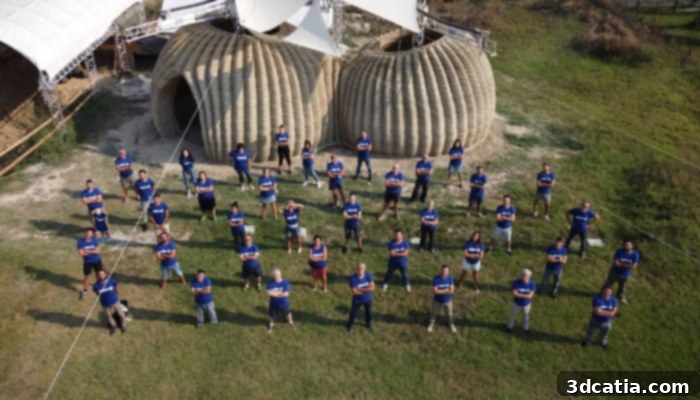
Beyond its material innovation, the architectural form of the TECLA building itself is remarkably notable. Drawing profound inspiration from the humble potter wasp and its ingeniously designed nest, the structure adopts a distinctive double-dome shape. This biomimetic design is not merely aesthetic; it serves a multifunctional purpose, simultaneously fulfilling the roles of load-bearing structure, roof, and external cladding. This integrated design approach contributes significantly to the house’s extremely high performance, offering superior structural stability, enhanced thermal insulation, and efficient natural ventilation. The geometry optimizes material use and inherently resists seismic forces, making it resilient in various environments.
Discussing the momentous completion of the printing phase, Mario Cucinella, Founder of Mario Cucinella Architects and SOS – School of Sustainability, remarked, “The completion of the structure is an important milestone and clearly demonstrates that, thanks to the innovative design and advanced technologies employed, TECLA is no longer just a theoretical concept. It has evolved into a tangible and achievable response to contemporary and future living needs, adaptable to diverse contexts and latitudes across the globe.” This statement underscores the project’s immediate relevance and its vast potential for global application, particularly in areas facing urgent housing shortages or needing resilient, climate-appropriate shelters. The adaptability of the design to local conditions, including varying seismic activity and weather patterns, makes TECLA a truly versatile prototype for future sustainable housing initiatives.
TECLA represents more than just a house; it embodies a holistic vision for the future of human habitation, integrating ecological responsibility with technological innovation. It challenges conventional architectural norms by proving that sustainable, aesthetically pleasing, and structurally sound homes can be constructed rapidly and affordably using locally sourced, natural materials. This project opens new avenues for research into advanced earthen construction techniques and the further integration of biomimicry in architectural design, promising a more harmonious relationship between human structures and the natural environment.
The eagerly anticipated first installation and public presentation of TECLA are scheduled for Spring 2021, promising to unveil the full realization of this groundbreaking WASP project. For those keen to delve deeper into WASP’s pioneering work in sustainable 3D printing, further information can be found on their official website HERE.
To witness the innovative construction process firsthand, check out the captivating video showcasing the printing process below:
What are your thoughts on these visionary sustainable 3D printed habitats? We encourage you to share your insights and comments below, or engage with us on our Facebook and Twitter pages! Don’t miss out on the latest advancements in additive manufacturing – sign up for our free weekly Newsletter here, delivering the freshest 3D printing news directly to your inbox!
*thumbnail photo credits: WASP