
Venture Orbital Systems: Pioneering France’s New Space Era with 3D Printed Rocket Launchers
In the heart of France’s Champagne region, Reims, a city globally renowned for its sparkling wine, is now charting a new course in advanced manufacturing and space exploration. Venture Orbital Systems (VOS), an innovative startup dedicated to the development of micro space launchers and state-of-the-art rocket engines, has achieved a significant milestone by inaugurating France’s first production site for rocket launchers. This groundbreaking venture is not just about establishing a new facility; it’s a testament to the transformative power of additive manufacturing, with 3D printing integrated directly into its core production processes. This move unequivocally signals a bright and expansive future for 3D printing within the highly demanding aerospace sector, a trend increasingly evident through various strategic partnerships between additive manufacturing specialists and leading aerospace players. The technology’s ability to deliver substantial advantages, particularly in accelerating production timelines and significantly reducing costs, positions it as an indispensable tool for next-generation space ventures.
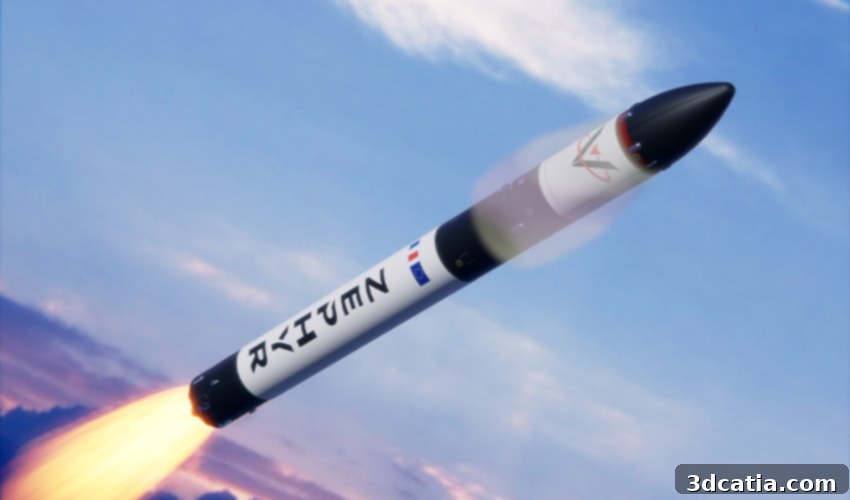
The inauguration of the Reims production site on October 19th marked a pivotal moment for French space ambitions. Its primary objective is to spearhead the development and production of “Zephyr,” a name that now carries the weight of history as the first launcher to be designed and built on French soil in over a quarter of a century. Stanislas Maximin, co-founder of Venture Orbital Systems, expressed immense pride and optimism regarding this achievement. “We are incredibly proud to inaugurate the first production site in France dedicated entirely to the manufacturing of small launchers specifically designed for nanosatellites,” Maximin stated. “This is a historic moment, the first time such an undertaking has occurred since 1975, and it marks a critical new stage for Zephyr, our flagship project. Our first commercial launch is ambitiously scheduled for just three years from now. The market for small satellite launches is not just present; its potential is immense, fueled by the explosive global growth in the demand for nanosatellites and microsatellites.” To effectively address the burgeoning requirements of this dynamic market, the French startup naturally gravitated towards metal additive manufacturing, recognizing its unique capabilities to meet their stringent design and production needs.
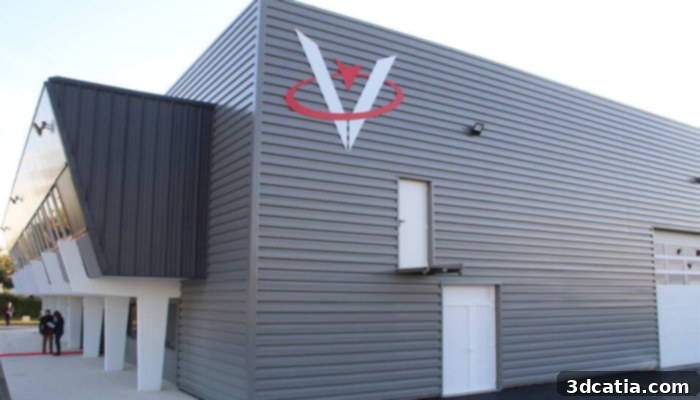
The VOS site aims to have 70 employees by 2023, showcasing significant growth. (Photo credits: l’Hebdo du Vendredi)
The Transformative Power of 3D Printing in Aerospace
The aerospace industry stands at the forefront of technological innovation, constantly seeking methods to enhance performance, reduce weight, and streamline manufacturing processes. Additive manufacturing, or 3D printing, has emerged as a revolutionary technology that perfectly aligns with these objectives. For companies like Venture Orbital Systems, embracing 3D printing is not merely an option but a strategic imperative. The advantages are multi-faceted: it enables the creation of highly complex geometries and intricate internal structures that are impossible with traditional manufacturing techniques. This capability is crucial for designing lighter components, which directly translates to improved fuel efficiency and increased payload capacity for rocket launchers.
Beyond weight reduction, 3D printing significantly accelerates the design and prototyping phases. Engineers can rapidly iterate on designs, test various configurations, and quickly move from concept to physical part, dramatically shortening development cycles. This agility is invaluable in the fast-paced “New Space” economy, where speed to market can determine success. Furthermore, additive manufacturing can consolidate multiple parts into a single, complex component, reducing assembly time, minimizing potential points of failure, and simplifying the supply chain. This consolidation also enhances the overall structural integrity and performance of critical rocket engine components, where extreme temperatures and pressures demand uncompromising reliability. The ability to use advanced metal alloys, such as titanium, nickel-based superalloys, and aluminum alloys, specifically tailored for extreme aerospace environments, further solidifies 3D printing’s position as a game-changer in rocket engine production.
Venture Orbital Systems: Spearheading a New Era for French Space
The Zephyr project, the brainchild of Venture Orbital Systems, represents more than just a new rocket; it symbolizes a resurgence of France’s independent space capabilities. For a nation with a proud history in space exploration and technology, the development of a wholly French-designed launcher after a 25-year hiatus is a powerful statement. Zephyr is meticulously engineered to address the exploding demand for dedicated launch services for nanosatellites and microsatellites. These small satellites, weighing typically between 1 and 100 kilograms, are vital for a vast array of applications, including Earth observation, telecommunications, Internet of Things (IoT) connectivity, scientific research, and defense. Historically, these smaller payloads often had to hitch a ride as secondary cargo on larger rockets, leading to inflexible launch schedules and orbital parameters. Zephyr offers a dedicated, agile, and cost-effective solution, enabling satellite operators to deploy their constellations precisely where and when needed.
The market for small satellites is experiencing unprecedented growth, driven by technological advancements that miniaturize electronics and reduce sensor costs. This has democratized access to space, allowing smaller companies, research institutions, and even universities to launch their own satellites. Venture Orbital Systems’ strategic focus on this niche, with Zephyr capable of carrying payloads up to 70 kg, positions them at the forefront of this burgeoning sector. The vision articulated by Stanislas Maximin underscores a profound understanding of this market dynamic: “The market is there and its potential is immense due to the strong growth in the need for nanosatellites and microsatellites worldwide.” By leveraging metal additive manufacturing, VOS can produce complex, high-performance engine parts with unparalleled efficiency and precision, which are critical for meeting the demanding operational requirements of orbital launches.
3D Printing at the Heart of the VOS Production Site
The 1,700-square-meter Venture Orbital Systems facility in Reims is a hub of innovation, designed from the ground up to integrate advanced manufacturing techniques. Currently, the site is equipped with polymer 3D printers, which are instrumental in the rapid prototyping phase. These machines allow VOS engineers to quickly fabricate and test design iterations for various components, accelerating the development cycle and identifying potential issues early on. This iterative approach is crucial for optimizing designs for performance, weight, and manufacturability before committing to more expensive metal printing.
Looking ahead, VOS has ambitious plans to integrate metal 3D printers directly into its facility. This strategic move will enable the in-house production of critical, high-performance metallic components for the Zephyr launcher. For the interim period, and to benefit from specialized expertise and infrastructure, the French startup is collaborating with established industrial partners who possess advanced metal additive manufacturing capabilities. These partnerships are vital for producing the end-use metal parts, particularly those comprising the rocket engine, which demand extreme precision and material integrity. Once manufactured, these sophisticated components are then assembled at VOS’s Reims site, creating a streamlined and efficient production flow. This collaborative approach allows VOS to leverage existing high-tech resources while simultaneously building its own internal capabilities, fostering a robust ecosystem for advanced space manufacturing in France. The company’s commitment to growth is further exemplified by its goal of expanding its workforce to 70 employees by 2023, contributing significantly to local employment and technological development.
Zephyr’s Ambitious Timeline and Future Trajectory
The development of the Zephyr launcher is proceeding on an aggressive yet meticulously planned timeline, reflecting Venture Orbital Systems’ determination to become a significant player in the small satellite launch market. Standing at an impressive 15 meters tall, the Zephyr launcher is designed to deploy up to 70 kg of satellites into various orbital paths. A crucial aspect of its design involves the extensive use of 3D printing for the metal parts that constitute the launcher’s engine. This not only allows for complex, high-performance designs but also speeds up the manufacturing process of these critical components. VOS anticipates conducting the first tests of the 3D-printed engine within the next few months, a significant step towards verifying its operational capabilities and reliability. Following successful engine tests, the Zephyr launcher is scheduled for full assembly in 2023, marking another major milestone in its development cycle. The pinnacle of this ambitious project is slated for 2024, when the first orbital launch of Zephyr is expected to take place, propelling France back into the league of nations independently launching their own vehicles.
The vision for Venture Orbital Systems extends far beyond a single launch. The company harbors an audacious long-term goal: to achieve no less than 40 launches per year by 2030. This target signifies a profound commitment to establishing a high-cadence, reliable, and cost-effective launch service for the rapidly expanding small satellite market. Achieving such a high frequency of launches will require not only robust manufacturing capabilities but also highly efficient operational logistics and a scalable production model, areas where 3D printing’s advantages in rapid manufacturing, customization, and supply chain simplification will be paramount. This aggressive launch schedule underscores VOS’s ambition to become a dominant force in providing flexible and dedicated access to space, positioning France and Europe at the forefront of the New Space economy and making significant contributions to global satellite deployment capabilities.
Pioneering the Future of Space Access
Venture Orbital Systems stands as a beacon of innovation within the rapidly evolving “New Space” industry. Their commitment to integrating cutting-edge 3D printing technology into the manufacturing of rocket launchers like Zephyr is not just an engineering choice; it’s a strategic decision that positions them for success in a competitive global market. By focusing on the dedicated launch needs of nanosatellites and microsatellites, VOS is addressing a critical gap in space access, fostering a more agile and responsive ecosystem for satellite deployment. This initiative not only bolsters France’s historical leadership in aerospace but also exemplifies how private enterprise, driven by technological foresight and bold ambition, can redefine the boundaries of space exploration and commercialization. The success of VOS and the Zephyr project could herald a new era of democratized access to space, enabling countless new applications and scientific discoveries. As the company progresses towards its ambitious launch targets, it will undoubtedly contribute to the ongoing transformation of how we utilize and explore the cosmos, proving that innovation, even in a traditionally complex sector, can flourish in unexpected places.
What are your thoughts on Venture Orbital Systems’ advancements and the role of 3D printing in shaping the future of space travel? We’d love to hear from you! Share your insights in a comment below or join the conversation on our Linkedin, Facebook, and Twitter pages! Don’t forget to sign up for our free weekly Newsletter here, bringing the latest 3D printing news straight to your inbox! You can also find all our engaging videos on our YouTube channel.