
3D Bioprinting Breakthrough: Johns Hopkins and Organovo Create a Functional Mouse Brain
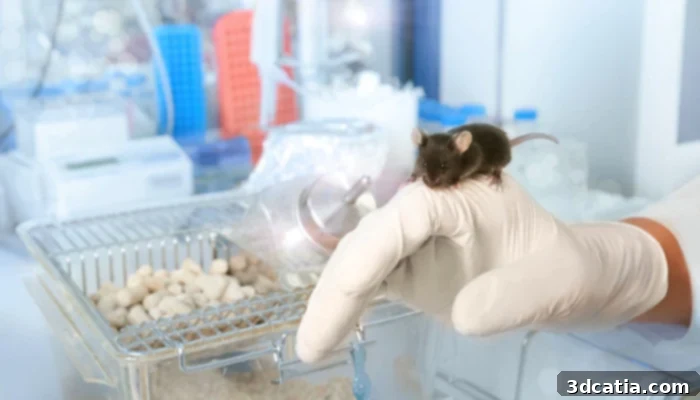
In a monumental leap forward for medical science, researchers at the Johns Hopkins University, in a pioneering collaboration with the American company Organovo, have successfully bioprinted a fully functional 3D brain for a mouse. This groundbreaking achievement marks an unprecedented milestone in the medical world, demonstrating the profound potential of bioprinting technology to revolutionize scientific research, particularly within the surgical and neurological sectors. The meticulously engineered organ was not only successfully created but also implanted into a living mouse, which continues to thrive today, exhibiting demonstrably improved intellectual faculties. This remarkable success underscores the rapid advancements occurring in the field of regenerative medicine and offers a beacon of hope for countless medical applications.
The burgeoning field of bio-printing continues to expand its capabilities at an astonishing pace, consistently revealing its immense potential to transform healthcare. This cutting-edge technology, which involves the precise creation of biological structures from living cells, holds the promise of producing functional organs that can be used for research, drug testing, and eventually, transplantation. While researchers have previously achieved significant success in bioprinting simpler organs such as a liver – an already considerable scientific advance – the recent breakthrough by the Johns Hopkins University team elevates this progress to an entirely new level. After years of dedicated research and development, their ability to print a functional 3D brain represents an unparalleled achievement, opening up vast new avenues for understanding and treating complex neurological conditions.
The complexity of the brain, with its intricate network of neurons and glial cells, has long presented a formidable challenge to bioengineers. Overcoming this hurdle required not only innovative technological solutions but also a deep understanding of neurobiology. This success signifies that bioprinting is no longer limited to basic tissues but can now tackle structures with highly specialized functions and architectural complexity. The implications for neurological research are particularly profound, as scientists can now study brain function, disease progression, and therapeutic interventions in a living, functional model that closely mimics natural biological conditions.
A Functional 3D Brain: Elevating Intellectual Capabilities and Medical Research
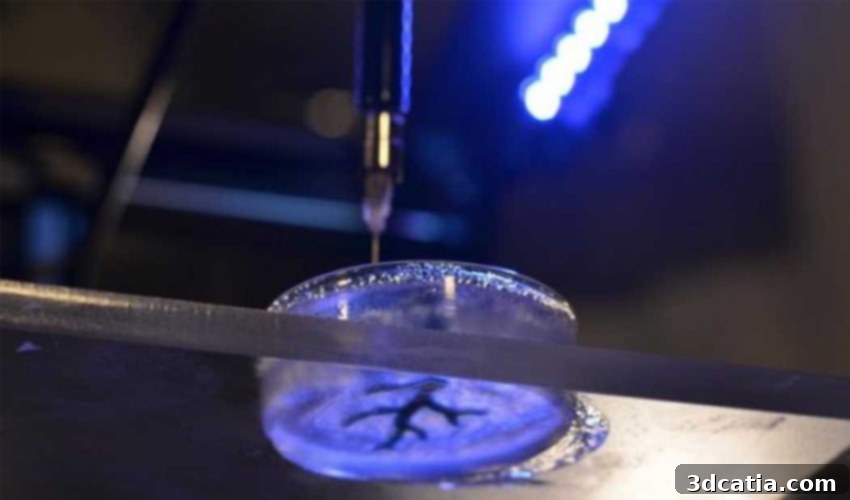
This pioneering achievement was made possible through the invaluable expertise and advanced technology provided by Organovo, a leader in bioprinting solutions. The research team harnessed a sophisticated bio-inkjet printer, specifically designed to precisely deposit microscopic droplets of bio-ink, often referred to as biotins. These biotins are essentially living cellular materials, carefully extracted and prepared on either a culture plate or a specialized hydrogel support. Through an additive manufacturing process, these droplets are meticulously layered, one upon another, to gradually form the desired three-dimensional organ structure.
For this particular project, researchers at Johns Hopkins University focused on developing and culturing highly specialized glial cells, which are crucial supportive cells within the brain. These glial cells were then strategically mixed with neurons – the fundamental building blocks of the nervous system responsible for transmitting information – to create the appropriate and highly effective biotins. The precise ratio and arrangement of these cell types were critical to ensure the structural integrity and functional viability of the bioprinted brain. This intricate cellular mixture allowed the team to successfully bio-print a complete brain structure, which they subsequently implanted with remarkable success into the mouse subject. The synergy between advanced bioprinting hardware and sophisticated biological engineering proved indispensable in achieving this unprecedented outcome.
Professor Merlan’s words highlight the immense therapeutic potential of this technology. For conditions like brain tumors, where precise surgical intervention is critical, having a bioprinted functional model for pre-clinical testing could lead to significantly improved surgical outcomes and more effective treatment protocols. Furthermore, the ability to study and potentially correct conditions associated with a low intelligence quotient offers unprecedented avenues for intervention and cognitive enhancement research. The implications for neurodegenerative diseases such as Alzheimer’s, Parkinson’s, and ALS are equally profound. By providing a more accurate and manipulable model of the human brain, scientists can accelerate the discovery of new drugs, therapies, and even potential cures, offering renewed hope to millions of patients worldwide. This breakthrough moves us closer to personalized medicine, where treatments can be tailored to the individual’s unique biological makeup.
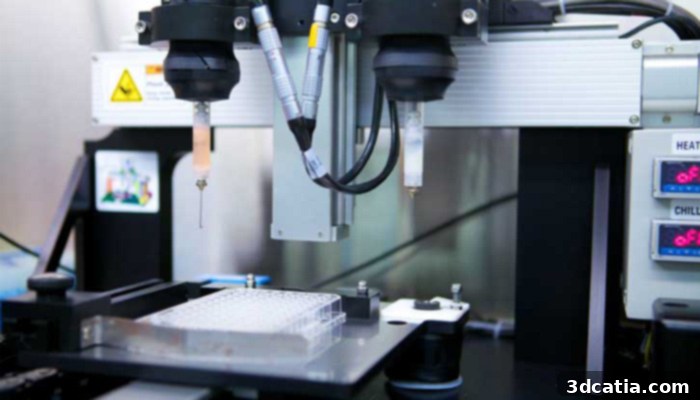
The bio-printer developed by Organovo
The initial results of the ongoing tests are unequivocally conclusive and immensely encouraging. Professor Merlan further elaborated on the successful outcome, stating that the mouse, which received the bioprinted 3D brain, remains alive and healthy a remarkable three months after the operation. This extended survival period for an implanted, complex bioprinted organ is a significant indicator of the technology’s viability and the stability of the cellular structures. Adding to this optimism, Bob Goldfish, the Scientific Director at Organovo, shared his perspective on the milestone: “This is very promising; it’s the first time our bio-printing technology has shown such results, especially on an organ as incredibly complex as the brain. The functional integration and sustained viability observed in the mouse are beyond our initial expectations. We are committed to continuing our intensive research and development efforts, with the ambitious hope that in a few short years, we will be able to apply this revolutionary technology to human subjects.”
The extended survival of the mouse, combined with the reported improvement in its intellectual faculties, provides compelling evidence that the bioprinted brain is not merely a structural replica but a truly functional organ capable of integrating with existing biological systems and performing complex neurological tasks. This success paves the way for deeper investigations into neuroplasticity, cognitive function, and the mechanisms of learning and memory. The implications for developing new models for drug discovery are immense, as bioprinted brains could allow pharmaceutical companies to test new compounds in a more biologically relevant environment, potentially reducing reliance on traditional animal testing and accelerating the drug development pipeline. Furthermore, this opens up opportunities for personalized medicine, where specific brain models could be created from a patient’s own cells to test the efficacy of different treatments for their unique condition.
Empowered by these groundbreaking results, researchers are already setting their sights on the ambitious goal of testing their bioprinting advancements on humans. While significant ethical considerations and regulatory hurdles must be meticulously addressed, the rapid progress in bio-printing technology suggests that this vision may become a reality sooner than previously imagined. This innovative approach may well become a new paradigm for designing, repairing, or even enhancing human organs, offering solutions for a wide range of medical needs, from organ replacement to the treatment of congenital defects and degenerative conditions. The journey from printing a mouse brain to addressing human neurological challenges is undoubtedly complex, but this foundational success provides a robust framework and an optimistic trajectory for future endeavors. The promise of personalized, on-demand organ creation is no longer confined to science fiction but is steadily moving into the realm of tangible scientific achievement. Find more in-depth information and technical details in the official press release.
The creation of a functional bioprinted brain represents a monumental step toward a future where failing organs can be replaced, damaged tissues repaired, and debilitating diseases effectively treated. It underscores the transformative power of 3D bioprinting and its potential to redefine medical practice. The scientific community is buzzing with anticipation, recognizing that this achievement could usher in an era of unprecedented advancements in neuroscience and regenerative medicine. From understanding complex brain disorders to developing new surgical techniques, the applications are vast and varied. This breakthrough challenges previous limitations and inspires a new generation of researchers to push the boundaries of what is medically possible.
Do you believe bio-printing will fundamentally improve our organs and revolutionize human health in the coming decades? We invite you to share your thoughts and predictions in a comment below or engage with us on our Facebook and Twitter pages! For all the latest news, insights, and developments in the fascinating world of 3D printing, be sure to sign up for our free weekly Newsletter, delivered straight to your inbox.