
Soliquid: Pioneering the Future of Large-Scale 3D Printing with Innovative Gel Suspension Technology
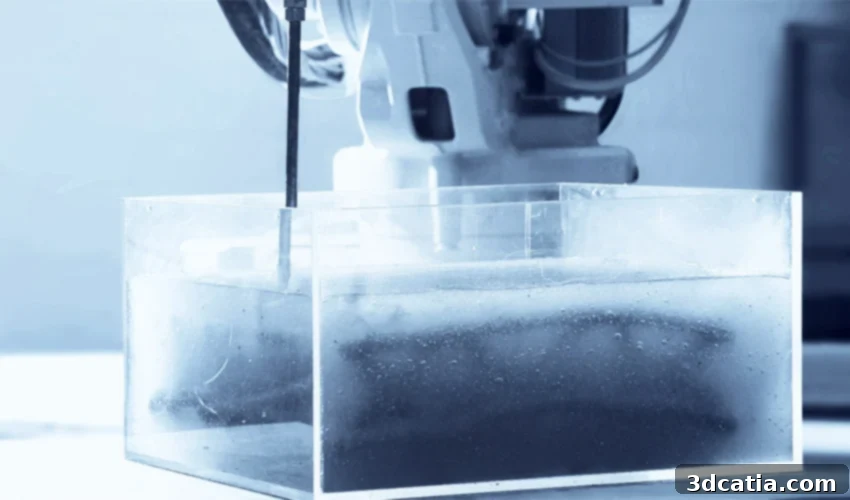
Soliquid, a visionary French startup, is fundamentally transforming the landscape of additive manufacturing with its groundbreaking 3D printing technology. Diverging from conventional layer-by-layer deposition methods, Soliquid’s approach involves extruding material directly into a robust and reusable gel matrix, utilizing the precision of a 6-axis industrial robot. This innovative process not only significantly accelerates production but also enables the creation of incredibly complex geometries without the need for traditional support structures, as the gel itself securely holds the part during the entire extrusion process. We had the privilege of speaking with Jim Rhoné, one of the co-founders, to delve deeper into this disruptive technology, understanding its operational principles, its numerous benefits, and the exciting possibilities it unlocks for various industries.
Unveiling Soliquid: Architects Pioneering Additive Manufacturing
Founded in the vibrant city of Paris in 2018, Soliquid emerged with a clear mission: to specialize in additive manufacturing and develop a distinctive large-scale 3D printing process. At its core, this technology operates by suspending materials within a reusable and highly durable gel matrix. The company was co-founded by Amaury Thomas and Jim Rhoné, both accomplished architects with extensive expertise in computational design and robotic manufacturing. Their collaboration with Impulse Group was instrumental in establishing Soliquid, driven by a collective ambition to expand the horizons of 3D printing. The objective was to introduce innovative methodologies and processes for producing non-standard, custom-designed, intricate, and unsupported elements across a multitude of industries, challenging the existing paradigms of digital fabrication.

The founders of Soliquid, Jim Rhoné (on the left) and Amaury Thomas, at the forefront of additive manufacturing innovation.
The Mechanics of Gel Suspension 3D Printing: A Detailed Insight
Soliquid’s patent-pending large-scale suspension 3D printing technology represents a significant departure from conventional “layer by layer” 3D printing techniques. Its fundamental innovation lies in depositing the printing material not on a previously laid string, but directly into a specialized gel matrix. This method entirely redefines how materials are supported and consolidated during the additive process, opening up new possibilities for design and production.
The system comprises several key components working in concert. At its heart is a printing tray, which houses the proprietary gel matrix. An advanced 6-axis industrial robot, equipped with a custom-developed print head at its end-effector, precisely maneuvers within this tray. The entire assembly, including the robot and its sophisticated end-effector, is meticulously controlled via a dedicated computer interface. This interface serves as the central hub where the printing phase is prepared and initiated. Initially, the 3D model of the desired element undergoes thorough analysis and, if necessary, adaptation. It is then transformed into a series of 3D curves, which directly correspond to the robot’s future toolpaths during the printing operation. These complex paths are further subdivided into a succession of discrete planes within the XYZ space, each associated with specific parameters that define the movement and printing processes with incredible accuracy.
The bespoke software developed by Soliquid is crucial for this conversion, translating this intricate data into RAPID language, the command protocol used to control the industrial robot. This sophisticated programming allows for precise control over all printing characteristics, including the toolpath, the robot’s movement speeds, and critically, the start/stop functions of the print head, along with variations in its material flow rate. This level of programmability offers unprecedented flexibility and control over the printing process.
Simultaneously, a high-efficiency pump is employed to transfer the chosen printing material from a storage and mixing tank directly to the print head. Once the printing process commences, the material-fed print head submerges into the printing tank and meticulously deposits the material, following the pre-determined toolpath. Herein lies the unique specificity of Soliquid’s technology: rather than merely extruding, the printing material is meticulously kept in stable suspension within the gel matrix. This feat is achieved through a carefully engineered balance between the viscosity of the gel and the density of the printing material, preventing collapse and enabling intricate designs that would otherwise require extensive support structures.
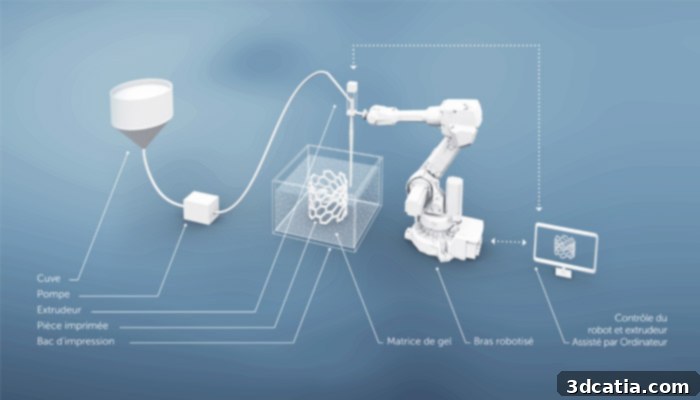
The innovative 3D printing process put in place by Soliquid, showcasing material extrusion within the gel matrix. | Credits: Soliquid
Upon the completion of the printing phase, the newly formed element remains suspended within the gel matrix. The gel effectively acts as an adaptive formwork, mould, or support until the material’s solidification or hardening reaches a sufficient state to allow for its safe removal from the tray. A significant advantage of this system is its sustainability: once a part is extracted, a new print can be initiated within the very same tray. The remarkable stability and durability of the printing matrix ensure that the process can be repeated numerous times over extended periods, consistently utilizing the same initial volume of gel, thereby minimizing waste and maximizing efficiency.
Versatile Materials for Diverse Applications
The journey of Soliquid began with initial small-scale demonstrations of their process, primarily utilizing two-component sealing resin. However, during the intensive R&D phase, the team strategically shifted its focus towards materials with broader industrial relevance, particularly in the construction sector. Concrete became a primary candidate, and more specifically, high-performance concretes such as HPC, BTHP, and BFUP were adopted. These advanced concrete formulations offer superior compression, traction, and bending performances, making them ideal for producing intricate wire structures, meshes, and complex 3D meshes while ensuring satisfactory structural integrity.
This initial R&D phase was crucial for conducting a Proof of Concept (POC) and several large-scale demonstrations, during which Soliquid meticulously characterized various materials compatible with their unique technology. The fundamental constraint for material selection remains its ability to exist in a liquid state for the printing phase and subsequently solidify in an anaerobic environment through an internal reaction, crucially initiated without any external energy input. This anaerobic curing capability significantly broadens the spectrum of usable materials, encompassing a wide array of products with extremely varied properties. These include resinous concretes, silicone, various one-component or two-component resins, and even certain mastics, polymers, and composites – materials whose industrial application is already well-established across numerous sectors. Furthermore, because the injected material is maintained in suspension until it achieves sufficient hardness, Soliquid’s printing process uniquely facilitates the use of multiple materials within a single element. This allows for both direct multi-material printing and successive printing with materials of different chemical or physical natures, opening doors to functional gradients and composite structures previously challenging to achieve with traditional additive manufacturing.
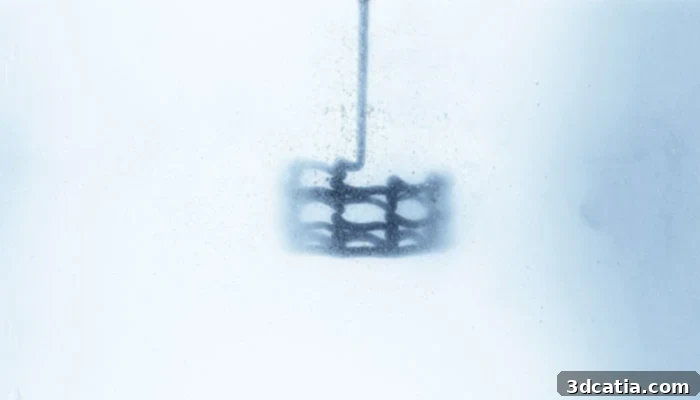
The robotic system precisely extruding concrete into the gel matrix during Soliquid’s innovative 3D printing process. | Credits: Soliquid
This concurrent research in materials science and engineering, alongside the continuous development of their core technology, actively fosters innovation. Soliquid is committed to further exploring and formulating new materials that can optimally address diverse application constraints, prioritizing the integration of biosourced components and those derived from recycling and reuse processes. This forward-looking approach underscores their dedication to sustainable practices and expanding the utility of their additive manufacturing solution.
Targeting Transformative Impact Across Key Sectors
The genesis of Soliquid was driven by a primary and ambitious objective: to develop a 3D printing process capable of revolutionizing prefabrication within the AEC (Architecture, Engineering, and Construction) and Design sectors. By introducing a novel industrial production method, Soliquid aims to create constructive, complex, and tailor-made elements that are lighter, more efficient, and crucially, require no traditional moulds or supports. This process unlocks a vast array of potential applications that are rapidly beginning to take shape. These range from the sophisticated optimization of structural systems – including slabs, columns, beams, and entire building modules – to the precise manufacture of non-standard architectural elements such such as intricate façade panels, and even the creation of innovative furniture ranges with unique designs. While acknowledging the often-extended timelines associated with adopting new processes in the construction industry, primarily due to rigorous normative, certification, and regulatory requirements, Soliquid has strategically chosen to target other promising sectors in parallel to accelerate impact and market penetration.
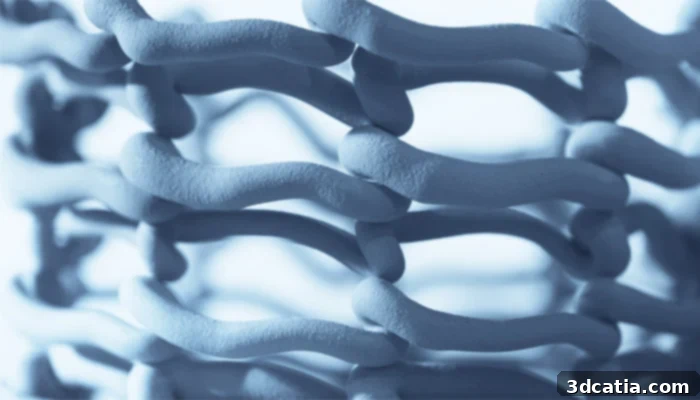
Soliquid’s technology finds diverse applications, particularly in creating complex architectural structures. | Credits: Soliquid
Among these emerging sectors, the ecological industry has become a significant focus, particularly in the production of sustainable engineering solutions. This area is rapidly evolving into one of Soliquid’s preferred activities. In an era marked by pressing environmental challenges like biodiversity erosion and the degradation of critical ecosystem services, the fusion of engineering and ecology offers a powerful approach. It seeks to bolster the resilience of fragile ecosystems and promote sustainable development through the intelligent design, application, and management of processes, products, and services aimed at preventing, limiting, or repairing environmental damage. For several years, numerous projects have successfully integrated ecological engineering principles into the eco-design of marine elements, notably in the form of artificial reefs or specialized cladding modules. These devices are meticulously engineered to create artificial habitats for diverse marine life, including fish and shellfish, and to stimulate the development of biomass. Often based on biomimetic solutions, their complex geometries can be challenging to implement using traditional manufacturing methods. Soliquid’s advanced 3D printing solution, with its unparalleled ability to produce elements featuring highly complex and organic geometries – such as three-dimensional meshes, intricate tree structures, bridging elements, and diverse cavities – is exceptionally well-suited for printing such intricate ecological structures, offering a significant advantage in this critical field.
Finally, the medical sector also stands as a promising field of application for Soliquid’s technology. The capability to manufacture custom-made medical devices, prostheses, and orthoses perfectly adapted to individual users, characterized by ultra-lightness, exceptional resistance, and produced within remarkably short timeframes, presents immense potential for improving patient care and rehabilitation. The precision and design freedom offered by gel suspension printing could revolutionize personalized medicine.
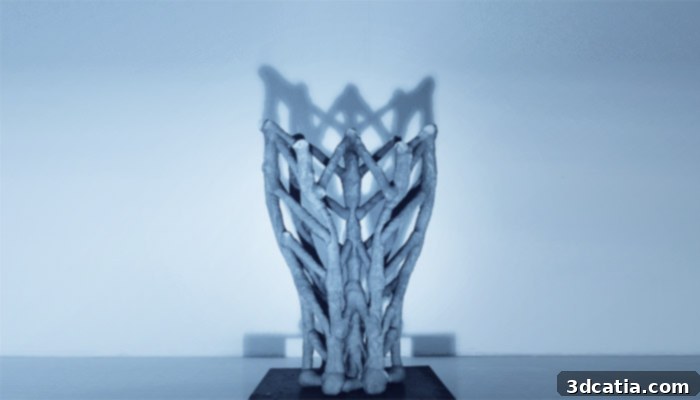
An example of an intricate structure printed using Soliquid’s innovative technology. | Credits: Soliquid
Key Advantages and Overcoming Technical Hurdles
The construction and building sectors are increasingly exploring the integration of additive manufacturing technologies as a core production strategy. However, the widespread industrial adoption of existing techniques has been hampered by four significant limitations: protracted production times, challenges in device scalability, and inherent material and formal design restrictions. Soliquid’s uniquely conceptualized process directly addresses these prevailing challenges in additive manufacturing, offering three critical differentiations that set it apart: **unprecedented printing speed**, **expansive morphological (design) freedom**, and significant **material saving**.
By leveraging a gel matrix to maintain the printed material in stable suspension, Soliquid’s printing strategy entirely eliminates the need for any support materials. This fundamental difference means that material can be continuously injected without requiring progressive solidification during the printing process itself, making the overall printing operation extraordinarily fast. Furthermore, the technology is not bound by the restrictive ‘layer by layer’ paradigm characteristic of most 3D printing techniques. This liberation from planar constraints allows for extremely free toolpaths, granting full control over the direction and orientation of the extruder within the three-dimensional space. The integration of advanced topology optimization tools enables the programming of element printing to be optimized across multiple dimensions and levels: achieving significant material quantity reduction, lowering carbon emissions, and enhancing structural performance. This suspension technique also unlocks novel printing possibilities that are exceptionally difficult, if not impossible, to achieve with conventional 3D printing processes. For instance, parts can be created with intricate, interlocking principles, such as one component being printed directly inside another, or chains with interconnected links, showcasing a level of geometric complexity previously unattainable.
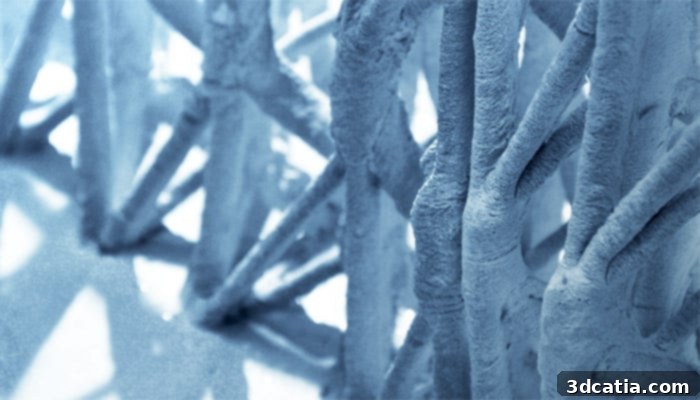
Demonstration of Soliquid’s ability to create intricately entangled shapes, showcasing unparalleled design freedom. | Credits: Soliquid
Finally, the inherent stability and exceptional durability of the printing matrix itself contribute significantly to the overall reduction of material required for the process. Beyond its undeniable environmental friendliness, the reusability of the gel matrix was a paramount criterion for the successful development of Soliquid’s technology. After the careful extraction of each printed part, an initial cleaning step allows for the recovery of the majority of the gel, effectively minimizing losses and enabling subsequent 3D printing jobs to proceed with the same initial volume of matrix material. A second, more thorough wash then ensures the complete removal of any residual gel traces from the printed part, primarily for aesthetic refinement, optimal finishing, and ease of handling. This multi-stage process highlights Soliquid’s commitment to both efficiency and environmental responsibility.
From a technological perspective, the primary challenges encountered during the initial year of development were predominantly related to the scalability of the technology and the effective use of new materials with significantly higher densities than the resins initially employed. These hurdles were rigorously addressed through extensive research and engineering. Now that this critical validation phase has been successfully completed, Soliquid is poised to explore and capture new applications and markets, confident in the transformative potential of its disruptive 3D printing process.
Future Horizons for Soliquid
While specific details about our upcoming projects remain confidential for strategic reasons, we can affirm that exciting developments are in motion. These projects are slated for implementation in the near future and are anticipated to bring substantial value to their users, whether in submarine environments or land-based applications. To stay informed and ensure you don’t miss any of our groundbreaking news or announcements, we encourage you to follow Soliquid on our various social media platforms.

Credits: Soliquid
A Message to Our Readers
Soliquid stands as a vibrant, rapidly expanding young startup, where the opportunities for research and development across hardware, software, and materials engineering are truly boundless. Our unwavering ambition is to continuously design and refine ever more efficient 3D printing hardware technologies and sophisticated software solutions. We are profoundly convinced that the unique gel suspension process we are meticulously developing will not only gain prominence but also significantly contribute, in synergy with other complementary devices, to the emergence of innovative production strategies across a multitude of industries. With this ambitious vision firmly ingrained, we place innovation at the very core of Soliquid’s DNA, recognizing it as absolutely essential for the continuous improvement and optimal refinement of our process. If you are intrigued by the prospect of joining our pioneering adventure, or if you believe that meaningful synergies could be forged between your enterprise and ours, please do not hesitate to contact us. We welcome collaborations that push the boundaries of what’s possible in additive manufacturing.
What are your thoughts on Soliquid’s innovative gel suspension technology? We invite you to share your insights in a comment below or join the conversation on our Facebook and Twitter pages! For the latest updates and breaking news in the world of 3D printing, sign up for our free weekly Newsletter here, delivered straight to your inbox!