
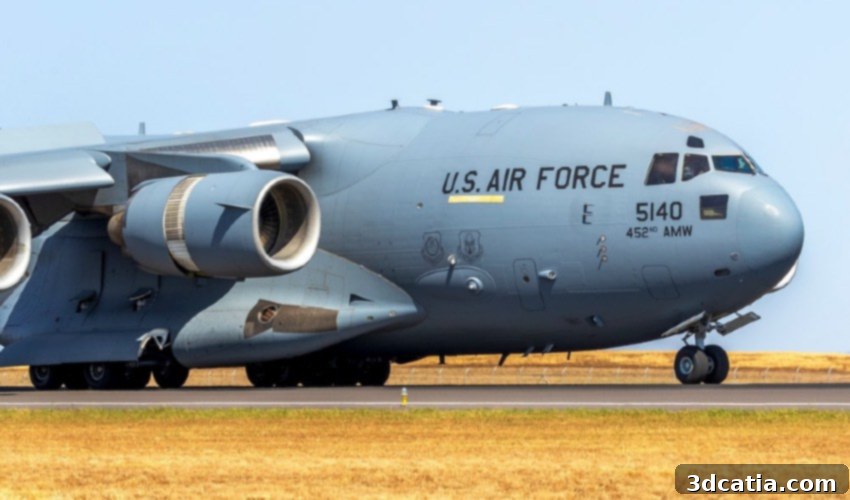
Revolutionizing Aircraft Maintenance: US Air Force Awards Optomec $1M for Advanced 3D Printed Turbine Blade Repair
The United States Air Force (USAF) continues to solidify its commitment to integrating cutting-edge additive manufacturing (AM) technologies across its extensive operations. This strategic investment is not merely an exploratory venture but a deliberate integration designed to enhance operational readiness, optimize logistics, and significantly reduce maintenance costs. From forging robust partnerships with industry leaders like GE Aerospace to pioneering the development of specialized materials, such as reinforced ceramics for advanced 3D printed sensors, the USAF consistently demonstrates its forward-thinking approach. Furthermore, the Air Force actively sponsors innovative AM projects, exemplified by the development of 3D printed runway mats, highlighting a comprehensive strategy to embed additive manufacturing into various critical applications within the military infrastructure.
In its latest strategic move, underscoring this deep integration, the US Air Force has awarded a substantial $1 million contract to Optomec, a recognized leader in the field of metal additive manufacturing. This significant award earmarks Optomec for a crucial mission: the refurbishment of high-value titanium turbine blades, components vital to military aircraft engine performance. Optomec is no stranger to such critical applications; not long ago, the company celebrated an extraordinary milestone, having utilized its proprietary AM technology to successfully repair over 10 million turbine blades. This impressive track record underscores Optomec’s proven expertise and reliability in delivering high-performance repair solutions, making them an ideal partner for the Air Force’s demanding requirements.
Each year, the US Air Force allocates billions of dollars towards the essential upkeep and repair of its vast fleet of military aircraft engines. This critical activity, formally known as Maintenance, Repair, and Overhaul (MRO), represents a substantial operational cost. Globally, the market for plane engine MRO is estimated to be a staggering $50 billion annually, with a significant portion of this expenditure dedicated to replacing worn-out or damaged components with newly manufactured parts. This traditional replacement-centric approach often incurs high material costs, lengthy lead times, and complex supply chain dependencies, all of which can impact military readiness and operational efficiency.
This is precisely where Optomec’s advanced metal additive manufacturing solutions offer a transformative alternative. By leveraging their innovative technologies, Optomec enables the restoration of existing, high-value components rather than their outright replacement. This capability has a demonstrated potential for cost savings of up to an impressive 70%. Beyond the substantial financial benefits, the Air Force stands to gain numerous operational advantages. These include significantly shorter and more predictable lead times for critical parts, a drastic reduction in supply chain dependencies, and an overall enhancement of parts availability. Collectively, these improvements directly translate into improved readiness and increased operational flexibility for the US military, ensuring that aircraft are mission-ready when they are needed most.
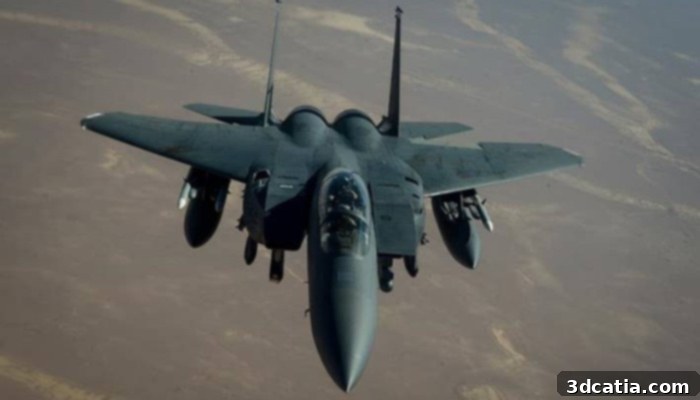
The core of this transformative project involves the delivery of a sophisticated, high-volume production machine specifically engineered for the precise refurbishment of turbine engine components, with a particular focus on complex titanium turbine blades. This state-of-the-art automated additive repair system is designed for unparalleled efficiency, boasting the capacity to process tens of thousands of repairs annually. This level of throughput is critical for meeting the vast maintenance needs of the Air Force and represents a significant leap forward in automated MRO capabilities.
Optomec’s cutting-edge solution is underpinned by its proprietary LENS (Laser Engineered Net Shaping) technology. LENS, in turn, is a specialized form of Directed Energy Deposition (DED), an advanced additive manufacturing technique renowned for its ability to repair existing components or add additional material with exceptional precision. Unlike traditional 3D printing methods that build parts from scratch, DED focuses on repairing specific areas or modifying existing structures. The process works by utilizing a highly focused energy source—typically a high-power laser or an electron beam—to melt a stream of metallic powder or wire as it is precisely deposited through the machine’s nozzle. This allows for localized material addition, creating metallurgical bonds with the original component, effectively restoring it to its original specifications or even enhancing its properties. The strategic significance of this project is further amplified by its planned installation at Tinker Air Force Base in Oklahoma City, a central hub for aircraft maintenance and logistics for the US Air Force. This location ensures that the advanced repair capabilities are integrated directly into a major operational facility, maximizing its impact on the fleet.
Jamie Hanson, Vice President of Business Development at Optomec, articulated the company’s pride and the strategic importance of this collaboration: “Optomec is proud to be serving our military. We have been processing titanium for years, a testament to our enduring expertise in advanced metal additive manufacturing. However, the unique challenge presented by the Air Force was to develop and implement high-volume, oxygen-free production cells specifically for titanium. While Optomec has a proven track record of developing automated, high-volume production cells for a variety of other alloys, the requirements for titanium demand a specialized environment to prevent oxidation and ensure material integrity.”
Hanson further elaborated on the stringent demands of the contract: “The core challenge given to us by the Air Force was to provide a system rooted in commercially proven capabilities, yet meticulously engineered to meet their exceptionally high production quotas and exacting technical requirements. This is not merely an adaptation but an evolution of our technology. In response, we will be delivering a first-of-its-kind machine, equipped with advanced automation that facilitates virtually uninterrupted production within a meticulously controlled oxygen-free environment. This unparalleled capability is paramount for working with reactive metals like titanium, ensuring the highest quality and consistency in repairs. Moreover, we believe this innovation will serve as a crucial enabler for the broader aerospace industry, assisting it in achieving aggressive cost-reduction goals and embracing more sustainable maintenance practices moving forward. The ripple effect of such advanced capabilities promises a new era of efficiency and reliability for both military and commercial aviation.”
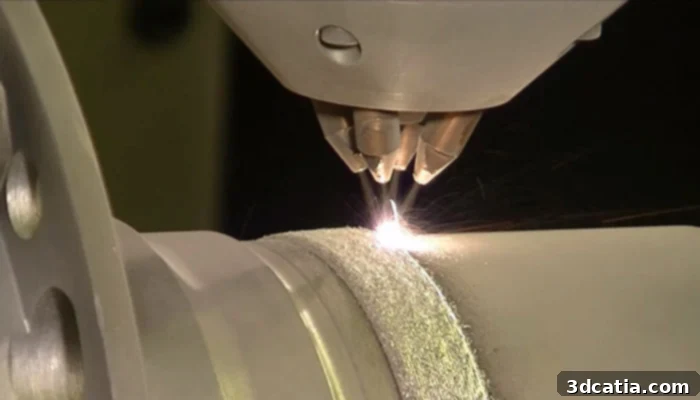
The Optomec DED technology
The implementation of Optomec’s DED technology for the repair of critical titanium components at Tinker Air Force Base signifies more than just a technological upgrade; it represents a paradigm shift in how military aircraft maintenance is approached. By enabling the meticulous restoration of expensive and vital parts, rather than their costly replacement, the USAF is poised to achieve unprecedented levels of efficiency and cost-effectiveness. This not only strengthens the nation’s defense capabilities by ensuring greater fleet readiness but also positions the Air Force as a pioneer in adopting sustainable and advanced manufacturing practices. The long-term implications of this partnership extend far beyond immediate cost savings, paving the way for further integration of additive manufacturing across the defense sector and setting a new benchmark for aerospace MRO globally. This collaborative effort between the US Air Force and Optomec is a testament to the transformative power of 3D printing in addressing complex engineering and logistical challenges in critical industries.
What are your thoughts on this significant partnership between Optomec and the US Air Force for revolutionizing turbine engine repairs with advanced 3D printing technology? Share your perspectives and join the conversation by leaving a comment below or connecting with us on our Facebook and Twitter pages! Don’t miss out on the latest advancements and news in the world of additive manufacturing. Be sure to sign up for our free weekly Newsletter, delivering all the essential updates directly to your inbox!