
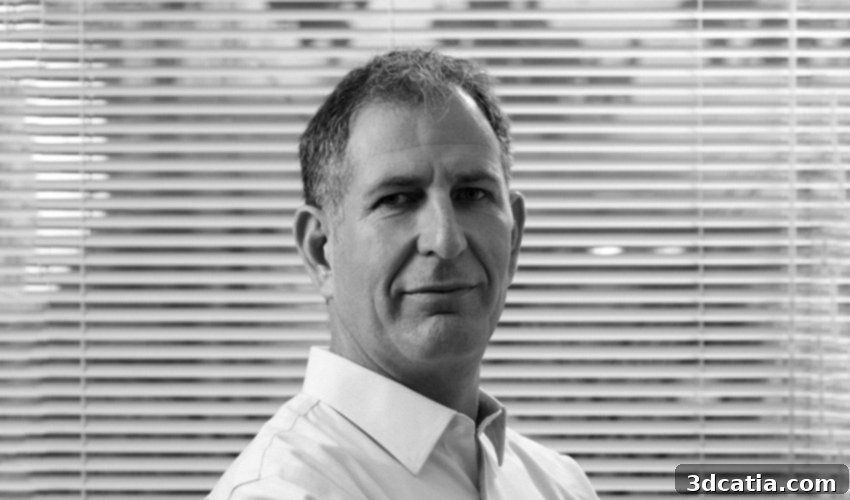
Hanan Gothait’s Vision: XJet’s NanoParticle Jetting Revolutionizes Ceramic and Metal 3D Printing
In our ongoing exploration of the pioneering figures who have indelibly shaped the landscape of additive manufacturing, we turn our spotlight to Hanan Gothait, the insightful CEO of XJet. A true innovator, Gothait is the driving force behind numerous transformative projects and the patented NanoParticle Jetting™ (NPJ) technology, which XJet proudly introduced to the world. This groundbreaking method represents a paradigm shift, enabling the production of sophisticated metal and ceramic parts with unprecedented ease and versatility, mirroring the straightforwardness of traditional inkjet printing. We recently had the distinct pleasure of engaging with Mr. Gothait to discuss prevailing trends within the additive manufacturing sector and his astute forecasts for its future trajectory. Our conversation delved particularly deep into the burgeoning field of ceramic 3D printing, a segment poised to profoundly disrupt conventional manufacturing processes across a multitude of industries, and one about which Gothait holds a truly expansive vision.
Hanan Gothait: A Pioneer’s Journey from Objet to XJet
Hanan Gothait’s illustrious career in additive manufacturing began as the Co-Founder of Objet Geometries Ltd. During his tenure, Objet Geometries became a dominant force in the 3D polymer printing arena, largely due to its patented PolyJet technology. PolyJet was a revolutionary 3D printing solution that seamlessly integrated the precision of inkjet technology with the advanced capabilities of photopolymer materials. This innovation allowed for the creation of multi-material prototypes with intricate geometries and varying material properties, fundamentally reinventing how designers and engineers approached product development. Gothait’s leadership was instrumental in establishing Objet as a trailblazer in rapid prototyping. However, in 2004, driven by a relentless pursuit of new challenges and an ambitious vision for the next generation of additive manufacturing, Hanan Gothait departed Objet to embark on other ventures. His departure preceded the company’s eventual merger with Stratasys in 2012, a consolidation that further cemented the foundational impact of Objet’s early innovations.
In 2005, Hanan Gothait assumed the role of CEO at XJet, dedicating himself and his team to an intensive decade of research and development. This extensive commitment culminated in the creation of yet another revolutionary 3D printing technology. Under Gothait’s expert guidance, XJet amassed a formidable intellectual property portfolio, now boasting more than 80 registered and pending patents. This robust foundation laid the groundwork for the highly anticipated launch of NanoParticle Jetting™ (NPJ) in 2016. NPJ was meticulously developed as a cutting-edge additive manufacturing process specifically designed for both metal and ceramic materials. The market soon witnessed the introduction of the first commercial platforms leveraging this advanced technology: the Carmel 1400 and Carmel 700 systems, launched just a year later in 2017. These systems represented a monumental step forward, bringing the promises of high-quality, complex metal and ceramic part production closer to industrial reality.
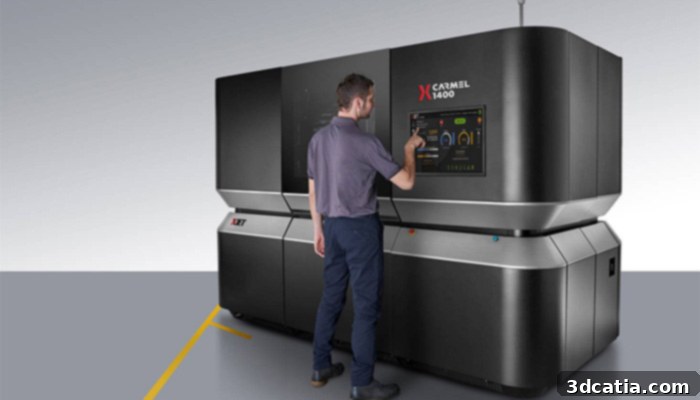
The Carmel 1400 3D printing solution from XJet | Photo credits: XJet
3DN: What was the inspiration behind XJet’s significant move into ceramic 3D printing?
Additive manufacturing, often referred to as 3D printing, has achieved considerable traction and become a well-established technology across numerous industries, particularly for the production of polymer and metal components. Its ability to create complex geometries, enable rapid prototyping, and facilitate on-demand production has transformed sectors ranging from automotive to consumer goods. However, despite these advancements, the immense potential of 3D printing for technical ceramics remains largely untapped. Traditional methods for manufacturing ceramic parts are often labor-intensive, costly, and severely limited in geometric complexity, making customized or intricate designs challenging and expensive. Experts in the field are keenly aware of this underserved market, predicting a dramatic surge in its value. The global market for technical ceramic 3D printing is projected to grow from a modest $174 million in 2017 to a substantial $544 million by 2022, with an even more impressive forecast of reaching $3.1 billion by 2027. This exponential growth underscores a clear industry need. The unique capabilities offered by XJet’s technology, coupled with the sheer size and diversity of the potential market, the wide array of transformative applications, and the undeniable advantages for end-users, collectively point towards an imminent and profound transformation within the advanced ceramics industry. XJet recognized this burgeoning opportunity and strategically positioned its NPJ technology to be at the forefront of this revolution, addressing the limitations of traditional methods head-on and unlocking new possibilities for ceramic part design and production.
3DN: Could you elaborate on the operational principles of your ceramic 3D printing technology?
XJet’s advanced additive manufacturing platforms are powered by its proprietary NanoParticle Jetting technology™ (NPJ), a process protected by numerous patents. This innovative technology empowers users to produce high-performance metal or ceramic parts with the same remarkable ease, precision, and versatility typically associated with conventional inkjet printing, all without compromising on critical performance attributes or overall quality. The core ingenuity of NPJ lies in its distinctive liquid dispersion methodology. The process begins with the careful preparation of liquid suspensions, which are essentially highly stable inks containing solid nanoparticles of the chosen material – whether it be a specific metal or ceramic – alongside a distinct support material. These suspensions are meticulously jetted, drop by drop, into the build tray, precisely forming each layer of the desired part. A crucial aspect of NPJ is the nature of these nanoparticles: they are stochastic, meaning they exhibit a variety of shapes and sizes. Following dispersion, a remarkable self-assembly occurs where the smaller particles strategically fill the interstitial spaces between the larger particles, resulting in an exceptionally tight and dense packing of the material. This phenomenon, which XJet refers to as “perfect packaging,” yields significant benefits. It not only translates into superior physical properties, such as exceptionally high density and minimal porosity in the final component, but also offers substantial geometric advantages. This includes the unparalleled ability to fabricate incredibly thin walls, achieve razor-sharp edges, create ultra-smooth surfaces, and reproduce other intricate fine details with an impressive accuracy down to 0.1mm. This level of precision is paramount for complex industrial applications where functional performance is non-negotiable.
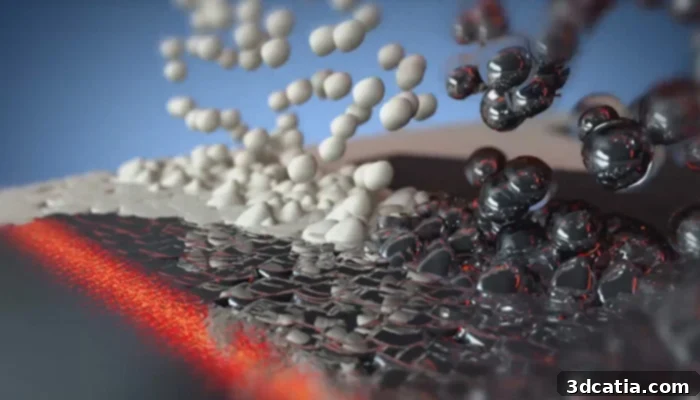
The NanoParticle Jetting technology in action | Photo Credits: XJet
The ‘perfect packaging’ achieved through NPJ is particularly crucial for ceramic 3D printing, enabling the production of parts with excellent shape retention and dimensional tolerance post-sintering. This significantly reduces the need for extensive post-processing, thereby cutting down both manufacturing costs and lead times. Ceramics, by their very nature, are notoriously difficult materials to machine using traditional subtractive methods, especially when complex geometries are required. The ability of NPJ to create intricate 3D printing details and highly complex free-form geometries with precision is therefore far more critical and impactful than with many other materials. This inherent capability positions XJet’s technology to profoundly benefit a vast array of industries. These include, but are not limited to, the demanding sectors of automotive (for high-performance engine components and sensors), aerospace (for lightweight, heat-resistant parts), healthcare (for biocompatible implants and surgical tools), dental (for crowns, bridges, and custom prosthetics), electronics (for advanced substrates and insulators), and machinery (for wear-resistant components and nozzles). The potential applications are truly extensive and continually expanding as industries recognize the unique advantages of additively manufactured ceramics.
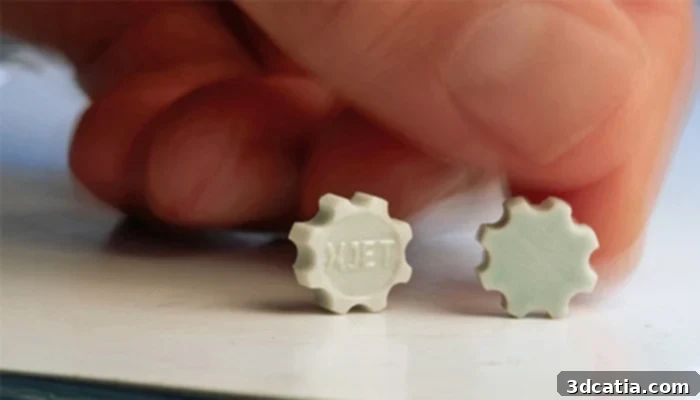
Ceramic 3D printed piece | Photo Credits: XJet
3DN: How critical do you believe ceramic 3D printing will be for various industries?
Just as the metal and polymer 3D printing markets have unequivocally demonstrated, the array of application opportunities and the substantial time and cost savings enabled by digital, short-run manufacturing are virtually limitless. Ceramic 3D printing is poised to replicate and even surpass this revolutionary impact across numerous industries. For decades, the inherent properties of advanced ceramics – such as extreme hardness, wear resistance, chemical inertness, and high-temperature stability – have been highly sought after. However, their brittleness and difficulty in processing limited their broader adoption for complex parts. Additive manufacturing changes this equation entirely. Industries such as health, energy, and automotive, which were early and enthusiastic adopters of plastic and metallic additive manufacturing, are now embarking on equally exciting journeys into the realm of technical ceramics. The ability to produce customized, complex ceramic parts on demand, without the need for expensive tooling or extensive post-processing, opens up new design freedoms and efficiencies. This technology is expected to gain full acceptance, evolving from a niche solution to a valid, necessary, and in many cases, even the preferred manufacturing method for high-performance components. Its strategic importance lies in its capacity to unlock novel designs, improve material performance in extreme environments, and streamline supply chains, thereby driving innovation and competitiveness across sectors that demand the very best in material science.
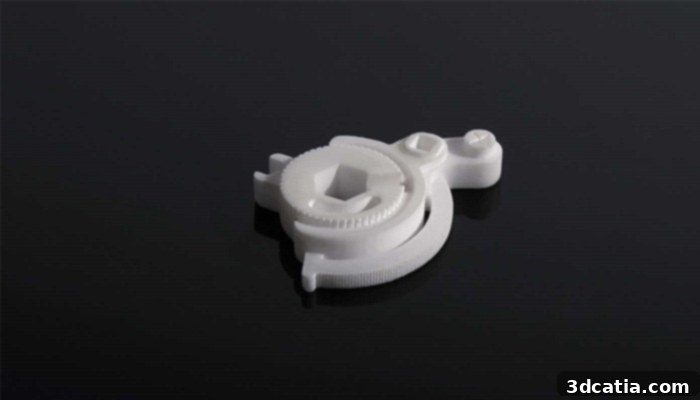
Ceramic 3D printing will disrupt many industries | Photo Credits: XJet
3DN: Where do you envision the ceramic 3D printing landscape in the next decade?
Ceramic additive manufacturing, while still considered to be in its nascent stages compared to its polymer and metal counterparts, is experiencing a period of exceptionally rapid growth and innovation. We are witnessing an accelerating trend where an increasing number of demanding applications, traditionally served by metals, are transitioning to advanced ceramics. The primary catalyst driving this shift is the escalating industrial need for components that exhibit superior temperature resistance, enhanced toughness, and improved performance in harsh environments. In many high-stress applications, conventional metals are pushed to the absolute limits of their capabilities, often failing prematurely or requiring extensive cooling systems. Technical ceramics, on the other hand, perform exceptionally well under such extreme conditions, offering unmatched thermal stability, chemical inertness, and wear resistance, making them ideal for next-generation designs. This growing demand acts as a powerful incentive for further development and adoption.
Looking ahead over the next decade, we anticipate a significant influx of new technologies and suppliers entering this dynamic market. This competitive landscape will foster further innovation, material diversity, and system improvements. Concurrently, we will see an expansion in the range of applications as more industries and individual users recognize and harness the unique benefits of ceramic AM. It is true that today, many potential adopters are carefully observing market trends, evaluating the maturing technologies, and assessing the return on investment. However, this period of cautious review will soon give way to widespread adoption, with many of these players launching their own ceramic AM initiatives. Their contributions will be pivotal in further exploring and solidifying this potentially vast market. While the current volume of the ceramic 3D printing market is estimated at approximately $170 million, the trajectory for growth is steep, with projections indicating a leap to an impressive $3.1 billion by 2027. This dramatic increase underscores the confidence the industry places in ceramic AM’s future.
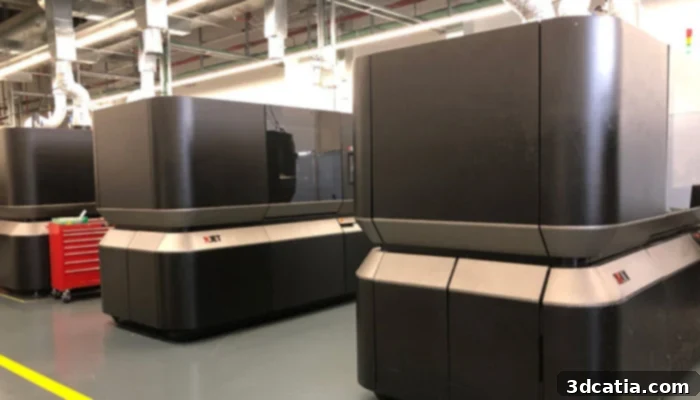
Photo Credits: XJet
However, achieving this ambitious growth trajectory necessitates overcoming several important challenges. Foremost among these is the critical need for enhanced education programs specifically tailored for ceramic engineers. The field requires professionals who are not only adept in traditional ceramic science but also possess a deep understanding of additive manufacturing processes, design for AM, and material interaction within 3D printing systems. Similarly, developing a skilled workforce of ceramic professionals specialized in additive manufacturing is paramount. Beyond human capital, other challenges include establishing industry standards for materials and processes, developing robust quality control mechanisms, and ensuring material consistency. An absolutely essential step in this ongoing progress is the widespread adoption of this transformative technology by the main players within the established ceramics market. This includes traditional ceramic manufacturers, specialized service providers who can offer outsourced AM solutions, and a broad base of end-users across various industrial sectors. Once this critical mass of adoption begins, the growth will likely accelerate in a “snowball effect,” rapidly transforming ceramic AM into a legitimate, widely accepted, and popular manufacturing technology. In many respects, the growth and integration of additive ceramic manufacturing into mainstream industrial production will follow a similar path to what we observed with plastics additive manufacturing and, to a significant extent, with metal fabrication, albeit potentially at an even faster pace due to the accumulated knowledge and infrastructure from those earlier waves of adoption.
Hanan Gothait’s profound vision for the ceramic segment of additive manufacturing paints a compelling picture of innovation and future industrial transformation. His leadership at XJet, coupled with the groundbreaking NanoParticle Jetting technology, is undoubtedly propelling this exciting field forward. What are your thoughts on Hanan Gothait’s perspective and the future of advanced ceramics in AM? We invite you to share your insights and comments below, or engage with us on our Facebook and Twitter pages! For all the latest news, trends, and developments in the world of 3D printing, don’t forget to sign up for our free weekly Newsletter, delivered straight to your inbox.