
Ursa Major Secures Landmark US Navy Contract for 3D-Printed Solid Rocket Motors: Revolutionizing Defense Propulsion with Lynx Technology
Denver-based rocket innovator Ursa Major, a recognized leader in advanced propulsion technology, has recently announced a pivotal milestone: securing a landmark contract with the U.S. Navy’s Naval Energetics Systems and Technologies (NEST) Program. This strategic collaboration is poised to usher in a new era for the Navy’s critical Standard Missile program, significantly enhancing its precision, reliability, and responsiveness through groundbreaking advancements in 3D printing and additive manufacturing technologies. At the heart of this partnership lies the ambitious goal of deploying a new generation of weaponry: specifically, 3D-printed solid rocket motors (SRMs) meticulously crafted using Ursa Major’s innovative Lynx approach to manufacturing.
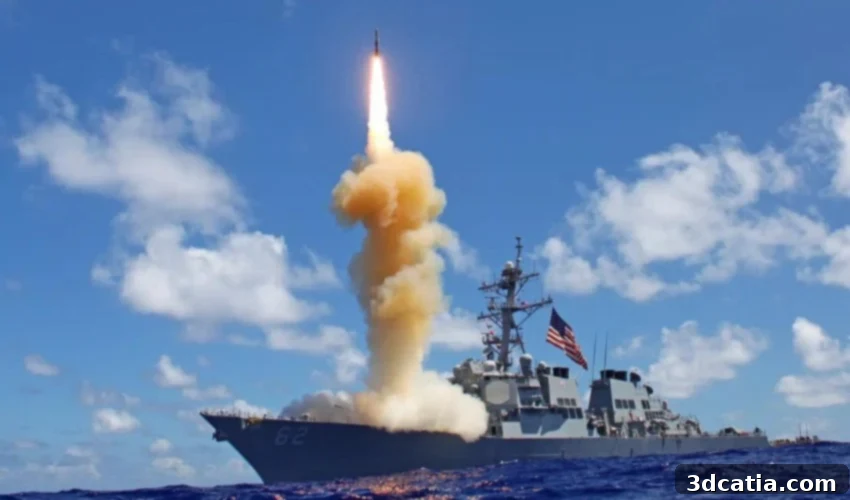
The focus of this transformative initiative is the complete redesign of the Mk 104 dual-thrust rocket motor, an indispensable component that serves as the propulsion backbone for the entire Standard Missile family. This workhorse motor is vital for a diverse array of naval defense systems, empowering missiles like the SM-2, which is essential for surface-to-air defense capabilities; the SM-3, a cornerstone of ballistic missile defense strategies; and the SM-6, a remarkably versatile multi-role missile capable of anti-air, anti-surface, and even anti-ship operations. Of particular note, the SM-6 holds a unique distinction as the only multi-role missile currently capable of intercepting advanced hypersonic threats – an increasingly critical concern for global and national security in an evolving geopolitical landscape. The re-engineering of the Mk 104 using cutting-edge additive manufacturing techniques is expected to dramatically improve its performance, reduce production timelines, and enhance its overall resilience against the most sophisticated threats.

Launch of an SM-6, powered by the Mk. 104 dual-thrust rocket motor component. (Photo Credits: U.S. Navy)
Ursa Major’s Lynx Approach: Redefining Solid Rocket Motor Manufacturing
Ursa Major’s proprietary Lynx approach directly addresses long-standing hurdles and inefficiencies prevalent in traditional solid rocket motor production. This innovative methodology strategically integrates the precision and design freedom of 3D printing with a highly versatile tooling system. This holistic method, which encompasses a variety of sophisticated additive manufacturing technologies and techniques, promises to fundamentally streamline the entire production process. The expected benefits are manifold: significantly slashing lead times, boosting overall reliability, and providing unparalleled flexibility in design and manufacturing – all crucial factors for maintaining rapid response capabilities and ensuring national defense readiness. The deployment of 3D printing within the Lynx framework will prove especially beneficial, as the manufacturing of current versions of the Mk 104 dual-thrust rocket motor has historically presented a significant challenge due to its intricate design and notoriously complex, time-consuming traditional processes. This critical bottleneck in SRM production coincides with a period of surging domestic demand for these vital components, primarily driven by the imperative need to replenish national stockpiles and to sustain support for allies like Ukraine in ongoing conflicts, underscoring the urgency and strategic importance of Ursa Major’s innovative solution.
Leadership Perspectives on a Critical Partnership
The leadership of both Ursa Major and the U.S. Navy have expressed profound enthusiasm and optimism regarding this collaborative endeavor. Joe Laurienti, the visionary Founder and CEO of Ursa Major, articulated his company’s pride and commitment, stating, “We are incredibly proud of the Navy’s unwavering support and their clear recognition of Ursa Major as a trusted partner uniquely positioned to develop the next generation of Mk 104 solid rocket motors. Our groundbreaking new approach to manufacturing SRMs empowers Ursa Major to swiftly develop high-performing motors at an unprecedented scale, effectively driving both volume and critical cost efficiencies. This directly addresses what we recognize as a paramount national need – ensuring our defense capabilities are robust, agile, and cost-effective.” This sentiment underscores the strategic alignment between technological innovation and national security imperatives.
Echoing this forward-looking sentiment, Captain Thomas Seigenthaler, Director of PEO IWS 3.0, highlighted the broader implications for the nation’s industrial base. He added, “PEO IWS is genuinely excited to collaborate with Ursa Major on this vital effort, which is set to bolster a critical component of the Nation’s industrial base. The rapid and efficient production of solid rocket motors is undeniably a top priority for our defense strategy, and we are profoundly impressed with Ursa Major’s innovative approach to effectively address longstanding manufacturing challenges. This partnership represents a significant leap forward in our ability to meet current and future defense needs with advanced, reliable propulsion systems.” These statements collectively emphasize the transformative potential of additive manufacturing in strengthening the domestic defense industrial ecosystem.
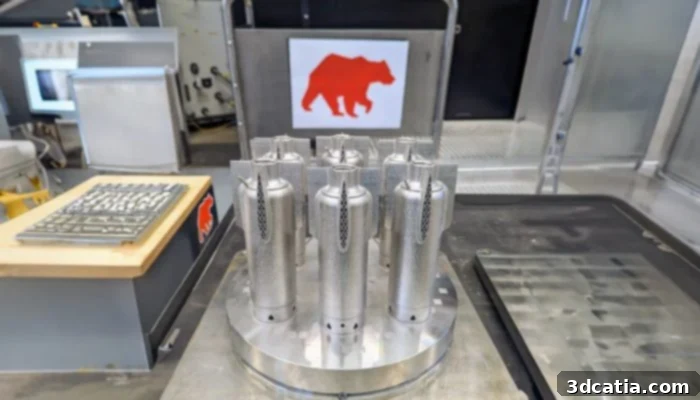
Small prototype motors. (Photo Credits: Ursa Major)
The Broader Impact: 3D Printing’s Role in Modernizing Defense
This initiative with Ursa Major signifies the U.S. Navy’s continued and strategic efforts to modernize its entire fleet and arsenal, ensuring it remains at the forefront of contemporary warfare capabilities. This significant contract is not an isolated event but rather follows a growing and undeniable trend of widespread military adoption of 3D printing across various branches of the armed forces. The push for state-of-the-art technology is driven by several compelling factors: the need for rapid prototyping, the ability to produce complex geometries previously thought impossible, substantial reductions in lead times and manufacturing costs, and the critical enhancement of supply chain resilience. Additive manufacturing offers unprecedented flexibility, allowing for on-demand production of parts, customization for specific missions, and a significant reduction in the logistical footprint associated with traditional spare parts inventories. From specialized components for submarines to intricate parts for aerospace applications, 3D printing is fundamentally reshaping how military hardware is designed, produced, and maintained. The Ursa Major-Navy partnership for SRMs is a prime example of this paradigm shift, demonstrating how innovative manufacturing techniques can directly translate into superior defense capabilities and a more robust national security posture. It also highlights the strategic investment in domestic manufacturing capabilities, reducing reliance on potentially vulnerable overseas supply chains and fostering technological self-sufficiency.
Strategic Implications and the Future of Propulsion
The collaboration between Ursa Major and the U.S. Navy represents more than just a contract for rocket motors; it’s a pivotal moment in the evolution of defense manufacturing. By embracing the Lynx approach for solid rocket motors, the Navy is not only addressing an immediate need for advanced propulsion but also setting a precedent for future procurement and technological integration. This partnership could catalyze broader adoption of additive manufacturing across the defense industrial base, inspiring other contractors and military branches to explore similar innovations. The ability to rapidly iterate designs, drastically reduce manufacturing cycles, and improve the performance of critical components like the Mk 104 is invaluable in a rapidly changing global security environment where technological superiority is paramount. Furthermore, investing in domestic companies like Ursa Major strengthens the U.S. industrial base, fostering economic growth and job creation while ensuring that vital defense technologies are developed and produced within the nation’s borders. This strategic foresight aims to create a more resilient, responsive, and technologically advanced defense infrastructure capable of meeting the complex challenges of the 21st century.
For those interested in delving deeper into this transformative manufacturing process, more information about Ursa Major’s groundbreaking Lynx approach to solid rocket motor manufacturing can be found by clicking here. This initiative firmly places Ursa Major at the forefront of aerospace propulsion innovation, contributing significantly to national defense capabilities.
What are your thoughts on the U.S. Navy’s pioneering partnership with Ursa Major and the future of 3D printing in defense? We encourage you to share your insights and comments below, or engage with us on our LinkedIn, Facebook, and Twitter pages! Don’t miss out on the latest advancements and news in additive manufacturing – sign up for our free weekly newsletter here to receive the most current 3D printing updates directly to your inbox! Additionally, you can explore all our engaging videos and in-depth content on our official YouTube channel.
*Cover Photo Credits: U.S. Navy