
Revolutionary 3D Printed Scaffolds Offer Advanced Healing for Diabetic Foot Ulcers
Diabetic foot ulcers (DFUs) represent a severe and debilitating complication of diabetes, profoundly impacting the lives of millions worldwide. According to sobering statistics from the Centers for Disease Control and Prevention (CDC), a substantial portion of the U.S. population – 37.3 million people, or 11.3% – lives with diabetes. For these individuals, the lifetime risk of developing a foot ulcer can be alarmingly high, reaching up to 34 percent. The insidious nature of diabetes, characterized by chronically elevated blood sugar levels, causes significant damage to the body’s intricate vascular and nervous systems, particularly in the extremities. This leads to impaired blood circulation and peripheral neuropathy, a condition where patients experience diminished or entirely absent pain sensation in their feet. As a result, even minor injuries, cuts, or abrasions can go unnoticed for extended periods. Without proper care and timely intervention, these seemingly small wounds can rapidly progress into chronic ulcers, which are exceedingly difficult to heal and highly susceptible to severe infections, tissue necrosis, and in the most devastating cases, limb amputation. The immense morbidity and healthcare costs associated with DFUs underscore an urgent need for advanced therapeutic solutions.
In a groundbreaking development offering a beacon of hope, researchers at Queen’s University Belfast have pioneered a revolutionary treatment for diabetic foot ulcers by harnessing the power of advanced 3D printing technology. Their innovative approach centers on the development of specialized 3D printed bandages, scientifically referred to as “scaffolds,” marking a significant breakthrough in diabetes wound care. This cutting-edge method moves beyond conventional wound dressings, promising a more effective, targeted, and personalized solution for an ailment that has long presented formidable challenges to both patients and healthcare providers.

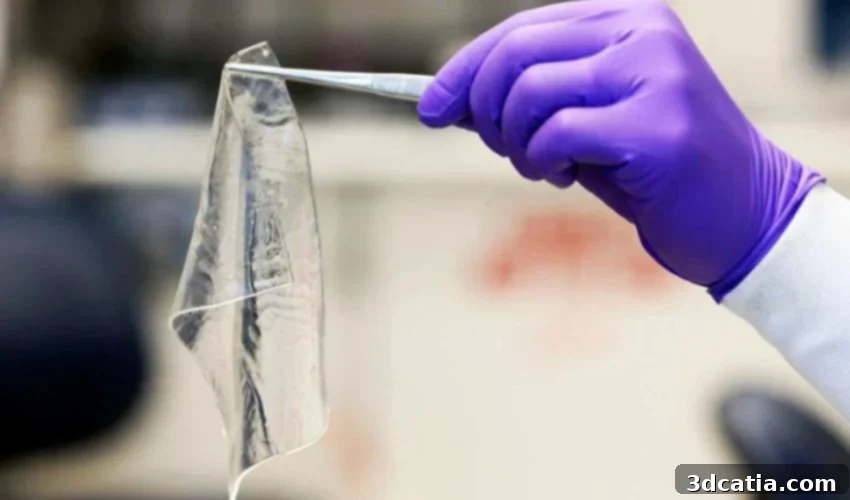
The therapeutic scaffolds are precisely produced using state-of-the-art 3D bioprinting technology. (Photo credit: Queen’s University Belfast)
Precision Engineering: Unveiling the Mechanism of 3D Printed Scaffolds
The innovative scaffolds are meticulously engineered using a sophisticated combination of lipid nanoparticles and hydrogels. This unique blend allows for the creation of a biomimetic structure that not only closely resembles the natural extracellular matrix of the skin but also boasts exceptional flexibility and biocompatibility. Crucially, each scaffold can be individually tailored to the patient’s specific wound dimensions, shape, and depth. This personalization ensures a perfect, custom fit and optimized contact with the affected area, a significant advantage over generic, off-the-shelf dressings that often fail to conform to the irregular contours of chronic wounds, potentially leaving parts of the ulcer untreated or inadequately covered.
Beyond their structural integrity and customized fit, the true ingenuity of these scaffolds lies in their functional capabilities as advanced drug delivery systems. They are designed to facilitate the sustained and targeted release of antibiotic-loaded molecules directly to the wound site. This localized delivery mechanism is vital for effective treatment, as it ensures that therapeutic agents are concentrated precisely where they are most needed, maximizing their efficacy while minimizing systemic exposure and potential side effects. The controlled and prolonged release of medication promotes continuous healing, combats existing infections, and prevents new ones from developing, which is paramount in the complex management of chronic diabetic wounds that are notoriously slow to heal and prone to recurrence.
A Holistic Approach: Personalised, Sustainable, and Cost-Effective Care
The benefits of this novel treatment method extend far beyond its immediate efficiency in promoting wound healing. The researchers at Queen’s University Belfast have meticulously designed these scaffolds with sustainability and cost-effectiveness in mind, making them a highly viable and attractive option for broader clinical implementation. Unlike highly specialized treatments that often require complex manufacturing facilities or extensive supply chains, these advanced “scaffolds” can be produced using existing 3D bioprinting technology, which is increasingly becoming a standard feature in many modern hospitals. This potential for localized, on-demand manufacturing not only significantly reduces production costs but also minimizes logistical complexities, waste, and supply chain delays, thereby making advanced wound care more accessible and responsive to patient needs.
Furthermore, both patients and medical staff stand to gain significantly from the adoption of these innovative 3D printed dressings. For patients, the ability to deliver medication continuously and effectively directly to the wound site dramatically reduces the need for frequent and often painful dressing changes. This leads to improved patient comfort, reduced anxiety, fewer hospital visits, and a significantly better overall quality of life. For medical professionals, the elimination of constant dressing application and removal saves considerable time and effort, allowing them to allocate their valuable resources more efficiently and focus on other critical aspects of patient care. Moreover, the inherent design of these advanced dressings could enable continuous monitoring capabilities, offering unprecedented insights into the healing process and allowing for timely adjustments and interventions, ultimately leading to superior patient outcomes.
Expert Insights on the Transformative Innovation
Professor Dimitrios Lamprou, who leads this pioneering project and holds the prestigious Chair of Biofabrication and Advanced Manufacturing at Queen’s University Belfast, eloquently summarized the comprehensive advantages of this research: “This innovative, personalised, and sustainable approach, provides the healing needed for the diabetic foot ulcers, to avoid any complications, and enables doctors to monitor the healing constantly. This avoids needing to remove dressing constantly, which can provoke infection and delay the healing process. Medical professionals also do not need to change the drug dosage as this double release, supports that need.” His statement powerfully underscores the multifaceted impact of this technology – from optimizing patient outcomes and preventing severe complications to streamlining clinical workflows and ensuring consistent, effective therapeutic delivery without constant manual adjustments.
The Science Behind Dual-Release: A Strategic Defense Against Infection and Resistance
The sophisticated manufacturing process of these advanced wound dressings employs cutting-edge 3D bioprinting techniques, specifically engineered to combine two distinct bio-inks into a single, functional filament. This meticulously designed dual-component filament is central to the scaffold’s highly effective and precise drug delivery system. The inner core of the filament comprises a nanocomposite hydrogel, which is ingeniously loaded with lipid nanoparticles. These nanoparticles, in turn, encapsulate thyme oil, chosen for its well-documented and potent natural antimicrobial properties. Thyme oil serves as a compelling natural alternative to traditional antibiotics, playing a crucial strategic role in the global fight against the escalating public health crisis of antimicrobial resistance (AMR).
The exterior layer of the filament is composed of a hybrid hydrogel, also therapeutically enriched with thyme oil. This intricate, layered design facilitates a finely tuned, two-stage release of the active ingredient molecules, optimizing both immediate and long-term infection prevention and wound healing. The first stage involves a rapid “mass release” of thyme oil within the critical initial 24 hours of application. This immediate burst is paramount for initiating prompt disease prevention, rapidly reducing the bacterial load, and controlling inflammation during the most vulnerable early phase of wound healing, which is when the risk of aggressive infection is highest. Following this crucial initial rapid response, a delayed and sustained release mechanism takes over, continuing to deliver consistent antimicrobial activity for an extended period, potentially up to ten days. This prolonged action ensures long-lasting infection prevention and supports the wound healing process without interruption, thereby significantly reducing the chances of recurring infections and severe complications.
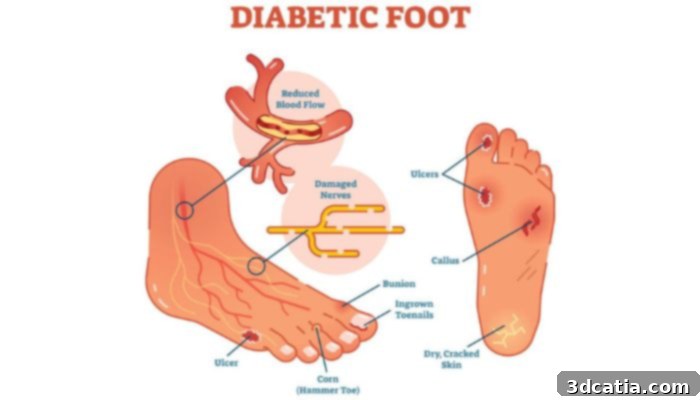
Advanced 3D printed scaffolds offer targeted and sustained therapy for chronic wounds. (Photo credit: Strade Orthopedic Shoe Technology)
Dr. Matthew Wylie, a distinguished Lecturer in the School of Pharmacy at Queen’s University Belfast, who played a pivotal role in the in vitro evaluation of the dressings’ antibacterial efficacy, elaborated on the clinical significance of their findings: “Diabetic foot ulcers are chronic wounds highly susceptible to infection which can lead to limb- or life-threatening complications. Our natural liposomal antibacterial approach has shown promising initial antibacterial results highlighting the potential of this strategy to prevent bacterial colonisation during the crucial early stages of wound healing, as well as longer term protection of the wound.” His statement strongly reinforces the critical role of sustained, effective antimicrobial protection in mitigating the severe and often devastating risks associated with DFUs, moving beyond merely treating symptoms to actively preventing deterioration.
The broader implications of this meticulous research are truly substantial, particularly in the ongoing global effort to combat antimicrobial resistance. Dr. Wylie further emphasized the profound impact: “Improved wound management will not only enhance patient quality of life but could reduce the need for traditional antibiotic therapy, a key aim in the fight against antimicrobial resistance development.” By offering a natural, highly effective, and sustained antimicrobial solution delivered directly to the wound, these 3D printed scaffolds present a viable and critical alternative that could lessen reliance on conventional systemic antibiotics. This strategy helps preserve the efficacy of existing antibiotics for future generations and actively addresses a pressing and growing challenge in modern medicine, contributing to a more sustainable healthcare future.
The Future of Diabetic Wound Care: A Brighter and More Personalized Outlook
The development of these revolutionary 3D printed scaffolds by Queen’s University Belfast marks a profound leap forward in the treatment paradigm for diabetic foot ulcers. By leveraging the unparalleled precision, adaptability, and personalization offered by advanced 3D bioprinting, researchers have engineered a solution that not only promises superior wound healing outcomes but also effectively addresses critical challenges related to sustainability, cost-effectiveness, and the escalating global threat of antimicrobial resistance. This innovation embodies a truly holistic and patient-centric approach to chronic wound care, prioritizing enhanced comfort, optimized efficacy, and increased accessibility for those who need it most.
As this cutting-edge technology progresses closer to widespread clinical application, it holds immense potential to dramatically improve the quality of life for millions of individuals living with diabetes, significantly reducing the debilitating incidence of severe complications such as amputations. The ability to produce personalized, continuously active wound dressings directly within hospital settings could fundamentally transform current wound management protocols, making advanced and highly effective care more routine and significantly less burdensome for both patients and dedicated healthcare providers. This pioneering research sets a new benchmark for innovative medical interventions and thoughtfully opens doors for similar advanced applications in the treatment of other chronic wound types, unequivocally heralding a future where advanced manufacturing plays an integral and transformative role in personalized medicine.
For more in-depth information and to review the original source of this pioneering research, please click HERE.
What are your valuable thoughts on this revolutionary new treatment method for diabetic foot ulcers? We sincerely encourage you to share your perspectives, insights, and engage with us by leaving a comment below! You can also connect with our vibrant community and stay consistently updated on the very latest advancements in 3D printing news by following us on our LinkedIn, Facebook, and Twitter pages. Don’t forget to sign up for our completely free weekly Newsletter here to receive the freshest and most impactful 3D printing news delivered directly to your inbox every week! Furthermore, you can explore all our insightful and engaging videos on our dedicated YouTube channel for a wealth of additional content and visual demonstrations.
*Cover photo credit: MediaNews Group/Boston Herald via Getty Images