
Unveiling the Future of Aerospace: An R&D Engineer’s Journey in Additive Manufacturing with Maria Montero at NLR
The landscape of modern manufacturing is rapidly transforming, driven significantly by the advancements in industrial additive manufacturing, often referred to as 3D printing. This technological revolution has created an urgent demand for specialized professionals capable of harnessing its full potential. Companies worldwide are actively seeking talent that can innovate, optimize processes, and push the boundaries of what’s possible with these cutting-edge techniques. This trend is clearly reflected on our dedicated job board, which featured over 900 job opportunities in the 3D sector just last year, underscoring the dynamic growth and escalating career prospects within this field.
To delve deeper into the diverse career paths available, we present #Working3D, an ongoing series designed to illuminate the various roles within the additive manufacturing market. If you aspire to build a career in this innovative sector, you’ve certainly found the right place! We’ve previously explored insightful roles, such as Emilien Goetz’s contributions at Siemens and Lorenzo Mastria’s leadership at Roboze. Today, we turn our attention to a particularly fascinating area that is crucial for a market constantly pursuing innovation: Research and Development. We had the distinct pleasure of speaking with Maria Montero Sistiaga, an accomplished R&D Engineer at the Royal Netherlands Aerospace Center (NLR), to learn about her experiences and insights in this rapidly evolving domain.
3DN: Could You Introduce Yourself and Your Journey into Additive Manufacturing?

Maria Montero Sistiaga
My name is Maria Montero Sistiaga, and I have been proudly serving as an R&D Engineer at the Royal Netherlands Aerospace Center (NLR) since 2020. My academic foundation is rooted in materials engineering, culminating in a doctorate degree from the prestigious University of Leuven (KU Leuven). At NLR, my primary focus revolves around elevating additive manufacturing technologies to unprecedented levels of maturity and applicability. Specifically, I dedicate my expertise to two pivotal metal AM processes: laser powder bed fusion (LPBF) and directed energy deposition (DED). These technologies are instrumental in developing advanced components for the aerospace sector, where precision, material performance, and reliability are paramount.
My journey into the fascinating world of additive manufacturing began quite early, during my bachelor’s degree in 2011. I seized the opportunity to participate in the Erasmus program, which led me to KU Leuven in Belgium for my bachelor thesis. This was a truly transformative year, as I collaborated with 3DSystems (then known as Layerwise) and KU Leuven, focusing on the process optimization of challenging materials like tantalum and tungsten. This immersive experience marked my very first hands-on encounter with AM, and I can confidently say I haven’t looked back since. It was incredibly enriching to be part of such a pioneering group, under the guidance of esteemed figures like Prof. Kruth and Prof. Van Humbeeck at KU Leuven, who were at the forefront of additive manufacturing research.
Following my bachelor’s studies, my passion for the field compelled me to remain in Leuven for both my master’s and PhD degrees. This extended period allowed me to significantly expand and refine my skills across a spectrum of critical areas for LPBF technology. These included advanced alloy design, intricate process optimization techniques, comprehensive mechanical characterization, innovative powder production methods, and detailed microstructure investigation. Each of these aspects is vital for understanding and improving the performance of 3D-printed metal parts, particularly for demanding applications like those in aerospace.
After several fruitful and highly educational years in Leuven, I was presented with the opportunity to join the Royal NLR as an R&D Engineer. It’s a role where I continue to learn and grow daily, thanks to the exceptionally talented and multidisciplinary AM team we have. NLR distinguishes itself as an applied research center, meaning our core mission is to bridge the often-significant gap between fundamental scientific concepts discovered through basic research and the practical, tangible solutions required by industry. We strive to transform groundbreaking ideas into robust, scalable technologies that industrial partners can confidently adopt and build upon, pushing the boundaries of aerospace innovation.
3DN: What is Your Current Role at NLR? What Does a Typical Day Look Like for You as an R&D Engineer?
At NLR, my role as an R&D Engineer is multifaceted and deeply engaging, involving me in a variety of additive manufacturing-related projects. My work primarily spans three key metal AM technologies: Laser Powder Bed Fusion (LPBF), Directed Energy Deposition (DED), and metal-filled Fused Filament Fabrication (FFF), also widely recognized as FDM. The diversity of these technologies allows for a broad exploration of manufacturing possibilities and challenges. As an R&D Engineer, my responsibilities extend beyond pure technical execution to encompass significant aspects of project management. This dynamic blend ensures that no two days are ever truly alike, keeping the work constantly stimulating and rewarding.
A typical day for me often involves a combination of collaborative meetings and hands-on laboratory work. I regularly attend various project meetings where we track progress, discuss emerging results, troubleshoot issues, and strategize next steps with our team and partners. These discussions are crucial for maintaining momentum and ensuring alignment across complex projects. In addition to these strategic discussions, a significant portion of my time is spent in our state-of-the-art labs. Here, I closely monitor the progress of activities on our AM printers, overseeing print jobs, validating parameters, and addressing any operational challenges. I also engage with our testing facilities, analyzing material properties, component performance, and validating experimental outcomes. This holistic approach, from conceptualization and planning to execution and analysis, is fundamental to successful R&D in additive manufacturing.
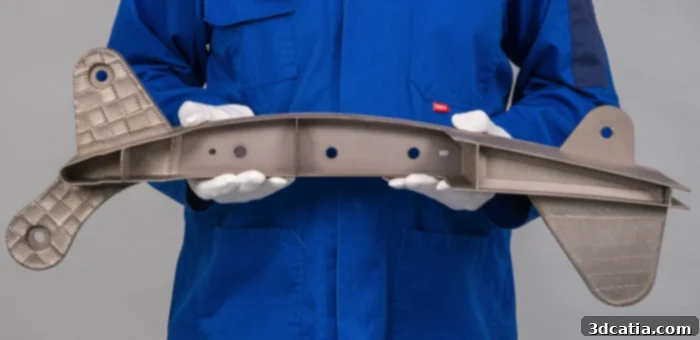
3D printed flaperon rib using DED technology (photo credits: NLR)
One of the most appealing aspects of working in R&D is the inherent aversion to repetitive tasks. Every single project we undertake is unique, presenting its own set of challenges and learning opportunities. When new obstacles arise, our collaborative working group convenes to brainstorm, analyze data, and collectively devise innovative solutions. This problem-solving dynamic is incredibly motivating. A significant advantage of working at NLR is our comprehensive in-house capability; thanks to our diverse range of advanced facilities and an expert multidisciplinary team, we can address almost every stage of the additive manufacturing chain, from initial material selection and process development to final part testing and characterization.
A recent and particularly illustrative project involved the intricate production of a flaperon rib, a critical component for next-generation aircraft, utilizing titanium DED technology. This endeavor marked a significant milestone for us, as it was the first time NLR had produced such a large-scale and complex titanium part using DED. To achieve this, we meticulously developed an advanced production approach focused on maximizing quality, achieving exceptional accuracy, and crucially, minimizing deflections inherent in the DED process. This involved optimizing several critical design features and process parameters before proceeding with the final part fabrication. The project was incredibly challenging due to the sheer size of the component and the significant residual stress build-up characteristic of titanium additive manufacturing. However, it proved to be an invaluable learning experience, pushing us to understand the inherent limitations of DED more deeply and fostering a truly “outside-the-box” approach to problem-solving in advanced aerospace manufacturing.
3DN: What Are the Key Qualifications and Experiences Required to Excel in Your Job as an Additive Manufacturing R&D Engineer?
The inherent versatility of additive manufacturing is one of its greatest strengths, and this translates directly into the diverse range of qualifications and expertise required for an R&D role in this field. AM integrates various scientific and engineering disciplines, offering numerous specialization avenues for R&D engineers. These include, but are not limited to, advanced data analysis, comprehensive digitalization strategies, sophisticated simulation and modelling techniques, core mechanics, material science, chemistry, statistical analysis, and machine building. My current position, therefore, necessitates a robust combination of these qualifications. On one hand, proficiency in 3D modelling tools is immensely helpful for designing, optimizing, and preparing parts for printing. On the other hand, and perhaps even more critically, a deep understanding of the intricate relationships between the manufacturing process, the inherent material characteristics, and the ultimate performance of the final part is indispensable. This holistic view allows us to predict, control, and enhance the properties of AM components. Consequently, I would strongly recommend aspiring R&D engineers to pursue an engineering education with a strong focus on either mechanical engineering or materials science, as these provide the foundational knowledge for success in additive manufacturing.
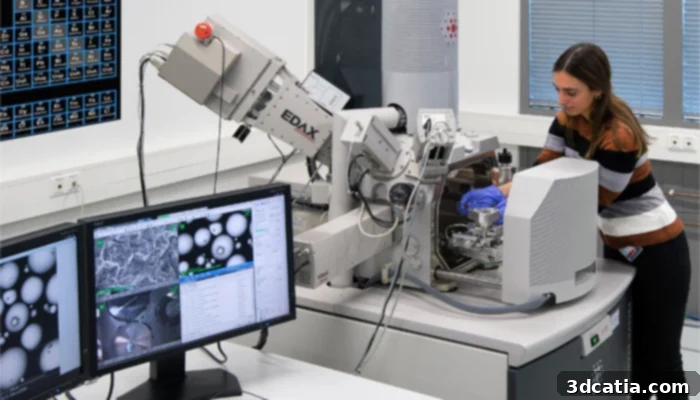
Photo Credits: NLR
3DN: What Are the Biggest Challenges You Encounter as an R&D Engineer in Additive Manufacturing, Especially for Aerospace Applications?
One of the most significant and pervasive challenges we encounter as R&D engineers in additive manufacturing is the continuous effort required to build and cement trust in the technology, particularly within highly regulated sectors like aerospace. While the global AM community is making tremendous strides in accumulating knowledge, maturing processes, and demonstrating capabilities, there are still critical steps that need to be accomplished regarding formal certification and qualification. This extensive and rigorous process is highly dependent on the specific industry. In the aerospace sector, where safety, reliability, and extreme performance are non-negotiable, certification becomes an even more critical and complex hurdle.
Currently, the prevailing qualification approach for additive manufactured parts in aerospace is largely “part-based.” This means that qualification is typically granted for a specific, fixed combination: a particular design, a designated manufacturing platform configuration, a precise set of process parameters, a defined powder batch, and even a specific machine. The implication of this stringent approach is profound: should even a minor change be introduced, for instance, to the part’s design or a slightly different material batch, the entire, often arduous, qualification process must be repeated from scratch. This makes innovation and design iteration exceptionally time-consuming and costly, requiring an incredibly deep and nuanced understanding of the intricate interdependencies between the process, the material characteristics, and the final part’s performance. Recognizing these limitations, at NLR, we are proactively engaged in pioneering new, more efficient, and flexible virtual qualification and certification approaches for additive manufacturing, aiming to accelerate adoption and foster greater innovation without compromising safety standards.
3DN: What Essential Advice Would You Offer To Someone Aspiring To Work In Additive Manufacturing R&D?
For anyone considering a career in additive manufacturing R&D, I believe the most crucial attributes are a genuine willingness to embrace diverse challenges, an insatiable curiosity, and an unwavering commitment to continuous learning. The field of additive manufacturing is characterized by its exceptionally rapid evolution; technologies, materials, and processes are constantly advancing, and with this dynamism come numerous challenges that are still waiting to be overcome. Therefore, if you possess a strong drive to seek out innovative solutions, a passion for making things better, more efficient, and more robust, then the AM world offers an abundance of exciting opportunities. It’s a domain where your problem-solving skills will be consistently tested and rewarded. Moreover, additive manufacturing technologies intrinsically span a multitude of engineering disciplines – from materials science and mechanical design to software development and process control. This interdisciplinary nature makes it an incredibly rich, diverse, and ultimately exhilarating field for a wide array of engineers, offering paths for specialization and broad expertise alike.
We hope you’ve enjoyed this installment of our #Working3D series and gained valuable insights into the challenging yet rewarding role of an R&D engineer in additive manufacturing. Does working as an R&D engineer in this cutting-edge field resonate with your career aspirations? We’d love to hear your thoughts! Please share your comments below or engage with us on our LinkedIn, Facebook, and Twitter pages. Don’t forget to sign up for our free weekly Newsletter here to receive the latest 3D printing news directly in your inbox! You can also explore all our informative videos and content on our YouTube channel.