
Innovations in 3D Printing: Tackling Warping, Pioneering Personalized Medicine, and Advancing Sustainability
The world of 3D printing, also known as additive manufacturing, continues to evolve at a breathtaking pace, pushing the boundaries of what’s possible across a myriad of industries. From groundbreaking medical advancements to solutions for complex industrial challenges and even creative applications for everyday life, this technology is redefining manufacturing processes and fostering innovation worldwide. This week, we delve into some of the most compelling developments and applications, showcasing how researchers and companies are leveraging 3D printing to create smarter, more efficient, and more sustainable solutions. Join us as we explore critical breakthroughs in metal 3D printing, the transformative potential of personalized medicine, innovative medical models, fun holiday projects, and significant strides in reducing industrial carbon footprints.
Top 1: University of Michigan Develops Software to Reduce Warping in Metal 3D Printing
One of the most persistent and significant challenges in metal 3D printing, particularly with processes like Laser Powder Bed Fusion (LPBF), is the phenomenon of part warping. This undesirable deformation occurs due to the extreme thermal gradients and residual stresses inherent in the layer-by-layer melting and solidification process. As metal powder is melted by a laser and then rapidly cools, differential contraction across the part can lead to internal stresses that cause the material to bend or distort, compromising dimensional accuracy and mechanical integrity. For industries where precision is paramount, such as aerospace, automotive, and biomedical, warping can render expensive parts unusable, leading to material waste, increased production costs, and extended lead times. Addressing this issue is crucial for the wider adoption and reliability of metal additive manufacturing.
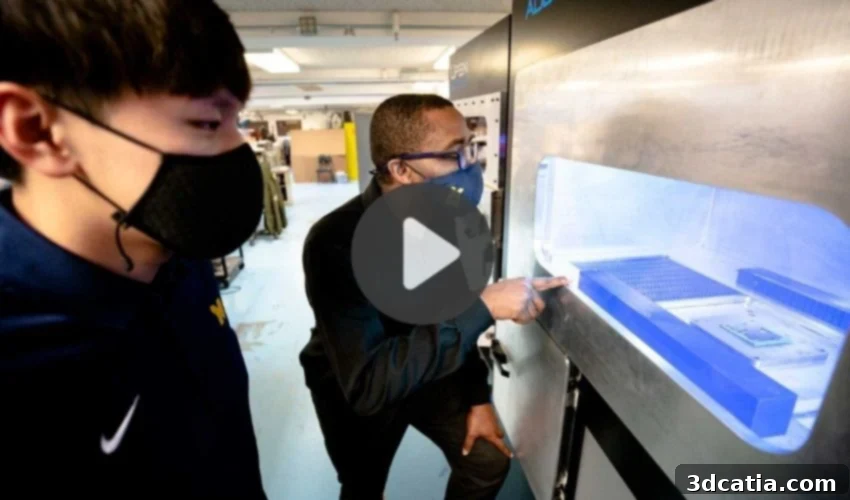
In a significant step forward, researchers at the University of Michigan have unveiled a novel solution designed to mitigate this prevalent problem. Led by Chinedum Okwudire, an Associate Professor of Mechanical Engineering, the team has developed an innovative thermal-model-based software. This sophisticated program doesn’t just identify potential warping; it actively directs the printer’s lasers to follow an optimal scanning sequence. By strategically controlling the laser’s path and timing, the software aims to manage heat distribution more effectively during the printing process, thereby minimizing the thermal stresses that cause warpage. This intelligent approach promises to enhance the quality and reliability of metal 3D printed parts, making additive manufacturing a more robust and predictable process for high-value applications. The implications for critical components in advanced industries are immense, offering the potential for more consistent production and reduced post-processing efforts. Explore more about this fascinating development in the video below:
Top 2: FabRx is Pioneering Personalized 3D Printed Medicine
The concept of personalized medicine, tailoring medical treatment to the individual characteristics of each patient, is rapidly transforming healthcare. At the forefront of this revolution is 3D printing, offering unprecedented capabilities to create drugs designed for specific patient needs. In our recent 3D Interview, we had the privilege of speaking with Alvaro Goyanes, Co-Founder & CEO of FabRx, a company dedicated to advancing drug printing technologies. He shed light on the immense importance of these innovations for the future of pharmaceuticals and patient care. Traditional drug manufacturing often adheres to a “one-size-fits-all” approach, which may not be ideal for all patients, especially those with complex conditions, unique metabolisms, or those requiring multiple medications.
3D printed medicine addresses these limitations by allowing for precise control over dosage, drug combinations, and release profiles within a single pill. This technology enables the creation of “polypills” containing multiple active pharmaceutical ingredients, potentially improving patient adherence and simplifying complex medication regimens. Furthermore, 3D printing can produce drugs with novel geometries or textures, which can influence how the drug dissolves and is absorbed in the body, optimizing therapeutic effects. Alvaro detailed how FabRx is leveraging these capabilities to develop truly personalized medications, moving beyond the standard tablet to offer customized treatments. This level of customization can revolutionize care for vulnerable populations, such as pediatric patients who often require precise, smaller doses, or geriatric patients who might benefit from multi-drug pills to manage chronic conditions. The potential for on-demand drug manufacturing in hospitals or pharmacies could also reduce logistical complexities and improve access to specific medications. FabRx’s pioneering work is not just an academic exercise; it’s a tangible step towards a future where medicines are as unique as the individuals who take them, promising improved efficacy and fewer side effects. Discover more about FabRx’s exciting projects and the future of personalized drug delivery in the video:
Top 3: BCN3D Creates an Anatomically Correct Heart Using FDM Technology and TPU
The application of 3D printing in healthcare extends far beyond drug development, playing an increasingly vital role in medical education, surgical planning, and patient-specific treatments. One of the most impactful uses is the creation of anatomically accurate models, which provide an invaluable tool for students and seasoned surgeons alike to study complex human anatomy and practice intricate procedures before entering the operating room. These tangible models offer a level of detail and tactile feedback that traditional 2D images or virtual simulations cannot fully replicate, enhancing comprehension and preparedness. The ability to hold and manipulate a physical representation of a patient’s organ or a specific anatomical structure significantly aids in understanding complex pathologies and planning the most effective surgical approach.
While advanced 3D printing technologies often come to mind for such intricate medical models, BCN3D impressively demonstrates the capabilities of more accessible FDM (Fused Deposition Modeling) 3D printers and flexible materials. Their project showcases an anatomically correct heart printed using Thermoplastic Polyurethane (TPU) – specifically, 95A TPU – and BVOH (Butenediol Vinyl Alcohol Copolymer) for soluble supports. The choice of TPU is strategic: its flexibility mimics the soft tissues of organs, providing realistic haptic feedback crucial for surgical training. Furthermore, FDM technology, known for its cost-effectiveness and widespread availability, makes this type of medical model more accessible to institutions and smaller healthcare providers. The use of BVOH as a support material is also critical; being water-soluble, it can be easily washed away, leaving behind a clean, intricate model without damaging delicate internal structures like ventricles and chambers. This allows for the creation of highly detailed and functional models where the internal anatomy is perfectly preserved and visible. The resulting heart model vividly displays all the ventricles and chambers, offering an unparalleled learning and planning aid. This project underscores the versatility and growing impact of FDM 3D printing in advancing medical understanding and improving patient outcomes globally.
Top 4: Celebrate Easter with Personalized 3D Printed Surprises from Flashforge
Beyond the industrial and medical breakthroughs, 3D printing also offers immense potential for creativity, personalization, and adding a unique touch to everyday celebrations. The accessibility of consumer-grade FDM 3D printers has empowered countless individuals to transform digital designs into physical objects, fostering a vibrant community of makers and hobbyists. This capacity for personalized creation is beautifully illustrated in a festive video from Flashforge, a prominent Chinese manufacturer of 3D printers.
Embracing the spirit of the holiday, Flashforge demonstrates how users can leverage their printers to craft a truly unique “surprise Easter egg.” But this isn’t just any Easter egg; it’s a custom-designed, hollow shell that can conceal much more than traditional candies. As shown in their engaging video, the innovative design allows you to hide an unexpected gift – in this case, a miniature excavator! This charming project highlights the playful and imaginative side of 3D printing, enabling users to move beyond off-the-shelf items and create truly memorable, bespoke gifts. Whether it’s for children eager for a unique toy or anyone young at heart who appreciates a custom-made surprise, such projects exemplify how 3D printing brings a new dimension to holiday festivities, crafts, and personalized presents. It’s an inspiring example of how additive manufacturing can be integrated into hobbies and everyday life, fostering creativity and providing endless possibilities for customisation. Watch the video to learn how to design and print your own incredible surprise Easter egg:
Top 5: Markforged and Vestas Partner to Drive Sustainable Manufacturing and Reduce Carbon Emissions
In an era where environmental responsibility is paramount, enterprise businesses are increasingly seeking innovative strategies to reduce operational costs, shorten lead times, and significantly lower their carbon emissions. This crucial challenge is addressed head-on in a compelling video from Markforged, a renowned American 3D printer manufacturer known for its robust industrial solutions. The video spotlights a strategic partnership with Vestas, a global leader in sustainable energy solutions, particularly in wind power. This collaboration exemplifies how advanced additive manufacturing can contribute directly to environmental sustainability within large-scale industrial operations.
Vestas’s decision to integrate Markforged’s Digital Forge platform into its operations underscores a growing trend towards direct digital manufacturing (DDM). The Digital Forge is not merely a printer; it’s a comprehensive ecosystem that combines advanced hardware, intelligent software, and high-performance materials (including composites and metals) to enable on-demand, local production. This platform allows Vestas to implement DDM programs, fundamentally shifting away from traditional, often lengthy, and carbon-intensive global supply chains. By producing parts and tools locally, Vestas can drastically reduce the need for extensive shipping, which is a major contributor to carbon emissions. Moreover, DDM facilitates faster iteration of designs, reduces inventory waste, and enables the production of lightweight, optimized parts that can improve the efficiency of their wind turbines or manufacturing equipment. This localized approach empowers Vestas to develop and deploy custom tools, fixtures, and even functional spare parts precisely when and where they are needed, enhancing agility and operational efficiency.
The partnership between Markforged and Vestas showcases not only the capabilities of industrial 3D printing but also its strategic importance in fostering a more sustainable manufacturing future. For companies like Vestas, which are inherently focused on green energy, aligning manufacturing processes with their core environmental mission is critical. By opting for Markforged’s solutions, Vestas gains the ability to create strong, durable, and precise parts on-site, minimizing their environmental footprint while simultaneously cutting costs and speeding up their development cycles. This strategic move highlights why more and more enterprises are turning to advanced additive manufacturing, recognizing its multifaceted benefits in driving both economic and ecological sustainability. Learn more about this impactful partnership and the transformative power of the Digital Forge platform in the video below:
The innovations highlighted this week underscore the incredible versatility and transformative power of 3D printing technology. From advanced software tackling the intricate challenges of metal additive manufacturing to the personalized future of medicine, the creation of highly accurate anatomical models for education, and even delightful custom creations for celebrations, 3D printing continues to reshape our world. Moreover, its role in driving sustainable practices, as demonstrated by the Markforged and Vestas partnership, positions it as a key technology for addressing global environmental concerns. These developments are not just incremental improvements; they represent significant leaps forward in making manufacturing smarter, healthcare more personalized, and our production processes more eco-conscious.
What are your thoughts on the new warping reduction software from the University of Michigan? Do you believe it will significantly improve the adoption of metal 3D printing for critical applications? Have you had any personal experiences with 3D printed medical models or personalized drugs, or perhaps used 3D printing for unique holiday projects? We encourage you to share your insights and experiences in the comments section below! Engage with us on our LinkedIn, Facebook, and Twitter pages to join the ongoing discussion about the future of additive manufacturing. And for all the latest 3D printing news delivered straight to your inbox, don’t forget to sign up for our free weekly Newsletter here! You can also find an extensive library of our insightful videos and more on our dedicated YouTube channel.