
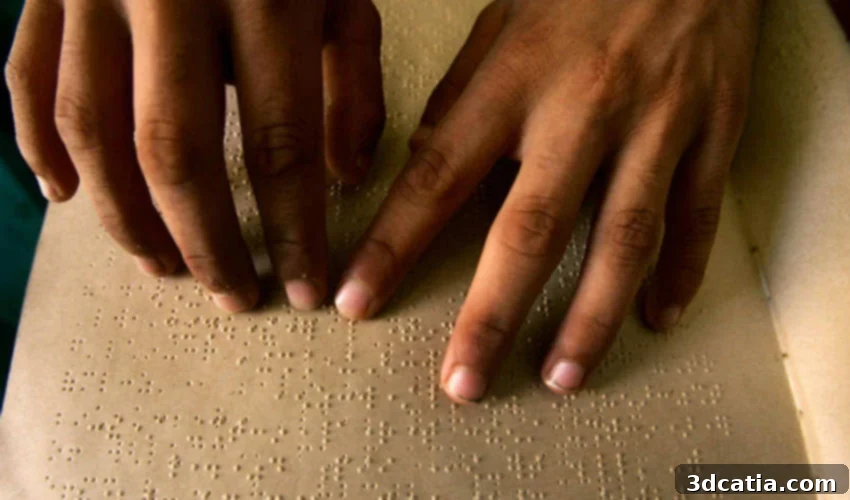
Empowering the Visually Impaired: How See3D Uses 3D Printing to Create a Tactile World
The transformative power of 3D printing technology has made an indelible mark across numerous sectors, offering innovative solutions that genuinely improve lives. From advancing medical prosthetics and educational tools to streamlining manufacturing processes, its versatile applications are continually expanding. Among the many organizations leveraging this technology for social good, See3D stands out for its direct and profound impact on the visually impaired community. This remarkable initiative utilizes 3D printing to create tactile models, allowing individuals with visual impairments to “see” and understand the world through touch. To delve deeper into this inspiring endeavor, we recently had the opportunity to speak with See3D’s passionate founder, Caroline Karbowski, who shared insights into her vision and the organization’s journey.
The Genesis of See3D: A Personal Journey
Caroline Karbowski, hailing from Cincinnati, Ohio, USA, is currently pursuing her first year at The Ohio State University. Her journey toward founding See3D began quite uniquely in 6th grade when she decided to teach herself braille. Her motivation was practical: to read books in the car without succumbing to motion sickness. It was during this period of self-study that she stumbled upon an article discussing the potential of 3D printing to convert complex scientific images, such as those from telescopes and microscopes, into tactile formats. This innovative approach would empower blind individuals to conduct their own observations, fostering independent learning and exploration. Caroline immediately recognized the immense potential and felt a strong urge to contribute, envisioning a project where she could 3D print these models and enhance them with braille labels.
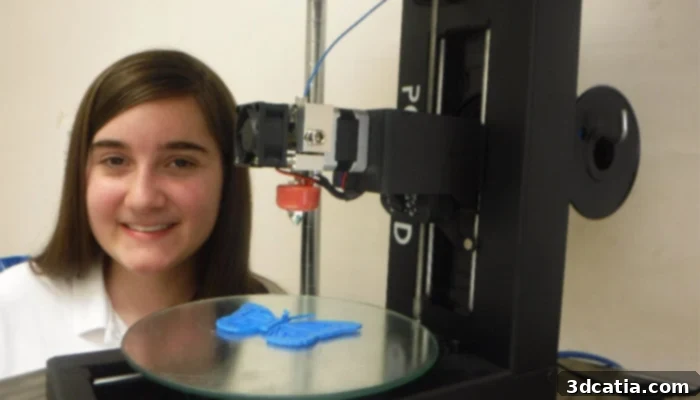
Caroline Karbowski, founder of See3D
Initially, a lack of connection with the visually impaired community and limited access to 3D printers presented significant hurdles. However, circumstances changed when she entered high school, where 3D printers became readily available. She soon noticed a common trend: many students were fascinated by the technology but often struggled to find meaningful applications for it, resulting in an abundance of unused filament from various projects. A pivotal thought sparked in her mind: “What if we printed models for people who are blind?” This idea became the cornerstone of her project for TechOlympics, a prestigious student-run technology conference in Cincinnati designed for high school students. This platform provided the perfect opportunity to transform her innovative concept into a tangible reality.
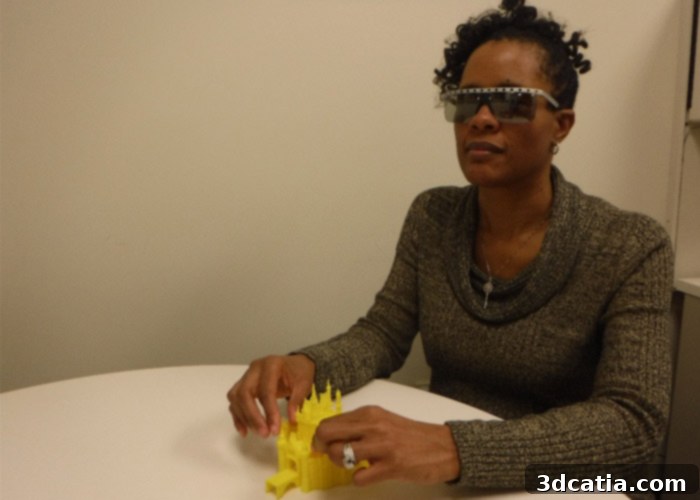
Collaborating with her friends at school, Caroline developed a user-friendly website designed to accept requests for 3D printed models. The project gained momentum after a chance encounter at a college fair, where she met Cassandra, a visually impaired individual. Caroline asked Cassandra what she would most like to understand better through a tactile model, and Cassandra’s heartfelt request for a Cinderella castle marked a significant milestone – it became the very first model printed by See3D. Cassandra’s enthusiasm for the project led her to share it with her friends within the visually impaired community. This organic outreach proved incredibly effective, as See3D has since distributed over 500 unique models within two years, fostering connections and making a tangible difference in the lives of many more individuals every day. This rapid growth highlights the immense unmet need for accessible tactile materials.
How See3D Operates: Bridging Gaps with Tactile Learning
The operational model of See3D is designed for accessibility and community engagement. Anyone who is visually impaired, or a teacher, parent, or friend supporting someone with a visual impairment, can easily submit a request for a custom 3D model through the organization’s dedicated website. Once a request is received, See3D volunteers meticulously print and then mail the finished model directly to the recipient, free of charge. This streamlined process ensures that tactile learning tools are readily available to those who need them most.
See3D also actively invites individuals with experience in 3D printing or a keen interest in design and fabrication to join their network of volunteers. These volunteers play a crucial role in expanding the organization’s capacity to fulfill requests, bringing their skills to help design and print a wider array of models. Beyond the direct provision of models, See3D is deeply committed to raising awareness about critical issues facing the visually impaired community. This includes emphasizing the paramount importance of braille literacy, which is a foundational skill for education and independence. They also advocate for comprehensive orientation and mobility training, empowering individuals to navigate their environments safely and confidently. Furthermore, See3D champions the message of maintaining high expectations for those who are blind. Caroline passionately believes that low expectations inadvertently create significant barriers, hindering visually impaired individuals from achieving their full potential and reaching their personal and professional goals. By fostering an environment of high expectations and providing necessary resources, See3D aims to dismantle these obstacles and pave the way for success.
Current Initiatives and Future Aspirations
See3D is continuously evolving, with several exciting projects currently underway. A primary focus is enhancing the accessibility of their website and online request system. This involves implementing features that ensure visually impaired users can navigate the platform independently, from submitting requests to accessing resources. They are also planning to enrich their website with valuable resources for learning braille, recognizing the critical role it plays in education and communication. Additionally, the organization aims to provide guidelines and best practices for designing and printing models that are not only accurate but also highly appealing and informative to the touch, ensuring an optimal tactile learning experience.
A particularly inspiring new development involves a Teacher of the Visually Impaired (TVI) who is blind himself. This TVI recently contacted See3D, expressing interest in having his students print models for other visually impaired students. This collaborative initiative presents a fantastic opportunity for peer-to-peer learning and empowerment within the community. Furthermore, See3D is actively engaged in fundraising efforts to acquire 3D printers that can be donated directly to schools with visually impaired students. This strategic move aims to eliminate waiting times for models, putting the power of tactile creation directly into the hands of educators and students. Recent requests highlight the diverse needs of the community, ranging from intricate models of the human eye and detailed street maps to abstract concepts like a Yin Yang symbol, keeping the printing and mailing teams busy.
Looking ahead, Caroline is also seeking to mobilize students at her own institution, The Ohio State University, to contribute their talents. She hopes to engage them in various stages of the process, including designing new models, overseeing the printing, post-processing (cleaning), and efficient mailing of these crucial tactile aids. This expansion of the volunteer base is vital for scaling See3D’s operations and reaching a broader audience.
A Vision for Expanded Reach and Greater Accessibility
Caroline envisions a future where See3D’s outreach and impact significantly increase. Acknowledging that the current process of printing and distributing models can take anywhere from one to five weeks, she hopes to expand the network of dedicated volunteers to expedite production and delivery. A key aspiration is for See3D to be able to provide 3D printers directly to schools serving visually impaired students, empowering them with immediate access to tactile learning tools without delay. This decentralization would revolutionize how students access educational materials.
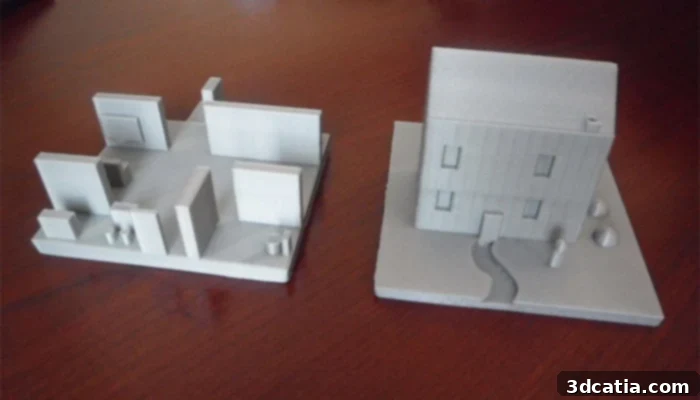
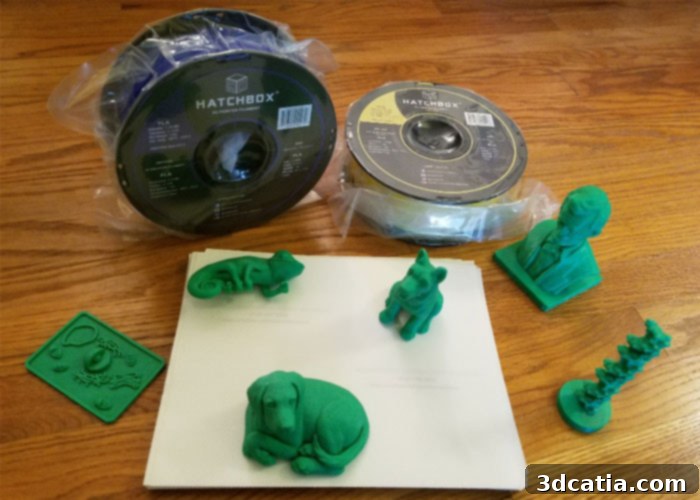
Example of 3D printed pieces for tactile learning
Another ambitious goal is to establish a robust network of designers passionate about creating new and complex objects based on specific requests. This would involve integrating See3D into university-level 3D printing design classes, where students could tackle challenging requests as part of their assignments. Some current requests, such as models representing abstract concepts like fire, sound waves, and intricate structures like roller coasters, pose significant design challenges that require innovative solutions. Having these models readily available would be a tremendous asset for education and exploration.
Financially, See3D currently provides all models free of charge, sustained primarily by funds raised through their GoFundMe page. Caroline’s hope is for the organization to secure self-funding through grants and ongoing donations, ensuring the continued provision of this invaluable service. Additionally, she envisions a program where businesses or individuals could sponsor 3D printers for schools, creating a direct impact on local communities. Collaborations with leading 3D printing companies are also a priority. Caroline aims to encourage these companies to develop printers and slicing software that are fully accessible via screen readers and braille displays. This crucial step would empower visually impaired individuals to design and print their own models, fostering unprecedented independence and creative expression in the field of additive manufacturing.
Ultimately, Caroline hopes See3D will significantly raise awareness about blindness and the pressing need for accessible educational materials. With less than 10% of visually impaired students currently being taught braille, there is a critical gap. She believes that as more people understand the profound importance of braille in education and daily life, more visually impaired students will be given the invaluable opportunity to learn it. See3D’s mission extends beyond providing models; it seeks to connect sighted and visually impaired individuals, fostering mutual understanding and enabling everyone to gain a new, enriched perspective of the world around them.
A Call to Action: Perceiving the World Differently
Caroline emphasizes the critical importance of creating 3D models that accurately represent their real-world counterparts, especially when used in educational settings. Just as an incorrectly drawn picture can lead to misconceptions, an inaccurate 3D model can hinder understanding. This commitment to precision ensures that visually impaired individuals receive the most authentic tactile learning experience possible. She passionately states that blindness is not a defining characteristic that limits an individual’s potential. With the right accessible materials – including braille, tactile graphics, screen readers, and expertly 3D printed models – every person, regardless of their visual acuity, can unlock and achieve their full potential.
Caroline strongly encourages everyone to reach out and connect with someone who is blind, and to engage in conversations about how they interpret and experience the world. She shares a fascinating anecdote: one of her visually impaired friends described the color orange as “cold,” simply because oranges from the refrigerator are cold to the touch. This example beautifully illustrates how individuals with visual impairments develop unique sensory associations and understandings of concepts that sighted people often take for granted. There is a vast amount to learn when we open ourselves to perceiving the world through all our senses. Caroline expresses her profound excitement for the discoveries and new perspectives that await all individuals when they engage with and touch a 3D printed model, fostering a deeper, multi-sensory understanding of complex objects and concepts.
What are your thoughts on See3D’s inspiring initiative to empower the visually impaired through 3D printing? Would you be interested in lending your support or expertise to this remarkable project? Share your insights and comments below, or connect with us on our Facebook and Twitter pages! Don’t forget to sign up for our free weekly Newsletter to receive all the latest news and updates in the world of 3D printing directly in your inbox!