
Revolutionizing Nuclear Energy: Additive Manufacturing and 3D Printed Reactor Components
The field of additive manufacturing, often referred to as 3D printing, has emerged as a transformative technology, particularly in sectors demanding unparalleled precision, safety, and efficiency. Among these critical industries, nuclear energy stands out, where the integrity of every component is paramount. For years, the conventional manufacturing processes for nuclear reactor parts have been exhaustive and often limited by design complexity. However, 3D printing offers a compelling alternative, proving its capabilities in producing intricate and robust components vital for nuclear applications.
Pioneering institutions like the Oak Ridge National Laboratory (ORNL) have consistently demonstrated the significant potential of combining additive manufacturing with nuclear technology. Their groundbreaking work includes the successful installation of 3D printed parts in an Alabaman nuclear power plant as early as 2021. This milestone built upon their own historical achievement in 2020, when ORNL designed and manufactured the world’s first-ever 3D printed nuclear reactor core. Such accomplishments underscore the technology’s readiness for high-stakes environments. For the fabrication of these highly specialized parts, metal 3D printing has consistently been identified as the most reliable and effective method, capable of achieving the necessary material properties and geometric accuracy.
Advancing Nuclear Technology with Additive Manufacturing
The drive to integrate additive manufacturing into nuclear power generation stems from its unique advantages over traditional fabrication techniques. Conventional methods, such as casting and forging, often impose significant design constraints, leading to less optimized geometries and longer lead times for production. In contrast, 3D printing allows for unprecedented design freedom, enabling engineers to create highly complex internal structures and integrated functionalities that can enhance performance, improve heat transfer, and reduce material waste. This capability is particularly critical for nuclear reactors, where optimizing every aspect of component design can lead to improved operational efficiency, extended lifespan, and enhanced safety.
Moreover, additive manufacturing can streamline the supply chain for nuclear parts, which traditionally relies on a limited number of highly specialized suppliers and lengthy procurement processes. By enabling on-demand production of replacement parts or custom components, 3D printing can significantly reduce downtime and increase the resilience of nuclear power plants. The ability to tailor material properties at a microscopic level also presents an opportunity to develop new alloys and composites specifically designed to withstand the extreme conditions within a reactor, including intense radiation, high temperatures, and corrosive environments. This level of control is crucial for meeting the stringent safety and regulatory requirements that govern the nuclear industry.
University of North Dakota Leads New Research into 3D Printed Nuclear Components
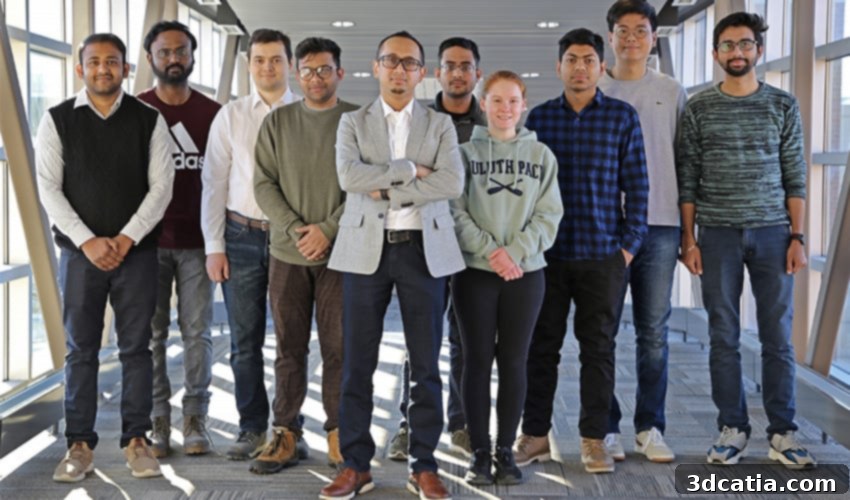
Continuing this trajectory of innovation, the University of North Dakota (UND) is now at the forefront of new research aimed at further integrating additive manufacturing into nuclear reactor technology. Dr. Roy Sougata, a distinguished mechanical engineering professor at UND, has secured a substantial grant of nearly $250,000 from the National Science Foundation. This significant funding will enable Dr. Sougata and his research team to explore cutting-edge solutions for fabricating advanced components and optimizing their integration into existing and future nuclear reactors. The project represents a critical step towards understanding how the intricate capabilities of additive manufacturing processes can be fully harnessed to design and produce next-generation nuclear parts.
Dr. Sougata’s research is poised to push the boundaries of what is possible in nuclear component manufacturing. By focusing on the fundamental science behind additive processes, his team aims to unlock new levels of performance and reliability. The insights gained from this study could not only revolutionize how nuclear reactor components are made but also contribute significantly to the broader understanding of materials science and advanced manufacturing techniques applicable across various high-tech industries. This funding highlights the growing recognition of additive manufacturing as a key enabler for national energy security and technological advancement.
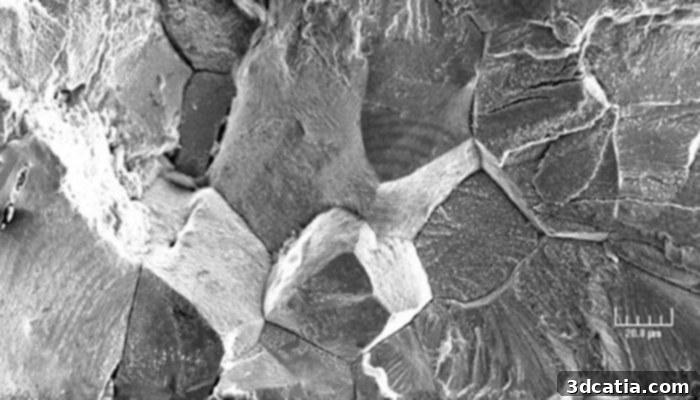
Austenitic steel will be used as the main material (photo credits: Dr K. Natesan)
3D Printed Nuclear Reactor Components Made of Reinforced Steel
A core focus of Dr. Roy Sougata’s ambitious project at the University of North Dakota is the selection and optimization of advanced materials for 3D printed nuclear reactor components. The research team will primarily utilize austenitic steel, a material renowned for its excellent mechanical properties and corrosion resistance. However, to meet the exceptionally demanding conditions within a nuclear reactor, this metal alloy will be further reinforced with nitrogen. Nitrogen reinforcement enhances the steel’s strength, hardness, and resistance to radiation-induced damage and high-temperature creep, making it an ideal candidate for critical reactor applications. This specially engineered material will serve as the primary raw material in the additive manufacturing process.
While specific details regarding the 3D printer technology to be employed have not yet been disclosed, the overarching objective of the research is to rigorously evaluate whether these 3D printed components can surpass the performance and efficiency of parts traditionally designed and manufactured. Dr. Sougata articulates the key advantage of additive manufacturing in this context, stating, “Different research groups are trying to make the components using additive manufacturing. Conventionally, these components are made through casting or wrought-iron forging, but you cannot tweak the mechanical properties or the microstructure properly. In additive manufacturing, we have lot more grip on that.” This “grip” refers to the unparalleled control that 3D printing offers over the material’s microstructure and internal architecture. This precision allows for the customization of mechanical properties such such as tensile strength, fatigue resistance, and thermal conductivity, which are paramount for the longevity and safety of nuclear components. By controlling parameters at a micro-level, additive manufacturing can mitigate common issues found in traditional parts, like porosity and inconsistent grain structures, leading to components with superior reliability.
Rigorous Testing and Collaborative Analysis for Enhanced Reliability
The development of nuclear reactor components through additive manufacturing is a multi-faceted process that demands stringent validation and analysis. In this collaborative effort, the initial design and prototyping of the advanced parts will be conducted at the University of North Dakota, leveraging the expertise of Dr. Sougata’s team. Following the fabrication phase, these components will undergo extensive further analysis at the Oak Ridge National Laboratory (ORNL). ORNL, with its world-class facilities and deep expertise in nuclear materials and engineering, will play a crucial role in validating the structural integrity, material properties, and performance characteristics of the 3D printed parts. This collaboration ensures that the research benefits from both innovative academic insights and robust national laboratory capabilities.
A significant aspect of the testing regimen will focus on the tribological properties of the components, particularly under high-temperature conditions. For those unfamiliar, tribology is the scientific study of interacting surfaces in relative motion, encompassing phenomena such as wear, friction, and lubrication. In the context of nuclear reactors, understanding and optimizing tribological properties is absolutely critical. Reactor components often operate under extreme mechanical stress, high temperatures, and sometimes in corrosive or radioactive environments. Excessive wear or friction can lead to material degradation, compromise component functionality, and potentially introduce foreign particles into the reactor coolant, posing significant safety and operational risks. Therefore, ensuring minimal wear and optimal frictional behavior at elevated temperatures is a crucial step in creating durable, safe, and efficient nuclear components.
The tribological testing at ORNL will simulate the harsh operational conditions of a nuclear reactor, providing invaluable data on how the nitrogen-reinforced austenitic steel components perform over extended periods. This involves assessing their resistance to abrasive wear, adhesive wear, and fatigue, as well as evaluating the coefficient of friction under various loads and temperatures. By meticulously studying these properties, researchers aim to confirm that 3D printed components can withstand the rigorous demands of nuclear service, potentially offering enhanced longevity and reduced maintenance needs compared to traditionally manufactured parts. The insights gained will not only validate the current designs but also inform future iterations, paving the way for wider adoption of additive manufacturing in the nuclear sector.
Driving Innovation for Energy and National Security
The implications of Dr. Roy Sougata’s research extend far beyond the immediate development of individual reactor components. As Brian Trande, Dean of the University of North Dakota, eloquently states, “I’m excited that this new award will add even more capabilities to the college and support the important work of Dr. Roy, one of our talented new faculty members. This work will lead to advancements in metal additive manufacturing and has the potential to contribute to UND’s research efforts in energy and national security.” This research underscores the vital connection between technological innovation, sustainable energy solutions, and national defense. By enhancing the efficiency and safety of nuclear power, additive manufacturing contributes directly to building a more resilient and secure energy infrastructure.
The partnership between academic institutions like UND and national laboratories such as ORNL is a powerful model for fostering breakthroughs in critical areas. Such collaborations accelerate the transition of cutting-edge research from the lab to practical applications, ensuring that the United States remains a leader in advanced manufacturing and nuclear technology. The advancements in metal additive manufacturing driven by this project will not only benefit the nuclear industry but also have ripple effects across other sectors requiring high-performance materials and complex geometries, including aerospace, defense, and medical devices. Ultimately, the work done by Dr. Sougata and his team is a testament to the transformative power of additive manufacturing in shaping a safer, more efficient, and more secure energy future. To learn more about this project, click HERE.
What do you think about using metal additive manufacturing to design nuclear reactor components and its potential impact on energy and national security? Let us know in a comment below or on our LinkedIn, Facebook, and Twitter pages! Don’t forget to sign up for our free weekly Newsletter here, the latest 3D printing news straight to your inbox! You can also find all our videos on our YouTube channel.
*Cover Photo Credits: Adam Kurtz / UND