
Pioneering the Future: Lockheed Martin and MakerBot Drive NASA’s Lunar Rover Development with Advanced Additive Manufacturing
The aerospace and defense sector stands at the forefront of technological innovation, consistently embracing cutting-edge methods to enhance design, functionality, and efficiency. Among these, additive manufacturing, commonly known as 3D printing, has emerged as a transformative force, revolutionizing how companies design tools, create prototypes, and even produce mission-critical components. This paradigm shift is particularly evident in the long-standing collaboration between global aerospace and defense giant Lockheed Martin and the leading 3D printing solutions provider, MakerBot. For nearly five years, their partnership has yielded significant advancements across various projects, demonstrating the profound impact of additive manufacturing on complex engineering challenges.
Their latest and arguably most ambitious joint venture sees them contributing to NASA’s groundbreaking Lunar Rover project. This initiative is a crucial component of NASA’s ambitious Artemis program, which aims to establish a sustainable human presence on the Moon. This lunar base will serve as a vital stepping stone, preparing humanity for even grander missions to Mars and beyond. Lockheed Martin’s role in this endeavor is to produce an autonomous lunar rover, a sophisticated vehicle designed to navigate the challenging lunar terrain, conduct scientific research, and support future astronaut activities on the Moon’s surface.
The initial design and development phases for this cutting-edge rover system are underway at Lockheed Martin’s esteemed Advanced Technology Center (ATC). Situated in Palo Alto, California, the ATC is nestled within the vibrant epicenter of America’s tech hub, making it an ideal environment for pioneering innovation. This state-of-the-art research and development facility boasts a specialized laboratory brimming with advanced 3D printers, which are pivotal to the rapid iteration and testing processes demanded by such a complex space mission.
Aaron Christian, a senior mechanical engineer within Lockheed Martin’s space division, highlights the indispensable role of additive manufacturing in their workflow. “At ATC, we have multiple MakerBot printers that help with quick turnaround times,” Christian explained. This immediate access to in-house printing capabilities dramatically accelerates the design cycle. “I will design a part, print it, and have it in my hand hours later. This allows me to quickly test the 3D-printed part, identify weak points, adjust the model, send it back to print overnight, and then have the next iteration in the morning. 3D printing lets me do fast and iterative design, reducing wait times for a part from weeks to hours.” This rapid prototyping capability is not merely a convenience; it is a critical enabler for innovation, allowing engineers to experiment with multiple designs, refine complex geometries, and optimize performance in a fraction of the time traditionally required, thereby pushing the boundaries of what’s possible for space exploration.

Advanced Manufacturing for NASA’s Lunar Rover Project
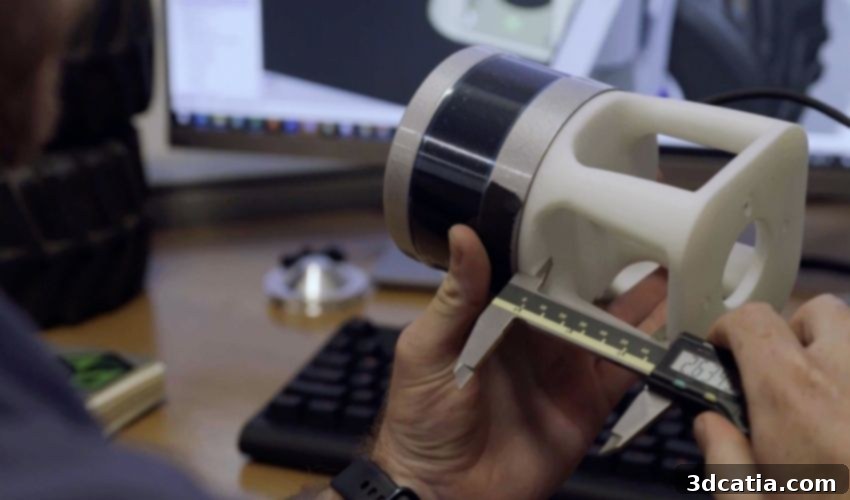
For the critical components of the Lunar Rover project, Lockheed Martin is leveraging the robust capabilities of MakerBot’s METHOD X 3D printer. This machine is instrumental in testing proof-of-concept parts, ensuring that every element of the rover system meets the stringent performance and reliability standards required for spaceflight. What makes this collaboration particularly significant is that the defense company isn’t solely focused on 3D printing prototypes; they are also producing parts that will be integrated into the final, flight-ready products destined for space. This marks a pivotal moment where additive manufacturing transitions from solely a prototyping tool to a legitimate manufacturing method for extraterrestrial applications.
These space-bound parts are predominantly printed using ABS (Acrylonitrile Butadiene Styrene), a high-performance polymer renowned for its mechanical strength, rigidity, and resistance to extreme temperatures. Unlike traditional PLA (Polylactic Acid), which is suitable for basic prototyping, ABS offers superior durability and stability, making it ideal for enduring the harsh vacuum, radiation, and temperature fluctuations encountered in space. While the specific parts vary greatly based on their function, they include critical components such as mounts for LIDAR (Light Detection and Ranging) sensors. These sensors are vital for the autonomous rover, enabling it to accurately determine the proximity of surrounding objects, which is crucial for navigation, hazard avoidance, and mapping the lunar surface without human intervention.
Driving Efficiency: Digital Inventory and In-Space Manufacturing
Manufacturing for space missions is inherently an expensive and logistically challenging endeavor. Every kilogram launched into orbit or beyond incurs substantial costs. Fortunately, additive manufacturing provides a strategic solution to these economic hurdles. One significant advantage is the ability to send bulk raw materials to space, which can then be used to 3D print multiple parts and structures on-demand. This approach drastically cuts down on the cost associated with sending individual, pre-manufactured parts piece by piece from Earth, optimizing payload efficiency and reducing overall mission expenses.
Further cost savings and operational efficiencies have been realized through the adoption of 3D printing technology, particularly its enablement of a “digital inventory” system. Instead of maintaining vast physical warehouses of spare parts, which are heavy and require extensive storage space both on Earth and in transit, companies can now store digital files of part designs. These digital blueprints can be transmitted electronically to a remote location, such as a lunar base or an orbiting spacecraft, where the required parts can then be printed on-demand. This minimizes the need for physical storage, reduces waste, and offers unprecedented flexibility in manufacturing. “The digital inventory concept helps push our digital transformation forward—you have digital designs that you can ship up, where you just print the parts and have them assembled on location,” added Aaron Christian, emphasizing the transformative potential of this approach for future space missions. This shift not only impacts logistics but also provides a resilient supply chain, allowing for repairs and modifications to be made remotely, enhancing mission safety and extending the operational lifespan of critical equipment.
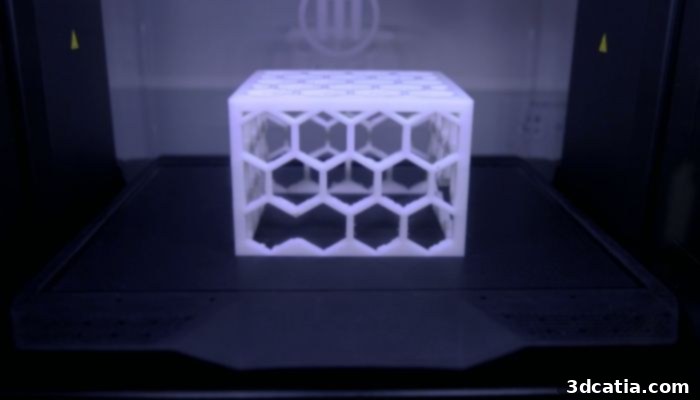
METHOD X’s heated chamber creates dimensionally accurate parts without the variable warping as compared to other desktop 3D printers.
The Road Ahead: Broader Implications for Space Exploration
The success of Lockheed Martin and MakerBot’s collaboration on NASA’s Lunar Rover project has far-reaching implications for the future of space exploration. By proving the viability of 3D printing for flight-ready components and demonstrating significant cost efficiencies through digital inventory and on-demand manufacturing, they are paving the way for more ambitious and sustainable missions. This technology is critical not only for establishing a permanent human presence on the Moon but also for venturing deeper into space, including crewed missions to Mars. The ability to manufacture tools, spare parts, and even habitats using local resources (in-situ resource utilization) on extraterrestrial bodies is a long-term goal that 3D printing is uniquely positioned to achieve.
Furthermore, the advancements made in material science for additive manufacturing, exemplified by the use of robust polymers like ABS with the MakerBot METHOD X, are continuously expanding the range of applications for space hardware. The precise control over the printing environment, as offered by the METHOD X’s heated chamber, ensures dimensional accuracy and structural integrity, crucial for components exposed to the unforgiving conditions of space. This ongoing innovation promises to unlock new possibilities for lighter, stronger, and more complex designs, further optimizing spacecraft performance and astronaut safety.
The partnership between Lockheed Martin and MakerBot is a shining example of how cutting-edge additive manufacturing is accelerating the pace of space exploration. Their work on NASA’s Lunar Rover is not just about building a vehicle; it’s about building the future of humanity’s journey beyond Earth. This collaborative spirit and technological prowess are fundamental to overcoming the immense challenges of space travel and establishing a lasting presence in the cosmos. You can learn more about this groundbreaking lunar space project HERE.
What are your thoughts on Lockheed Martin’s incredible lunar rover project for NASA and the role of 3D printing in our future in space? Share your comments below or connect with us on our Facebook and Twitter pages. Don’t miss out on the latest advancements in additive manufacturing – remember to sign up for our free weekly newsletter, bringing all the essential 3D printing news straight to your inbox!
*All Photo Credits: MakerBot