
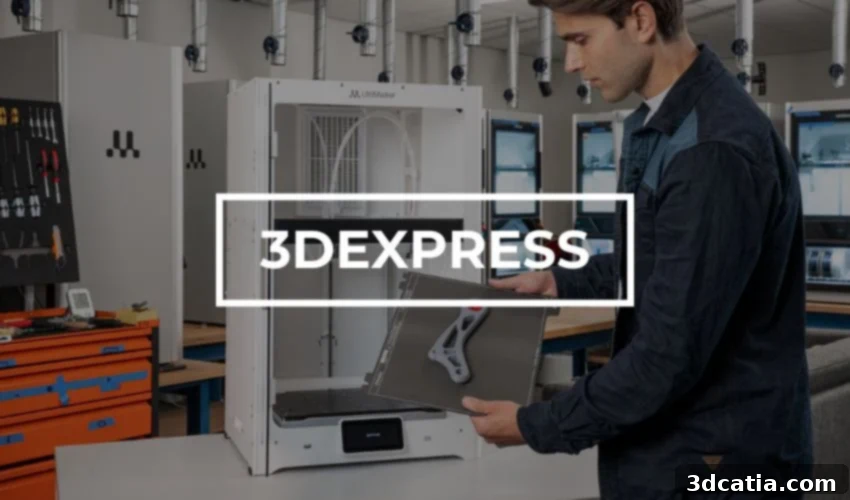
Revolutionizing Industries: Latest 3D Printing Innovations, Construction Breakthroughs, and Future Outlook
This week marks another significant leap forward in the world of additive manufacturing, showcasing how 3D printing continues to redefine possibilities across various sectors. From groundbreaking hardware launches that promise enhanced productivity to transformative applications in defense and residential construction, and critical advancements in scientific research, the industry is buzzing with innovation. We delve into UltiMaker’s latest FDM solution, the S8 3D printer, designed for speed and uncompromised quality, then shift our focus to the U.S. Army’s ambitious plans for 3D printed barracks and Australia’s pioneering multi-story printed home. Further solidifying 3D printing’s impact, a NASA grant fuels research into microscale devices, while Formnext 2025 shows promising signs of an international success story. Join us as we explore these exciting developments shaping the future of manufacturing and beyond.
UltiMaker Unveils the S8 3D Printer: Boosting Productivity in Professional FDM
UltiMaker, a name synonymous with accessible yet high-performance additive manufacturing, continues its legacy with the launch of its latest FDM (Fused Deposition Modeling) powerhouse, the UltiMaker S8. Born from the strategic merger of Ultimaker and Makerbot, the company has consistently delivered robust desktop 3D printing solutions tailored for professionals. The S8 is engineered with a clear objective: to significantly elevate user productivity while steadfastly upholding the core principles of reliability, safety, and precision that define the UltiMaker brand. This new machine is poised to streamline workflows for engineers, designers, and manufacturers seeking efficient prototyping and production capabilities.
The technical specifications of the S8 underscore its advanced design. It boasts a generous print volume of 330 x 240 x 300 mm, accommodating a wide range of part sizes for diverse applications. More impressively, it achieves print speeds of up to 500 mm/s, a critical factor for reducing lead times in demanding environments. This remarkable speed is partly attributed to the integration of the UltiMaker Cheetah, a new, highly optimized motion planner that ensures smoother and faster print head movements without sacrificing print quality. Additionally, an improved feed system contributes to more consistent material extrusion, vital for producing high-quality parts rapidly and reliably.
A key feature that enhances its versatility and material compatibility is its dual extruder 3D printer setup. This capability allows for printing with two different materials simultaneously—whether it’s a model material and a soluble support material, or two distinct model materials for multi-color or multi-property parts. Such flexibility is crucial for complex geometries and functional prototypes. Furthermore, the S8 is compatible with over 300 materials, empowering users to select the perfect filament for their specific application, from standard plastics to advanced engineering-grade polymers. UltiMaker CEO Michiel Alting von Geusau encapsulates the company’s vision for this launch, stating, “We are thrilled to launch the UltiMaker S8, the next generation in our popular S series, built with customers in mind. With our growing 3D printing ecosystem, we aim to provide customers with a variety of solutions that will fit their production needs.” This sentiment highlights the S8’s role as a versatile and integral component within a broader, evolving 3D printing ecosystem designed to meet the dynamic demands of modern production.
US Army Explores 3D Printing for Rapid Construction of Barracks and Military Infrastructure
The construction 3D printing sector continues to gain significant traction, and this week brings noteworthy news from the U.S. Army. The military branch has announced its serious consideration of utilizing 3D printing technology for the construction of future Army and Navy barracks. This initiative is not a completely new venture but rather an expansion of successful pilot projects previously undertaken by the Army Corps of Engineers. These earlier endeavors include the pioneering 3D printed barracks at Fort Bliss in Texas, which demonstrated the feasibility and benefits of additive construction in military contexts. The potential adoption of 3D printing on a larger scale underscores a strategic shift towards more agile, efficient, and resilient infrastructure development within the defense sector.
During recent discussions with lawmakers, Dave Morrow, the director of military programs for the Army Corps of Engineers, provided a compelling justification for this innovative approach. He emphasized the critical role of innovation in military construction within an increasingly complex global security landscape. Morrow articulated, “In an increasingly complex global security environment, our commitment to innovation in military construction is not just about building structures, it’s about building the resilience and readiness our forces need to prevail. By working with industry to leverage these advancements, we can deliver more durable, sustainable and cost-effective infrastructure for our military, ensuring taxpayer dollars are used efficiently, while equipping our troops with the best facilities in the world.” This statement highlights that the motivation extends beyond mere cost savings, focusing on strategic advantages like enhanced operational readiness and durability in challenging environments. Additive construction holds immense promise for the military, offering the potential to reduce traditional construction costs, decrease required manpower, simplify logistics in remote or hostile territories, and significantly cut down on construction timelines. These efficiencies are crucial for rapid deployment and establishing infrastructure in diverse operational theaters.
Furthermore, Morrow pointed out that “Additive construction has [the] potential to reduce costs, manpower, logistics and time, while opening the door for improved and new applications, such as unconventional countermeasures.” This suggests that beyond basic structures, 3D printing could enable the creation of highly customized, complex defensive or operational structures that would be impractical or impossible with conventional methods. The ability to quickly print on-site, using locally sourced materials where possible, also minimizes the logistical footprint and reliance on vulnerable supply chains. The U.S. Army’s interest in leveraging this technology signals a broader recognition of additive manufacturing’s capacity to revolutionize defense infrastructure, providing strategic flexibility and enhanced capabilities for forces operating worldwide.
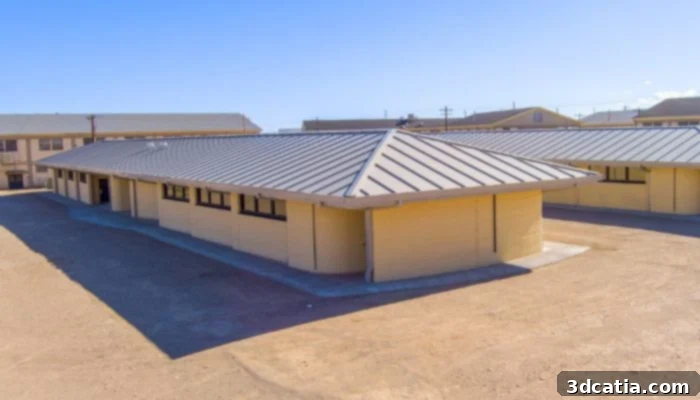
3D printed military barracks at Fort Bliss, Texas (photo credits: Sophia Espinosa/U.S. Army)
Australia’s First 3D Printed Multi-Story Home: A Step Towards Solving the Housing Crisis
Australia is making headlines in the construction sector with the announcement from Luyten that work has commenced on the nation’s inaugural 3D printed multi-story home. This pioneering project represents a significant milestone, showcasing the advanced capabilities of modern additive construction techniques. The ambitious 350 m2 residence, located in the suburbs of Melbourne, Victoria, is not just a demonstration of technology but will also serve as the home for Ahmed Mahil, the CEO and Global President of LUYTEN, underscoring the company’s confidence in its innovative approach. Utilizing sophisticated AI-powered 3D printing technology, this project exemplifies how smart automation can transform traditional building processes.
Since February 11th, a specialized robotic crane developed by LUYTEN has been meticulously constructing the home layer by layer. This automated construction method is being widely heralded as a potential, much-needed solution to the ongoing housing crisis gripping Australia. The promise of 3D printing in construction lies in its ability to drastically reduce building times, lower labor costs, and minimize material waste, all of which contribute to more affordable and accessible housing options. By leveraging AI, the printing process can achieve greater precision, optimize material usage, and adapt to design complexities more efficiently than conventional construction methods. This not only speeds up the construction timeline but also opens doors for more complex and custom architectural designs.
While the full extent of 3D printing’s transformative power in Australia’s construction sector still requires further research and broader adoption, this multi-story home is undoubtedly a promising and critical step forward. As reported this week by The Guardian, such initiatives highlight how technological innovation can address pressing societal challenges. The successful completion and habitation of this home could pave the way for more widespread application of 3D printing in residential and commercial construction across the country, offering a scalable and sustainable pathway to alleviate housing shortages and create more efficient building practices for the future.
Oklahoma State Researcher Secures NASA Grant for 3D Printed Microscale Devices
In a testament to the diverse applications of additive manufacturing, Dr. Sri Ramesh, an assistant professor in the Department of Industrial Engineering at Oklahoma State University, has been honored with the prestigious NASA Established Program to Simulate Competitive Research (EPSCoR) grant. This significant award recognizes and supports Dr. Ramesh’s cutting-edge research, which focuses on the intricate manufacturing of functional microscale devices. These tiny, yet powerful, components are created using conductive inks, with additive manufacturing playing a pivotal role in their precise fabrication. The applications for these microscale devices are vast and critical, spanning across space exploration, advanced medical technologies, and high-performance computing.
The NASA EPSCoR grant provides Dr. Ramesh with an unparalleled opportunity to directly collaborate with leading NASA scientists and engineers. This collaboration is set to foster new avenues of research and accelerate the development of innovative solutions for some of humanity’s most challenging scientific and engineering problems. His work delves into how additive manufacturing can enable the creation of highly complex and customized electronic structures at a micro-level, which are essential for the next generation of sensors, communication systems, and integrated circuits needed for extreme environments found in space. The grant specifically focuses on leveraging additive manufacturing for electronics, a field with immense potential for future technological breakthroughs.
Dr. Ramesh articulated the profound impact of this collaboration, explaining, “This project will provide an excellent opportunity to directly observe the challenges and solutions NASA is working on in additive manufacturing for electronics.” This firsthand exposure to real-world engineering hurdles faced by NASA will be invaluable. He further added, “By seeing these real-world problems firsthand, I’ll be able to bring relevant examples back to the classroom, helping students align their research to address similar challenges. Additionally, I’ll be able to share insights on potential internship opportunities at NASA, guiding students on how they can get involved and contribute to cutting-edge work in the field.” This dual benefit highlights how the grant will not only advance critical research but also enrich the educational experience for his students, preparing the next generation of scientists and engineers to tackle complex challenges in additive manufacturing and beyond.
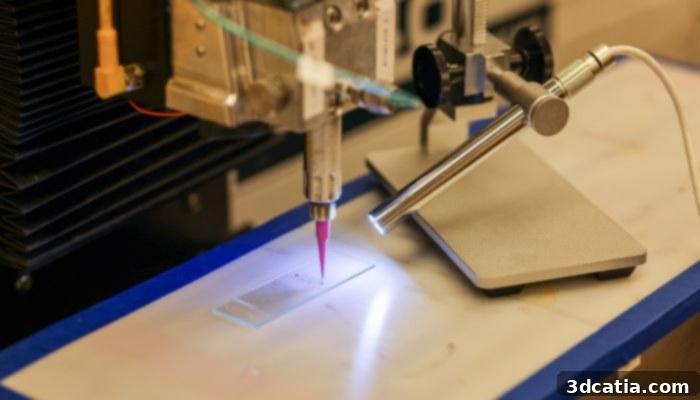
Photo Credits: Okstate
Formnext 2025: Celebrating a Decade of Additive Manufacturing Excellence with Strong International Outlook
Formnext, the premier global exhibition and conference for additive manufacturing and industrial 3D printing, is gearing up for a landmark celebration in 2025: its 10th anniversary. This auspicious occasion, set to open its doors once again on November 18th, is already demonstrating all the signs of being another resounding international success. Organizers report exceptionally positive registration figures, providing a robust indicator of the industry’s sustained growth and enthusiasm for the event. By early March, an impressive 533 companies from 34 different countries had already confirmed their participation, far in advance of the event date.
A particularly striking statistic highlighting Formnext’s global appeal is that approximately 65% of all exhibitors registered to date hail from outside Germany. This strong international presence includes major industry players from economic powerhouses like the USA and China, alongside a significant contingent of companies from this year’s designated partner country, Spain. Such diverse international participation is a powerful counter-narrative to any lingering concerns about stagnation within the additive manufacturing industry. The organizers are clearly observing a positive momentum within the sector, reflecting ongoing investment, innovation, and market expansion.
The current robust number of registrations, coupled with an exceptionally high exhibitor satisfaction rate of around 88% from last year’s event, unequivocally underscores the continued relevance and critical importance of Formnext. It serves as an essential global platform for networking, showcasing technological advancements, and fostering business opportunities across the entire additive manufacturing value chain. Petra Haarburger, President of Mesago Messe Frankfurt GmbH, articulates this sentiment perfectly: “The diversity of our existing and new exhibitors is proof that Additive Manufacturing offers excellent business opportunities for companies along the entire process chain.” This strong outlook confirms Formnext’s indispensable role in driving the additive manufacturing industry forward, providing a vibrant marketplace and intellectual hub for professionals worldwide.
We hope you enjoyed this week’s dive into the dynamic world of 3D printing. What are your thoughts on the new S8 3D printer from UltiMaker, or the groundbreaking applications in military construction and residential housing? Let us know your insights in a comment below or join the conversation on our LinkedIn, Facebook, and Twitter pages! Don’t forget to sign up for our free weekly Newsletter here to receive the latest 3D printing news straight to your inbox! You can also find all our videos and in-depth analyses on our YouTube channel.