
Pioneering Single-Step 3D Printing: UCLA’s Breakthrough in Metamaterial Robots
Additive manufacturing, more widely known as 3D printing, has profoundly reshaped numerous industries, perhaps none more so than robotics. Its inherent capacity to produce highly intricate geometries and customized designs has positioned it as an indispensable tool for developing sophisticated robotic systems. Traditionally, the process of fabricating robots via 3D printing typically involved producing numerous individual components, which subsequently required meticulous and time-consuming manual assembly. While this multi-step approach provided significant design flexibility, it introduced challenges concerning manufacturing efficiency, potential points of structural weakness, and the overall complexity of integrating diverse functionalities. The ambition to significantly streamline this elaborate process has long been a driving force for researchers dedicated to advancing robotic development.
However, a groundbreaking innovation originating from a team of visionary researchers at the University of California, Los Angeles (UCLA), is poised to fundamentally redefine this paradigm. These scientists have engineered a revolutionary single-step, all-in-one 3D printing methodology that facilitates the creation of fully functional robots in a single, continuous operation. This breakthrough effectively eliminates the conventional assembly phase, heralding a new era of integrated robotic design and production. Central to this remarkable achievement is their pioneering utilization of metamaterials – artificially engineered substances possessing extraordinary electromagnetic and mechanical properties that are not typically observed in natural compounds. By judiciously leveraging these unique materials, UCLA’s team has unlocked unprecedented possibilities within the realm of soft robotics and intelligent material systems. This innovation promises not only to accelerate the development cycle of advanced robots but also to enable the creation of highly integrated, resilient, and adaptable autonomous systems endowed with capabilities previously considered unattainable.
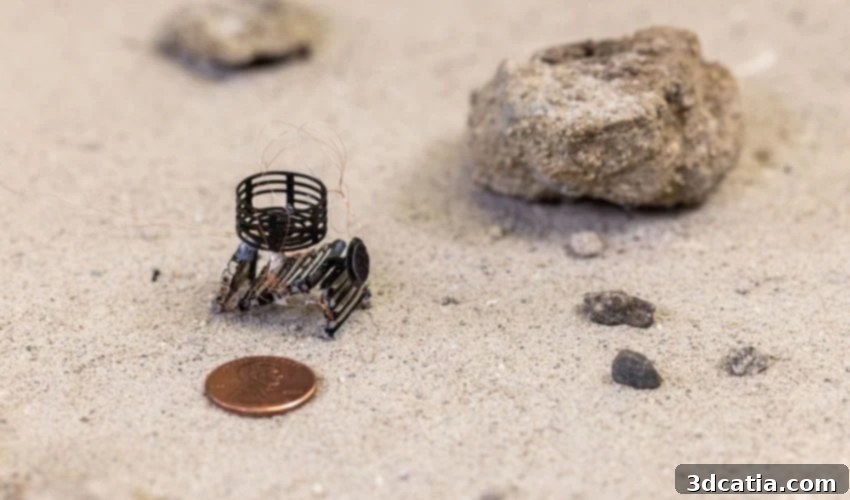
The robots developed by the UCLA team are far from static structures; they are dynamic, intelligent entities capable of interacting with their environment in remarkably sophisticated ways. These innovative “meta-bots” demonstrate impressive inherent functionalities, including the ability to crawl across various surfaces, execute intricate jumps, and accurately sense elements within their immediate surroundings. This elevated level of integrated functionality, achieved through a single printing process, represents a monumental leap forward in robotic engineering and additive manufacturing.
Xiaoyu Zheng, the principal investigator behind this transformative study, eloquently articulated the profound implications of their innovation. “We envision that this design and printing methodology of smart robotic materials will help realize a class of autonomous materials that could replace the current complex assembly process for making a robot,” Zheng stated. He further emphasized the biomimetic nature of their creation, drawing a compelling parallel: “With complex motions, multiple modes of sensing and programmable decision-making abilities all tightly integrated, it’s similar to a biological system with the nerves, bones and tendons working in tandem to execute controlled motions.” This perspective vividly illustrates the long-term vision of developing truly autonomous materials – systems where the material itself inherently possesses robotic qualities, thereby blurring the distinctions between structure, actuator, and sensor. This holistic approach promises to unlock designs that are more robust, compact, and energy-efficient than their multi-component predecessors, closely mirroring the elegant efficiency observed in natural biological organisms.

3D printed piezoelectric materials (photo credits: UCLA)
Unlocking Advanced Functionality: The Power of Piezoelectric Metamaterials
The remarkable capabilities demonstrated by UCLA’s meta-bots stem directly from the unique properties of the specialized metamaterials they employed, specifically their inherent piezoelectric nature. Piezoelectricity is a fascinating physical phenomenon wherein certain crystalline materials generate an electrical charge in response to applied mechanical stress, and conversely, undergo mechanical deformation or strain when subjected to an electric field. This fundamental ability to interconvert electrical and mechanical energy is absolutely crucial to the operation and functionality of these advanced robots.
The researchers meticulously engineered these piezoelectric metamaterials into an intricate lattice structure. This sophisticated design is critical because it enables the materials to exhibit precise, macroscopic changes in geometry and produce controlled movements when stimulated by an electric field. Essentially, the electrical energy applied to the material is directly and highly efficiently converted into kinetic energy, thereby driving the robot’s motion without the need for cumbersome external motors, gearboxes, or traditional actuators. This direct energy conversion mechanism forms a cornerstone of the single-step 3D printing approach, as it allows functional components like actuators to be intrinsically embedded within the robot’s very structure from the moment of fabrication, eliminating the need for post-printing assembly.
To thoroughly validate their innovative methodology, UCLA scientists successfully designed and 3D printed three distinct “meta-bots,” each showcasing unique adaptive behaviors. The first meta-bot was skillfully programmed to avoid various obstacles in its path, effectively demonstrating its environmental awareness and basic navigation capabilities. The second prototype exhibited more dynamic locomotion, adeptly performing both walking and precise jumping maneuvers, thereby indicating its versatility across different types of terrain. The third meta-bot was specifically engineered to withstand and escape significant contact impacts, highlighting its substantial potential for resilience and durability in challenging or unpredictable environments. These distinct demonstrations emphatically underscore the versatility and robustness of the single-step printing method, unequivocally proving its capacity to create robots with diverse, integrated functionalities directly from the printer. The seamless integration of sensing, actuation, and structural integrity into a single material system significantly reduces overall complexity and opens up vast possibilities for previously unimaginable robotic applications, from medical implants to deep-sea explorers.
Revolutionizing Industries: Future Applications of Single-Step 3D Printed Robots
The profound implications of UCLA’s pioneering single-step 3D printing method for metamaterial robots extend far beyond the confines of the laboratory, promising to revolutionize numerous sectors and aspects of daily life. The research team is particularly focused on applying this innovation to the burgeoning medical field, envisioning a future where miniature, soft robots fabricated from these smart metamaterials can perform highly targeted medical interventions. Imagine tiny meta-robots, precisely printed and controlled, navigating the intricate pathways of the human body to deliver drugs directly to specific diseased areas, thereby minimizing systemic side effects and maximizing therapeutic efficacy. These micro-robots could fundamentally revolutionize drug delivery systems, offering a level of precision and control currently unattainable with conventional methods.
Beyond targeted drug delivery, these highly versatile meta-robots could serve as invaluable tools for internal diagnostics and sophisticated minimally invasive surgery. Their inherent ability to probe dangerous or otherwise inaccessible areas of the body, such as deep within organs, complex vascular networks, or intricate neural pathways, could provide real-time data and facilitate accurate diagnoses without the need for invasive surgical procedures. Furthermore, their demonstrated resilience to impacts and remarkable capacity to adapt to varying conditions make them ideal candidates for exploring hostile or challenging environments. This could encompass tasks such as inspecting damaged nuclear reactors, navigating collapsed buildings in search of survivors, or even exploring extraterrestrial landscapes where traditional rigid robots encounter significant operational limitations and vulnerabilities.
The potential applications extend broadly to fields like environmental monitoring, where swarms of small, self-sensing robots could meticulously detect pollutants in water bodies, track wildlife movements in remote ecosystems, or monitor critical climate change indicators in challenging geographical locations. In advanced manufacturing, these integrated robots could lead to the development of self-healing machines or advanced components that intrinsically sense and intelligently respond to operational stress or environmental changes. The elegance and efficiency of the single-step fabrication process mean that these robots can be customized for highly specific tasks with unprecedented speed and cost-efficiency, offering a scalable and agile solution for complex robotic challenges. This paradigm shift, where form, function, and intelligence are intrinsically linked and co-fabricated from the very moment of creation, paves the way for a new generation of intelligent, adaptive, and highly functional robotic systems that can seamlessly integrate into various aspects of our lives, offering innovative solutions to some of humanity’s most pressing and complex challenges.
The Core Innovation: How Metamaterials Enable Single-Step Robotic Fabrication
To truly appreciate the monumental magnitude of UCLA’s achievement, it is absolutely essential to delve deeper into the intricate science behind metamaterials and their pivotal role in this single-step robotic fabrication breakthrough. Metamaterials are not naturally occurring substances; rather, they are meticulously artificially engineered structures designed to possess extraordinary properties that are often impossible to achieve with conventional, naturally occurring materials. These unprecedented properties emerge not from their chemical composition, but fundamentally from their meticulously designed internal architecture at the micro or nanoscale. In the specific context of UCLA’s pioneering robots, the researchers judiciously leveraged the capabilities of **piezoelectric metamaterials**.
The “meta” prefix in metamaterial signifies their exceptional ability to manipulate waves (such as electromagnetic or acoustic waves) in ways that natural materials simply cannot. For these novel robots, the primary focus is on their unique mechanical properties and their highly controlled response to electrical stimuli. By precisely structuring piezoelectric materials into specific, intricate geometric lattices, the scientists successfully created a composite material whose overall mechanical response – including its remarkable ability to deform, move, and sense its environment – is significantly enhanced and precisely controllable. This structured internal arrangement allows for the strategic and seamless integration of multiple distinct functionalities directly into the material’s body. Instead of requiring the attachment of separate sensors, actuators, and structural components, the intelligently designed metamaterial itself intrinsically performs these multifaceted roles.
This intrinsic functional integration is the definitive linchpin of the single-step 3D printing process. Traditional robotics relies heavily on assembling a distinct ‘brain’ (controller), ‘muscles’ (actuators), ‘bones’ (structural framework), and ‘skin’ (sensors) as separate, discrete components. UCLA’s ground-breaking method, however, allows these traditionally distinct functions to be co-fabricated into a single, continuous, and homogeneous material. The 3D printer precisely lays down the metamaterial in a pre-programmed pattern, and as it solidifies, its internal architecture simultaneously defines the robot’s overall shape, its remarkable ability to move (via direct piezoelectric actuation), and its intrinsic capacity to sense environmental cues (also via piezoelectric effects, generating an electrical charge when deformed by touch or pressure). This revolutionary approach means that a complex robot, fully equipped with integrated sensing and actuation capabilities, can emerge completely formed from the printer, drastically reducing manufacturing time, significantly lowering production costs, and virtually eliminating the potential for errors inherent in traditional assembly processes. The unparalleled ability to tailor the material’s properties at the micro-level through innovative structural design offers unprecedented control over the robot’s eventual behaviors and functionalities, making it a truly revolutionary approach in the rapidly evolving fields of soft robotics and intelligent material systems.
Beyond Traditional Assembly: The Multifaceted Benefits of Integrated Robotic Systems
The complete elimination of the assembly phase is perhaps the most immediately striking advantage of UCLA’s single-step 3D printing method, but the transformative benefits extend far beyond this initial simplification, initiating a profound paradigm shift in how robots are conceptualized, designed, and manufactured. This innovative approach promises a cascade of improvements across the entire robotic lifecycle.
Firstly, **significantly reduced manufacturing complexity and cost** are paramount advantages. Traditional robot fabrication often involves a labyrinthine sequence of multiple manufacturing processes—such as precision machining, intricate molding, delicate wiring, and careful soldering—each followed by laborious and precise assembly. Every single step in this conventional chain adds considerable time, labor expenses, and introduces potential for error. By consolidating these diverse operations into a single, streamlined 3D printing process, UCLA’s method drastically cuts down on overall production overheads and fundamentally simplifies the entire manufacturing supply chain, making robotic production more accessible and efficient.
Secondly, **enhanced reliability and inherent robustness** are profoundly improved. Assemblies, by their very nature, inevitably introduce points of weakness: joints can loosen over time, wires can fray from repeated stress, and electrical connections can fail under various conditions. A monolithic, integrated robot, where all essential functions are seamlessly embedded within the material structure, intrinsically possesses far fewer potential failure points. This inherent structural integrity leads to significantly more durable and long-lasting robotic systems, a critical factor particularly for applications in harsh, remote, or inaccessible environments where maintenance and repairs are exceptionally challenging or impossible.
Thirdly, the method enables **unprecedented miniaturization and the creation of exquisitely intricate designs**. Without the need to accommodate separate components, their individual housing, and the necessary clearances for assembly, robots can be designed with far greater compactness and with more organic, bio-inspired, and complex shapes. This capability is vital for applications requiring microscopic scales, such as advanced medical micro-bots navigating within the human body or tiny environmental sensors deployed in sensitive ecosystems, where every fraction of a millimeter counts. The full potential of additive manufacturing’s design freedom is expertly exploited, allowing for the realization of geometries optimized specifically for unique movements, precise interactions, or specific environmental adaptations.
Fourthly, **accelerated prototyping and highly efficient iterative design cycles** become a tangible reality. Researchers and developers can rapidly print and thoroughly test new robotic designs, allowing for quick iterations and refinements without the laborious and time-consuming re-assembly process that plagues traditional methods. This significantly speeds up the innovation cycle, enabling much faster development of highly specialized robots meticulously tailored to specific tasks, unique environments, or evolving functional requirements.
Finally, the transformative concept of **”autonomous materials,”** as eloquently articulated by Xiaoyu Zheng, represents perhaps the most revolutionary benefit. This concept refers to materials that intrinsically possess robotic qualities—including advanced sensing capabilities, precise actuation, and even rudimentary decision-making abilities—all integrated at the fundamental material level. This advancement transcends merely printing a robot; it moves towards printing *intelligence* and *functionality* directly into the very material itself. Such groundbreaking materials could lead to truly adaptive structures, self-adjusting mechanisms, and an entirely new generation of soft robotics that interacts with its surroundings in a more fluid, intuitive, and biologically analogous manner, mirroring the elegance and efficiency of natural systems more closely than ever before. This holistic approach signifies a profound philosophical shift from building machines *out of* smart components to creating smart machines *as* fully integrated, intelligent components.
The Road Ahead: Challenges and Opportunities for Metamaterial Robotics
While UCLA’s single-step 3D printing of metamaterial robots represents a monumental leap forward in robotic engineering, the journey from a laboratory breakthrough to widespread commercial and industrial application involves addressing several exciting yet formidable challenges and seizing new opportunities. This nascent field, while incredibly promising, still requires significant development across multiple domains.
One primary area of intensive focus will undoubtedly be **material science and scalability**. Currently, the specialized piezoelectric metamaterials utilized in this research require precise formulation, intricate architectural design, and careful processing. Expanding the available range of metamaterials with diverse and tailored properties (e.g., varying stiffness, electrical conductivity, inherent biocompatibility for medical use, or specific thermal responsiveness) will be crucial to unlock an even broader spectrum of complex functionalities. Furthermore, scaling up the fabrication process for efficient mass production while rigorously maintaining the required precision, structural integrity, and cost-effectiveness will be a critical engineering and economic hurdle to overcome.
Another significant challenge lies in **powering these truly autonomous systems**. Although the robots efficiently convert electrical energy into kinetic energy, they inherently still require a reliable power source. The integration of miniature, long-lasting power solutions—such as tiny, flexible batteries, advanced flexible solar cells, or even innovative mechanisms for scavenging ambient energy (e.g., kinetic, thermal)—directly into the 3D printed structure will be absolutely crucial for achieving genuinely autonomous and untethered operation, especially for demanding medical, environmental monitoring, or remote exploration applications.
Moreover, the **computational design and optimization** of these highly complex metamaterial robots will need to become increasingly sophisticated. Designing intricate lattice structures that consistently yield precise macroscopic behaviors and desired functionalities demands the development and application of advanced computational modeling and simulation tools. As robots become exponentially more complex and multifunctional, integrating cutting-edge artificial intelligence (AI) and machine learning (ML) algorithms directly into the design process could revolutionize how material architecture is optimized for specific tasks, ultimately leading to the creation of highly efficient, incredibly specialized, and truly intelligent meta-bots with unprecedented capabilities.
Despite these inherent hurdles, the opportunities presented by this technology are truly immense and transformative. This breakthrough technology paves the way for an entirely new paradigm in **soft robotics**, enabling the creation of robots that are intrinsically safer for direct human interaction, more adaptable to irregular terrains and unpredictable environments, and capable of incredibly delicate and precise manipulation tasks. It could lead to the development of self-assembling or self-repairing robotic systems, highly reconfigurable robots capable of altering their form for various functions, and personalized robotic assistants that are entirely custom-printed to individual user needs or specific applications. The visionary concept of “autonomous materials” could profoundly impact diverse fields ranging from personalized medicine and advanced prosthetics to intelligent infrastructure systems and ambitious space exploration missions. The remarkable ability to print a fully functional, highly integrated robotic system in a single operation is not merely an incremental improvement; it represents a foundational shift that promises to redefine the very essence of robotic engineering and fundamentally alter how we interact with intelligent machines in the future.
What do you think of the UCLA researchers’ new method to print robots in one go? Let us know in a comment below or on our LinkedIn, Facebook, and Twitter pages! Don’t forget to sign up for our free weekly Newsletter here, the latest 3D printing news straight to your inbox! You can also find all our videos on our YouTube channel.
*Cover Photo Credits: UCLA