
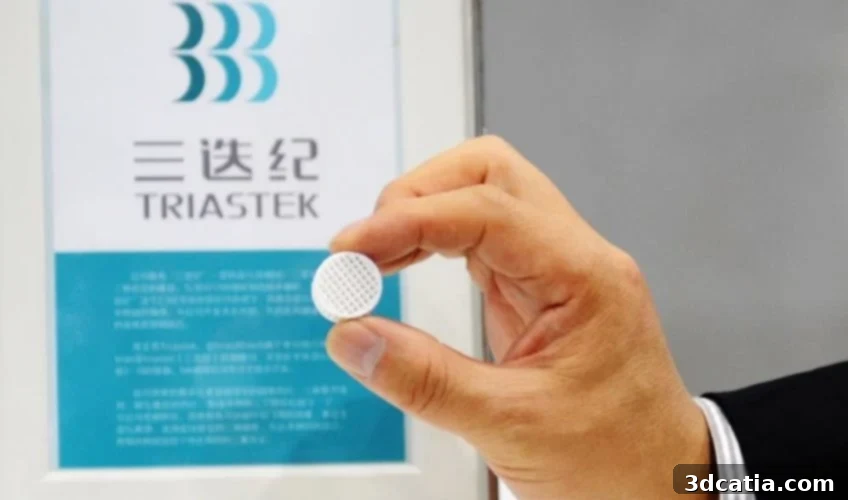
Pioneering the Future: Triastek’s $15M Investment in 3D Printed Pharmaceutical Innovation
Chinese startup Triastek has just secured a substantial $15 million in Series A funding, marking a pivotal moment for the advancement of 3D printed drugs. Established in Nanjing, China, in 2015, the company embarked on an ambitious mission to transform healthcare by leveraging cutting-edge 3D technologies, aiming to revolutionize drug delivery, development, and manufacturing processes. This significant investment will fuel critical research and development efforts, propelling Triastek’s ambitious vision forward. Earlier this year, the company achieved a historic milestone when its innovative 3D printing technology was recognized as an emerging technology project by the U.S. Food and Drug Administration (FDA). This distinction not only validates Triastek’s technological prowess but also made it the first Chinese company ever to receive such an honor from the FDA, underscoring its global impact and pioneering status. Having already made significant strides in the creation of advanced 3D printed medicines and the development of the additive manufacturing facilities required to produce them, Triastek is now poised to establish a groundbreaking new drug platform. This platform is designed for the sophisticated design and large-scale production of a new generation of pharmaceuticals, promising unprecedented precision and customization in medication.
The medical sector has undergone a profound transformation thanks to the disruptive power of additive manufacturing. Beyond its well-known applications, 3D printing innovations have consistently pushed the boundaries of healthcare. From durable titanium implants that offer enhanced biocompatibility and customized fit, to highly accurate anatomical models for surgical planning that provide surgeons with invaluable tools for patient-specific insights, the technology’s impact is far-reaching. Furthermore, microscopic robots, or microbots, capable of navigating the human body to deliver medicine precisely to targeted organs or tissues, represent a leap forward in drug targeting. The ability to create personalized prosthetics that perfectly match a patient’s anatomy, or highly customized dental care solutions, highlights the patient-centric revolution driven by 3D printing. Most critically, the emergence of 3D printed drugs is poised to redefine pharmaceutical development. Triastek stands at the forefront of this revolution with its proprietary melt extrusion deposition (MED) 3D printing technology. This advanced method precisely mixes and deposits pharmaceutical-grade materials layer by layer to manufacture solid drugs, enabling mass production with an unprecedented level of control. A core advantage of MED lies in its ability to meticulously control the placement, timing, and speed of the deposition of various drug components. This precision allows for the tailored release profiles of active pharmaceutical ingredients, meaning the drug’s different components can be released at specific intervals or in varying combinations. Such meticulous control significantly reduces the likelihood of adverse side-effects and enhances therapeutic efficacy, leading to safer and more effective treatments.
Triastek’s strategic focus encompasses three distinct yet critical product areas, each presenting unique challenges and opportunities for additive manufacturing. The first category includes “blockbuster drugs” – popular, often generic medications prescribed for prevalent ailments affecting a large patient population. These typically generate over a billion U.S. dollars in annual revenue for their manufacturers, exemplified by essential medications like insulin for diabetes management or Lipitor for high cholesterol. While these drugs are widely available, 3D printing technology holds the potential to significantly enhance their efficacy and patient experience. For instance, it can enable personalized dosages tailored to individual patient needs, combine multiple active ingredients into a single, complex tablet for improved adherence, or develop novel formulations that optimize absorption and bioavailability, ultimately leading to better patient outcomes and reduced healthcare costs.
The second crucial area involves “orphan drugs.” These pharmaceuticals are designed to treat rare diseases or conditions that affect a very small percentage of the population. Consequently, the demand for such drugs is minimal, making them often unprofitable for pharmaceutical companies unless heavily subsidized or incentivized. An illustrative example is Anthrasil used for the exceedingly rare cases of anthrax inhalation. The development and production of orphan drugs have historically been fraught with economic challenges due to the small batch sizes required. However, additive manufacturing promises to revolutionize this landscape. By enabling digital customisation and optimizing production processes for low-volume manufacturing, 3D printing has the profound potential to drastically reduce the prohibitive costs associated with developing and producing these life-saving medications. This not only makes orphan drugs more economically viable for manufacturers but, more importantly, ensures that patients suffering from rare diseases have access to the critical treatments they need, fostering a more equitable healthcare system.
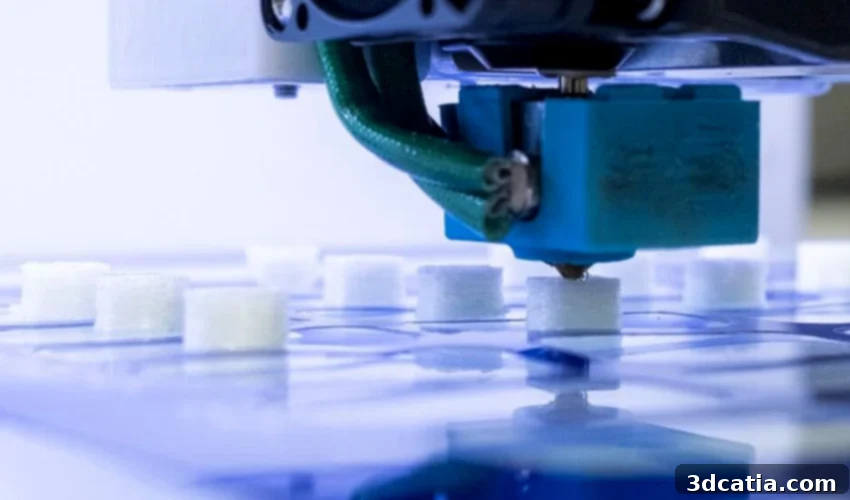
The third primary area of Triastek’s specialization lies in advanced drug delivery systems. Thanks to the unparalleled design freedom offered by 3D printing technologies, it is now possible to engineer drug delivery systems with incredibly sophisticated and intricate internal architectures. Triastek leverages its expertise in fused deposition modeling (FDM) technology, utilizing state-of-the-art 3D printers that are designed and custom-built by the company itself. These advanced FDM printers are equipped with multiple printer heads, a critical feature that enables the simultaneous deposition of different materials and precise construction of highly complex pharmaceutical dosage forms. The result is a unique tablet architecture, often composed of one or more internal compartments, each meticulously engineered to serve distinct functions within the patient’s body. These 3D printed compartments can be specifically adapted for a variety of purposes. For example, they can precisely modulate the release of active pharmaceutical ingredients at specific, predetermined times, in particular modes (e.g., immediate, sustained, pulsatile), and at controlled rates. This capability for finely tuned drug release characteristics, made possible by additive manufacturing technology, represents a paradigm shift from traditional manufacturing methods. It moves beyond a one-size-fits-all approach, enabling the creation of truly personalized and unique medicines that can deliver therapeutic effects exactly when and where they are needed, optimizing treatment efficacy and minimizing side effects for individual patients. This level of control opens up vast possibilities for complex therapeutic regimens, chronic disease management, and even preventative medicine.
Triastek is rapidly progressing towards bringing its innovative products to market. The company is currently in the crucial process of submitting an investigational new drug (IND) application to the FDA for its inaugural product, a novel drug designed to treat rheumatoid arthritis. This marks a significant step towards clinical trials and eventual commercialization. Demonstrating their commitment to a robust pipeline, Triastek also intends to submit applications for two more promising products in the near future, indicating a strong portfolio of 3D printed pharmaceuticals. With over a hundred patent applications already filed worldwide for its groundbreaking technology, Triastek has established a formidable intellectual property portfolio. The inherent complexity and precision of imitating drug products manufactured using their advanced 3D printed drug delivery systems position Triastek to not only become but likely remain, a major and influential player in the global pharmaceutical industry for years to come. Their pioneering work is set to reshape how drugs are developed, manufactured, and delivered, benefiting countless patients worldwide.
We are keen to hear your thoughts on Triastek’s impressive Series A funding round and the broader implications for 3D printed pharmaceuticals. Share your insights in the comments section below or join the conversation on our Facebook and Twitter pages! Don’t miss out on the latest advancements and breaking news in 3D printing – sign up for our free weekly Newsletter to have all updates delivered straight to your inbox.