
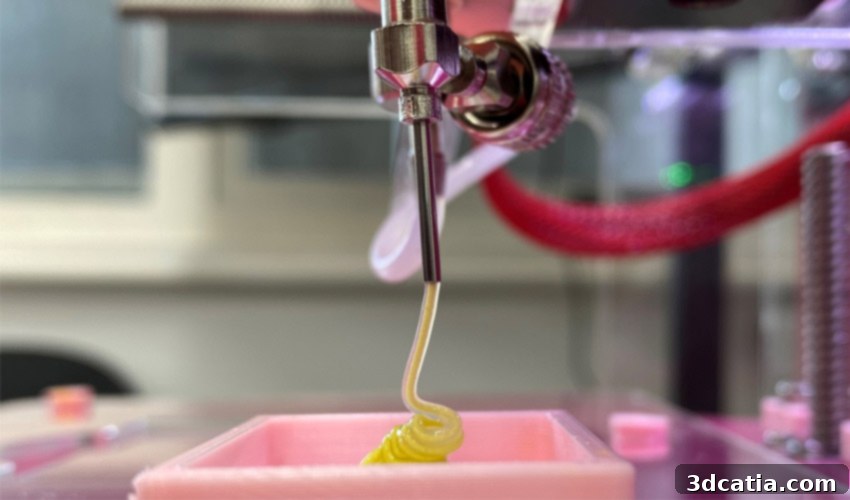
TissueLabs: Revolutionizing Bioprinting and Artificial Organ Creation for the Medical Sector
The medical landscape is being transformed by groundbreaking innovations, and among the most promising is the application of 3D printing in the medical sector. Within this transformative field, bioprinting stands out as a particularly exciting frontier. This advanced method involves creating intricate cellular structures using specialized bioinks formulated with stem cells, opening up a myriad of applications, from engineering synthetic skin and tissues to developing fully functional artificial organs. The urgency for such advancements cannot be overstated; in the United States alone, approximately 105,909 individuals are currently awaiting life-saving organ transplants, with a tragic average of 17 patients dying each day while on the waiting list. The potential for bioprinting to address this critical shortage by producing custom, artificial organs represents a beacon of hope for countless lives. While significant progress has been made, continuous research and development are vital. This is where TissueLabs, our esteemed 3D startup of the month, enters the spotlight. TissueLabs has garnered recognition for its remarkable innovations in bioprinting technology and the development of bioprinters specifically designed for creating artificial organs. To delve deeper into their pioneering work, we had the privilege of speaking with Gabriel Liguori, the visionary founder and CEO of TissueLabs, to understand the intricacies of their technology and their ambitious future goals.
Meet Gabriel Liguori: A Visionary at the Forefront of Bioprinting Innovation
“My name is Gabriel Liguori, and I am the founder and CEO of TissueLabs,” he begins, introducing himself with a clear sense of purpose. “My mission at TissueLabs is to lead the development of artificial organs in the lab, directly confronting the profound limitations that currently plague organ transplantation worldwide.” Dr. Liguori brings a formidable academic and professional background to this endeavor. He is a medical doctor with a Ph.D. in Cardiovascular Regenerative Medicine, coupled with specialized training in Thoracic and Cardiovascular Surgery. His exceptional contributions to the field have been widely recognized; in 2018, he was named to the prestigious Forbes 30 Under 30 list, and the MIT Technology Review nominated him as one of his generation’s most innovative young minds under 35. These accolades underscore his profound impact and leadership in the burgeoning field of regenerative medicine.
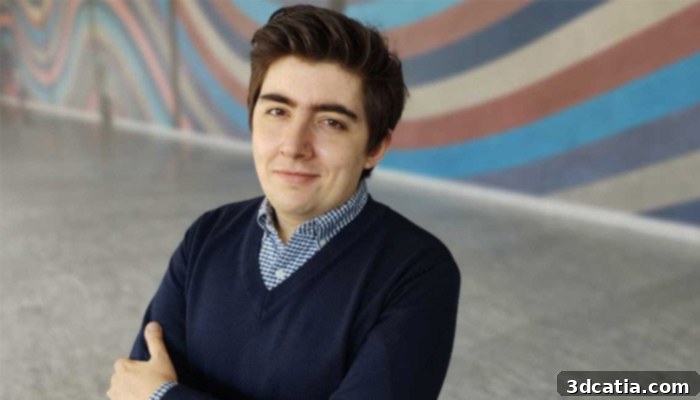
Gabriel Liguori, CEO and Founder of TissueLabs
Dr. Liguori’s journey into bioprinting began during his Ph.D. studies, a period that laid the foundational groundwork for his future innovations. Although his doctoral thesis initially concentrated on scaffold seeding techniques, his foresight led him to champion the acquisition of a 3D bioprinter for his lab. His goal was ambitious: to develop advanced tissue-engineered vascular grafts, a core area of his thesis focused on novel approaches to vascular tissue engineering. However, this initial foray into bioprinting was fraught with challenges. Following the bioprinter’s acquisition, the team encountered persistent issues with the system, hindering their progress. He completed his Ph.D. at the University of Groningen in the Netherlands without fully achieving his bioprinting objectives and subsequently relocated to Brazil. There, an opportunity arose to establish a new tissue engineering lab at the University of Sao Paulo. Driven by his unyielding vision, he decided to invest in a bioprinter from a different company, a direct competitor to his previous supplier. Regrettably, this second attempt also led to repeated disappointments and technical hurdles, reinforcing his growing frustration with the limitations of existing commercial solutions.
It was through a serendipitous turn of events that Dr. Liguori’s path truly converged with bioprinting innovation. While developing a project to rigorously test the resistance of the engineered blood vessels in his lab, he crossed paths with Emerson Moretto, who would soon become his invaluable business partner. Emerson, remarkably, had been developing his own bioprinter purely as a hobby, driven by a personal interest in advanced manufacturing. Upon witnessing Emerson’s creation, Dr. Liguori immediately recognized its profound potential. He realized that this homemade system, while simpler in design, was far more effective and precise for fabricating the delicate vascular grafts they desperately sought to create. This pivotal discovery led them to abandon the expensive, problematic commercial systems they had previously struggled with and wholeheartedly embrace Emerson’s ingenious printer. “It was life-changing!” Dr. Liguori recalls, emphasizing the profound impact this collaboration had on his research trajectory. This moment marked the true beginning of his impactful journey with 3D bioprinting, a testament to the power of innovation born from necessity, combined with an unwavering passion for solving complex biological challenges.
The Genesis of TissueLabs: A Personal Mission to Heal
The inception of TissueLabs is rooted in a deeply personal and profound dream shared by Gabriel Liguori: to engineer bioartificial hearts for transplantation. “I started TissueLabs because I have a dream: to create bioartificial hearts for transplantation!” he emphasizes, revealing the driving force behind his entrepreneurial spirit and the company’s core mission. His personal connection to this mission is poignant, as he was born with congenital heart disease and became intimately familiar with hospital environments from his first week of life. Fortuitously, despite facing a severe condition, he received timely and effective medical treatment, including open-heart surgery at the tender age of two, leading to a successful recovery. However, he is acutely aware that many children facing similar conditions are not as fortunate and often require a heart transplant. The grim reality is that finding a suitable donor organ for these vulnerable patients, especially within younger age groups, remains exceedingly difficult due to a severe scarcity of donors and the complexities of tissue matching, leading to heartbreaking outcomes for families.
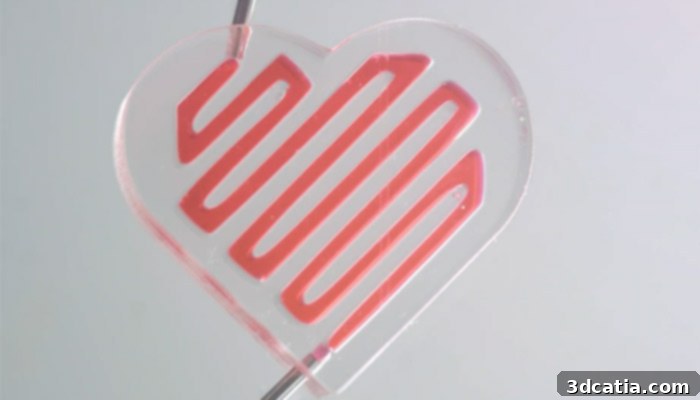
Photo credits: TissueLabs
Inspired by his childhood experiences and a profound desire to make a difference, Gabriel pursued a medical career, graduating in Medicine in 2014. Towards the end of medical school, he encountered the burgeoning field of tissue engineering, immediately grasping its immense potential to create bioartificial tissues and organs for future transplantation. This revelation prompted a pivotal decision: he paused his medical career to dedicate himself to a Ph.D. in this transformative field, recognizing it as a direct pathway to addressing the organ shortage crisis. Upon completing his Ph.D. in 2019, his involvement with tissue engineering had deepened to such an extent that he made the arduous choice to forego traditional medical practice. Instead, he committed himself entirely to research and development, driven by the singular goal of translating this revolutionary technology from the lab to patients. He understood that pursuing both simultaneously was untenable, and he feared that if he returned to clinical practice, his unique vision and concentrated drive for tissue engineering might not be sustained by others. Initially, he contemplated pursuing these goals within academia, which led him to establish a lab in Brazil. However, he quickly discerned that the objectives and incentives prevalent within university settings—often focused on theoretical research rather than rapid commercialization—were not aligned with the swift, impactful translation of science into practical applications that he envisioned. This realization solidified his conviction that a dedicated company was the optimal vehicle for his mission, leading directly to the founding of TissueLabs.
TissueLabs embarked on its journey in Brazil, but within a few short months of operation, the company strategically relocated its headquarters to Switzerland. This move proved to be prescient, as Switzerland offered an exceptionally conducive and unique environment specifically tailored for biotech startups, providing robust infrastructure, access to a highly skilled talent pool, and a strong, supportive regulatory framework. This strategic decision enabled TissueLabs to thrive and accelerate its development. Since establishing its presence in Switzerland, TissueLabs has experienced phenomenal growth, consistently doubling its customer base year after year. This sustained expansion is a testament to the effectiveness of their innovative products, the critical unmet need for advanced bioprinting solutions, and the growing demand for sophisticated tools in the global medical research community dedicated to regenerative medicine and artificial organ development.
TissueLabs’ Advanced Bioprinting Systems: Precision and Versatility
TissueLabs is proud to offer a comprehensive suite of bioprinting solutions designed to meet the diverse and evolving needs of researchers and innovators in regenerative medicine. “Sure! We currently have two state-of-the-art bioprinting systems,” Dr. Liguori explains, highlighting their dual approach to biofabrication that combines accessibility with cutting-edge performance. These include TissueStart™, an extrusion-based system known for its affordability, precision, and ease of use, and TissueRay™, an advanced stereolithography-based system that significantly pushes the boundaries of speed, resolution, and material versatility in bioprinting applications.
TissueStart™, TissueLabs’ inaugural product launched in 2020, was specifically engineered to empower scientists who are just beginning their exploration of biofabrication, offering an ideal entry point into this complex field. This system is distinguished by its unparalleled cost-benefit ratio in the market, making advanced bioprinting more accessible to a wider range of research institutions and budgets. Starting at just $7,999, it features a two-head piston-based extrusion system, which offers significantly finer and more consistent control over bioink extrusion compared to conventional pneumatic systems. A crucial advantage of TissueStart™ is its innovative suck-back capability. This feature ensures remarkably precise start and finish points during printing, effectively minimizing bioink waste and preventing over-extrusion – common issues that can compromise print quality, material efficiency, and cellular viability. Designed for maximum convenience, TissueStart™ is remarkably compact and user-friendly, weighing only approximately 4 kg (about 9 pounds), making it easy to integrate into any lab space. Notably, it operates without the need for cumbersome air compressors, simplifying setup and reducing operational noise. Further enhancing its capabilities is a unique, proprietary extrusion system named Mixtrusor™, which allows for the seamless combination of different bioinks within a single print. This enables researchers to create more complex and heterogeneous 3D tissues with intricate designs and multi-material compositions. Built from durable plexiglass, the system offers high resistance, long-lasting durability, and effortless cleaning, ensuring a reliable and efficient research tool for years to come.
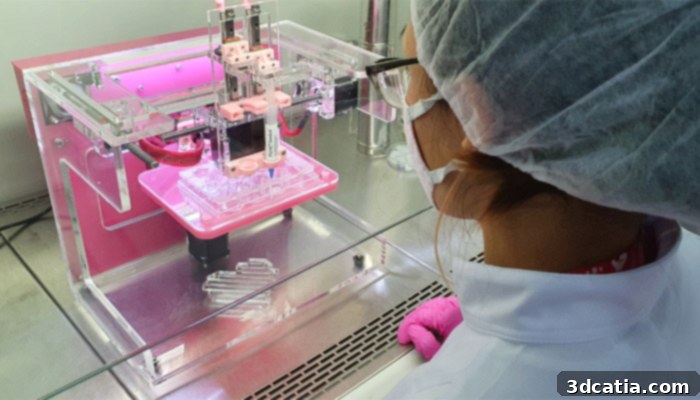
The TissueStart bioprinter developed by TissueLabs, showcasing its innovative design
Following the success of TissueStart™, TissueLabs introduced the groundbreaking TissueRay™ at the end of 2021. This system represents a significant leap forward as the market’s first masked stereolithography (MSLA) 3D bioprinter, harnessing the speed of light to revolutionize 3D bioprinting and accelerate complex biofabrication processes. TissueRay™ delivers an exceptional combination of high resolution and throughput, boasting a 4K screen that provides a remarkable 35 μm dot pitch (theoretical XY resolution) and an impressive 10 μm motor-driven Z-precision. This level of detail is crucial for mimicking the intricate microenvironments of biological tissues. Depending on the specific material being used, it can achieve astonishing print speeds as fast as 1 second per layer, dramatically accelerating experimental workflows and enabling high-throughput research. It features a generous 193 cm3 build volume with a 6×6 cm circular base, accommodating a wide range of construct sizes and geometries. A particularly innovative aspect of TissueRay™ is its high degree of customization to client needs. Recognizing that different researchers work with various photoinitiators, which necessitates different standard wavelengths for optimal crosslinking, TissueLabs offers bespoke options. For instance, clients working with ruthenium-based photoinitiators can opt for a 420 nm wavelength light source, while those using eosin-based systems can choose 530 nm, among other possibilities. This wavelength flexibility ensures optimal polymerization kinetics for diverse bioink formulations, greatly expanding the range of compatible biomaterials. The TissueRay™ light-based system is ideal for creating sophisticated microfluidic devices, organs-on-chips, complex cell-laden constructs, and intricate scaffolds essential for cutting-edge tissue engineering and regenerative medicine applications. This advanced system is available starting at an accessible price of just $15,999, making high-speed, high-resolution bioprinting attainable for leading research labs.
Beyond their revolutionary bioprinters, TissueLabs also provides a comprehensive range of high-quality biomaterials. These materials are suitable not only for use with their advanced bioprinters but also for researchers conducting more conventional 3D cell culture experiments, whether they possess a bioprinter or not. This broad applicability ensures that TissueLabs supports the entire spectrum of tissue engineering research. In addition to a selection of generic biomaterials—such as alginate, GelMA, and pluronics, which are widely used in biofabrication—TissueLabs offers an innovative line of tissue-specific hydrogels, meticulously developed for 15 different tissue types. These include Adipose, Bone, Brain, Cartilage, Colon, Kidney, Liver, Lung, Muscle, Myocardium, Pancreas, Skin, Spleen, Stomach, and Vascular tissues. Collectively known as MatriXpec™, these hydrogels are designed to provide highly representative tissue-specific microenvironments for 3D cell culture. By precisely mimicking the biological cues, physiochemical properties, and stiffness of the native extracellular matrix, MatriXpec™ hydrogels enable more accurate and biologically relevant experimental models, improving the predictability of research outcomes. They are available in two versatile versions: one thermo-crosslinkable and another photo-crosslinkable, catering to the varying methodological needs and experimental setups of the diverse research community, ensuring compatibility with different cell types and experimental designs.
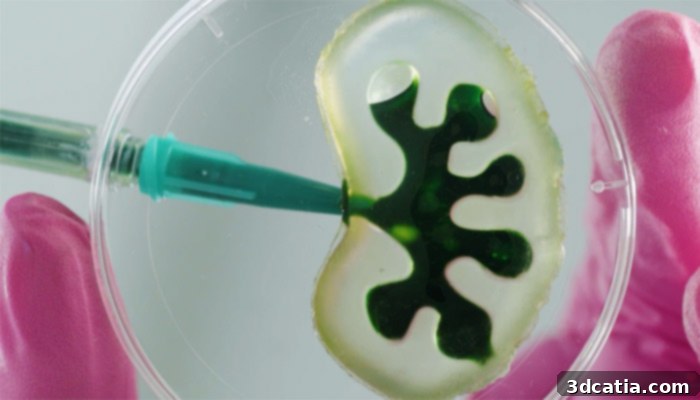
Photo credits: TissueLabs
Transformative Applications: Pushing the Boundaries of Biomedical Research
“That’s a great question because we see researchers doing things we could never imagine when we developed our systems and biomaterials,” Dr. Liguori enthuses, highlighting the incredible creativity and ingenuity of their global user base. With over a hundred labs utilizing TissueLabs’ products across 20 different countries, the scope of innovation is vast and rapidly expanding, demonstrating the versatility and power of their bioprinting platforms. The applications span a remarkable range of biomedical research, each holding immense potential for advancing scientific understanding and developing future therapies.
To illustrate the breadth of their impact, here are just a few examples of the groundbreaking work being conducted with TissueLabs’ bioprinters and biomaterials: Researchers are actively 3D printing self-oxygenating materials, a critical advancement for fabricating viable microtissues that can sustain themselves for longer periods in vitro, opening possibilities for more complex organoid models. Others are creating intricate cartilage tissue models to delve into the complex mechanisms of tendinosis, potentially leading to new diagnostic tools and treatments for this debilitating condition affecting millions. Innovative teams are developing sophisticated mini-intestines, providing invaluable platforms for studying nutrient absorption, drug permeability, and the progression of colorectal cancer outside the human body, reducing reliance on animal models. Similarly, researchers are meticulously reproducing the alveoli microenvironment in vitro to gain deeper insights into lung cancer development and potential therapeutic interventions, aiding in precision medicine. In cardiac research, scientists are bioprinting cardiac cells to precisely study their behavior and responses under various mechanical stimuli, offering new avenues for understanding heart function, disease pathogenesis, and developing regenerative therapies for myocardial infarction. Furthermore, the technology is being leveraged to engineer advanced skin models, serving as ethical and effective replacements for traditional animal models in dermatological research, wound healing studies, and toxicology testing, accelerating product development. Scientists are fabricating pancreatic tissue to investigate diabetes mechanisms, test new drug candidates, and potentially develop personalized insulin-producing constructs, while others are developing novel strategies for the regeneration of oral and dental tissue, as well as addressing congenital and acquired bone defects through advanced tissue engineering approaches. The applications are truly limitless, bounded only by the ingenuity and creativity of the end-users who are pushing the frontiers of what is possible in regenerative medicine and tissue engineering. TissueLabs’ commitment to providing versatile and high-performance tools empowers this global community of scientists to achieve previously unimaginable breakthroughs and accelerate the translation of research into clinical practice.
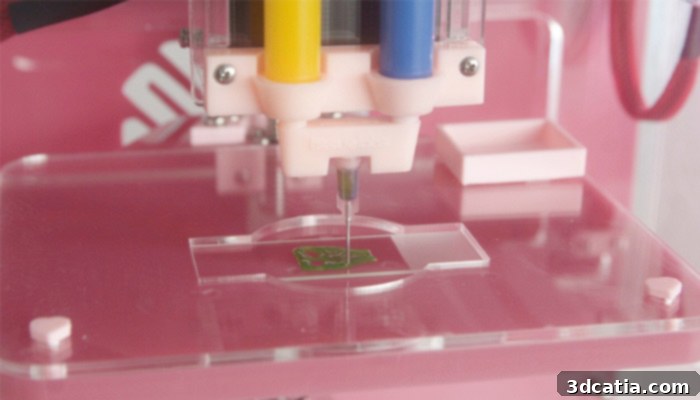
Photo Credits: TissueLabs – Examples of advanced bioprinted constructs
The Future of Bioprinting: A Horizon of Uncharted Innovation
When contemplating the trajectory of bioprinting within the medical sector, Dr. Liguori articulates a vision of profound and rapid transformation. “I believe a lot will change,” he states, acknowledging that the current technologies, while foundational and incredibly promising, are merely stepping stones towards the ultimate goal of fabricating fully functional bioartificial organs that can integrate seamlessly into the human body. He firmly asserts that bioprinting is still very much in its infancy, with an immense amount of unexplored potential and future developments yet to unfold, comparing its current state to the early days of personal computing. Innovation, he stresses, is the paramount driving factor in this dynamic field. There is such a vast landscape of scientific and technological advancements awaiting discovery and refinement that it becomes challenging to fully conceptualize the future if one remains tethered solely to the solutions available today. Dr. Liguori anticipates a future where “we will probably see new systems using technologies that have not even been invented yet!” This forward-thinking perspective underscores TissueLabs’ commitment not just to participate in the evolution of bioprinting but to actively shape it through continuous research and development. “TissueLabs will make sure to be at the forefront of such developments,” he pledges, positioning his company as a key architect of the next generation of regenerative medicine, ready to adapt and lead with breakthrough solutions.
Connect with TissueLabs: Your Partner in Regenerative Research
In a concluding gesture that reflects his unwavering dedication to the scientific community and TissueLabs’ user-centric philosophy, Dr. Liguori extends a personal invitation: “I’d like to offer my own time to listen to the readers’ needs and understand how we can continue improving our systems and biomaterials to allow them to create tissues and organs in their labs either for biomedical research or future clinical applications.” This commitment to direct engagement highlights TissueLabs’ transparent and collaborative approach, recognizing that the best innovations often arise from close interaction with the end-users. Researchers, innovators, and anyone with inquiries, feedback, or ideas are encouraged to write to in**@********bs.com, and Dr. Liguori assures a personal response. This open dialogue is crucial for fostering robust collaboration, driving continuous product improvement, and ensuring TissueLabs’ products continue to evolve in tandem with the cutting-edge requirements and ambitious goals of biomedical research globally.
We invite you to share your valuable thoughts on TissueLabs’ pioneering work and the profound impact of these advancements in bioprinting. What are your perspectives on the future of regenerative medicine, and how do you envision these technologies shaping healthcare? Let us know in a comment below or join the conversation on our LinkedIn, Facebook, and Twitter pages! Don’t forget to sign up for our free weekly Newsletter here to receive the latest 3D printing news straight to your inbox! You can also explore all our insightful videos and interviews on our YouTube channel, where we continually cover the most exciting developments in the additive manufacturing industry.