
Revolutionizing Radiance: The Transformative Power of 3D Printing in the Beauty and Cosmetics Industry
The rapid advancements in additive manufacturing and 3D technologies are reshaping virtually every industry, offering unprecedented opportunities for innovation and efficiency. While sectors like automotive and aerospace have long leveraged these capabilities, the beauty and cosmetics industry has recently emerged as a significant adopter, embracing 3D printing for a multitude of compelling reasons. At the forefront of this transformation is the profound increase in product customizability. Imagine cosmetics tailored precisely to an individual’s unique skin type, facial structure, or specific preferences, often achieved through advanced 3D scanning techniques. This level of personalization goes far beyond traditional mass-produced offerings, promising a truly bespoke beauty experience. Beyond individual product formulation, major beauty brands are also utilizing additive manufacturing to champion ethical production, creating “cruelty-free” items, and to develop more sustainable, lightweight, and aesthetically optimized packaging solutions. This convergence of technology and beauty is not just a passing trend; it represents a fundamental shift in how products are conceived, produced, and consumed. To delve deeper into this fascinating evolution, we will explore some of the most innovative and impactful 3D printed cosmetics projects and applications, shedding light on the cutting-edge trends that are defining the future of beauty.
Innovating Beauty Products with 3D Printing Technology
The integration of 3D printing into the development and manufacturing of beauty products is unlocking new possibilities, from novel formulations to unique user experiences. This section highlights how various companies are leveraging this technology to redefine cosmetic offerings.
3D Printing at LUSH: Crafting Custom Creations
LUSH, a globally recognized brand renowned for its commitment to natural, plant-based cosmetics, including body creams, soaps, and bath bombs, has successfully integrated 3D printing into its operational framework. With a widespread network of boutiques worldwide, LUSH has carved out a significant niche in the ethical beauty market. Several years ago, the company made a strategic investment in 3D printing technology, primarily to enhance its Research & Development processes. This investment has allowed LUSH to rapidly prototype and iterate designs for molds, tooling, and even unique finished products. A compelling example of their application of 3D printing was during a campaign in 2020 to support wildlife victims of the devastating Australian bushfires. LUSH utilized 3D printers to design intricate koala-shaped molds, enabling the mass production of special edition soaps, with proceeds contributing to a vital cause. This demonstrates how 3D printing supports not only product innovation but also reinforces a brand’s core values and social responsibility initiatives. Among the advanced 3D printers in LUSH’s arsenal, Formlabs machines are notably utilized for their precision and versatility, allowing for complex geometries and efficient production of prototypes and specialized tools.
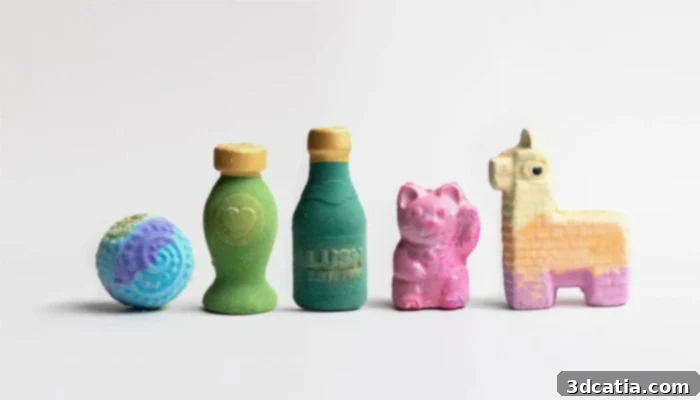
Photo credits: LUSH Cosmetics
3D Printed Nails by Mani.me: Precision and Personalization
The traditional process of painting one’s nails can often be a frustrating, time-consuming endeavor, fraught with the potential for smudges and imperfections. Moreover, off-the-shelf fake nails frequently fail to provide a comfortable or perfectly sized fit, leading to dissatisfaction. This is precisely where Mani.me offers an ingenious solution, revolutionizing the nail care experience with tailor-fitted, custom 3D printable nails. Mani.me’s groundbreaking procedure leverages cutting-edge technology to create a set of unique nails for each customer, precisely engineered based on measurements and data derived from images customers submit of their hands. By analyzing these digital photographs, the company generates a precise 3D model that accurately determines the exact size and optimal shape required for each individual nail. Following this meticulous sizing process, clients can select their desired design, which is then intricately 3D printed onto the custom-fitted nail sets and delivered directly to their doorstep. This innovative approach provides unparalleled freedom of choice and eliminates the common limitations associated with standard nail painting or generic false nails, offering a flawless, fashionable, and comfortable solution. It’s clear that the future of personal grooming is here, and your next perfect manicure might just be arriving courtesy of a 3D printer!
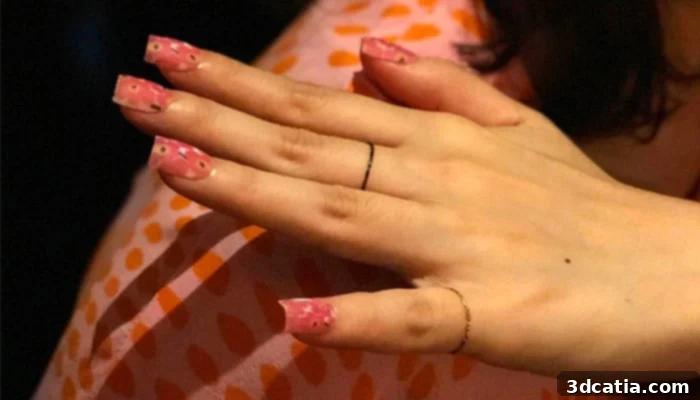
Photo credits: Mani.me
3D Printed Mascara: The Art of the Brush
Among the most remarkable and successful applications of 3D printing in cosmetics is the creation of mascara brushes. A pivotal moment occurred in 2017 when luxury brand Chanel unveiled its groundbreaking Le Volume Révolution mascara, featuring a brush intricately 3D printed using Selective Laser Sintering (SLS) technology. What made this innovation truly revolutionary was the brush’s uniquely shaped geometry, which proved impossible to replicate using conventional manufacturing methods. This highly complex design was the culmination of extensive research and development, involving the study and testing of over a hundred prototypes. Chanel’s venture marked the very first mass production of a 3D printed cosmetic product component on this scale, fundamentally opening new avenues for design and functionality within the cosmetics world. The advanced manufacturing expertise behind this creation was provided by Erpro Factory 3D, a company that subsequently managed a similar project for the Albéa brand. Albéa’s innovative service, “Make 3D yours,” empowers brands to create fully customized mascara brushes, offering an incredible turnaround of up to ten different shapes within a single week. This capability provides customers with a truly unique and tailored product experience, enabled by the precision and design freedom inherent in 3D printed cosmetics. The intricate structures and varied bristle patterns achievable through 3D printing allow for unparalleled precision in mascara application, delivering enhanced volume, length, and separation that traditional brushes simply cannot match.
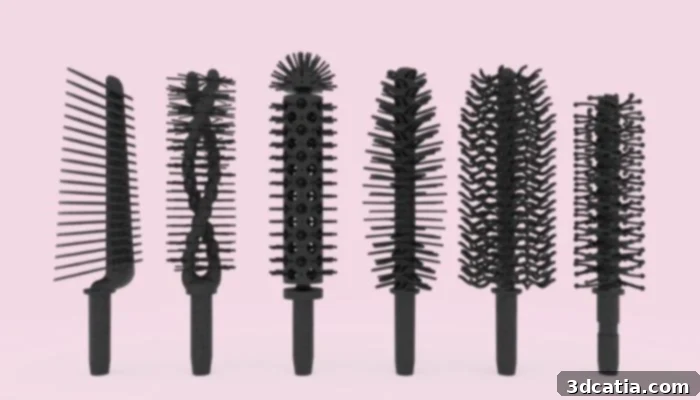
Photo credits: Albéa
Mink Beauty – The Mink Printer: Makeup at Your Fingertips
In 2014, visionary Harvard graduate Grace Choi founded Mink Beauty with a revolutionary concept: a compact 3D printer capable of producing makeup on demand. The company’s flagship product, aptly named the Mink Printer, simplifies makeup creation to an unprecedented degree. Its operation is remarkably straightforward: users simply select any image from the internet, whether it’s a vibrant sunset, a favorite painting, or a fashion trend, and press “print.” The Mink Printer then precisely translates the chosen image into a palette of eye shadows, printing the colors directly onto a specialized makeup sheet. As the image is printed, users can effortlessly sweep their makeup brush across the printed colors, instantly creating custom eyeshadows that perfectly match their chosen hues. This innovative small-scale printer is ingeniously designed for portability, making it an ideal companion for beauty enthusiasts on the go. Weighing very little and boasting incredibly fast printing speeds – capable of reproducing over a million colors per second – the Mink Printer is a marvel of personal technology. All that’s required for operation is a Wi-Fi connection and the intuitive Mink mobile application. This device not only offers unparalleled creative freedom and personalization but also represents a significant disruption to the traditional makeup market, allowing consumers to replicate virtually any color or shade they desire with incredible ease and speed. It truly is an amazing leap forward in personalized beauty.
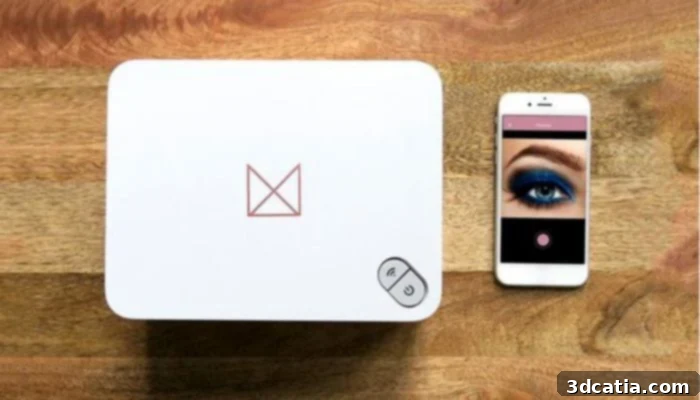
Photo credits: Mink Beauty
Revolutionizing Skincare Through 3D Printing
Beyond makeup, 3D printing is making significant strides in the skincare segment, offering hyper-personalized solutions that address individual needs with unprecedented precision. This section explores how additive manufacturing is transforming skincare routines.
Neutrogena Uses 3D Printing in Several Forms for Personalized Skincare
Neutrogena, a prominent American leader in the beauty sector, dedicated to developing advanced cosmetic and personal care products, has been at the forefront of integrating cutting-edge technologies into its operations. Their journey with additive manufacturing began with the launch of Neutrogena Skin360, an innovative system designed to analyze a user’s skin comprehensively. By leveraging advanced analytical tools, Skin360 identifies specific skin needs and concerns, subsequently enabling the creation of “MaskIDs.” These are custom 3D printed facial masks meticulously designed to adapt perfectly to each user’s unique facial contours and targeted requirements, delivering personalized active ingredients precisely where they are needed most. Building on this success, Neutrogena further expanded its use of 3D printing through a collaboration with Nourished, resulting in the creation of Skin360 SKINSTACKS. These are revolutionary 3D printed nutritional supplements specifically formulated for skin care. Each SKINSTACK is crafted to be vegan, sugar-free, and features an intricate seven-layer structure, allowing for deep customization to address an individual’s distinct dietary and skin health needs. This multi-layered approach ensures optimal delivery and absorption of beneficial ingredients. Neutrogena’s continuous exploration of additive manufacturing’s potential in this field signals a promising future for highly personalized and effective skincare solutions, moving beyond one-size-fits-all approaches towards truly individualized regimens.
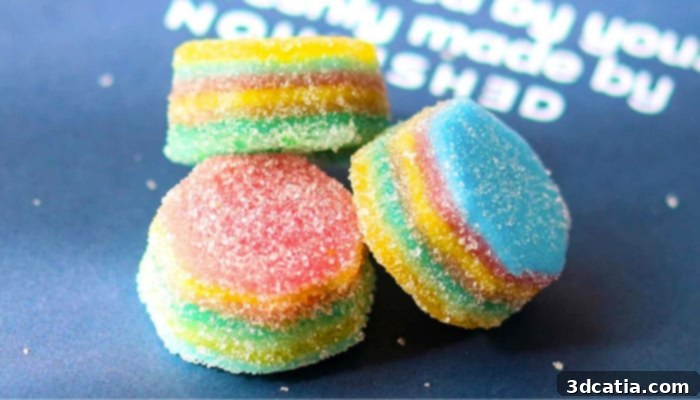
SKINSTACK 3D printed supplements (Photo credits: Neutrogena)
BASF’s Customized Masks and Eye Patches: Targeted Solutions
A significant and growing trend within the beauty industry is a shift away from simply masking imperfections towards developing products that directly address and resolve specific skin concerns. Consumers are increasingly seeking solutions for issues such as acne, wrinkles, dark circles, and redness. Recognizing that every individual’s skin is unique, requiring personalized care, BASF, a global chemical company, formed a strategic partnership with Natural Machines in 2021. Their collaborative goal was to develop advanced technology for creating 3D printed customized face masks and eye patches. This ambitious project aimed to combine Natural Machines’ innovative 3D printing capabilities, particularly their Foodini printer known for its precision in depositing materials, with BASF’s specialized cosmetic ingredients. The synergy would allow for the production of masks that are not only adaptable to individual face sizes and contours but can also incorporate different beneficial ingredients in specific zones of the mask. For example, a mask could target anti-aging compounds around the eyes, hydrating elements on the cheeks, and blemish control on the forehead, all within a single application. This represents a truly unique and highly advanced application of 3D printing in the beauty sector, promising unprecedented levels of targeted skincare. While the technology was initially anticipated to launch in the market in 2022, the beauty industry eagerly awaits further updates on this pioneering development, which holds the potential to redefine personalized skincare routines.
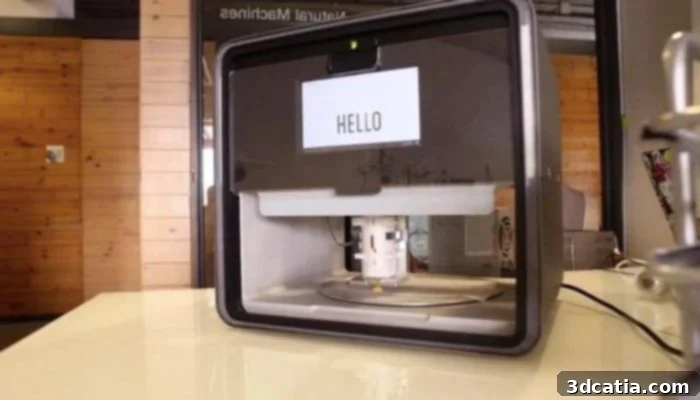
The 3D printed masks are expected to be created with a solution based upon Natural Machine’s Foodini 3D printer (pictured above) (photo credits: Natural Machines)
Dior and 3D Skincare Technology: Luxury Meets Precision
Among the elite tier of luxury brands embracing advanced technologies, Dior stands out with its innovative approach to skincare analysis. The iconic French fashion and beauty house has taken a significant leap forward in artificial intelligence (AI) powered skin analysis technology, establishing a state-of-the-art facility in Paris. Leveraging its extensive expertise in dermatology and neuroscience, Dior has developed sophisticated tools capable of more accurately identifying even the most minor skin imperfections and, crucially, understanding their underlying causes. This profound diagnostic capability allows Dior to provide customers with highly precise and personalized product recommendations, perfectly tailored to their individual needs and concerns. In line with Christian Dior’s enduring vision of empowering women to feel happier and more beautiful, the fashion house unveiled the Dior AI Skin Analyzer. This revolutionary process employs advanced 3D scanners to meticulously analyze six key dimensions of the skin, generating a comprehensive profile. Subsequently, the AI system processes this data to offer intelligent, science-backed solutions specifically targeting the two primary skin problems detected. This fusion of AI and 3D scanning technology represents a significant breakthrough in global skincare, elevating the standard for personalized beauty regimens and ensuring that every recommendation is rooted in deep, scientific understanding of individual skin health.
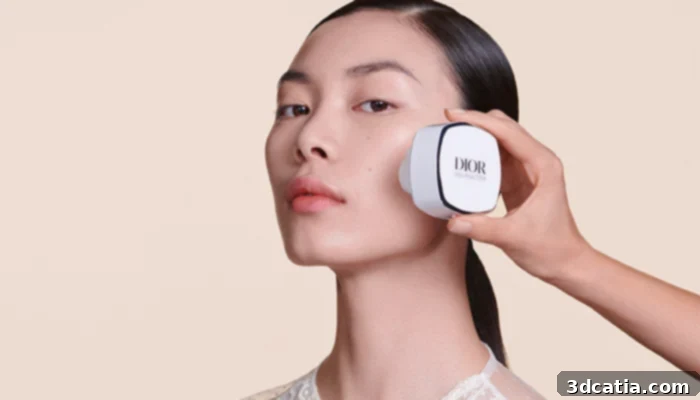
The AI Skin Analyzer uses 3D scanning technology. (Photo credits: Dior)
Using 3D Bioprinting to Improve Skincare Products and Ethics
One of the most ethically significant and scientifically advanced applications of 3D printing in cosmetics is the bioprinting of human skin models. This innovative technique allows for the precise testing of products and the development of highly customized skincare solutions without resorting to animal testing. Pioneering this frontier once again is Chanel, which, in collaboration with the French biotech company Labskin Creations, successfully reproduced human skin using advanced cell culture and 3D bioprinting techniques. This breakthrough enabled Chanel to more effectively study skin imperfections in a realistic human model and, consequently, create more efficacious skincare products. Labskin Creations has also extended its expertise to a similar innovative project with the JALA Group, one of China’s leading cosmetic companies. In this collaboration, bioprinting technology was employed to construct the first Asian skin model, facilitating the development and testing of products specifically tailored for Asian women’s unique skin characteristics. It is crucial to highlight that this type of technology offers dual benefits: not only does it lead to the creation of more effective and targeted products based on accurate human biological responses, but it also completely eradicates the need for controversial and often cruel animal testing, aligning with growing consumer demand for ethical and cruelty-free beauty solutions. This represents a paradigm shift towards more humane and scientifically rigorous product development.
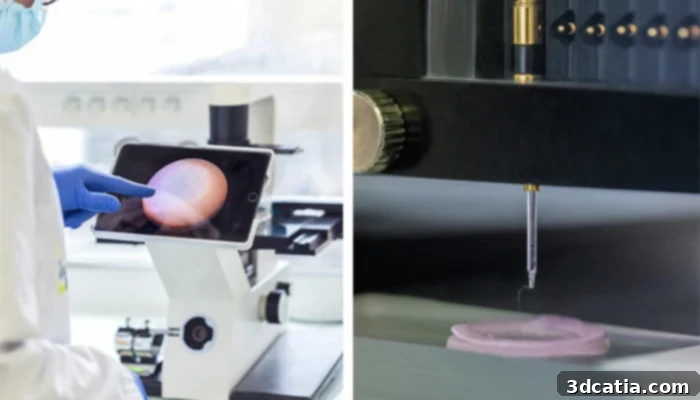
Photo credits: Labskin Creations
Exploring the Uses of 3D Printed Packaging in Beauty
Beyond the products themselves, 3D printing is significantly impacting the aesthetics, functionality, and sustainability of cosmetic packaging, offering brands unprecedented design freedom and environmental advantages.
L’Oréal and its 3D Printed Packaging for Cosmetics: A Legacy of Innovation
When discussing the global cosmetics industry, it is impossible to overlook L’Oréal, a veritable powerhouse known for its expansive influence across perfumes, makeup, and skincare. What many might not realize is L’Oréal’s pioneering role in adopting additive manufacturing. The French conglomerate has been utilizing 3D printing since as early as 1993, initially for rapid prototyping, developing intricate tools, and creating molds for its diverse packaging requirements. This early adoption demonstrates a long-term commitment to leveraging advanced technologies. In 2019, L’Oréal took a significant leap by introducing its very first directly 3D printed packaging for the La Maison Jasmins Marzipane Lancôme collection, an exclusive, limited series of just 50 ultra-luxury perfumes. This bespoke packaging showcased the intricate designs and premium finish achievable through additive manufacturing, elevating the product’s exclusivity. L’Oréal’s journey with 3D printing has only continued to evolve, exemplified by its 2021 partnership with HP. This collaboration aimed to expand its packaging production capabilities, specifically focusing on the creation of adjustable ‘pucks’ – specialized fixtures used in automated assembly lines – manufactured through HP’s dedicated Digital Manufacturing Network. These 3D printed pucks offer unparalleled flexibility and efficiency in handling diverse product shapes and sizes on a single production line, optimizing manufacturing processes. This ongoing investment highlights L’Oréal’s strategic vision to integrate 3D printing not just for luxury items but also for enhancing the agility and sustainability of its wider production ecosystem.
MAMEHA and Sustainable Packaging: A Greener Approach to Beauty
In today’s global landscape, environmental awareness and sustainability have become paramount values across all industries, driving many innovative companies to forge new paths towards a healthier planet. Japanese startup MAMEHA exemplifies this commitment by integrating sustainability directly into the beauty sector with their ambitious goal of achieving zero-waste through 100% recyclable containers. Their distinctively minimalist packaging is expertly 3D printed, utilizing a carefully selected blend of four building materials to create a robust polymer container complemented by a precision glass pipette. The results of this innovative approach are remarkable: MAMEHA containers use an impressive 80% less glass compared to standard cosmetic containers, significantly reducing their environmental footprint. Furthermore, these elegantly designed, UV-protected bottles are engineered to keep their contents safer and preserve product efficacy for extended periods. Crucially, they are also designed for easy disassembly by hand, facilitating proper recycling and contributing to a circular economy. Therefore, the next time you are seeking stylish yet ethical packaging for your serums, toners, or other cherished skincare products, consider the thoughtful and responsible approach championed by MAMEHA. Discover the true beauty that lies not only in the product but also in the conscious choices made for our planet, reflected in the hands of the mindful consumer.
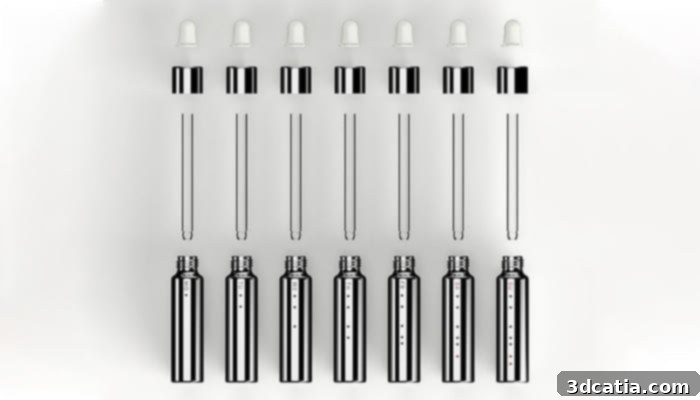
Photo credits: MAMEHA
Viktor & Rolf: Flowerbomb – A Luxurious Tribute to Design
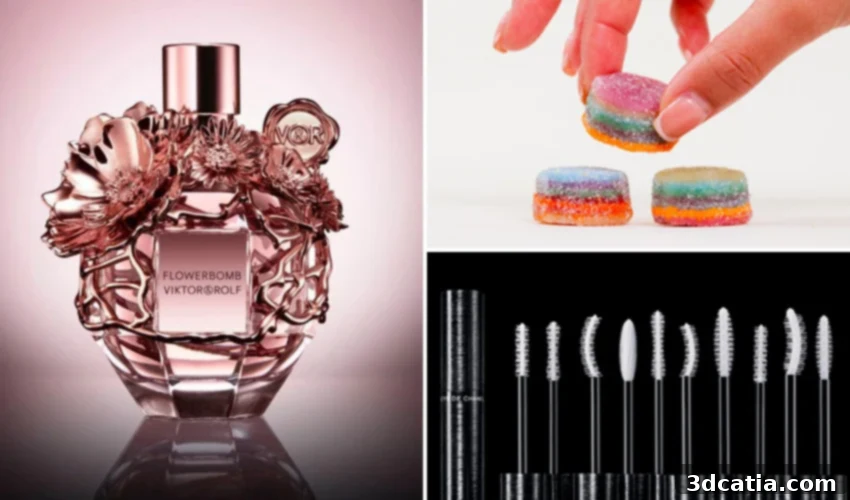
Viktor & Rolf, the renowned fashion and perfumery house established in 1993, has consistently captivated audiences with its glamorous and distinctively luxurious collections. Among their most iconic creations, “Flowerbomb” has reigned as a bestseller for years, achieving a household name status within the fragrance world. To commemorate its unparalleled success and enduring popularity, fifteen years after its initial launch, the brand decided to create an extraordinary tribute: an exclusive, limited-edition version of the Flowerbomb fragrance. However, the intricate blueprints for this celebratory packaging presented a formidable challenge, proving impossible to manufacture using conventional methods. This necessitated a turn towards cutting-edge technologies. The creation of these exquisite vessels was accomplished through a collaborative effort with L’Oréal, utilizing advanced 3D printing machines from Carbon, a leader in additive manufacturing. This partnership resulted in the production of just fifteen exclusive units. Each piece for these highly coveted bottles was meticulously 3D printed in resin, then painstakingly polished by hand, carefully assembled, and finally adorned with a lustrous rose gold plating. With a staggering final price tag of $2,500 per unit, these bottles represent a masterful fusion of new technologies and traditional artisanal craftsmanship. This innovative project is not an isolated incident in the realm of high-end, 3D printed perfume bottles; back in 2020, Formula 1 also released three limited-edition bottles crafted with 3D printing methods, with the most astonishing aspect being their price – no less than $10,000 per bottle! These examples underscore the immense potential of 3D printing to create truly unique, ultra-luxury packaging that pushes the boundaries of design and exclusivity.
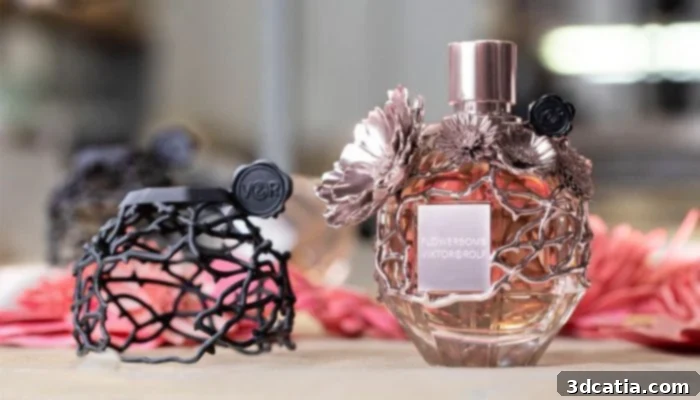
Photo credits: Viktor & Rolf
Cosmogen’s Additive Manufacturing Connection: Precision Applicators
Cosmogen, a leading French company specializing in the development of innovative packaging solutions for the cosmetics sector, has recently embraced 3D metal printing to revolutionize its cream applicators. This strategic adoption of additive manufacturing has enabled Cosmogen to design and produce applicators with far more varied and complex geometries than previously possible with traditional manufacturing methods. Thanks to the unparalleled design freedom offered by 3D technology, the company can now conceptualize and create intricate shapes that are specifically optimized for enhanced application of skincare products around delicate areas such as the eyes or lips. These precisely engineered applicators can offer unique benefits, like cooling effects, ergonomic comfort, or targeted massage, improving both product efficacy and user experience. Furthermore, the inherent flexibility of additive manufacturing allows Cosmogen to efficiently adjust their production volumes according to fluctuating market demands, significantly reducing lead times and minimizing waste. While the specific metal 3D printing process employed by the company is not publicly disclosed, it is known that Cosmogen is actively collaborating with a specialized partner to push the boundaries of applicator design and manufacturing. This collaboration underscores the increasing trend of specialized partnerships in additive manufacturing to bring highly advanced and customized solutions to the beauty industry.
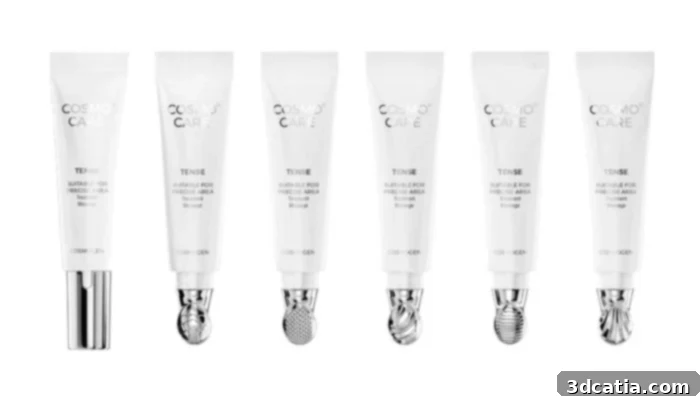
Photo credits: Cosmogen
From hyper-personalized skincare to sustainable packaging and cruelty-free product development, 3D printing is rapidly redefining the landscape of the beauty and cosmetics industry. The examples highlighted above clearly demonstrate the versatility and transformative potential of additive manufacturing, driving innovation in customization, ethical production, and environmental responsibility. As technology continues to evolve, we can anticipate even more groundbreaking applications, further blurring the lines between science, art, and personal care. The future of beauty is undoubtedly taking shape, one 3D printed layer at a time. Which of these innovative 3D printed cosmetics applications or products did you find most intriguing? Share your thoughts with us in a comment below or connect with us on our LinkedIn, Facebook, and Twitter pages! Don’t miss out on the latest advancements in additive manufacturing – be sure to sign up for our free weekly Newsletter here, delivering the freshest 3D printing news straight to your inbox! You can also explore all our insightful videos on our dedicated YouTube channel.