
Unlocking Innovation: A Deep Dive into the Top 5 3D Printing and Manufacturing Breakthroughs
Welcome to our exploration of the week’s most compelling advancements in the world of 3D printing and modern manufacturing. This week, we delve into a fascinating array of technologies and inspiring stories that highlight the transformative power of additive manufacturing. From a revolutionary 3-in-1 machine designed to empower creators, to the critical role of 3D printing in the highly demanding aerospace and automotive industries, we cover innovations poised to redefine how we design, prototype, and produce. We’ll also meet the visionary designers and companies pushing the boundaries of what’s possible, showcasing how technologies like Fused Deposition Modeling (FDM) are accelerating development cycles for complex projects, including the next generation of electric vehicles. Prepare to be inspired by the ingenuity and potential of these cutting-edge applications. Let’s dive in and discover the future of fabrication!
Top 1: Snapmaker 2.0 – The Ultimate 3-in-1 Manufacturing Machine
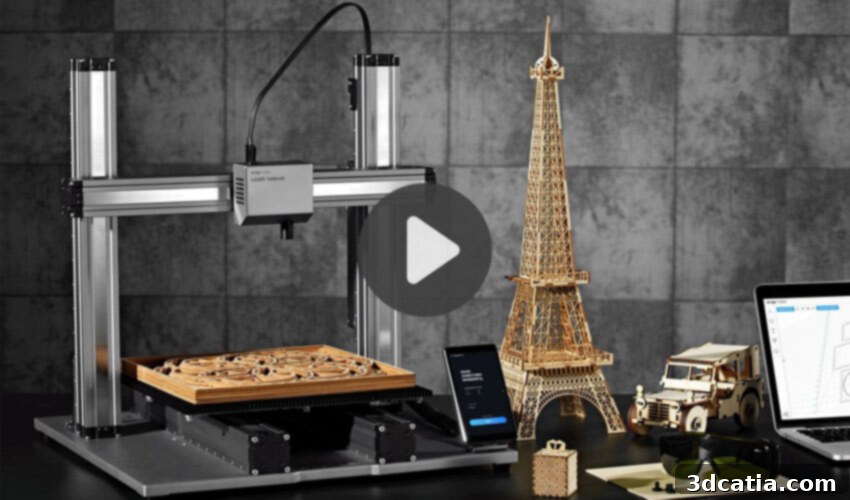
The journey of Snapmaker began in 2017 with a groundbreaking concept: a single machine integrating 3D printing, laser engraving, and CNC carving capabilities, all offered at an accessible price point. This innovative approach resonated deeply with makers and small businesses alike, seeking versatility without prohibitive costs. Building on this initial success, Snapmaker introduced the Snapmaker 2.0, a significantly enhanced and highly modular machine that further expands creative horizons. With an impressive build volume of 320 x 350 x 330 mm, it caters to a wider range of project sizes and complexities.
The Snapmaker 2.0 truly stands out due to its multi-functionality, making it an indispensable tool for hobbyists, educators, and professionals. The 3D printing module supports popular materials such as PLA, ABS, TPU, and PETG, allowing users to produce everything from intricate prototypes to durable functional parts. Its laser engraving and cutting capabilities open up avenues for detailed artistic projects, custom signage, or precise material shaping on wood, leather, acrylic, and paper. Furthermore, the CNC carving module provides the power to mill and sculpt designs from tougher materials like wood, acrylic, and even soft metals, enabling the creation of custom circuit boards, molds, or relief carvings with high precision. This modular design not only saves space and cost but also encourages users to explore diverse manufacturing methods within a single, integrated ecosystem. The Snapmaker 2.0 is more than just a tool; it’s a gateway to limitless creation, providing the flexibility needed to bring complex, multi-faceted projects to life. Discover the machine’s capabilities in action below:
Top 2: An Inspiring Journey with Rapid Application Group (RAG)
In a testament to entrepreneurial spirit and the transformative power of additive manufacturing, we turn our attention to Rapid Application Group (RAG). RAG is distinguished as the sole disabled veteran-owned, full-production 3D printing company in North America, embodying resilience, dedication, and a commitment to innovation. Their journey began just three years ago with a modest investment of $1,000, a simple napkin sketch outlining their vision, and a home office. From these humble origins, RAG has achieved remarkable growth, rapidly ascending to become a leading force in the additive manufacturing industry.
RAG offers a comprehensive suite of services that leverage the full potential of modern manufacturing technologies. Their expertise extends to critical areas such as reverse engineering, allowing them to recreate or improve existing parts with precision. They excel in 3D CAD modeling, providing robust digital designs essential for product development, and specialize in sophisticated tool design and fixture design. These services are vital for optimizing manufacturing processes, ensuring accuracy, and enhancing quality control. RAG’s rapid expansion is not merely a business success story; it’s an inspiring narrative of how passion, coupled with strategic application of 3D printing technologies, can overcome significant obstacles and foster a thriving enterprise. Their commitment to excellence and their inspiring foundation as a veteran-owned business make RAG a true beacon in the additive manufacturing landscape. Learn more about their incredible story and achievements in the video below:
Top 3: Philipp Aduatz and Incremental3D – Pushing the Boundaries of 3D Printed Furniture
Vienna-based designer Philipp Aduatz is renowned for his innovative approach to industrial design, consistently leveraging additive manufacturing to create unique and visually striking objects, particularly in the realm of furniture and seating. His latest collaboration with Incremental3D showcases the extraordinary potential of large-scale concrete 3D printing, transforming conceptual designs into tangible, functional art pieces.
This project features a collection of 3D printed furniture, including an elegant vase, a robust bench, a distinctive chair, and a practical stool. What makes these creations particularly captivating is the advanced manufacturing process involved: they are meticulously designed and produced using concrete extruded by a robotic arm. This method allows for the fabrication of complex geometries and organic forms that would be impossible to achieve with traditional casting or construction techniques. Furthermore, the integration of colored concrete during the extrusion process creates a mesmerizing aesthetic gradient effect, adding a layer of artistic sophistication and visual depth to each piece. This innovative coloring technique highlights the fluid and sculptural qualities of the concrete, transforming it from a mere construction material into a medium for high-end design.
Aduatz and Incremental3D are not just creating furniture; they are pioneering a new chapter in sustainable and customizable design. Robotic concrete 3D printing offers significant advantages, including material efficiency, reduced waste, and the ability to produce on-demand, tailored pieces. This collaboration exemplifies how cutting-edge additive manufacturing can merge with artistic vision to produce functional objects that are both aesthetically pleasing and structurally ingenious, challenging conventional notions of furniture production. Witness the remarkable process and the beautiful finished products for yourself in the video below:
Top 4: EnvisionTec’s Precision Additive Manufacturing Solutions for Aerospace
Additive manufacturing continues to play an increasingly critical role in the aerospace sector, revolutionizing everything from the design and production of spare parts for commercial aircraft to the creation of advanced engines for rockets and satellites. This technology offers unparalleled advantages: it dramatically reduces production times, enhances the performance of components through optimized geometries and lightweighting, and enables the creation of highly complex designs previously unattainable. These benefits are not just theoretical; they are now being expertly harnessed by companies like 3D Composites.
3D Composites, an American 3D printing service bureau, has made strategic investments in several EnvisionTec resin 3D printers, known for their exceptional precision, fine feature detail, and wide range of engineering-grade materials. This investment underscores their commitment to manufacturing high-quality, high-performance components that meet the stringent demands of the aerospace industry. EnvisionTec’s advanced resin technologies, such as Digital Light Processing (DLP) and Stereolithography (SLA), are perfectly suited for producing parts with tight tolerances and smooth surface finishes crucial for aerospace applications, where even microscopic imperfections can have significant consequences.
In a notable collaboration with ACS, 3D Composites has successfully 3D printed a variety of critical parts for diverse aerospace applications. This includes components for the iconic Boeing 747 aircraft, where reliability and performance are paramount. Beyond commercial aviation, their expertise extends to manufacturing intricate parts for satellites and other spacecraft, where weight reduction, custom geometries, and rapid iteration are essential for mission success. The ability to quickly prototype, iterate, and produce end-use parts with certified materials is transforming how aerospace companies approach design and manufacturing, leading to more efficient, lighter, and more capable aerial and space vehicles. Witness the sophisticated applications of EnvisionTec’s technology in the aerospace field in the video below:
Top 5: Automotive Industry Driven by 3D Printing Innovation
The automotive sector, particularly the rapidly evolving electric vehicle (EV) segment, is experiencing a profound transformation thanks to the integration of 3D printing technologies. A prime example of this innovation is the Californian company Electric GT, which specializes in designing and manufacturing high-performance electric propulsion systems for classic cars. Their mission is to preserve automotive heritage by giving iconic vehicles a new, sustainable life through electric conversion. Notably, Electric GT garnered significant attention for their work on the famous Volkswagen Combi project, which was successfully converted to an electric powertrain, incorporating numerous 3D printed components.
To achieve their ambitious goals and manage the complexities of custom EV conversions, Electric GT made a strategic investment in an FDM (Fused Deposition Modeling) machine: the Airwolf 3D EVO. This industrial-grade 3D printer has proven to be an indispensable asset, clocking in over 5,000 printing hours and demonstrating its robust reliability and versatility. The Airwolf 3D EVO has been instrumental in the rapid prototyping and production of a wide array of essential components. These include custom battery boxes, precisely engineered to fit within the unique chassis of classic cars, prototype crate motors for testing and development, and custom charging ports that integrate seamlessly with the vehicle’s aesthetic.
Today, the Airwolf 3D EVO is far more than just a prototyping tool for Electric GT; it has become an essential production workhorse. Its ability to quickly produce durable, functional parts allows the company to iterate designs rapidly, significantly reducing development cycles and costs. Moreover, the flexibility of 3D printing empowers Electric GT to personalize specific components for each unique vehicle conversion, offering bespoke solutions that perfectly match the client’s requirements and the car’s original design ethos. This integration of FDM technology highlights how additive manufacturing facilitates innovation, accelerates product development, and enables unparalleled customization in the dynamic automotive industry. Explore how 3D printing is electrifying classic cars in the video below:
We hope you enjoyed this comprehensive look at some of the most exciting developments in 3D printing and additive manufacturing this week. From versatile multi-functional machines that empower creators, to inspiring stories of entrepreneurial success, and the critical role of these technologies in advanced industries like aerospace and automotive, the landscape of digital fabrication is constantly evolving. Which of these innovations captivated you the most? We’d love to hear your thoughts! Let us know your favorite in a comment below or join the conversation on our Facebook, Twitter, and LinkedIn pages! For an even deeper dive into the world of 3D printing, remember to check out more captivating videos on our YouTube channel. And to ensure you never miss out on the latest news and breakthroughs shaping the 3D industry, don’t forget to sign up for our free weekly Newsletter, delivered straight to your inbox!