
Empowering the Future of Additive Manufacturing: Lino3D’s Vision for 3D Printing Education and Innovation
As the landscape of industrial production rapidly evolves, additive manufacturing (AM), commonly known as 3D printing, is no longer a niche technology but a transformative force. Its growth and increasing widespread adoption necessitate a profound shift in skill sets and knowledge acquisition. Indeed, harnessing the power of 3D technologies extends far beyond merely pressing a button on a 3D printer to produce a final part. It demands a comprehensive understanding of design principles, material science, process parameters, and post-processing techniques. In this dynamic environment, education plays an absolutely pivotal role in shaping the future workforce and ensuring the sustained development of additive manufacturing. Recognizing this critical need, an increasing number of initiatives are being launched to equip tomorrow’s professionals with the essential expertise required to thrive in this innovative field. This forward-thinking strategy is precisely what the Greek company Lino3D has embraced. As a proactive educator and industry pioneer, Lino3D is committed to providing young people with the foundational tools and advanced insights necessary to fully deploy and leverage 3D printing capabilities across various sectors. We recently had the invaluable opportunity to engage with their expert team to gain a deeper understanding of their mission and contributions to the additive manufacturing ecosystem.
Introducing Lino3D: Bridging Decades of Industrial Expertise with Additive Manufacturing
3DN: Could you introduce yourself and explain your connection with additive manufacturing?
Lino3D operates as an innovative spin-off company stemming from Lino SA, an established industrial leader with over 25 years of profound experience in providing integrated solutions for digital printing and finishing. Our team at Lino3D comprises a diverse group of highly motivated and inherently curious engineers, consistently remaining at the forefront of technological advancements. This dedication applies equally to traditional inkjet printing technologies and the burgeoning field of additive manufacturing. For the past seven years, we have intensely focused on developing sophisticated industrial applications, with a particular emphasis on critical sectors such as maritime engineering, general engineering, and specialized dental applications. We pride ourselves on executing innovative, flexible, and often groundbreaking projects, especially within the medical and dental fields, where we collaborate extensively with a multitude of partners. Our commitment to driving innovation is further strengthened by the close relationships we have cultivated with leading R&D institutes, esteemed universities, and prestigious military academies. These strategic partnerships enable us to push the boundaries of what’s possible with 3D printing, fostering a collaborative environment for research, development, and practical application.
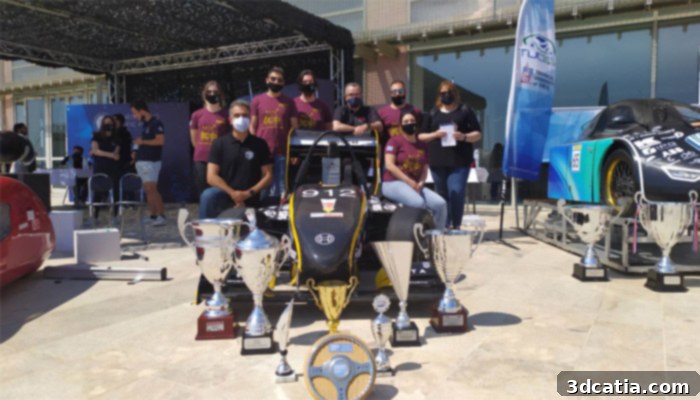
Lino3D works on a variety of projects, notably in Formula 1 (photo credits: Lino3D)
Lino3D’s Mission: Innovating Applications and Materials for Everyday Impact
3DN: What is the mission of Lino3D? Could you tell us more about the company?
At Lino3D, we have meticulously laid a robust foundation for the widespread adoption and advancement of additive manufacturing. This foundation encompasses both theoretical knowledge and invaluable practical know-how, derived from years of hands-on experience and extensive research. Our current strategic focus is directed towards the development of novel applications and the exploration of new, high-performance materials that can unlock unprecedented possibilities for 3D printing. Our overarching goal is to seamlessly introduce and integrate this transformative technology into both traditional manufacturing sectors and emerging industries, demonstrating its immense potential to simplify our daily lives and revolutionize existing processes. We firmly believe that additive manufacturing offers an unparalleled paradigm shift: the ability to easily print exactly what one needs, precisely when it’s needed, eliminates the complexities and delays often associated with anticipating solutions through conventional supply chains. This on-demand manufacturing capability fosters unparalleled agility, reduces waste, and empowers individuals and industries to innovate with unprecedented speed and efficiency. The fascination lies in witnessing how this technology empowers creation, moving from complex anticipation to simple, effective realization.
Championing Additive Manufacturing Skills in Europe Through Proactive Education
3DN: How does Lino3D promote the use of manufacturing in Europe?
One aspect is unequivocally clear: the escalating expansion of additive manufacturing within the industrial world will inevitably generate an immense and sustained demand for a diverse range of highly skilled professionals. This includes, but is not limited to, specialized engineers, proficient operators, innovative designers, meticulous post-processing specialists, and many more roles yet to be fully defined. To meet this burgeoning demand, we critically require experienced and expertly trained profiles, and this invariably points to the crucial role of comprehensive education and continuous professional development. This fundamental understanding is precisely why Lino3D is committed to adopting a proactive stance, actively engaging with educational institutions, nurturing students from an early stage, and mentoring young engineers as they embark on their careers. Our strategy involves a multi-faceted approach to integrate 3D printing education across various academic levels. This includes developing and delivering tailored courses and insightful seminars within schools and universities, thereby embedding additive manufacturing principles into mainstream curricula. Furthermore, we establish dynamic, hands-on workshops that delve into practical applications of 3D printing in diverse and exciting fields such as robotics, high-performance Formula 1 racing, advanced cycling component design, cutting-edge aerospace engineering, and numerous other sectors where AM offers significant advantages. For aspiring young engineers seeking to specialize, for instance, we have meticulously crafted online courses that are complemented by invaluable hands-on experiences. These practical modules are designed around real-world prototyping applications, covering intricate areas like jewelry design and manufacturing, as well as highly specialized tasks within dental laboratories. This blend of theoretical knowledge and practical application ensures that our trainees gain not only an academic understanding but also the tangible skills required to excel in the additive manufacturing industry.
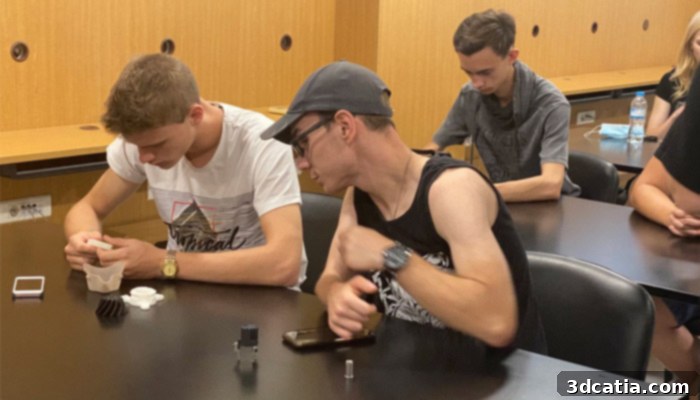
Lino3D develops workshops on additive manufacturing for students (photo credits: Lino3D)
The Indispensable Role of Education in Democratizing Additive Manufacturing
3DN: Why is education important when it comes to democratizing additive manufacturing?
The education sector is increasingly recognized as an indispensable catalyst in the ongoing development and widespread adoption of new additive manufacturing technologies and processes. The journey of understanding and leveraging 3D printing can, and indeed should, begin at a remarkably young age. Even as early as elementary school, students can grasp the fundamental concepts and appreciate the transformative potential of using 3D printing to bring ideas to life. As they progress through their academic years, they can gradually delve deeper into the complex issues, operational intricacies, and technical nuances of how 3D printing works, transitioning from simple curiosity to a profound technical understanding. At higher education levels, universities are increasingly investing in and establishing state-of-the-art 3D printing labs. These facilities serve as crucial hubs for both cutting-edge research and innovative production efforts. Within these labs, students and academics are actively exploring the expansive new possibilities offered by additive manufacturing across various disciplines, pushing the boundaries of material science, design optimization, and functional prototyping. The wider and more effectively this specialized knowledge is disseminated through robust educational frameworks, the more widespread and impactful its application will become in the future, truly democratizing access to this powerful manufacturing paradigm.
Addressing the Key Barriers to Additive Manufacturing Adoption: The Certification Challenge
3DN: What do you see as the remaining barriers to wider adoption of additive manufacturing?
While additive manufacturing presents immense opportunities, several significant barriers continue to impede its broader industrial adoption. Prominently among these is the ongoing challenge of certification for additive manufacturing processes. Many industries, particularly those with stringent regulatory requirements such as aerospace, medical devices, and automotive, find it exceedingly difficult and time-consuming to obtain the necessary certifications that are comparable to those established for conventional manufacturing processes. This difficulty stems from several factors: the inherent variability in AM processes, the novelty of many additive materials, and the lack of universally standardized qualification protocols. Achieving certification is a multifaceted endeavor that demands meticulous attention not only to the additive technology itself and the specific materials utilized but also, critically, to the often complex and specialized post-processing steps. Each stage, from initial design and material selection to the printing process, heat treatment, surface finishing, and quality inspection, must be rigorously validated to ensure consistent part performance, reliability, and safety. Without robust, globally recognized certification standards and efficient qualification pathways, industries remain hesitant to fully commit to AM for critical applications, thus hindering its wider integration into the mainstream manufacturing landscape. Overcoming this certification hurdle is paramount for unleashing the full potential of additive manufacturing.
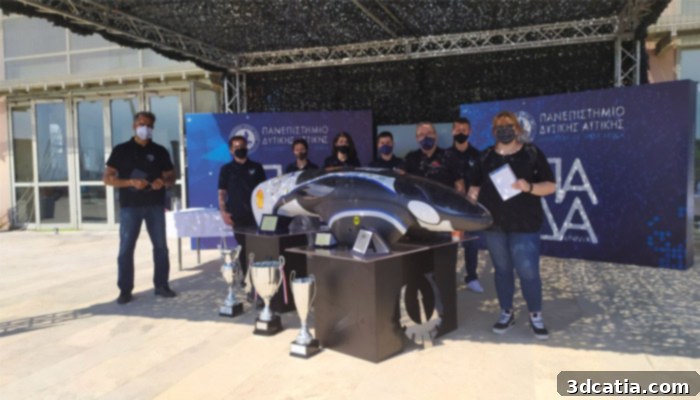
Photo Credits: Lino3D
Lino3D’s Commitment to Training and Sustainable Innovation for Tomorrow
3DN: Any last words for our readers?
We extend a warm invitation to all interested individuals and organizations to explore the comprehensive, hands-on training opportunities offered at our state-of-the-art Lino Experience Center and dedicated Lino3D lab. Our training programs are meticulously designed and delivered by a team of highly experienced and certified engineers, ensuring that participants receive instruction of the highest caliber. Our innovative pedagogical approach combines the flexibility of online and distance learning modules, which participants can complete BEFORE their on-site visit, with intensive, practical hands-on training directly in our lab. Here, trainees gain invaluable experience operating industrial-grade additive manufacturing machines. These practical sessions are complemented by rigorous examinations for certified operators, guaranteeing a recognized standard of proficiency. We possess a particularly strong and specialized expertise in the demanding dental and medical fields, where we are continuously developing numerous innovative projects that push the boundaries of patient care and device manufacturing. Our ultimate goal at Lino3D is to leverage our extensive skills, cutting-edge knowledge, and technological infrastructure to empower and serve the bright young talents of tomorrow, preparing them to lead the next wave of innovation in manufacturing.
Looking ahead, the European Union’s ambitious target to achieve Net Zero emissions by 2050 necessitates an enormous surge in research and development across critical areas such as Electric Machines, advanced Batteries, and high-efficiency Power Electronics. To realize the required step-change improvements in both efficiency and power density targets, novel topologies and groundbreaking architectures will be absolutely essential. Crucially, many of these advanced designs are simply not feasible with traditional manufacturing technologies. This is where Additive Manufacturing offers a transformative capability. With its inherent design flexibility, AM has the power to deliver a significant leap forward in meeting these stringent requirements. It enables the creation of intricate internal structures, optimized geometries for thermal management, lightweight components, and multi-material integration – all vital for enhancing performance and reducing environmental impact. By providing young engineers with the necessary knowledge, practical skills, and unparalleled opportunities to effectively utilize 3D printing, we can collectively make a profound and lasting impact on these critical sustainability goals. At Lino3D, we are proud to possess the capabilities, expertise, and dedication to enable this impact. We encourage you to reach out and contact us HERE to explore how we can collaborate and contribute to a more sustainable and technologically advanced future!
What are your thoughts on the pivotal role of education in accelerating additive manufacturing adoption and innovation? Let us know your insights in a comment below or connect with us on our LinkedIn, Facebook, and Twitter pages! Don’t forget to sign up for our free weekly Newsletter here to receive the latest 3D printing news straight to your inbox! You can also find all our engaging videos on our YouTube channel for more in-depth content.
*Cover Photo Credits: Andrea De Martin_123RF