
Exploring the Cutting Edge: Top 5 3D Printing Innovations Shaping Our World
The landscape of manufacturing is undergoing a profound transformation, spearheaded by the relentless advancements in additive manufacturing, commonly known as 3D printing. This revolutionary technology continues to infiltrate and redefine numerous sectors, pushing the boundaries of what’s possible in design, production, and problem-solving. From critical medical applications that promise to revolutionize healthcare, to the intricate demands of the automotive industry, and even into the culinary world, 3D printing is not just a technology; it’s a societal shaper. Staying abreast of these rapid developments is crucial for enthusiasts and professionals alike. Each week, we curate a selection of compelling videos that highlight the most impactful and inspiring innovations. This week’s roundup takes us on a journey from heartwarming patient care initiatives and major industry trade shows to groundbreaking bioprinting achievements, futuristic food creation, and essential design methodologies. Join us as we explore how these incredible breakthroughs are driving progress and offering glimpses into the future of manufacturing. For even more insightful content, be sure to visit and subscribe to our YouTube channel.
Top 1: The 3D Printing Challenge – Enhancing Patient Experience
In a heartwarming and innovative initiative, Alberta’s Children’s Hospital in Canada launched its “3D Printing Challenge,” a dedicated 30-day campaign throughout October. The core mission of this ambitious project was to harness the power of 3D printing to significantly improve the patient experience for young individuals. Understanding that those who live with health challenges daily possess invaluable insights, the hospital actively solicited creative ideas from patients, their families, and staff. This co-creation approach ensures that solutions are truly patient-centric and address real-world needs. The inherent benefits of 3D printing technologies, particularly their unparalleled ability to rapidly translate a concept into a tangible, finished piece, were central to the challenge’s success. Unlike traditional manufacturing methods, which often involve lengthy lead times and costly tooling, 3D printing allows for quick iteration and customization. This speed and flexibility are invaluable in a healthcare setting, enabling the rapid development of personalized medical devices, assistive aids, or even custom therapeutic tools that can dramatically enhance a child’s comfort, mobility, and overall quality of life during their hospital stay. The challenge beautifully showcased how cutting-edge technology can be applied with compassion to make a tangible difference in young lives, fostering an environment of innovation and empathy within the medical community.
Top 2: A Glimpse into the Future at Formnext – The Global Hub for Additive Manufacturing
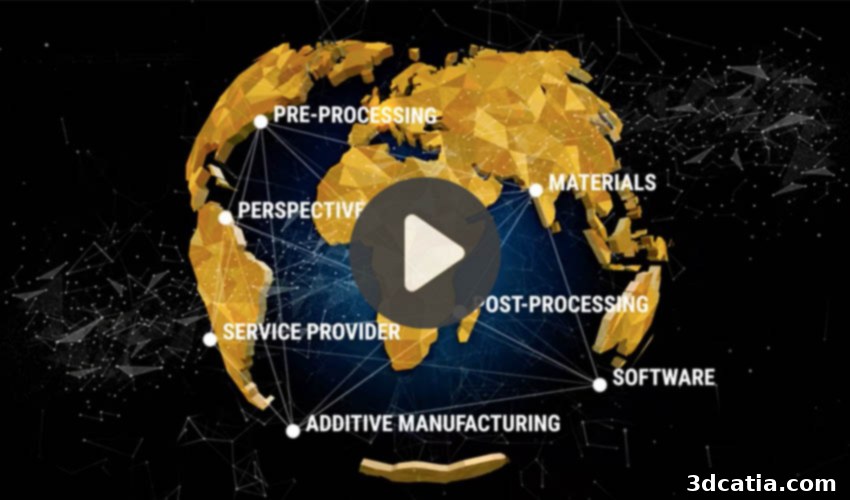
Formnext stands as the undeniable pinnacle among global trade fairs dedicated to additive manufacturing. Held annually in Frankfurt, Germany, this event serves as the definitive gathering point for innovators, manufacturers, and users across the entire AM ecosystem. It offers an unparalleled opportunity to explore the complete supply chain of additive manufacturing, providing a holistic view from conceptualization to final product. Attendees can delve into the latest advancements in 3D modeling software, discover novel materials designed for various applications, witness cutting-edge 3D printer technologies, and learn about essential post-processing techniques that bring additive manufactured parts to perfection. Formnext is not merely an exhibition of products; it is a dynamic platform for knowledge exchange, networking, and forging partnerships that drive the industry forward. From groundbreaking research presentations to live demonstrations of the most advanced industrial 3D printers, every facet of additive manufacturing is meticulously covered. The event fosters an environment where designers, engineers, and business leaders can connect, share insights, and collectively push the boundaries of what’s achievable with 3D printing. The video below offers an exciting preview of the sheer scale and innovation that awaits visitors at Formnext, highlighting its critical role in shaping the future of industrial production and advanced manufacturing processes.
Top 3: Bioprinting the Human Heart – A Medical Revolution in the Making
At Carnegie Mellon University, a team of pioneering engineering researchers has achieved a monumental breakthrough in the field of bioprinting. Their findings, recently published in the prestigious journal *Science*, detail a novel method that propels tissue engineering significantly closer to the ultimate goal: the ability to 3D print a full-sized, adult human heart. This incredible feat addresses some of the most complex challenges in bioprinting, particularly the creation of intricate vascular networks necessary to sustain large, multi-cellular organs. While we previously highlighted the impressive achievement of a team in Tel-Aviv who created a tiny 3D printed heart with initial functionality, the Carnegie Mellon project is distinct in its approach and its direct aim at scaling up to adult organ size. Both endeavors, however, share the overarching mission of revolutionizing treatment for individuals suffering from severe heart problems and heart failure, offering a beacon of hope for organ transplantation and regenerative medicine. The development of functional, complex organs through bioprinting holds the potential to dramatically reduce organ donor waiting lists, eliminate issues of immune rejection, and provide an invaluable tool for drug discovery and disease modeling. This research marks a pivotal step in developing personalized, patient-specific organs, promising a future where engineered tissues and organs could extend and improve countless lives.
Top 4: The Culinary Future – Indulging in 3D Printed Snacks
Prepare your taste buds, because 3D printed food is rapidly transitioning from science fiction to everyday reality! Food 3D printers, such as the innovative Foodini 3D printer from Natural Machines, have been available for some time, enabling users to create intricate shapes and designs from various food pastes. However, a common limitation has been that once the food is 3D printed, it still requires traditional cooking methods. But what if the printer could do both? Scientists are now actively working on the next generation of food 3D printers that not only extrude and shape ingredients but also cook them simultaneously, often utilizing precise laser technology. This groundbreaking advancement promises to revolutionize the kitchen experience, offering unparalleled control over taste, texture, and nutritional content. Imagine perfectly cooked meals tailored to specific dietary needs, custom-designed snacks with artistic flair, or even specialized nutritional supplements created on demand. This technology could empower individuals to personalize their meals in ways never before possible, reduce food waste, and even provide innovative solutions for space travel or disaster relief. Could this integrated print-and-cook functionality truly be the real revolution in the kitchen, ushering in an era of hyper-personalized and effortlessly prepared culinary creations?
Top 5: Unlocking Efficiency with Topology Optimization
Topology optimization represents a critical design methodology in advanced engineering, particularly powerful when paired with additive manufacturing. This iterative process begins during the initial design phase with a coarse 3D model, to which various structural loads and forces, expected to be supported by the final part, are applied. Specialized software then takes on the complex task of calculating all these applied constraints and stresses. Based on these calculations, the software intelligently prunes and removes material from areas of the part that are not subjected to significant stress or are redundant to its structural integrity. The primary objective is to optimize the material layout, meticulously distributing it only where it is functionally necessary, with the ultimate goal of maximizing the performance of the final piece. This often results in organic, almost biological-looking structures that are incredibly lightweight yet exceptionally strong and rigid. Beyond simply making “strong shelves,” topology optimization is routinely applied in high-stakes industries such as aerospace for creating lighter aircraft components, in automotive for fuel-efficient parts, and in medical implants for biocompatible, optimized devices. It reduces material consumption, cuts manufacturing costs, and enables designs that are simply impossible to achieve with traditional subtractive manufacturing. The following video provides a clear explanation of topology optimization, showcasing its principles through the practical example of designing robust and efficient shelving units, illustrating how sophisticated algorithms lead to superior engineering solutions.
e
The innovations highlighted in this week’s top 5 videos underscore the incredible dynamism and transformative power of 3D printing across diverse fields. From empowering patients and revolutionizing medical science to redefining industrial production and even our culinary experiences, additive manufacturing is consistently pushing the boundaries of what’s conceivable. We hope this curated selection offered you a compelling glimpse into the future driven by these technologies. What are your thoughts on these groundbreaking applications of 3D printing? We’d love to hear your insights! Drop a comment below, or engage with us on our Facebook and Twitter pages. To ensure you never miss out on the latest news, trends, and breakthroughs in the 3D printing industry, don’t forget to sign up for our free weekly Newsletter, delivered straight to your inbox. Stay connected and stay informed about the future of manufacturing!