
Revolutionizing Seafood: The Rise of 3D Printed Plant-Based Calamari and Sustainable Alternatives
Humanity’s global appetite for seafood is undeniably vast, with an average person consuming over 45 pounds of fish each year. This escalating demand, however, has led to a critical juncture for our oceans and food systems. The traditional seafood industry faces significant challenges including rampant overfishing, diminishing wild fish populations, and increasing ocean contamination with hazardous materials such as persistent microplastics and heavy metals like mercury. Furthermore, issues of accessibility and affordability for fresh, quality seafood continue to plague many communities worldwide. These pressing concerns have spurred innovative pioneers and researchers to seek out familiar flavors and nutritional profiles in entirely new, sustainable places. Consequently, the demand for more sustainable and ethical plant-based seafood alternatives has experienced a steady and remarkable rise over the past few years, ushering in an era of advanced food technology. This includes the exciting introduction of 3D printed, plant-based fish substitutes designed to meticulously replicate popular seafood items such as salmon, tuna, and even exotic options like eel. Adding to these groundbreaking advancements, recent reports highlight that researchers at the prestigious University of Singapore have been diligently working to expand the repertoire of vegan seafood with 3D printed calamari rings, utilizing specialized food-grade 3D printing technology and an innovative edible bioink. This development promises to bring the beloved texture and taste of calamari to a wider audience, free from the environmental burdens and health risks associated with conventional sources.
At the forefront of this culinary and technological revolution is Dr. Dejian Huang, who spearheads the dedicated team at the University of Singapore. His group is responsible for the research, development, and creation of these novel 3D printed plant-based seafood substitutes. The team has a proven track record, having previously developed compelling alternatives for salmon and shrimp, demonstrating their expertise in plant-based food innovation. Their current focus has now squarely landed on the viability and potential of crafting protein-rich, plant-based calamari. Dr. Huang articulates the core motivation behind their research, explaining, “While various plant-based seafood mimics are currently available in the market, a common limitation is that their ingredient lists often lack substantial protein content. Our primary objective was to engineer protein-based products that are not only nutritionally equivalent to, but ideally superior to real seafood, while simultaneously addressing critical issues of food sustainability and ethical consumption.” As any early adopter or enthusiast of plant-based meat substitutes will attest, achieving the precise balance of flavor and texture that closely resembles animal-derived products can be an incredibly challenging endeavor. This complexity is why the research team is dedicating meticulous attention to both aspects in their vegan calamari project. They are utilizing a specially formulated protein-based bioink, ingeniously derived from a combination of nutrient-dense microalgae and wholesome mung beans, further fortified with beneficial omega-3 fatty acids to enhance its nutritional profile. This carefully engineered bioink is then processed into a paste, which is subsequently extruded with precision by a food-grade 3D printer, layer by layer, to form the familiar ring shape of calamari. This innovative approach promises a product that not only satisfies cravings but also contributes positively to global health and environmental goals.
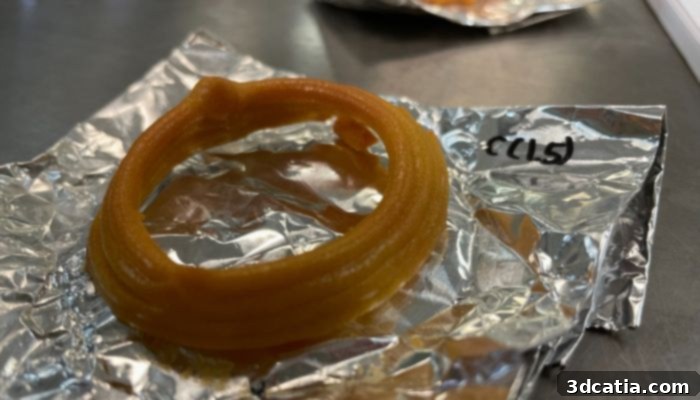
The first of the 3D printed calamari rings after being air fried (Photo Credits: Poornima Vijayan)
Algae, a diverse group of photosynthetic organisms, has already demonstrated its potential as a game-changing component across several critical fields, showcasing promising characteristics for environmental remediation, particularly in carbon dioxide reduction, and significant advancements in medical and biotechnological applications. As a food source, its cultivation requires remarkably fewer resources compared to traditional agriculture, making it an exceptionally sustainable option. The University of Singapore team’s deliberate choice of microalgae for their bioink is multi-faceted and strategic. Microalgae are celebrated for their exceptionally high protein density, providing a complete amino acid profile vital for human nutrition. Beyond its nutritional superiority, microalgae cultivation boasts an impressive environmental sustainability footprint, requiring minimal land and freshwater resources, and even acting as a natural carbon sink. An additional, yet crucial, benefit is microalgae’s inherent slight fishy flavor. This subtle taste profile is a natural advantage, as it contributes authentically to the overall character and sensory experience of the faux calamari, enhancing its resemblance to its conventional counterpart without the need for excessive artificial flavoring. Mung beans, the second core protein component in their innovative bioink, also present compelling advantages. They are not only plentiful and readily available globally, ensuring a stable and accessible supply, but their cultivation also has a relatively low environmental impact. An additional, highly valuable benefit of incorporating mung beans stems from principles of the circular economy: the excess material, specifically from the manufacture of mung bean vermicelli or glass noodles, can be efficiently utilized in the production of bioink for 3D printed foods. This ingenious approach transforms what would otherwise be agricultural waste into a valuable resource, significantly reducing waste generation and enhancing the overall sustainability of the food production process. This dual-pronged ingredient strategy ensures both nutritional richness and unparalleled ecological responsibility.
The adoption of algae-based bioink provides food producers with a fundamentally cheaper, infinitely renewable, and highly environmentally friendly alternative to traditional animal-derived meat proteins. This is particularly significant in the seafood sector, where sourcing challenges are immense. Crucially, these innovative plant-based alternatives offer consumers with fish or shellfish allergies an unprecedented opportunity to safely enjoy the flavors and culinary experience of seafood without fear of adverse reactions. This inclusivity opens up a world of dietary possibilities for many individuals who were previously excluded from these culinary delights. Beyond addressing allergies, creating more versatile and easily adaptable food choices, such as these 3D printed calamari rings, empowers consumers with the freedom to prepare their meals however they prefer – whether pan-fried to a golden crisp, baked in the oven for a lighter option, or air-fried for a modern twist. The University of Singapore team’s ambitious end-goal for this pioneering research is to develop a product that is not only delicious and nutritious but also capable of efficient and cost-effective large-scale production. Their vision includes these sustainable calamari rings eventually gracing the menus of discerning restaurant kitchens and becoming readily available on supermarket shelves worldwide, making plant-based seafood a mainstream reality. After conducting their initial taste tests with their first samples, expertly cooked in an air fryer, the team harbors a strong sense of optimism. They are highly hopeful that more 3D printed alternatives to conventional seafood, including their innovative calamari, could begin commercial production and reach consumers within the next few years. This represents a significant step forward in building a resilient, sustainable, and equitable global food system. For those interested in delving deeper into the scientific intricacies and broader implications of this exciting research, the full story can be accessed HERE.
As this exciting new frontier of food technology unfolds, imagine the possibilities! How would you personally serve up a delicious plate of 3D printed calamari, perhaps alongside a fresh lemon wedge and your favorite dipping sauce? We encourage you to share your creative culinary ideas and thoughts in a comment below, or connect with us and join the conversation on our LinkedIn, Facebook, and Twitter pages! To stay consistently informed about the latest breakthroughs and innovations in the rapidly evolving world of 3D printing, don’t forget to sign up for our free weekly Newsletter here, delivering the freshest 3D printing news straight to your inbox! You can also find all our engaging videos and in-depth discussions on our dedicated YouTube channel, where we explore the most impactful trends and technologies shaping our future.
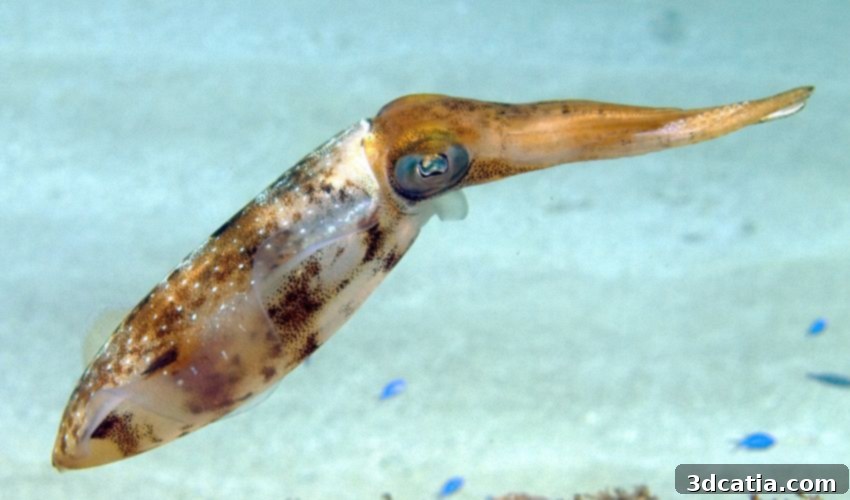
*Cover Photo Credits: Nhobgood Nick Hobgood, Own work, CC BY-SA 3.0