
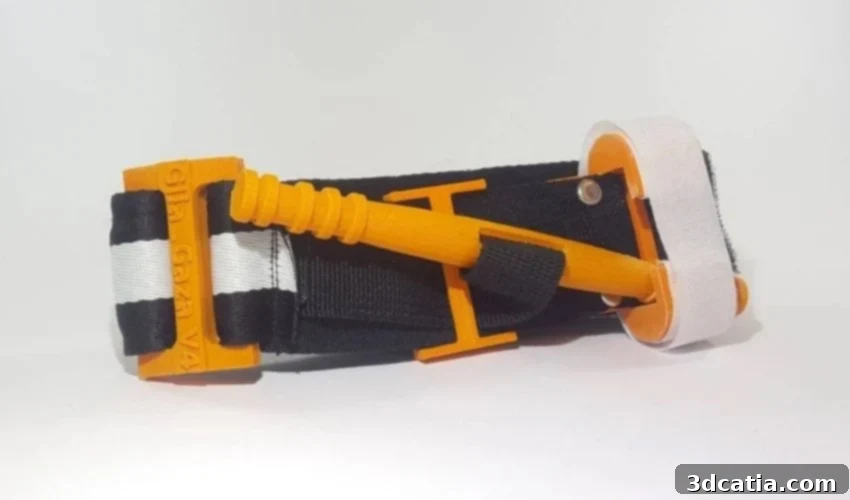
3D Printed Tourniquets: Glia’s Open-Source Innovation Delivering Vital Aid to Ukraine
The ongoing conflict in Ukraine has created an unprecedented humanitarian crisis, leading to an urgent and pervasive need for medical supplies and assistance for its residents. International aid organizations, national governments, and even private enterprises have rallied to solicit crucial donations essential for survival. From basic necessities like clothing and food to critical medical provisions, the list of requirements for the people of Ukraine is currently vast and ever-growing. Among these vital supplies, bandages and hemorrhage control devices like tourniquets have come into sharp focus due to the nature of injuries sustained in conflict zones. In this dire situation, a groundbreaking alternative is being spearheaded by the Canadian company, Glia, a renowned developer of open-source 3D-printed medical supplies.
Glia is actively contributing to the crisis response by launching a global call to action. They are appealing to all medical professionals, and indeed anyone with access to a 3D printer, to download, print, and donate their freely available 3D-printed tourniquet template. This innovative approach empowers individuals and organizations worldwide to make a tangible humanitarian contribution through the power of additive manufacturing. By decentralizing production and providing open-source designs, Glia is not only accelerating the delivery of critical medical devices but also fostering a collaborative global effort to save lives in regions where traditional supply chains are severely disrupted or non-existent.
Glia’s Vision: Making Essential Medical Devices Accessible Through 3D Printing
Glia was founded on a noble mission: to democratize access to essential medical components for healthcare personnel, particularly in countries and regions of the world where obtaining medical supplies is exceptionally challenging. Tourniquets, the primary focus of Glia’s current initiative, are indispensable medical devices. They function by applying concentrated pressure to a limb or extremity to effectively stop severe bleeding. While not always the ideal long-term solution, in war zones or areas with limited access to conventional medical materials, tourniquets can serve as a life-saving alternative to traditional bandages, preventing exsanguination and providing critical time for casualties to receive further medical attention.
For several years, this visionary Canadian 3D printing company has been at the forefront of developing these robust and effective 3D-printed tourniquets. Beyond tourniquets, Glia has also established a compact yet crucial line of other clinical devices, all produced using additive manufacturing techniques. These include essential items such as facial goggles, stethoscopes, and otoscopes. Each of these devices has been successfully deployed and utilized in various parts of the world, directly contributing to improved healthcare access and, most importantly, saving countless lives. This proven track record underscores Glia’s expertise and commitment to leveraging 3D printing technology for global humanitarian impact, solidifying their reputation as a reliable innovator in accessible medical technology.
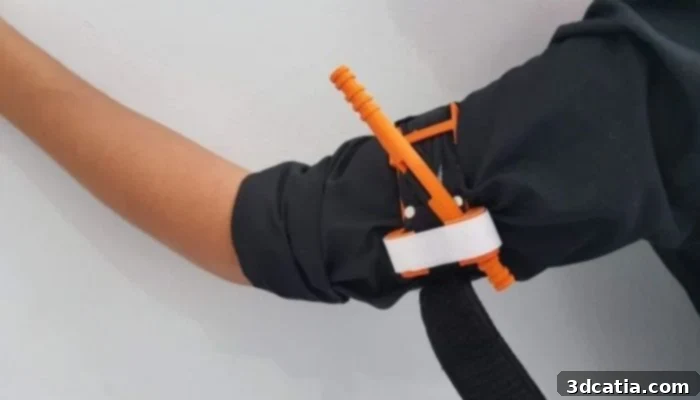
The 3D-printed tourniquet developed by Glia has already proven instrumental in saving a significant number of lives (photo credits: Glia)
A Global Call to Action: Manufacturing Life-Saving 3D Printed Tourniquets
The Glia tourniquet is meticulously designed for efficacy and ease of production. It comprises several key components: padding for patient comfort, a sturdy buckle for secure fastening, a central holder, a robust rod for tightening, and a protective sheath. These parts can be precisely manufactured using additive manufacturing processes, with ABS (Acrylonitrile Butadiene Styrene) being the recommended material due to its durability and suitability for medical applications. This carefully engineered design has the potential to significantly contribute to preventing severe injuries from becoming fatal due to blood loss, particularly in high-risk environments.
Addressing the urgency of the situation, the 3D printing company issued a poignant statement: “We’re watching a humanitarian tragedy unfold in Ukraine, and civilians are bearing the brunt of it. We can and must help. Glia will create tourniquets in Canada and in Ukraine, as well as disseminate our experience of how to produce more in battlefield conditions. These tourniquets will be distributed to hospitals and civilians in Ukraine who are at risk of serious injury and death.” This commitment highlights their two-pronged strategy: direct manufacturing and empowering a decentralized network of producers.
To ensure that anyone with a 3D printer can readily contribute to this vital cause, Glia has made all necessary resources freely available through a comprehensive online repository. This essential resource includes a detailed material list, the precise 3D print models required, and clear, step-by-step assembly instructions for the tourniquets. By offering this life-saving design as a free and open-access resource, Glia is exemplifying the transformative potential of 3D printing in emergency humanitarian aid, enabling a global community to participate actively in saving lives through distributed manufacturing.
The Economic Advantage and Global Impact of 3D Printed Medical Supplies
Beyond the logistical flexibility it offers, 3D printing technology delivers another significant advantage: cost-effectiveness. The tourniquets, which are so urgently needed in Ukraine and other crisis areas, can be produced at a mere fraction of the cost associated with conventionally manufactured tourniquets. This dramatic reduction in production expenses makes life-saving medical devices far more accessible, especially for populations in resource-scarce environments. For approximately €18.13, or roughly half the cost of a gold-standard combat application tourniquet (CAT), a high-quality, functional tourniquet can be manufactured using additive manufacturing techniques.
Glia’s commitment extends further with ambitious plans to scale up production and distribution. They have launched a dedicated fundraising campaign with a target of $20,000. This crucial funding will enable them to manufacture an impressive 1,500 tourniquets, which will then be promptly dispatched to Ukraine. Recognizing the unpredictable nature of conflict, Glia has also implemented a contingency plan: should the attack on Ukraine conclude before this goal is reached or the supplies are fully distributed, the Canadian company has resolved to redirect these vital tourniquets to another war zone or humanitarian crisis area where the need is most pressing. This demonstrates their unwavering dedication to providing aid wherever it is most required, ensuring that every manufactured device serves its life-saving purpose.
This model not only addresses immediate needs but also showcases the potential for a sustainable, decentralized supply chain for medical devices. The ability to produce essential equipment locally, on-demand, and at a reduced cost could revolutionize disaster response and healthcare provision in underserved communities globally. Glia’s initiative proves that open-source designs combined with additive manufacturing can provide rapid, affordable, and effective solutions when traditional systems fail or are overwhelmed.
If you possess a 3D printer and are eager to contribute to this critical humanitarian effort by manufacturing Glia tourniquets, you can access the free template and comprehensive instructions HERE. Your participation can directly translate into saving lives and offering hope amidst despair.
What are your thoughts on Glia’s innovative use of 3D printing to supply tourniquets for Ukraine and other crisis regions? We invite you to share your insights in a comment below or join the conversation on our LinkedIn, Facebook, and Twitter pages! Don’t forget to sign up for our free weekly Newsletter here to receive the latest 3D printing news directly in your inbox. You can also discover all our compelling videos on our YouTube channel, offering deeper dives into additive manufacturing innovations and their real-world applications.
*Cover Photo Credits: Glia