
Systems Reef 2: Revolutionizing Sustainable Air Distribution with 3D Printing and Bio-Inspired Design
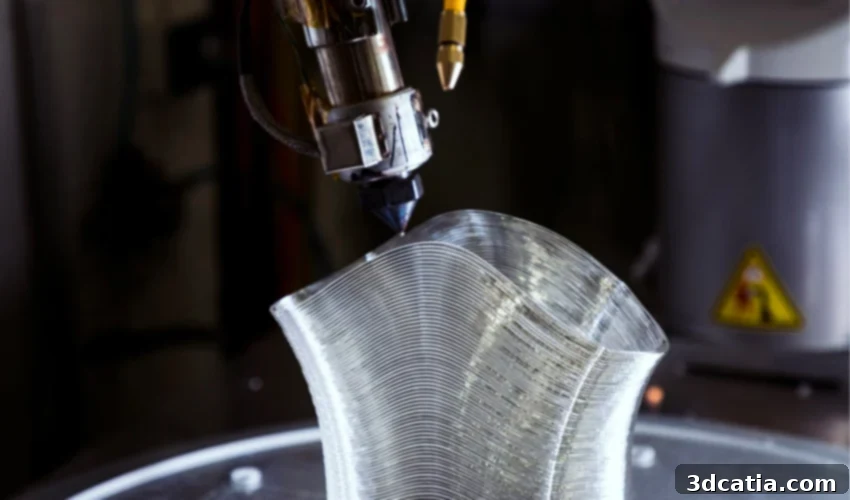
The potential for new applications of 3D printing truly appears boundless, continually pushing the boundaries of innovation across diverse sectors. A compelling illustration of this transformative power comes from a groundbreaking collaboration between the Australian architectural firm BVN and the University of Technology Sydney (UTS). Together, they have developed Systems Reef 2 (SR2), an advanced air distribution system that leverages the unique capabilities of additive manufacturing to achieve unprecedented levels of sustainability and efficiency. This remarkable system is engineered to “breathe” in a manner akin to the skin of a frog, a bio-inspired approach that sets it apart from conventional HVAC solutions.
What makes Systems Reef 2 particularly noteworthy is its profound commitment to environmental stewardship. The project boasts an astonishing 90% reduction in embodied carbon compared to a standard air conditioning system. This significant decrease in carbon footprint highlights the immense potential of 3D printing, not just for creating novel forms, but for entirely reimagining infrastructure with ecological considerations at its core. By addressing the critical challenge of indoor air management through an eco-conscious lens, SR2 exemplifies how technological innovation can align perfectly with pressing environmental imperatives.
Beyond mere air purification, a field where additive manufacturing has already demonstrated its utility with devices like the AMS Mini and AMS Auto, Systems Reef 2 focuses on the efficient and sustainable diffusion of air. While those earlier innovations concentrated on filtering and cleaning air, SR2 reinvents the very mechanism of air distribution within a built environment. It represents a paradigm shift, moving away from rigid, energy-intensive ductwork towards a more organic, adaptable, and energy-efficient solution, all made possible by the precision and design freedom offered by 3D printing technology.
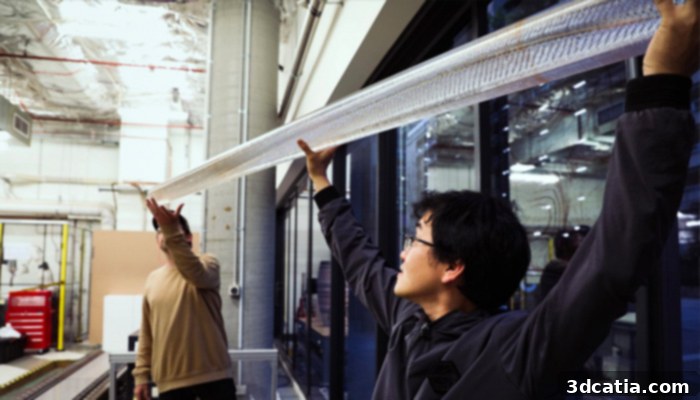
Project managers with one of the 3D printed parts of the Systems Reef 2 (photo credits: BVN / UTS)
The Limitations of Traditional Air Conditioning Systems
The genesis of Systems Reef 2 stemmed from a critical examination of the numerous shortcomings inherent in conventional air conditioning systems. For decades, HVAC (Heating, Ventilation, and Air Conditioning) technology has largely relied on methods and materials that are now recognized as inefficient and environmentally detrimental. Traditional air conditioning units are typically fabricated from sheet steel, a process that is not only energy-intensive but also results in a high level of embodied carbon—the total greenhouse gas emissions generated by the manufacturing, transport, and construction of a building material. Furthermore, these systems often utilize far more material than is structurally or functionally necessary, contributing to resource depletion and waste.
Beyond their material footprint, conventional air conditioners are frequently energy hogs. Their structural inefficiencies, characterized by rigid, often angular ductwork, lead to significant energy losses as air is forced through complex paths, encountering friction and turbulence. Once installed, these systems are notoriously difficult and costly to modify or replace, severely limiting the flexibility of building design and usage over time. This rigidity stands in stark contrast to the evolving demands of 21st-century architecture, which increasingly prioritizes adaptive and agile spaces capable of responding to changing needs.
Ninotschka Titchkosky, co-executive director of BVN, articulates this frustration eloquently, observing that manufacturing practices for HVAC systems have remained largely unchanged since their inception in the 20th century. “At the moment, the systems that we have, they’re really inflexible, they’re not particularly great for human comfort, they’re really expensive to change and they really limit the way we want to occupy buildings now in the 21st century, which is much more adaptive and agile,” she explains. This compelling critique underscores the urgent need for a radical rethinking of air distribution technology, paving the way for innovations like Systems Reef 2.
Systems Reef 2: A Sustainable and Bio-Inspired 3D Printed Solution
Systems Reef 2 (SR2) emerged as a direct response to these challenges, offering an air conditioning system that is not only highly efficient but also deeply integrated with sustainable practices and cutting-edge digital fabrication. At its core, SR2 combines computer-optimized generative design with the versatility of 3D printing to create an entirely new paradigm for air distribution. This intelligent integration allows for complex, organic shapes that are impossible or cost-prohibitive to produce with traditional manufacturing techniques, leading to both aesthetic appeal and superior performance.
A cornerstone of SR2’s sustainability credentials is its innovative material sourcing. The system is fabricated using recycled transparent plastic, specifically derived from discarded materials from hospitals. This plastic is meticulously crushed into pellets and then fed into a sophisticated 3D printing robotic system. This choice of material exemplifies a commitment to the circular economy, transforming waste into a valuable resource and significantly reducing the demand for virgin plastics. By utilizing recycled content, the project further solidifies its connection to additive manufacturing’s potential for eco-friendly production and reduced environmental impact.
The synergy between generative design and 3D printing enables SR2 to achieve an unparalleled level of material efficiency. Computer algorithms are employed to optimize the system’s geometry, ensuring that the least amount of material is used while maximizing structural integrity and functional performance. This computational approach results in an inherently lighter and more robust structure, a stark contrast to the often over-engineered and material-intensive designs of conventional HVAC ductwork. The organic, branched tubes designed through this process facilitate smooth airflow, eliminating the sharp corners and abrupt changes in direction that typically cause friction and pressure drops in traditional systems. This reduction in friction translates directly into lower operating energy consumption, as less power is required to move air through the system.
Inspired by nature’s elegance, specifically the way frogs breathe through their skin, the designers of Systems Reef 2 developed a truly revolutionary air diffusion mechanism. Instead of relying on large, visible ducts and conventional vents that blast air into a space, SR2 is covered with thousands of tiny, micro-perforated pores. These miniature apertures gently diffuse air into the space below, mimicking the biological process of respiration. This bio-inspired approach offers numerous advantages:
- Enhanced Human Comfort: The diffused airflow eliminates drafts and cold spots, providing a more uniform and comfortable thermal environment for occupants.
- Superior Acoustics: Without the forceful expulsion of air, the system operates with remarkable quietness, contributing to a more serene indoor atmosphere.
- Optimized Space Utilization: By eliminating the need for bulky ducts, SR2 is inherently smaller and thinner, requiring less ceiling or wall cavity space. This frees up valuable architectural volume and offers greater design flexibility.
- Further Material Reduction: The compact design, coupled with generative optimization, results in less material overall for the system’s construction.
While the initial prototypes and showcased specimens of Systems Reef 2 are crafted from transparent recycled material, demonstrating its intricate internal structure and commitment to sustainability, the system also offers significant aesthetic customization potential. The inherent flexibility of 3D printing allows for the fabrication of SR2 components in a vast array of colors, enabling seamless integration with diverse interior design schemes. Furthermore, the system can be illuminated, transforming it from a functional element into an architectural feature that enhances the ambiance and visual appeal of a space. This blend of high performance, sustainability, and aesthetic adaptability positions SR2 as a truly holistic solution for modern building design.
To delve deeper into the innovative aspects of Systems Reef 2 and explore its potential applications, you can learn more about the project directly on the BVN website HERE. Additionally, a compelling visual overview of the system’s design and functionality is available in the video below, offering a dynamic perspective on this pioneering development in sustainable air distribution.
The Future of Sustainable Architecture with 3D Printing
The successful development and implementation of Systems Reef 2 by BVN and UTS represent more than just a new air conditioning system; it marks a significant milestone in the broader movement towards sustainable and smart architecture. This project showcases the transformative power of interdisciplinary collaboration, bringing together architectural vision with advanced manufacturing research to tackle complex environmental and design challenges. By demonstrating a viable, high-performance alternative to energy-intensive conventional HVAC, SR2 provides a compelling blueprint for future building systems.
The principles embedded in Systems Reef 2—bio-inspiration, generative design, material circularity, and additive manufacturing—are poised to influence the next generation of building components. Imagine entire structures that “breathe,” adapting to their environments with minimal energy consumption and maximum occupant comfort. This innovation could lead to more resilient, responsive, and ultimately, more livable urban environments. It underscores the critical role that advanced technologies like 3D printing will play in achieving global sustainability goals and fostering a built world that lives in harmony with its natural surroundings.
What are your thoughts on the 3D printed Systems Reef 2 and its potential to reshape sustainable building practices? Let us know your insights and perspectives in a comment below or engage with us on our LinkedIn, Facebook, and Twitter pages! Don’t miss out on the latest advancements and news in additive manufacturing—sign up for our free weekly Newsletter here, delivered straight to your inbox! You can also find all our compelling videos and interviews on our dedicated YouTube channel.
*Cover Photo Credits: BVN / UTS