
Hybrid Manufacturing: Unlocking the Future of Production with Additive Manufacturing and CNC Machining
The manufacturing landscape is in a constant state of evolution, driven by innovation and the demand for increasingly complex, high-performance parts. While traditional methods like CNC machining have long been the backbone of industrial production, the rise of additive manufacturing (AM), commonly known as 3D printing, has introduced a paradigm shift. However, instead of seeing these technologies as competitors, the industry is increasingly recognizing the immense potential in combining them. This synergistic approach, known as hybrid manufacturing, leverages the strengths of both additive manufacturing and conventional techniques to create superior products, optimize workflows, and solve some of the most intricate challenges facing modern production.
Hybrid manufacturing isn’t just a buzzword; it represents a tangible pathway to achieving unprecedented levels of precision, design freedom, and material efficiency. For instance, consider metal 3D printing, a groundbreaking technology capable of producing highly intricate geometries. While additive processes excel at creating complex internal structures and lightweight designs, the surface finish and dimensional accuracy often require refinement. This is where CNC machining seamlessly integrates, providing the crucial post-processing necessary to meet stringent industry standards. By merging the capabilities of these two powerful technologies, manufacturers can ensure that final parts not only fulfill aesthetic and functional specifications but also exceed customer expectations in terms of quality and performance.
The Synergy of Additive Manufacturing and CNC Machining
The core concept of hybrid manufacturing lies in strategically combining additive and subtractive processes within a single workflow or even on a single machine. Additive manufacturing builds parts layer by layer, allowing for unparalleled geometric complexity, internal channels, and customized designs that would be impossible or cost-prohibitive to produce with traditional methods. However, AM often struggles with achieving the exact surface finishes, tight tolerances, and critical feature dimensions required for many high-performance applications.
This is precisely where CNC machining steps in. As a subtractive process, CNC machines precisely remove material from a workpiece to achieve highly accurate dimensions, smooth surface finishes, and specific geometrical features. When applied to an additively manufactured part, CNC machining can:
- Refine Critical Surfaces: Ensure mating surfaces, bearing fits, and other functional areas meet required smoothness and flatness specifications.
- Achieve Tight Tolerances: Bring key dimensions within extremely narrow margins, essential for assemblies and high-precision components.
- Improve Mechanical Properties: Enhance the fatigue life and overall structural integrity of the part by removing surface defects or improving stress distribution.
- Add Features: Machine in threads, holes, or other features that might be challenging or less accurate to print additively.
This combination is particularly transformative for metal 3D printing, where raw printed parts often have a characteristic surface roughness and dimensional inconsistencies inherent to the layer-by-layer deposition process. A subsequent CNC machining step can transform these parts into production-ready components, opening up new possibilities for industries like aerospace, medical devices, and automotive, where performance and reliability are paramount.
Exploring the Future: Insights from Industry Experts
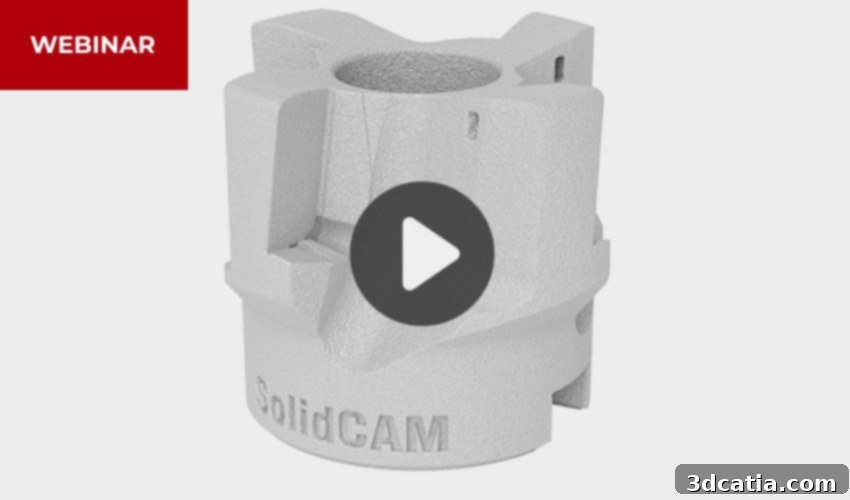
To delve deeper into how exactly additive manufacturing and CNC machining can be combined to form the “manufacturing of the future,” a recent webinar titled “Metal Printing and CNC Machining – the Manufacturing of the Future?” offered invaluable insights. Held on May 11th, this event brought together leading minds in the field to discuss practical implementation strategies, address common challenges, and forecast the trajectory of hybrid manufacturing.
The webinar served as a crucial platform for participants to understand how companies are actively helping customers integrate additive manufacturing into their existing hybrid manufacturing frameworks, with a particular focus on empowering traditional machine shops. It highlighted how the strategic combination of these exciting technologies is not merely an incremental improvement but a fundamental shift that is poised to dominate the manufacturing market in the coming years.
The discussion was expertly moderated by Madeleine Prior, EN Content Specialist at 3Dnatives, who guided the conversation and ensured a comprehensive exploration of the topic. We were privileged to host two distinguished experts from SolidCAM additive, a company at the forefront of integrated manufacturing solutions. Peter Genovese, a 3D Printing Application Engineer, provided deep technical insights into the practical aspects of combining AM and CNC, sharing real-world examples and best practices. Joining him was Kenny Betz, Additive Account Manager at SolidCAM additive, who offered a broader perspective on market trends, customer needs, and the strategic advantages of adopting hybrid manufacturing workflows.
These experts not only delved into the intricacies of how hybrid manufacturing works and its myriad benefits but also addressed attendee questions in a dedicated 30-minute Q&A session. This interactive segment allowed for a direct exchange of knowledge, tackling specific concerns and clarifying complex concepts, making the webinar an incredibly valuable resource for anyone interested in advanced manufacturing. The comprehensive discussion covered everything from material selection and process optimization to software integration and cost-effectiveness, painting a clear picture of the opportunities that hybrid manufacturing presents.
Key Benefits of Embracing Hybrid Manufacturing
The advantages of adopting a hybrid manufacturing approach are multifaceted and extend across various stages of the product lifecycle. These benefits include:
- Unparalleled Design Freedom: Additive manufacturing allows for highly complex geometries, lattice structures, and internal channels that reduce weight and improve performance. CNC post-processing ensures these intricate designs can be finished to the highest standards.
- Enhanced Part Performance: Combining the strength-to-weight ratio potential of AM with the precision and surface integrity from CNC leads to parts with superior mechanical properties and longer service life.
- Material Optimization and Reduced Waste: AM builds parts with minimal material waste, while subsequent CNC operations only remove necessary material for finishing, resulting in more efficient material utilization compared to solely subtractive methods for complex parts.
- Cost-Effectiveness for Complex Parts: For highly intricate components, hybrid manufacturing can be more cost-effective than attempting to machine them entirely or accepting the limitations of raw printed parts.
- Streamlined Production Workflows: With integrated solutions, the transition from additive to subtractive processes can be made seamless, reducing lead times and improving overall production efficiency.
- Faster Time to Market: The ability to quickly iterate designs with AM and then rapidly finish them with CNC accelerates the development cycle, bringing innovative products to market faster.
- Expanded Application Scope: Industries like aerospace, medical, and automotive can now produce parts that meet their stringent performance requirements, enabling innovations previously deemed impossible.
These benefits collectively position hybrid manufacturing as a critical enabler for industries seeking to push the boundaries of design, performance, and efficiency.
Who Should Consider Hybrid Manufacturing?
The versatility and benefits of hybrid manufacturing make it an attractive option for a wide range of stakeholders within the industrial sector:
- Machine Shops: Traditional machine shops looking to expand their capabilities and offer more advanced solutions to their clients can integrate AM to tackle complex geometries and open new revenue streams.
- Aerospace and Defense: For lightweight, high-strength components with complex internal cooling channels or intricate structural designs, hybrid manufacturing offers critical advantages in performance and fuel efficiency.
- Medical Device Manufacturers: Custom prosthetics, implants, and surgical instruments that require both intricate geometries (AM) and biocompatible surface finishes (CNC) are ideal candidates for this approach.
- Automotive Industry: From prototyping to specialized tooling and high-performance components, hybrid methods can accelerate development and improve part functionality.
- Tooling and Molds: Creating complex conformal cooling channels in molds via AM, followed by precision machining of cavities, can significantly improve cycle times and product quality.
- Any Manufacturer Seeking Innovation: Companies facing design limitations with traditional methods or looking to optimize material usage and lead times will find hybrid manufacturing a powerful solution.
The transition to hybrid manufacturing requires careful planning and investment, but the long-term strategic advantages in terms of innovation, competitiveness, and product quality are undeniable. It represents a forward-thinking approach to production that embraces the best of both worlds.
Watch the Webinar Replay and Stay Connected
If you missed the live event, you’re in luck! The full replay of this insightful webinar is available for free. We highly encourage you to watch it to gain a deeper understanding of the practical applications and strategic importance of hybrid manufacturing. You can register for free HERE to access the recording and discover how SolidCAM additive is paving the way for the manufacturing processes of tomorrow. Learn from the experts and see firsthand how the integration of additive and subtractive technologies is shaping the industrial landscape.
We value your engagement and invite you to share your thoughts and questions. Will hybrid manufacturing revolutionize your production strategy? Let us know your insights in a comment below! For more updates and discussions on the latest advancements in 3D printing and manufacturing, make sure to follow us on our LinkedIn, Facebook, and Twitter pages. Don’t miss out on crucial industry news; sign up for our free weekly Newsletter here to get the latest 3D printing headlines delivered straight to your inbox. You can also find a wealth of informative videos and expert interviews on our YouTube channel, offering even more content to expand your knowledge of additive manufacturing and its integration with traditional techniques.