
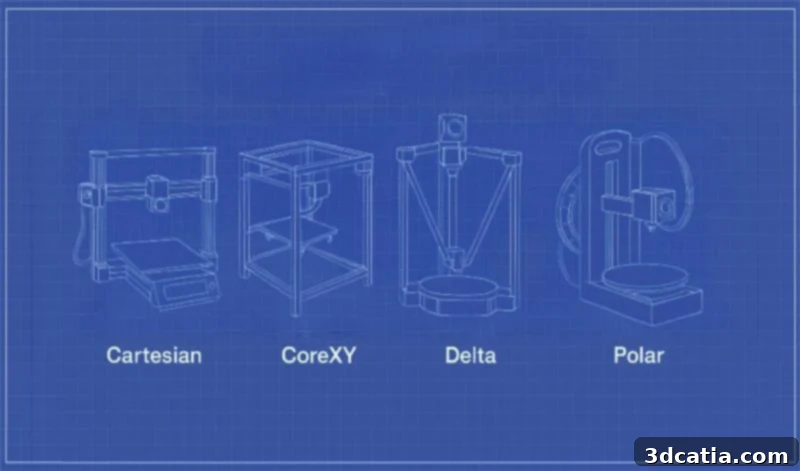
Exploring FDM 3D Printer Motion Systems: Cartesian, CoreXY, Delta, and Polar Explained
3D printers are capable of producing a vast array of three-dimensional objects using diverse materials and technologies. While some methods involve curing liquid resin with light (SLA, DLP, LCD) or sintering powdered materials (SLS, LPBF), a widely popular approach, Fused Deposition Modeling (FDM), relies on extrusion. In FDM, material, typically in the form of filament or pellets, is melted and precisely deposited layer by layer onto a build platform through a heated nozzle. But how exactly does this delicate dance of material deposition occur, ensuring accuracy and consistency?
The answer lies in the intricate workings of what are known as motion systems, or kinematics, within a 3D printer. These systems are fundamental to how the print head or the build platform navigates through three-dimensional space, meticulously positioning each layer of molten material. This article will delve into the most common FDM printer motion systems, elucidating their operational principles, key differences, and the unique advantages that contribute to their popularity. Understanding these systems is crucial for anyone looking to optimize print quality, speed, and reliability in their 3D printing endeavors.
The motion system of a 3D printer, often referred to as its kinematics, is the core mechanism that dictates how the printing material is precisely laid down. It directly influences which components move, and in what directions they travel. Generally, the material is applied to the build plate either by the extruder moving along multiple axes, or by the print bed itself moving, or a combination of both. The motion system is paramount for accurate positioning, ensuring repeatable material application, dictating the overall printing speed, and maintaining mechanical stability throughout the printing process. Ultimately, these parameters coalesce to make the motion system a decisive factor in achieving superior print quality.
While all kinematic systems share the fundamental task of moving the print head and/or build plate, they achieve this in vastly different ways. Broadly, these systems can be categorized into several types: Cartesian variants, including the “bedslinger” style, along with their derivatives like CoreXY and H-Bot. Beyond Cartesian, we also encounter Delta and Polar systems. Although robotic arms, such as SCARA systems, can also function as motion systems, for simplicity and focus on consumer-grade FDM printers, this article will primarily compare and contrast the most prevalent types: Cartesian systems (including bedslingers), CoreXY, Delta, and Polar systems.
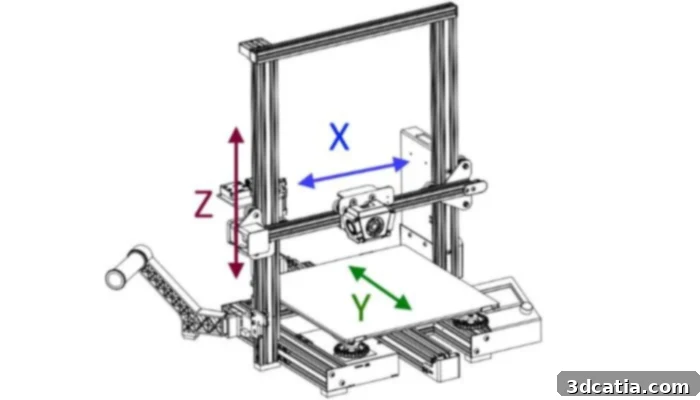
The three axes defined by a coordinate system. (Image: Creality)
Understanding the Mechanics of Different Motion Systems
You’ve likely come across popular models from manufacturers like Prusa, Creality, and UltiMaker. These companies are celebrated pioneers in the realm of FDM technology for end-users. A common thread among many of their designs is the integration of Cartesian drive systems. A Cartesian system is characterized by axes arranged according to a standard coordinate system (X, Y, Z), with each axis typically moved independently by its own dedicated motor. For example, the X-axis motor moves only the X-axis, followed by the Y-axis motor moving the Y-axis, and so on.
Within the Cartesian category, the “bedslinger” configuration is particularly widespread. In this setup, the build plate moves along the Y-axis (forward and backward), while the tool head travels along the X and Z directions. This design is famously embodied in the Prusa i3 MK3, leading to this Cartesian motion system often being referred to as “i3 style.” Creality also extensively utilizes this motion system across its popular Ender series, making it a staple for hobbyists due to its simplicity and affordability.
Another common Cartesian variant involves a print bed that moves exclusively along the Z-axis (vertically), while the tool head handles all movement in the X and Y directions. UltiMaker printers frequently adopt this concept, typically featuring a robust, enclosed box-like structure. This design earns it monikers such as “quadrap,” “UltiMaker style,” or simply “box style,” emphasizing its stability and suitability for industrial and professional applications.
It’s crucial not to confuse the box-style Cartesian system with the more advanced CoreXY motion system. In CoreXY printers, the print head also moves in the X and Y directions, and the print bed exclusively moves in the Z direction. The distinguishing characteristic of CoreXY lies in its innovative motor and belt arrangement: the X and Y motors work in concert, pulling on a complex network of long toothed belts to precisely position the print head. Both motors are typically fixed to the frame, minimizing the moving mass of the print head assembly. This design significantly enhances mechanical stability and allows for much higher printing speeds and accelerations compared to traditional Cartesian systems. Renowned examples of CoreXY drive systems include high-performance DIY printers from the Voron project and commercial successes like the Bambu Lab X1 series.
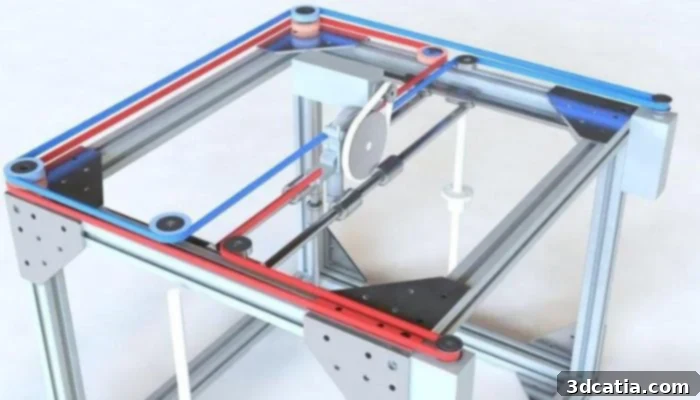
The motors in the X and Y directions pull on the belts together in a CoreXY system. (Image: Pinterest)
Delta 3D printers, on the other hand, are instantly recognizable by their distinctive geometric design. Unlike Cartesian or CoreXY systems, Delta models feature a completely rigid, typically circular print bed. The print head is suspended by three vertical arms, each connected to a Z-axis motor at the top of a tall tower. All three motors work in unison to control the print head’s position in X, Y, and Z space. By precisely lifting and lowering these three arms, the print head moves in all directions. This unique kinematics minimizes the mass that needs to be moved during printing, leading to exceptionally fast print speeds and impressive stability and precision, particularly advantageous for tall and circular objects.
Finally, Polar Motion Systems represent a departure from the conventional Cartesian coordinate approach. While they retain a Z-axis for vertical control, the Polar design incorporates a rotating build plate and a radial arm that positions the print head. This means movements are defined by a radius and an angle, with the print head typically guided from the center of the build plate outwards and back. This innovative approach can lead to highly compact printer designs, though it introduces unique challenges in software and G-code generation.
Each of these motion systems presents its own set of advantages and inherent limitations. The selection of the optimal motion system, and consequently the right 3D printer, is heavily contingent upon your specific printing objectives, desired print quality, speed requirements, and budget constraints.
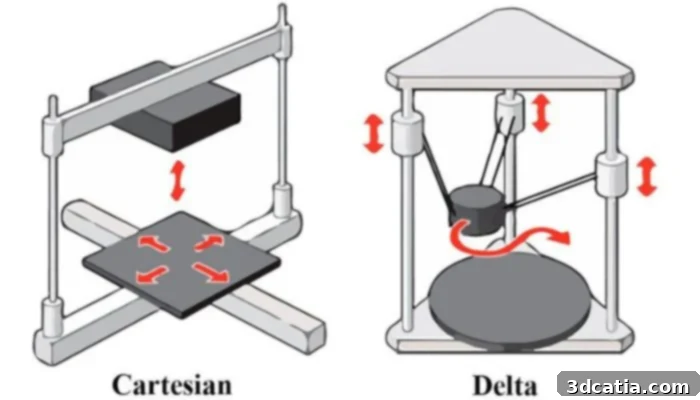
Cartesian motion system and delta system in comparison. (Image: 3Dsourced)
Motion Systems in Detail: History, Popularity, User Experience, and Price Comparison
The landscape of FDM 3D printer motion systems has undergone significant evolution over the past decade. This progress has been fueled by relentless technological innovation, evolving user expectations, and a continuous drive for improved speed, print quality, and reliability. Each distinct system comes with its own set of advantages and disadvantages concerning ease of use, overall performance, and cost. Crucially, the chosen motion architecture not only influences the printer’s operational characteristics but also directly impacts its price point and mechanical complexity. Let’s explore how the primary motion systems have developed, their current market presence, and what users can anticipate in terms of experience and investment.
Bedslinger Cartesian Systems
Development and Popularity
Bedslinger-style Cartesian 3D printers emerged as the foundational pillars of the early hobbyist 3D printing movement. Their inherent simplicity in design and a remarkably low barrier to entry made them the go-to choice for enthusiasts, educational institutions, and new users. Iconic machines such as the Prusa Mendel and the Creality Ender 3 series were instrumental in democratizing 3D printing, and their fundamental design principles continue to influence countless models today. Their enduring popularity in the consumer sector stems from their unparalleled affordability, high modularity, and the vast, supportive community that provides a wealth of resources for troubleshooting and upgrades.
Bedslinger printers consistently rank as the most budget-friendly options available on the market. Entry-level models can be acquired for as little as $175, making 3D printing accessible to a broad audience, while more feature-rich and sophisticated models typically fall within the $500 to $1000 range.
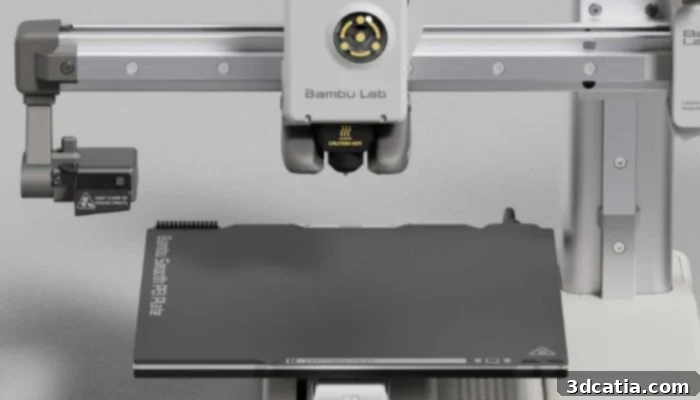
Popular bedslingers include the Prusa i3 MK4S, the Creality Ender 3 series and the Bambu Lab A1 Mini. (Image: Bambu Lab)
User Experience
These printers are generally straightforward to operate, maintain, and even modify. Their open-frame design ensures that all components are easily accessible, and the mechanical setup is intuitive for beginners. Print quality is typically solid and reliable for hobbyist applications, although high-speed printing can sometimes introduce artifacts like “ghosting” or “ringing” due to the inertia of the moving print bed. Despite these limitations at extreme speeds, bedslingers are renowned as reliable workhorses, offering predictable performance and benefiting from an extensive ecosystem of community support, readily available parts, and upgrade options.
Box-Style Cartesian 3D Printers
Development and Popularity
As FDM technology matured and found its footing in professional and industrial settings, box-style Cartesian printers emerged as the next evolutionary step, emphasizing enhanced reliability and consistent print outcomes. Characterized by their fully enclosed structures and often a fixed print bed (moving only on the Z-axis), these machines are meticulously optimized for working with engineering-grade materials and tackling demanding applications. They are widely deployed in professional, prosumer, and educational environments where paramount importance is placed on stability, security, environmental control, and print consistency, particularly when dealing with temperature-sensitive filaments.
For a prosumer-grade box-style machine, prospective buyers can anticipate a price range of $600 to $1,500. Professional and industrial-grade models, offering larger build volumes and more advanced features, can easily exceed $2,500, with some high-end units reaching $6,000 or more.
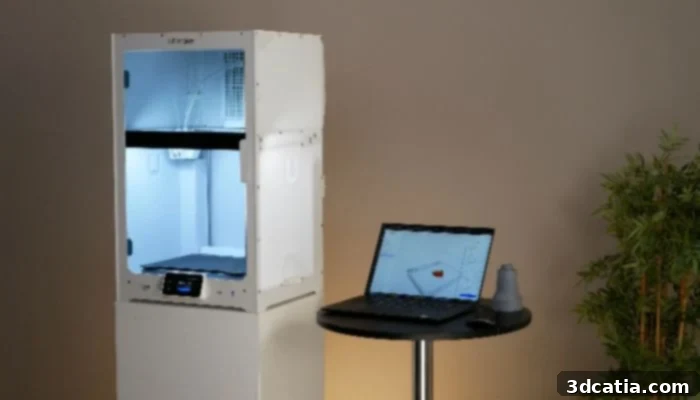
UltiMaker uses a box-style Cartesian motion system for all of its 3D printers. Notable examples of this are the models in the S series, such as the S8. Creality also uses this system for its Ender 5. (Image: Elliot Saldukaite, 3Dnatives)
User Experience
Cartesian 3D printers housed in a box format deliver exceptional print quality and maintain superior thermal consistency, which is particularly beneficial when printing challenging materials such as ABS or PC. While their initial setup might be slightly more involved than that of a bedslinger, ongoing operation is typically very smooth and reliable. Maintenance can require a bit more care due to the enclosed nature, which can limit access to internal components. In summary, these machines are ideally suited for users who prioritize precision, consistency, and minimal manual intervention over direct component accessibility, making them excellent choices for functional parts and prototyping.
CoreXY / H-Bot Systems
Development and Popularity
CoreXY motion systems gained significant traction as the 3D printing community increasingly demanded higher speeds and superior print quality. By strategically fixing the motors to the printer’s frame and effectively minimizing the moving mass of the print head, CoreXY systems are capable of achieving remarkable acceleration rates and producing prints with excellent surface accuracy. These systems were first popularized within influential open-source projects like Voron, and subsequently entered the mainstream through commercial successes such as the Bambu Lab X1 series. Today, CoreXY is widely recognized as the motion system of choice for users seeking high-performance printing capabilities without fully venturing into the more complex and costly industrial machine territory.
CoreXY printers span a broad price spectrum. DIY kits, which offer significant customization and learning opportunities, typically range from $500 to $1,600, with cost varying based on component quality and build size. Turnkey, ready-to-print machines start at approximately $750 and can go upwards of $1,500 or more for models equipped with advanced features and larger build volumes.
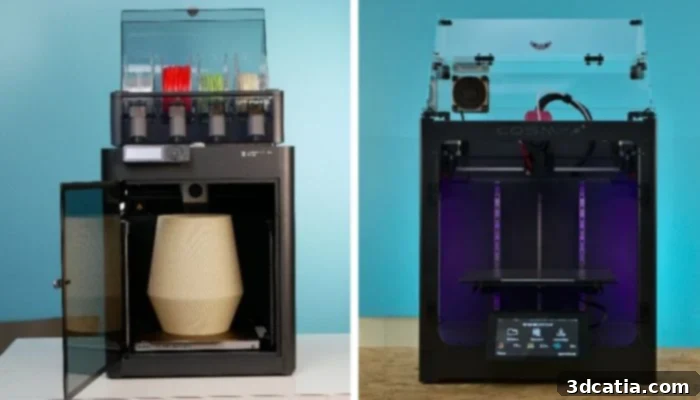
Core XY (left) and H-Bot (right) 3D printers are becoming increasingly popular thanks to their compact size and ability to work accurately at high speeds. (Image: Elliot Saldukaite, 3Dnatives)
User Experience
The performance of CoreXY printers is undeniably excellent, offering high throughput and fine detail. However, the initial setup can be quite challenging, particularly for DIY kits like the Voron 2.4. Achieving optimal results requires meticulous attention to detail in aspects such as belt adjustment, precise gantry alignment, and ensuring overall frame rigidity. Once properly configured and calibrated, these machines provide a premium printing experience, characterized by impressive speed and precision. While maintenance can be more involved due to the complex belt routing, a thorough initial setup often translates into less frequent maintenance requirements. For commercial models, such as the Bambu Lab X1, the user experience is significantly optimized, often rivaling the ease of use found in consumer-grade plug-and-play machines.
Delta 3D Printers
Development and Popularity
Delta printers, with their distinctive three-tower geometry and fluid, almost ethereal motion, initially promised unprecedented speeds and a visually captivating printing process. In principle, their design allows for extremely fast and smooth movements with a minimal number of heavy moving parts. However, their unique kinematics introduced challenges, including the complexity of motion planning, difficulties with precise calibration, and a tendency for reduced accuracy at the extreme edges of the circular build plate. These factors somewhat limited their widespread adoption. Today, Delta printers primarily appeal to niche enthusiast communities or users who specifically seek a large vertical build volume combined with a relatively small footprint, making them suitable for tall, intricate objects.
Despite their operational complexity, Delta printers remain relatively affordable, with most consumer models ranging from $300 to $800. This provides an accessible entry point for users intrigued by this unique motion architecture. More advanced, industrial-grade Delta solutions, often designed for specific applications, can command prices upwards of $10,000.
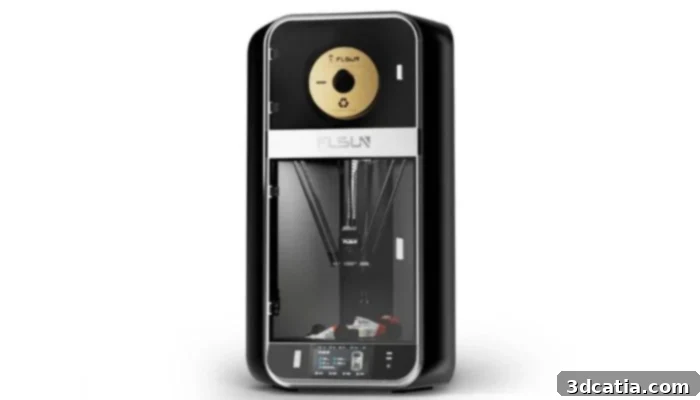
Not many printers use delta kinematics, but Anycubic and FLSun have both launched printers with this technology in the past, and some more advanced solutions are also available, such as the Prusa Pro HT90 and printers from WASP. (Image: FLSUN)
User Experience
Delta printers are notoriously more challenging to calibrate than their Cartesian counterparts. Achieving optimal results requires all three belts and arms to be adjusted with extreme precision and equal tension. While they offer undeniable visual appeal and impressive speed, print errors tend to be more pronounced and harder to diagnose compared to Cartesian or CoreXY systems. Maintenance and upgrades are also considerably more complex, especially when dealing with firmware configurations and integrating automatic bed leveling systems, requiring a deeper technical understanding from the user.
Polar Motion Systems
Development and Popularity
Polar motion systems leverage a rotating print bed in conjunction with a radial arm, enabling print head movement through polar coordinates rather than linear X/Y axes. These printers initially garnered attention due to their potential for extremely compact designs. However, they faced significant hurdles with software compatibility, particularly with existing slicers, and struggled with reliability in terms of print performance and precision. Consequently, Polar printers have largely faded from the commercial market, primarily existing today within specialized educational institutions, research projects, or as experimental DIY builds.
During their limited commercial availability, devices such as the Polar3D were priced between $400 and $700. However, these models are now largely discontinued, underscoring their niche and experimental nature within the broader FDM ecosystem. For those interested, Polar printers can still be constructed from scratch as DIY projects, with costs starting around $300, heavily dependent on the quality and type of components selected for the build.
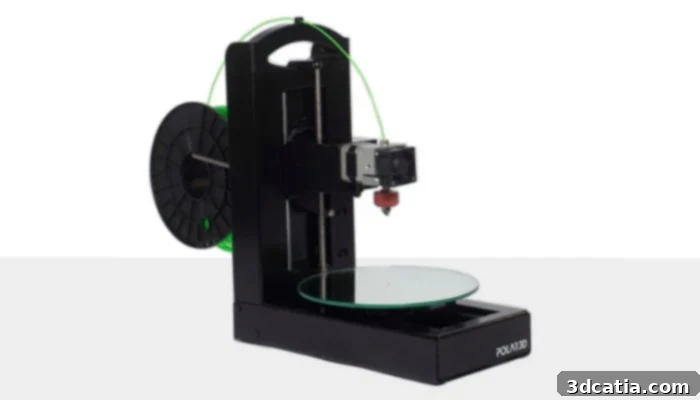
Polar3D used to sell Polar 3D printers, but today there are no commercially available solutions, although Polar printers continue to exist as DIY kits and personal projects like Joshua Bird’s “core-RΘ.” (Image: Polar3D)
User Experience
These machines are notoriously difficult to operate, primarily due to their unconventional motion patterns, a severe lack of compatibility with mainstream slicer software, and their unique mechanical requirements. Achieving precise prints, especially for rectangular or any non-circular models, is generally poor, and official software support is minimal to non-existent. Maintenance is also significantly hampered by the scarcity of standard parts and specialized knowledge. Consequently, Polar printers should be viewed more as intriguing experimental gadgets or challenging academic projects rather than reliable production machines for everyday 3D printing tasks.
In conclusion, every FDM motion system possesses a unique set of strengths and inherent weaknesses. Their ultimate suitability depends critically on the specific application and the user’s priorities. Bedslingers remain the most straightforward and cost-effective entry point into 3D printing, offering ease of use for beginners. Cartesian box-style printers provide a more compact design with enhanced stability and thermal control, ideal for demanding materials. CoreXY systems deliver exceptional power and speed, but demand precision during initial setup. Delta 3D printers excel in aesthetics and vertical print height, albeit with added calibration complexity. Lastly, Polar-style printers, while conceptually innovative, are best reserved for experimental or educational pursuits due to their operational challenges and limited practical applications. For a quick and clear overview, refer to the comparative table below:
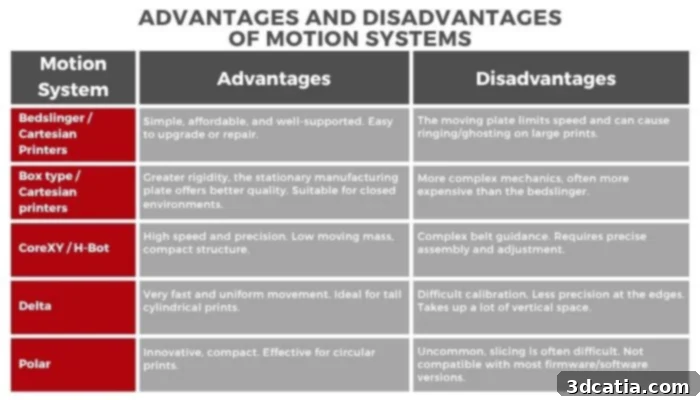
Credit: 3Dnatives
Which of these motion systems do you use in your 3D printing projects? Share your experiences and insights in a comment below or join the conversation on our LinkedIn or Facebook pages! Additionally, don’t miss out on the latest advancements in additive manufacturing—sign up for our free weekly Newsletter to receive top 3D printing news directly in your inbox. You can also explore all our videos and tutorials on our YouTube channel.