
China’s PLA Revolutionizes Battlefield Logistics with 3D Printing and Drone Technology
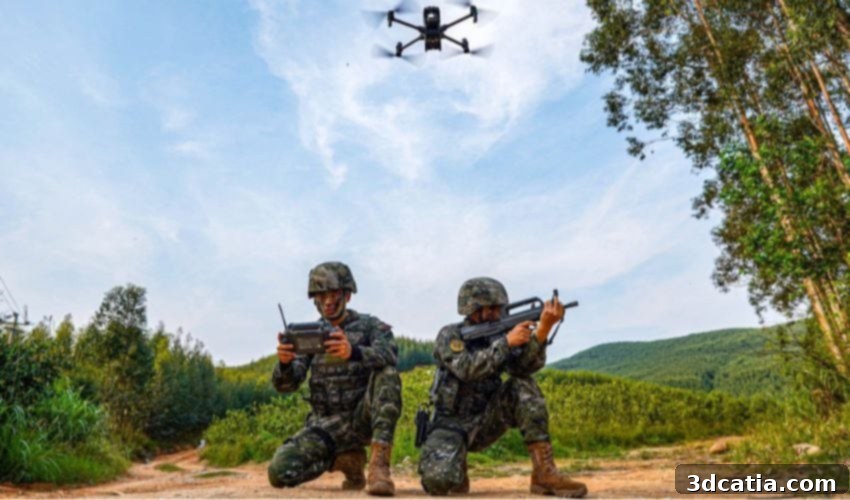
In a significant move highlighting its commitment to advanced military modernization, China’s People’s Liberation Army (PLA) is reportedly integrating cutting-edge technologies like 3D printing and drones into its remote weapons maintenance protocols. This innovative approach was recently demonstrated in a series of exercises, where the PLA successfully tested the capabilities of additive manufacturing for producing vital spare parts and utilizing unmanned aerial vehicles (UAVs) for their rapid delivery to simulated frontline battlefields. While various military journals and local media outlets have extensively covered these developments, specific details regarding the exact time and location of these groundbreaking exercises remain undisclosed.
These exercises, according to official Chinese military media, were a core component of extensive training conducted by the Northern Theater Command’s Air Force brigade. The primary objective was to demonstrate and refine a system where military equipment could be efficiently maintained or repaired using on-demand 3D printed components, with drones serving as the crucial link for delivering these parts directly to the point of need on the battlefield. This paradigm shift in logistics aims to dramatically reduce repair times and enhance operational readiness.
During the simulations, the PLA practiced a range of specific scenarios to thoroughly test the efficacy of this combined technology. One notable simulation involved the urgent repair of a damaged missile launch vehicle. In this scenario, a maintenance technician located in a secure backend facility received immediate notification of the damage via remote communication. Promptly, the technician utilized a 3D printer at the technical maintenance center to fabricate the exact replacement part required. This custom-made, 3D printed component was then dispatched to the front line via a drone, enabling on-site repair and minimizing the downtime of critical assets. This exercise underscores the potential for rapid response and adaptability that 3D printing and drones bring to military operations.
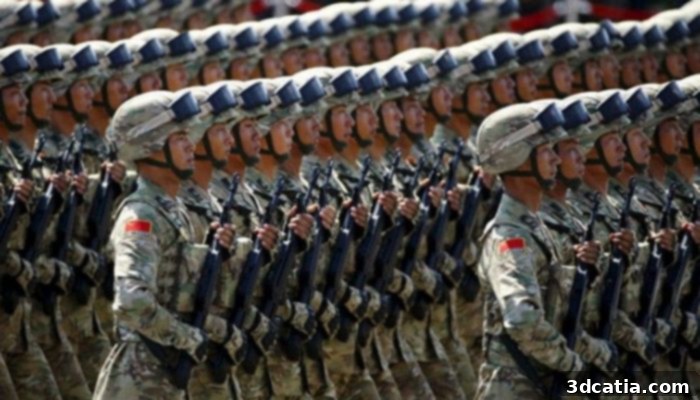
The Chinese military is increasingly integrating 3D printing and drones for enhanced logistics and remote maintenance. (Credit: Azernews)
Strategic Advantages: Speed, Cost-Efficiency, and Supply Chain Resilience
The implementation of 3D printing and drone delivery in military maintenance offers a multitude of strategic advantages that are set to redefine battlefield logistics. Firstly, the ability to produce spare parts locally and on-demand significantly accelerates the repair process. Traditional supply chains often involve complex logistical networks, transportation over vast distances, and reliance on pre-manufactured stock, all of which can be slow and vulnerable. By contrast, additive manufacturing enables the creation of necessary components within hours, if not minutes, drastically reducing equipment downtime and maintaining operational tempo.
Secondly, this approach proves to be remarkably cost-effective. Manufacturing parts using 3D printing technology, particularly for low-volume or specialized components, can be substantially cheaper than procuring them from original equipment manufacturers (OEMs). It eliminates the need for vast inventories of spare parts, which are expensive to store, manage, and transport. Furthermore, the localized production capability minimizes shipping costs and reduces the financial burden associated with maintaining extensive logistics infrastructure. This economic benefit contributes to a more sustainable and efficient defense budget.
Moreover, the method tested by the PLA creates immense added value, especially in contested, remote, or difficult-to-access operational areas. In such environments, traditional supply lines are often targets for adversaries or are hindered by geographical challenges. The ability to print parts closer to the front lines and deliver them via agile drones mitigates these vulnerabilities, ensuring that critical equipment can be sustained even under extreme conditions. This fosters greater self-sufficiency and operational independence for frontline units, allowing them to remain engaged for longer periods without needing to withdraw for extensive repairs.
Global Military Modernization and the Rise of Additive Manufacturing
The simulation exercises conducted by the PLA are not isolated incidents but rather indicative of a broader global trend in military modernization strategies. The integration of 3D printing and remote maintenance via drones is a pivotal part of China’s efforts to develop a more agile, resilient, and technologically advanced fighting force. These technologies are considered essential for maintaining a strategic edge in future conflicts and ensuring the operational readiness of military assets across diverse theaters.
It is widely known that other major military powers, including the United States, are already exploring and implementing similar tactics. The US military, for instance, has been a pioneer in deploying additive manufacturing capabilities to forward operating bases and naval vessels, allowing for on-demand production of spare parts and custom tools. The concept of delivering parts by drones is also gaining traction, particularly as an important pillar in supporting various allied forces in complex geopolitical scenarios. For example, reports have suggested that drone-based logistics play a significant role in delivering crucial supplies from Poland to Ukraine during the ongoing conflict with Russia, demonstrating the real-world applicability and effectiveness of such systems in high-intensity environments.
How 3D Printing Transforms Military Logistics
3D printing, or additive manufacturing, fundamentally changes the logistics landscape. Instead of relying on a vast network of warehouses and transportation routes for every conceivable spare part, military units can now produce components on-site or nearby. This “manufacturing on demand” capability offers several key benefits:
- Reduced Inventory: Armies traditionally maintain enormous inventories of spare parts for all their equipment. 3D printing allows for significant reductions in stock, freeing up storage space, reducing capital tied up in inventory, and decreasing the logistical burden of managing countless items.
- Customization and Rapid Prototyping: Beyond standard parts, 3D printing enables the rapid creation of custom tools, fixtures, or even specialized modifications needed for unique battlefield challenges. This agility can be crucial for adapting equipment to evolving threats or operational requirements.
- Obsolescence Management: Older military equipment often suffers from parts obsolescence, where original manufacturers no longer produce replacement components. 3D printing offers a viable solution to recreate these parts, extending the lifespan of valuable assets.
- Material Versatility: While initial military applications focused on polymer parts, advancements in metal 3D printing are expanding capabilities to produce structural and high-performance components, including those made from aluminum, titanium, and steel alloys.
The Pivotal Role of Drones in Battlefield Delivery
Drones are the ideal complement to 3D printing in a distributed logistics model. Their ability to deliver small, critical packages swiftly and precisely makes them indispensable for:
- Overcoming Terrain and Obstacles: Drones can navigate challenging terrain, dense urban environments, or areas made impassable by enemy action, delivering parts directly to the forward-most units.
- Reducing Risk to Personnel: By using autonomous or remotely operated drones for delivery, the need for human personnel to venture into dangerous zones with supply convoys is significantly reduced, minimizing casualties and resource expenditure.
- Speed and Agility: Unlike ground vehicles that are subject to traffic, road conditions, or enemy interdiction, drones offer near-direct flight paths and rapid transit times, ensuring that repairs can commence almost immediately after a part is printed.
- Point-to-Point Delivery: Drones facilitate precise, point-to-point delivery, even to individual soldiers or specific pieces of equipment, making logistics incredibly granular and responsive.
Implications for Future Warfare and Military Preparedness
The combined capabilities of 3D printing and drone delivery herald a new era in military logistics and preparedness. This distributed manufacturing and delivery model contributes to a more agile, resilient, and survivable military force. Traditional, centralized supply chains present single points of failure that adversaries can exploit. By decentralizing production and leveraging aerial delivery, militaries can build greater resilience into their logistics networks, making them less vulnerable to disruption. This flexibility is particularly crucial for large-scale operations or in environments characterized by anti-access/area denial (A2/AD) strategies.
Furthermore, these technologies promise significant long-term cost efficiencies. While initial investments in 3D printing infrastructure and drone fleets may be substantial, the reduced need for vast inventories, lower transportation costs, and extended equipment lifespans through rapid repairs are expected to yield considerable savings over time. This also frees up resources that can be reallocated to other critical areas of defense spending, such as research and development or personnel training.
Challenges and the Road Ahead
Despite the immense promise, integrating 3D printing and drones into mainstream military operations is not without challenges. These include ensuring the material integrity of 3D printed parts for high-stress applications, protecting digital design files from cyber threats, the energy requirements for mobile 3D printers in austere environments, and the need for extensive training for maintenance personnel to adapt to these new methodologies. However, ongoing research and development are continuously addressing these hurdles, pushing the boundaries of what’s possible. As these technologies mature, their integration is poised to become an indispensable element of modern military strategy, transforming how forces operate, sustain themselves, and adapt to the dynamic demands of contemporary warfare.
What are your thoughts on the military’s increasing reliance on 3D printing and drones for vital operations? Share your insights and opinions in a comment below or join the conversation on our LinkedIn, Facebook, and Twitter pages! Don’t forget to sign up for our free weekly Newsletter here to receive the latest 3D printing news directly to your inbox. You can also explore all our videos and interviews on our YouTube channel.
*Cover Photo Credits: CFOTO/Future Publishing via Getty Images