
Silicone 3D Printing: Revolutionizing Additive Manufacturing with Advanced Flexible Materials
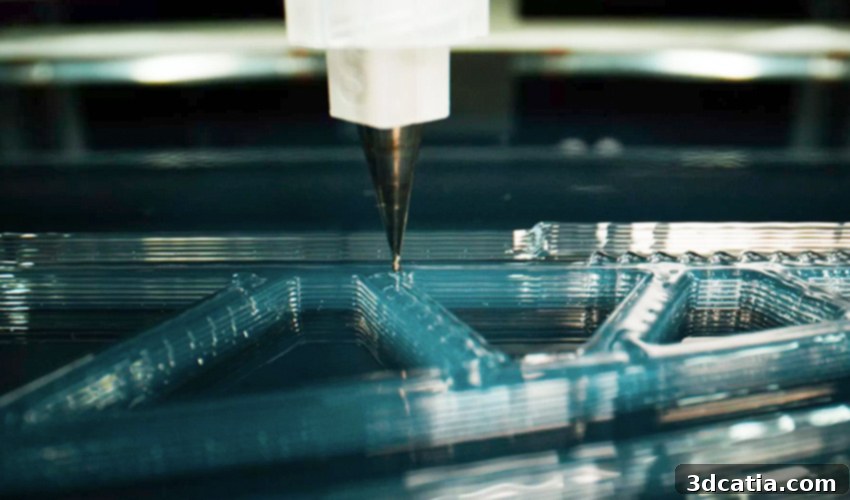
The landscape of additive manufacturing is undergoing a significant transformation with the emergence of an innovative technology enabling the 3D printing of silicone parts. This breakthrough has garnered immense attention across the 3D printing industry, primarily because silicone, unlike many polymers or metals, could not previously be melted and deposited layer by layer using conventional thermal methods. This novel capability opens up a wealth of new possibilities, particularly in the medical and medical biomaterial sectors, where it promises to enhance patient treatment outcomes and foster advancements previously deemed unattainable. As 3D printing technology continues its steady march toward maturity, the integration of silicone introduces a new dimension of design freedom and functional benefits.
The impact of silicone 3D printing on various industries is anticipated to be profound, marking a pivotal milestone in the evolution of additive manufacturing. Market analyses underscore this expectation; a study by Precision Business Insight, for instance, reported the global silicone 3D printing market value at an estimated $1,590.3 million in 2021. Projections indicate robust growth, with a compound annual growth rate (CAGR) of 19.9% expected through 2028. This impressive expansion is not merely organic; it’s actively fueled by 3D printing companies that are diligently developing and offering cutting-edge silicone-compatible solutions. This comprehensive guide will delve deeper into the fascinating world of silicone, exploring its fundamental properties and examining how this versatile material is being harnessed and applied within the realm of additive manufacturing.
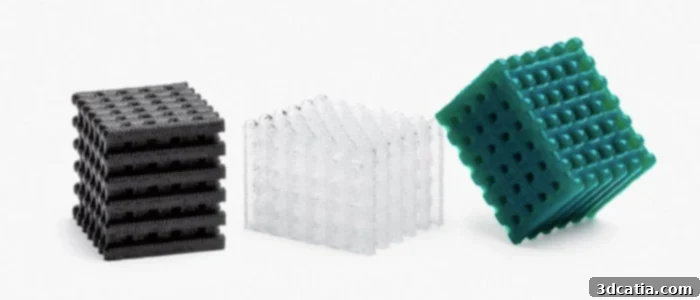
Photo Credits: Beamler
Understanding Silicone: Composition and Production
Silicone: What Is It and How Is It Made?
At its core, what we commonly refer to as silicone is scientifically known as polysiloxane. This inorganic polymer is synthesized through the polymerization of siloxanes, which are molecules uniquely characterized by a backbone composed of alternating silicon and oxygen atoms. The polymerization process for polysiloxanes typically occurs via a condensation reaction of these siloxanes. This chemical transformation is facilitated by the presence of a catalyst, which can be either an acid or a base, playing a crucial role in promoting the formation of strong bonds between the functional groups present on the siloxane monomers. The resulting polymer chains exhibit remarkable flexibility and mobility, a direct consequence of the unique bond angles and rotational freedom afforded by the silicon-oxygen backbone.
The polysiloxane family of polymers is celebrated for a distinctive combination of properties, notably its exceptional chemical resistance, high thermal stability, and advantageous physical and mechanical characteristics. While “polysiloxane” serves as the precise technical designation, “silicone” has become the more widely recognized and commercially adopted term in everyday and industrial contexts. The versatility of silicone is further demonstrated by its various states, which are largely determined by the specific macromolecular structure, chain length, and distribution of its constituent components. It can be found in forms such as silicone oils and rubbers, extensively utilized as additives, high-performance lubricants, or hydraulic fluids in demanding applications. Silicone gels are another common form, notably used in medical implants like breast prostheses or for comfort in products such as bicycle saddles. However, the most prevalent and widely employed type of silicone today is the elastomer, prized for its rubber-like elasticity and durability.
The Evolution of Silicone 3D Printing Technologies
Silicone 3D Printing Pioneers and Processes
The pioneering efforts in developing a dedicated 3D printing system for silicone can be traced back to ACEO, a specialized division of the German chemical conglomerate Wacker Chemie AG. In 2016, ACEO unveiled a groundbreaking process reminiscent of inkjet printing. This innovative method involved precisely applying microscopic silicone droplets layer by layer, which were then instantly cured using a targeted UV light source. This meticulous process was repeated countless times, building the part from the ground up until the final, intricate geometry was achieved. ACEO boldly claimed that its technology was capable of producing parts with isotropic mechanical properties, meaning they exhibited uniform strength and flexibility in all directions, comparable to those achieved through traditional injection molding. Although ACEO itself ceased operations in 2021, the fundamental principles and approaches it championed for 3D silicone printing continue to be highly relevant and in demand across a diverse range of sectors, including industrial manufacturing, specialty chemicals, and critical medical and dental applications.
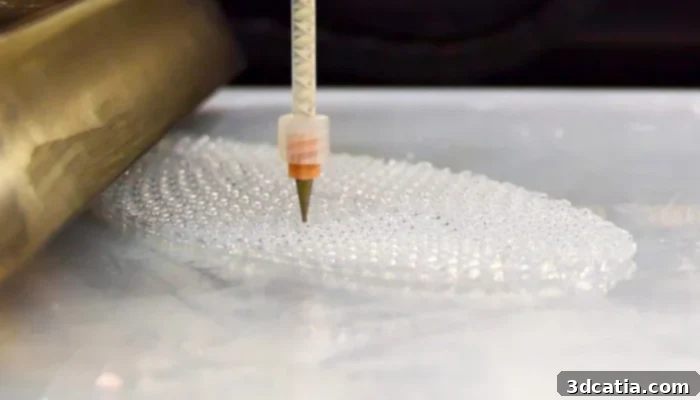
3D printing of silicone through a pressure syringe (photo credits: AMFG)
While photopolymerization, as pioneered by ACEO, is one effective 3D printing technology compatible with silicones, it is by no means the only one. Several other additive manufacturing technologies have been successfully adapted to work with this unique material. For instance, extrusion technology, which is widely recognized for thermoplastics, requires specific hardware and material handling properties when applied to silicone. First and foremost, the highly viscous silicone material must be carefully packaged in specialized connectable syringes equipped with a plunger. The pressure heads of these advanced extrusion systems are typically outfitted with high-precision volumetric metering pumps. These pumps are crucial for ensuring exceptional dispensing accuracy and consistent material flow. The raw silicone material is fed into these pumps directly from the pressure syringes, and the pumps precisely convey and meter the exact amount of material required for printing. The material is then applied onto the build platform or previous layer through an extremely fine, precision-engineered nozzle connected to the pump outlet.
This additive manufacturing process, particularly the extrusion-based approach, shares conceptual similarities with fused deposition modeling (FDM) or fused filament fabrication (FFF), common for thermoplastics. However, a key distinction lies in the material’s behavior immediately after deposition. Unlike thermoplastics that rapidly solidify upon exiting the nozzle, the extruded silicone is formulated to possess a specific viscosity, allowing it to maintain its shape and properly overlay subsequent layers without collapsing. The crucial crosslinking reaction, where individual polymer chains chemically bond to form a robust, three-dimensional network, occurs either simultaneously with the printing process or as a post-printing step, leading to the hardening of the formed material. After this essential crosslinking or curing phase, the printed silicone part acquires its final desired physical, mechanical, and chemical properties, making it ready for its intended application.
Advantages and Limitations of Silicone 3D Printing
The Benefits of 3D Printing with Silicone
Exploring the capabilities of silicone 3D printing reveals a multitude of compelling advantages that set it apart from other additive manufacturing processes. One of the foremost benefits is its ability to create 3D models with extraordinary flexibility and outstanding durability. This inherent flexibility allows silicone parts to endure significantly higher loads and pressures compared to components made from many other materials, often while enabling space-saving designs due to their conformability – all without compromising their crucial mechanical integrity. Furthermore, silicone exhibits remarkable resistance to extreme temperature fluctuations and various forms of radiation, rendering printed parts far less susceptible to degradation from such environmental impacts than materials like glass or certain plastics. In applications where glass is deemed too fragile or rigid, professionals frequently turn to silicone as a robust and reliable alternative. Its high transparency is another attractive feature, making it an ideal choice for models or components that require visual inspection or optical clarity. Ultimately, the synergistic combination of conductive, insulating, and highly biocompatible properties makes silicone an exceptionally versatile and attractive material for a broad spectrum of 3D printing applications, as we will further explore.
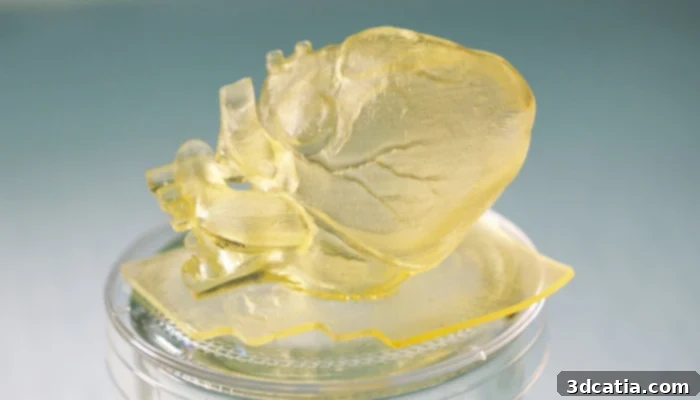
Silicones are biocompatible, making them an ideal choice for medical applications (photo credits: Nick Pitsas)
Challenges and Limitations
Despite its numerous advantages, silicone 3D printing is not without its limitations, particularly concerning accessibility to specialized hardware and materials. While the number of companies actively developing advanced technological solutions for silicone 3D printing is steadily increasing, the market still features a relatively limited number of manufacturers offering commercially viable machines of this specific type. This scarcity contributes directly to higher acquisition costs for equipment and a more restricted array of material options, hindering broader adoption. Additionally, current silicone 3D printers often operate with relatively low print volumes, meaning that while multiple small parts can be produced simultaneously, the technology is not yet fully optimized for true mass production of high-volume components. Many existing devices utilize a single print head, which is efficient for creating simple, flat models but presents challenges when complex geometries requiring elaborate support structures are involved. However, this aspect has seen significant improvement in recent years, with a growing availability of dual-head IDEX (Independent Dual Extruder) solutions that are capable of seamlessly integrating and producing soluble or break-away support structures for more intricate designs. Finally, the post-treatment phase presents another limitation for this technology. Silicones typically necessitate a longer and often more complex curing process compared to other materials, which inevitably extends the overall production time and can add to operational costs.
Applications and Key Manufacturers in Silicone 3D Printing
Diverse Applications of 3D Printed Silicone
Silicone 3D printing is exceptionally well-suited for small to medium batch production, rapid prototyping, and the creation of highly complex or unique geometries that would be practically impossible to achieve using conventional manufacturing methods. One of the sectors benefiting most profoundly from this innovative technology is the medical field. In this critical area, silicone 3D printing is employed to produce custom implants, patient-specific prostheses, and highly accurate anatomical models tailored precisely to individual patient needs. The tactile properties of silicone, which closely mimic human tissue, make it an ideal material for surgical training models, haptic feedback devices, and even direct implantable components. Furthermore, biomedical research is leveraging 3D printed silicone extensively, utilizing it as sophisticated scaffolds for tissue engineering. These intricate structures provide a framework for growing cells and tissues in controlled environments, facilitating groundbreaking studies and experiments aimed at regenerative medicine and disease modeling.
Beyond medicine, soft robotics represents another burgeoning application area for additive manufacturing with silicone. The material’s inherent elasticity and resilience make it particularly suitable for manufacturing compliant robotic components, such as sophisticated grippers. These soft grippers are capable of gently yet firmly handling delicate or irregularly shaped objects without causing damage, a significant advantage over rigid robotic end-effectors. Thanks to its unique properties, 3D-printed silicone is also being rigorously explored as a viable and highly promising material for developing flexible and elastic electronics. This includes stretchable sensors, wearable devices, and flexible circuit boards that can conform to various surfaces. Another significant industry where 3D-printed silicone is making inroads is the consumer goods sector. Here, it is primarily used for the production of flexible and elastic components for apparel, such as specialized ergonomic inserts or decorative elements, as well as for rapid prototyping of innovative wearables like smartwatches, where comfort and flexibility are paramount.
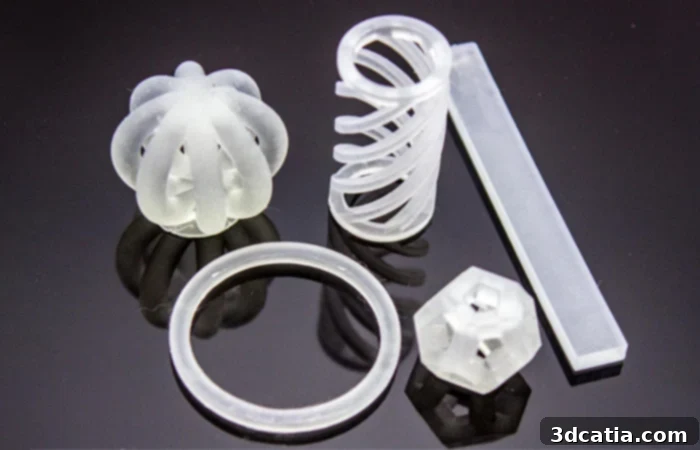
3D-printed objects made of silicone (photo credits: AMFG)
Leading Players in Silicone 3D Printing
The rapid advancement of silicone 3D printing is bolstered by a growing ecosystem of dedicated manufacturers and material developers. For example, Elkem Silicones stands out as a prominent player in the market, specializing in the development of advanced silicone materials specifically engineered for high-performance additive manufacturing applications. In addition to material suppliers, numerous companies within the 3D printing sector have developed sophisticated machines capable of precisely working with these specialized materials. Notable manufacturers in this space include the pioneering ACEO (though now part of Wacker), Deltatower, innovatiQ, Lynxter, Spectroplast, and San Draw, among others. Each of these companies contributes to the maturation of the technology by offering unique printing solutions, ranging from extrusion-based systems to advanced photopolymerization platforms. For readers interested in a more detailed overview of available silicone 3D printers and their specifications, we recommend consulting our dedicated article on the topic.
What has been your experience with silicone 3D printing? We invite you to share your insights and thoughts in a comment below, or engage with us on ourLinkedIn,Facebook, andTwitter pages! Don’t forget to sign up for our free weeklyNewsletter here to receive the latest 3D printing news straight to your inbox! You can also find all our compelling videos on ourYouTube channel, showcasing the incredible innovations in additive manufacturing.
*Cover Photo Credits: innovatiQ