
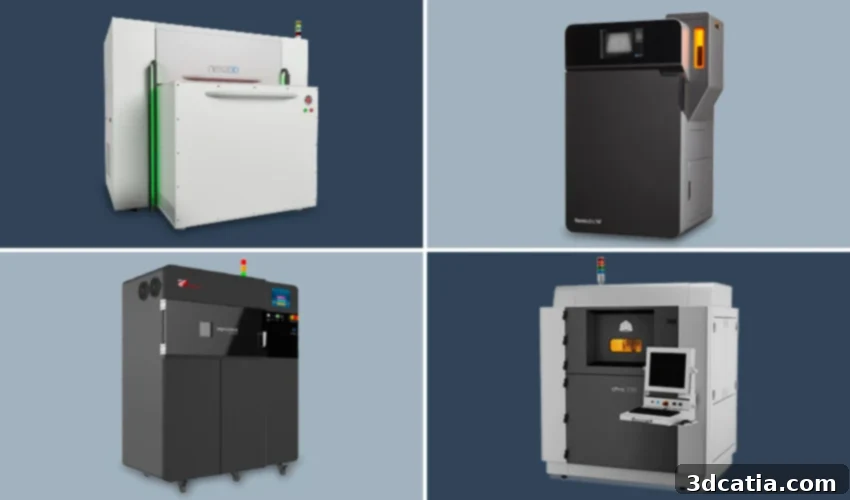
Exploring the Best SLS 3D Printers: Your Comprehensive Guide to Desktop & Industrial Selective Laser Sintering Solutions
Selective Laser Sintering (SLS) is an advanced additive manufacturing technology that has revolutionized the way prototypes and functional parts are produced across various industries. At its core, SLS utilizes a high-power laser to selectively fuse powdered plastic materials, layer by layer, creating robust and intricate three-dimensional objects. Historically, SLS technology was often perceived as inaccessible, primarily due to the high cost and complexity of industrial-grade machines. However, the landscape of SLS 3D printing has dramatically transformed in recent years.
Today, the market has seen a significant expansion with the introduction of more affordable and user-friendly desktop SLS solutions, making this powerful technology accessible to a broader range of businesses, from small design studios to large enterprises. This accessibility has fueled its adoption across diverse sectors, including automotive, consumer goods, product design, and medical industries. The versatility of SLS is further enhanced by the continuous development of new and improved materials, such as the widely used PA11 and PA12 nylons, flexible TPUs (Thermoplastic Polyurethanes), and robust PPs (Polypropylene). These materials offer a wide spectrum of mechanical properties, allowing for the creation of parts with exceptional strength, flexibility, chemical resistance, and biocompatibility.
The inherent advantages of SLS, such as the elimination of support structures (as the unfused powder acts as its own support), enabling complex geometries and internal channels, coupled with the ability to produce parts with excellent surface finish and mechanical properties, make it a preferred choice for professionals and manufacturers seeking high-quality, functional prototypes and end-use components. This comprehensive guide will delve into the leading SLS 3D printers available on the market, showcasing solutions from both desktop and industrial segments. We will explore the innovative manufacturers behind these machines, their unique features, and how they are shaping the future of additive manufacturing. The machines are presented in alphabetical order within their respective categories to provide a clear and organized overview.
Desktop SLS 3D Printers
Desktop SLS 3D printers represent a pivotal shift in additive manufacturing, bringing industrial-grade capabilities into more compact and accessible packages. These machines are designed for engineering teams, small businesses, and educational institutions looking to integrate advanced prototyping and low-volume production in-house without the significant investment or infrastructure required for traditional industrial systems. They offer the core benefits of SLS – freedom from support structures, excellent material properties, and design flexibility – in a footprint suitable for an office or lab environment.
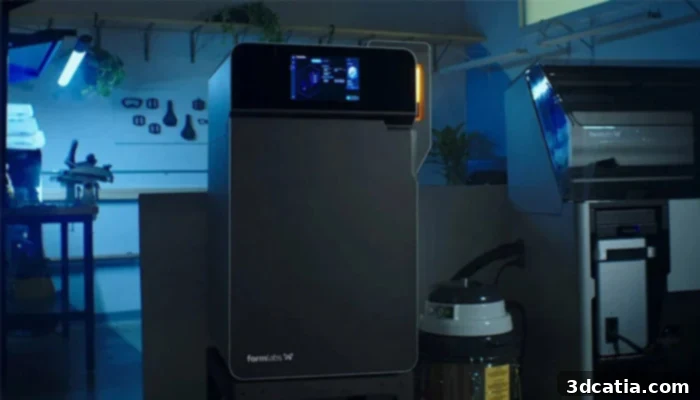
Fuse 1 – Formlabs
Formlabs, founded in the United States in 2011, initially made its mark by developing professional, affordable stereolithography (SLA) 3D printers. Building on this legacy of making advanced additive manufacturing accessible, the company announced its entry into the powder sintering market in 2017, culminating in the highly anticipated launch of the Fuse 1 SLS 3D printer in early 2021. The Fuse 1 was a game-changer, democratizing SLS technology for a wider audience. This innovative machine is engineered to produce high-quality nylon (PA12 and PA11) parts, offering a minimum layer thickness of 0.1 mm and a substantial maximum print volume of 165 x 165 x 320 mm for a desktop system.
Its relatively low price point positions the Fuse 1 as an ideal solution for users seeking to rapidly manufacture functional prototypes and even production-ready parts within their own facilities, bypassing external service bureaus. Following the immense success of the Fuse 1, Formlabs further expanded its SLS portfolio with the introduction of the Fuse 1+ 30W. This successor model boasts enhanced speed and introduces compatibility with carbon fiber-filled nylon, significantly broadening the range of applications for high-performance parts that require increased stiffness and strength. The Formlabs Fuse series embodies the company’s commitment to making industrial-grade additive manufacturing more practical and affordable for a diverse user base.
Gravity – Wematter
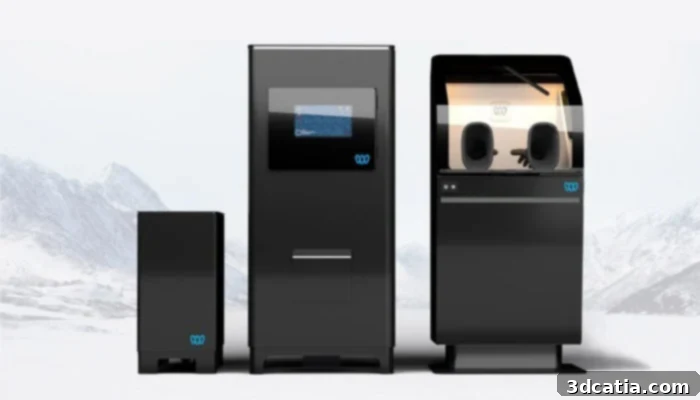
Wematter, a forward-thinking Swedish manufacturer, has distinguished itself in the desktop SLS market with its innovative Gravity 3D printer. Designed with both performance and practicality in mind, the Gravity boasts a compact design that allows it to seamlessly integrate into virtually any working environment. Its CE marking is a testament to its safety and suitability for use in a variety of settings, including offices, laboratories, workshops, and even hospitals, making it an incredibly versatile solution.
The Gravity offers a generous print volume of 300 x 300 x 300 mm, paired with an efficient printing speed of 12 mm per hour. User experience is enhanced by a responsive touch screen interface and a critical HEPA air filtration system, which ensures a safe and clean operating environment by capturing airborne particles. A key innovation in the Gravity is its patented material management system. This allows users to efficiently store and recycle plastic powder (compatible with PA11 and PA12) directly within the machine, significantly reducing material waste and operating costs. Furthermore, Wematter offers a complementary machine, Atmosphere, which works in conjunction with Gravity to control the interior printing chamber conditions, thereby optimizing the final mechanical properties and surface finish of the printed parts. This ecosystem approach underscores Wematter’s dedication to providing a complete, high-quality, and environmentally conscious SLS solution.
Lisa Pro – Sinterit
Sinterit, a Polish company founded in 2014, has rapidly established itself as a specialist in developing accessible SLS 3D printers. Following the successful introduction of its pioneering desktop SLS solution, the Lisa, in 2015, Sinterit launched an advanced and updated version: the Lisa Pro. This iteration builds upon the strengths of its predecessor while introducing significant enhancements to elevate print quality and material versatility.
A standout feature of the Lisa Pro is its integrated nitrogen atmosphere system within the printing chamber. This innovative addition actively prevents oxidation during the sintering process, which is crucial for achieving superior mechanical properties and a more consistent finish for printed parts, especially with certain materials. In terms of material compatibility, the Lisa Pro is exceptionally flexible, supporting not only standard PA12 Smooth and PA11 Onyx polyamides but also four types of elastomers and polypropylene. This broad material palette opens up a vast array of applications, from flexible prototypes to durable functional components. The printer is equipped with a precise 5W diode laser and offers a 73% larger printing volume compared to the original Lisa, reaching an impressive 150 x 200 x 260 mm. Complementing its hardware, the Lisa Pro features Sinterit Studio, an integrated software suite designed to streamline the entire printing workflow and assist users at every step. This model is particularly well-suited for demanding users who require larger build volumes, enhanced part quality through a nitrogen atmosphere, and the flexibility to experiment with a diverse range of advanced materials for a variety of professional applications.
S2 – Sintratec
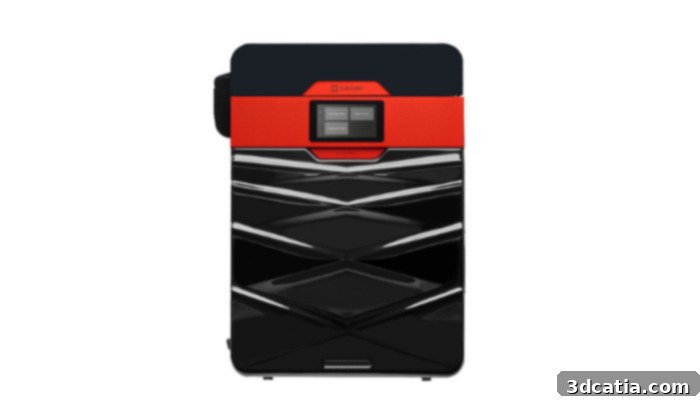
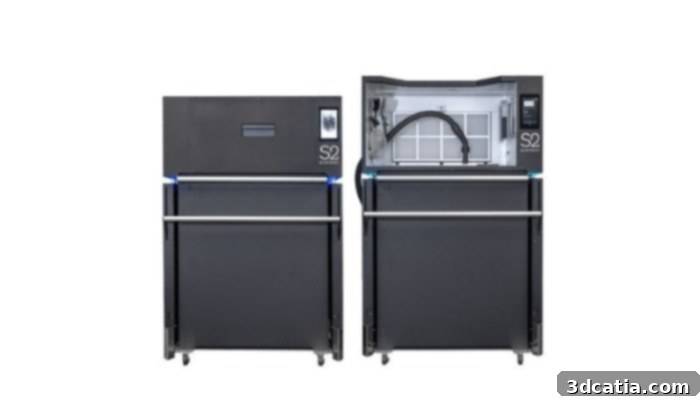
Sintratec stands as Switzerland’s leading manufacturer of 3D printers, with a core specialization in the development and production of high-performance SLS 3D printing solutions. Their flagship offering, the Sintratec S2, is a remarkable all-in-one system designed for professional users seeking automated processes and exceptional print quality in a compact footprint. The S2 is characterized by its modular design, comprising three distinct yet integrated modules: the Laser Sintering Station (LSS), which features eight heating zones to ensure precise temperature control and superior surface finishing; the Material Core Unit (MCU), facilitating efficient material handling; and the Material Handling Station (MHS), which streamlines powder management and part breakout.
Further enhancing its functionality, the Sintratec S2 incorporates an integrated 4K camera, allowing for convenient remote observation of the 3D printing process, and a large touch screen for intuitive and user-friendly control. The system offers a maximum print volume of 160 x 160 x 400 mm and is compatible with robust materials such as PA12 and TPE, catering to a wide range of functional prototyping and end-use part applications. Sintratec’s all-in-one solution significantly reduces downtime by enabling quick material changes and simplified cleaning procedures, thereby maximizing operational efficiency and throughput. The Sintratec S2 provides a comprehensive and highly integrated platform for businesses and researchers looking to leverage the power of SLS technology with ease and reliability.
SnowWhite 2 – Sharebot
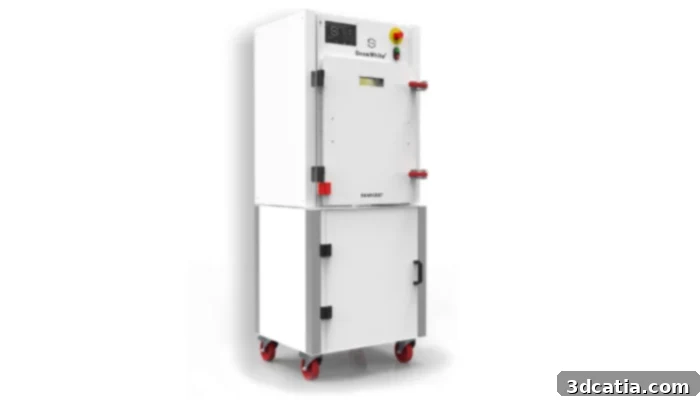
The SnowWhite 2 is a professional-grade 3D printer developed by the Italian manufacturer Sharebot, representing a significant upgrade to its predecessor, the original SnowWhite. Released in the summer of 2020, this machine is engineered to deliver high-resistance solid structures using precise laser sintering technology, where a powerful laser automatically fuses material particles at specific points in space.
One of the key strengths of the SnowWhite 2 lies in its CO₂ laser, which enables compatibility with a wide array of thermoplastic powders. Beyond standard PA12 and flexible TPU materials, the system is capable of processing specialized powders loaded with various material particles, such as aluminum, glass, or carbon. This versatility allows users to produce parts with enhanced properties like increased stiffness, conductivity, or specific aesthetic finishes, catering to highly specialized applications. The SnowWhite 2 also features an upgraded software interface that provides users with greater control through custom print profiles and open parameters, allowing for fine-tuning of the printing process. The printer utilizes the industry-standard Simplify3D slicer software, known for its robust capabilities in preparing models for 3D printing. Connectivity is straightforward via Ethernet, ensuring reliable data transfer and integration into existing network infrastructures. The SnowWhite 2 is designed for professionals and researchers who demand precision, material flexibility, and control over their SLS 3D printing operations.
Industrial SLS Solutions
Industrial SLS solutions represent the pinnacle of powder bed fusion technology, designed to meet the rigorous demands of high-volume production, large-scale part manufacturing, and applications requiring the most advanced materials. These machines offer larger build volumes, faster processing speeds, enhanced automation, and more sophisticated environmental controls compared to their desktop counterparts. Industrial SLS printers are crucial for sectors like aerospace, automotive, medical device manufacturing, and industrial tooling, where precision, repeatability, and the mechanical performance of end-use parts are paramount. They enable the creation of complex components without the need for traditional molds, facilitating rapid design iterations and efficient on-demand manufacturing.
403P series – Farsoon
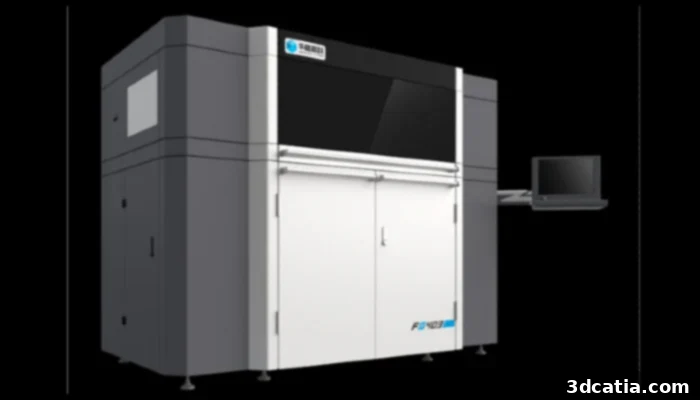
Farsoon, a prominent additive manufacturing company based in China, is known for its robust and high-performance industrial SLS 3D printers. Among its flagship offerings is the versatile Farsoon 403P Series, a family of industrial SLS machines designed to cater to a broad spectrum of manufacturing needs. The series is characterized by its four distinct configurations: the FS403P, HS403P, SS403P, and HT403P, each optimized for specific applications and material requirements. These versions differentiate themselves through properties such as maximum chamber temperature and 3D volume build rate, allowing users to select the ideal machine for their production goals.
All printers within the Farsoon 403P Series are equipped with an advanced 8-zone heater intelligent temperature control system, ensuring uniform heat distribution and precise processing of complex polymer powders for consistent part quality. High-precision embedded 3D scanners are integrated to maintain dimensional accuracy and surface finish. This industrial 3D printing solution combines an impressive scan speed of up to 15.2 m/s with a high-efficiency roller system, which ensures smooth and rapid powder recoating. Furthermore, the convenient removable powder cartridge system significantly enhances productivity by allowing for quick material changes and efficient maintenance. The Farsoon 403P Series is engineered to offer increased throughput and a lower cost per part, making it an attractive solution for industrial manufacturers aiming for efficient and cost-effective additive production.
EP-P3850 – Eplus3D
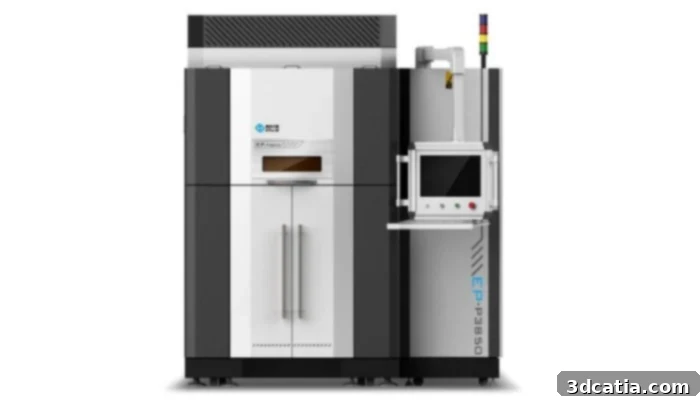
The EP-P3850 is a powerful and versatile industrial SLS 3D printer that has a significant lineage. Originally released and marketed by the Chinese manufacturer Shining 3D, it became a cornerstone of their industrial printer lineup. Subsequently, Eplus3D, the subsidiary primarily responsible for the development of Shining 3D’s industrial machines, spun off to become an independent and prominent brand in its own right. The EP-P3850, carrying forward its legacy, remains one of Eplus3D’s leading SLS 3D printers, known for its multifunctional capabilities and suitability across various industrial applications.
This machine employs a high-power laser as its energy source to precisely sinter a wide range of advanced polymer materials, including various nylons, polypropylene, and TPU, among others. A notable feature of the device is its integrated, removable forming cylinder. This design innovation significantly boosts manufacturing efficiency by allowing continuous production cycles and reducing waiting times associated with cooling and part extraction. Compatible with the Windows 7 operating system, the EP-P3850 offers a substantial maximum construction volume of 380 x 380 x 500 mm and provides flexibility in layer thickness, ranging from 0.08 to 0.3 mm, catering to diverse requirements for detail and speed. The EP-P3850 is highly regarded for its adaptability, making it an excellent choice for demanding sectors such as the automotive industry, where it excels in producing complex prototypes and functional parts.
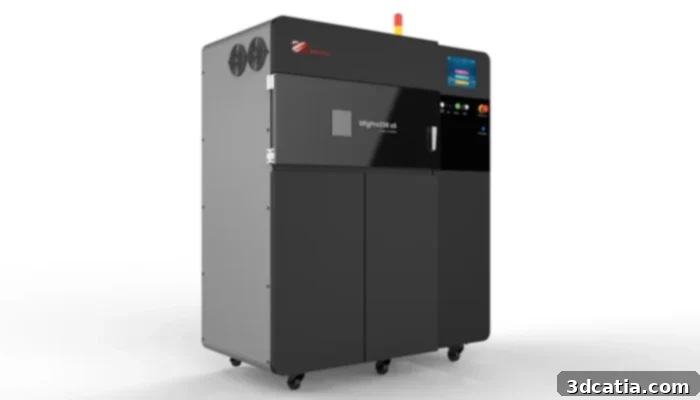
MfgPro236 xS – XYZPrinting
For many years, the Asian manufacturer XYZPrinting was primarily recognized for its focus on FDM (Fused Deposition Modeling) technology, catering largely to the desktop and consumer segments. However, in 2017, the company made a strategic pivot, expanding its horizons to embrace the industrial additive manufacturing market. This significant shift led to the launch of its MfgPro product range, specifically designed around powder bed technologies like SLS.
Within this advanced product line, the MfgPro236 xS 3D printer stands out as a robust industrial solution targeting professionals in aerospace, automotive, and other sectors requiring advanced prototyping and functional parts. Boasting a maximum manufacturing volume of 230 x 230 x 250 mm, this SLS 3D printer is a substantial machine, weighing 425kg, underscoring its industrial build quality. It offers seamless integration with XYZprint AM and Buildware software, facilitating an efficient and controlled printing workflow. On the technical front, the machine incorporates an internal gas control system to maintain optimal build chamber conditions and features a powerful 60W CO2 fusion laser for precise and rapid sintering. The MfgPro236 xS is an ideal choice for industries seeking to develop high-performance end-use parts with excellent mechanical properties, making it a valuable asset for demanding professional applications.
P810 – EOS
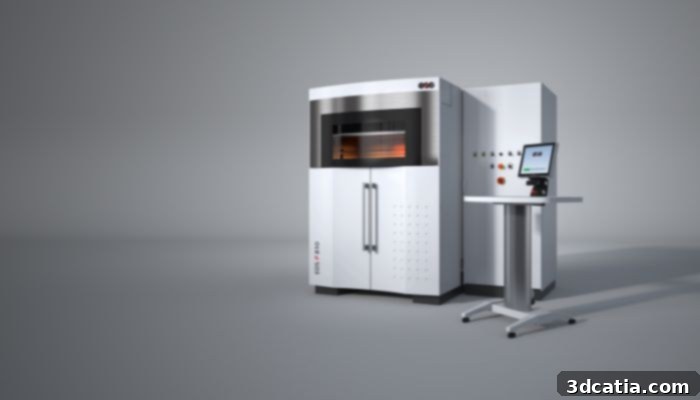
EOS, the renowned German 3D printer manufacturer, has been a cornerstone of the industrial additive manufacturing industry for almost three decades. They are globally recognized as a leader in polymer and metal laser powder bed fusion technologies, consistently pushing the boundaries of what is possible with 3D printing. In previous discussions, we might have highlighted models like the EOS P500, an industrial SLS 3D printer celebrated for its capability to print with complex materials such as PEKK and its impressive speeds of up to 0.6 m/s.
For this updated list of top SLS 3D printers, we turn our attention to one of EOS’s latest and most advanced innovations: the EOS P 810. This state-of-the-art SLS 3D printer features a generous build volume of 700 x 380 x 380 mm (27.6 x 15 x 15 in), enabling the production of large-scale parts or high volumes of smaller components with exceptional precision and speed. The EOS P 810 is specifically engineered to process polyetherketoneketone (PEKK) filled with 23% carbon fiber, a material designated as HT-23. This strategic combination leverages one of the strongest polymers available with carbon fiber reinforcement, resulting in parts that exhibit outstanding strength-to-weight ratios and the ability to withstand extremely high temperatures.
Beyond its mechanical prowess, the HT-23 material processed by the EOS P 810 is flame-retardant and UV-resistant, meeting stringent aerospace (FAR 25.853) and mobility (EN 45545) standards. EOS proudly asserts that the P 810 is the first 3D printing system capable of supporting the series production of demanding composite parts, making it an invaluable tool for industries like aerospace, automotive, and defense that require uncompromising performance and regulatory compliance. Its advanced capabilities solidify EOS’s position at the forefront of industrial polymer additive manufacturing.
ProMaker P1000 S – Prodways
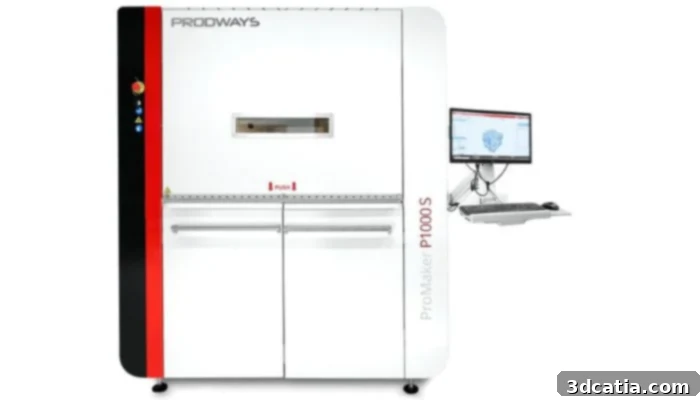
Prodways, a French manufacturer specializing in industrial and professional 3D printing solutions, offers the ProMaker P1000 S, an impressive industrial 3D printer based on laser powder sintering technology. This machine is specifically designed to facilitate mass production of parts at a highly competitive cost, making it an attractive entry-level solution for industrial applications leveraging SLS technology.
The ProMaker P1000 S features a large build platform, allowing for efficient nesting of multiple parts and maximizing throughput. Its impressive maximum speed of 1.4 liters per hour contributes significantly to its productivity, ensuring that large batches of components can be produced quickly. One of its standout attributes is its exceptional price-to-volume ratio within its class, positioning it as an ideal choice for businesses looking to adopt industrial SLS without an exorbitant initial investment. The printer is equipped with a high-quality 30W laser and a precise Raylase brand scanner, ensuring accuracy and consistent part quality. A particularly advanced feature is its “slicing on the fly” function, which provides unparalleled flexibility by allowing production parameters to be adjusted or even changed during an ongoing print job. This capability is invaluable for optimizing workflow, responding to last-minute design changes, and enhancing overall manufacturing agility. The ProMaker P1000 S embodies Prodways’ commitment to providing powerful, cost-effective, and flexible industrial additive manufacturing solutions.
QLS 820 by NEXA3D
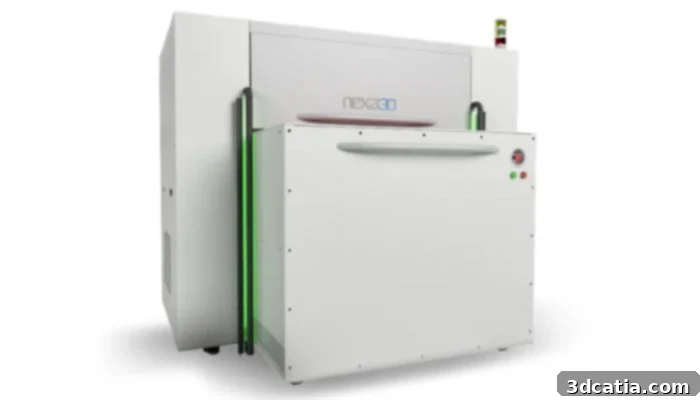
The QLS-3D printer series has a rich innovative history, originating from NXT Factory, which pioneered the groundbreaking Quantum Laser Sintering (QLS) technology. When NEXA3D, the California-based leader in ultrafast polymer 3D printing, acquired NXT Factory, it enthusiastically continued the development of this high-quality series, with the QLS 820 emerging as its most prolific device. The QLS 820 leverages the proprietary QLS technology to enable exceptionally rapid additive manufacturing of polymer parts.
According to NEXA3D, this system is a staggering four times faster than many other conventional SLS technologies, boasting an impressive printing speed of 4200 cubic centimeters per hour. This speed, combined with a substantial build volume of 350 x 350 x 400 mm, makes it a powerhouse for high-throughput production. The system also offers a versatile Z-resolution range of 50 to 200 microns, allowing for a balance between detail and speed. Designed with the ambitious goal of competing directly with traditional injection molding technologies, the QLS 820 is built for continuous, 24/7 operation, thanks to its fully automated capabilities. It is compatible with a wide array of engineering plastics, including various nylons and PC (Polycarbonate), making it suitable for demanding industrial applications that require rapid production of strong, functional parts. The QLS 820 represents a significant leap forward in production-scale additive manufacturing, offering unprecedented speed and efficiency.
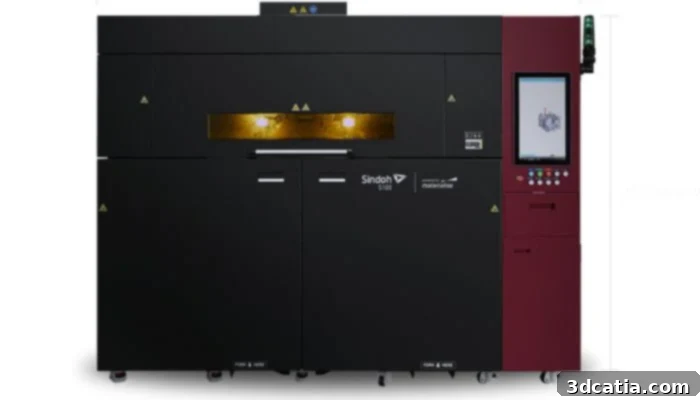
S100 – Sindoh
Sindoh, a prominent South Korean company known for its printers and office solutions, has made a significant entry into the additive manufacturing space with its S100 industrial SLS 3D printer. The Sindoh S100 is distinguished as a fully open and flexible polymer laser sintering system, engineered to offer an exceptional combination of operational ease, straightforward maintenance, and advanced material capabilities.
A groundbreaking aspect of the S100 is its status as the first commercially available machine to feature Materialise’s innovative Bluesint PA12 process technology. This revolutionary technology addresses one of the key challenges in SLS 3D printing: powder waste. While most traditional SLS printers can only reuse a fraction of the unfused powder, Bluesint PA12 allows for almost 100% of the powder to be recycled and reused to produce new parts. This dramatically increases the resource efficiency of laser sintering, significantly reducing material costs and environmental impact, thereby promoting a more sustainable approach to additive manufacturing. Beyond its material efficiency, the Sindoh S100 offers users a range of pre-configured material packages and robust remote maintenance features, ensuring reliability and minimizing downtime. Its open architecture further provides flexibility for users to experiment with different parameters and materials, making it a powerful tool for research and development as well as efficient production.
sPro 230 – 3D Systems
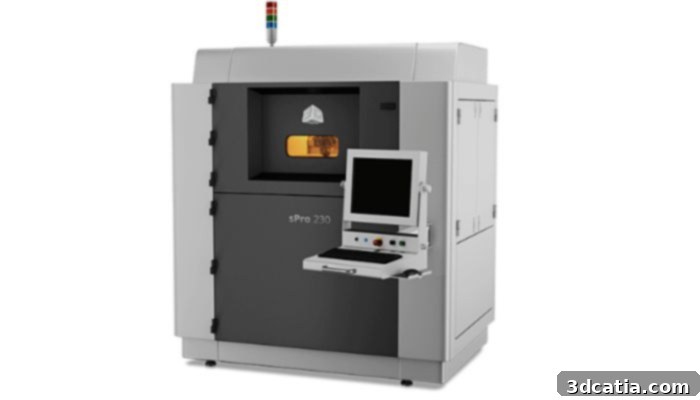
As one of the pioneering giants in the 3D printing industry, the American company 3D Systems boasts an extensive portfolio of additive manufacturing solutions, including numerous SLS 3D printers available through its esteemed ProX and sPro lines. For this updated compilation of leading SLS 3D printers, we specifically highlight the sPro 230, a testament to 3D Systems’ enduring expertise in industrial-scale powder bed fusion.
The sPro 230 is a large-capacity SLS printer meticulously designed for the high-volume production of tough and durable thermoplastic parts. Its robust capabilities make it compatible with a wide range of advanced materials, including resilient nylon and high-performance composites such as nylon 11 and nylon 12. With a truly impressive build volume of 550 x 550 x 750 mm, the sPro 230 empowers users to produce remarkably large single-piece components (up to 30 inches or 750 mm long) or efficiently manufacture a substantial quantity of small to medium-sized parts in a single build. This flexibility makes it ideal for diverse industrial applications, from creating large functional prototypes to mass production of end-use parts. Furthermore, the machine incorporates a suite of exciting features aimed at enhancing productivity and ease of use, such as automated 3D part nesting. This intelligent software capability optimizes part placement within the build chamber, maximizing material utilization and print efficiency. The sPro 230 stands as a powerful solution for manufacturers seeking to achieve high throughput, exceptional part quality, and design freedom in their additive manufacturing workflows.
This exploration of leading desktop and industrial SLS 3D printers showcases the remarkable advancements and expanding accessibility of Selective Laser Sintering technology. From compact systems enabling in-house prototyping to massive industrial machines tackling high-volume production with advanced materials, SLS continues to prove its value as a versatile and powerful additive manufacturing method.
What are your thoughts on our selection of top SLS 3D printers? We encourage you to share your insights and experiences in the comments section below or engage with us on our LinkedIn, Facebook, and Twitter pages! Don’t forget to sign up for our free weekly Newsletter here to receive the latest 3D printing news directly in your inbox. You can also discover more about additive manufacturing through our videos on our YouTube channel.